Complete Guide to Funazushi | History, How to Make, and How to Eat Japan’s Oldest Local Dish Proudly Presented by Shiga Prefecture
What is Funazushi | Shiga Prefecture’s Representative Traditional Fermented Food
Funazushi (crucian carp sushi) is Japan’s oldest narezushi (fermented sushi) that has been passed down in Shiga Prefecture for many generations. Made primarily from nigoro buna (a type of crucian carp) caught in Lake Biwa and fermented for long periods using only rice and salt, it remains a unique local dish deeply rooted in the region today.
Narezushi is a type of preserved food made by pickling fish with salt and rice, utilizing natural fermentation by lactic acid bacteria. Unlike modern hand-formed or rolled sushi, the rice serves as a medium to promote fermentation, and the unique sourness and aroma produced through fermentation are its defining characteristics.
Funazushi was selected as “Shiga’s Food Cultural Property” and designated as an intangible folk cultural property of Shiga Prefecture in 1998, and is recognized as a traditional food occupying an extremely important position in the history of Japanese food culture. This dish, created in an era without refrigeration technology as a means to preserve fish, a valuable source of protein, for long periods, has transcended its role as mere preserved food and become deeply intertwined with the daily life and culture of Shiga Prefecture residents.
History and Origins of Funazushi | A Thousand-Year Tradition Spanning from the Nara Period
Funazushi Recorded in Ancient Documents
The history of funazushi can be traced back to the Nara period according to written records. In the “Engishiki” (Procedures of the Engi Era), a legal code completed in 927 during the Heian period, there is a record that “sushi buna” was presented as tribute from Omi Province (present-day Shiga Prefecture) to the imperial court. This demonstrates that funazushi was treated as a special food more than a thousand years ago and held value worthy of being offered as a sacred offering.
In ancient Japan, the technology of pickling fish with salt and rice, known as “narezushi,” existed in various regions, but among them, funazushi is considered a precious food culture heritage retaining the oldest form. As a result of fermentation technology believed to have been transmitted from Southeast Asia becoming adapted to Japan’s climate and developing uniquely, funazushi has been passed down to the present day in a form connected to Lake Biwa, a special environment.
Development as Omi Province’s Food Culture
Shiga Prefecture was called Omi Province in ancient times and has been blessed with abundant aquatic resources centered around Lake Biwa, Japan’s largest lake. Lake Biwa is home to diverse endemic species, among which nigoro buna was particularly treasured as the fish most suitable for making funazushi.
During the Edo period, funazushi was treated as a luxury item and positioned as a “hare no hi” (special occasion) dish served at celebrations and special events in samurai and merchant households. Additionally, it can be seen that in Shiga Prefecture, there was an ancient custom of eating funazushi as a substitute for medicine when experiencing stomach pain or poor health, suggesting that the health effects of fermented foods were empirically recognized.
Main Transmission Regions and Ingredients Used | Techniques Passed Down Around Lake Biwa
Regions Where Funazushi is Transmitted
Funazushi is made throughout Shiga Prefecture, but it is particularly actively transmitted in regions surrounding Lake Biwa. In areas facing Lake Biwa such as Nagahama City, Hikone City, Omihachiman City, and Otsu City, unique manufacturing methods have been passed down in individual households and specialty shops.
There are subtle differences in fermentation period, types of rice used, and salt content depending on the region, and each region and household has its own distinct “flavor.” While it was once common for each household to make it, today specialty shops and long-established restaurants continue to preserve the traditional manufacturing methods.
Main Ingredients Used | Nigoro Buna, Rice, and Salt
The ingredients for funazushi are surprisingly simple, consisting of only three items: “nigoro buna, rice, and salt.”
Nigoro Buna: Nigoro buna, an endemic species of Lake Biwa, is considered the fish most suitable for making funazushi. Egg-bearing females are particularly preferred, with the egg portions treasured as a delicacy. Nigoro buna measure approximately 15-20 cm in body length, have firm flesh, and contain fat content suitable for fermentation. Due to recent resource depletion, they have become precious, and other types of buna such as gengorō buna are sometimes used instead.
Rice: Used as a medium to promote fermentation. Rice produced in Shiga Prefecture is often used, in the form of cooked rice. The starch contained in rice serves as a nutrient source for lactic acid bacteria, playing an important role in advancing fermentation.
Salt: Used for salting fish and preservation. Salt concentration influences how fermentation progresses, making appropriate salt balance crucial.
How to Make Funazushi | Detailed Explanation of Traditional Manufacturing Methods
Ingredients (Based on approximately 20L per barrel)
- Nigoro buna (egg-bearing females): approximately 10-15 fish
- Salt: approximately 30-40% of buna weight (for salting)
- Cooked rice: approximately 5-7 kg
- Salt: appropriate amount (for main pickling, to be mixed with rice)
Process Steps
1. Salting (Spring to Early Summer)
Around March to May, when egg-bearing nigoro buna enter their spawning season, they are obtained. The scales are removed from the buna, and the gills and internal organs are carefully removed. It is important to keep the eggs intact during this process. The processed buna are thoroughly washed with water and dried.
A generous layer of salt is placed in a barrel, buna are laid out and salted, and more buna are layered with more salt sprinkled on top, repeating this process. Finally, stones are placed as weights and the barrel is left in a cool, dark place for 2-3 months of salting. During this period, moisture is removed from the buna, increasing its preservability.
2. Desalting (Early to Mid-Summer)
Around June to July, the salted buna are removed and rinsed thoroughly under running water to wash away the salt. Afterward, they are soaked in fresh water for several hours to overnight to desalt them. The degree of desalting is adjusted according to preference, but it is important not to remove all saltiness completely, but rather to retain an appropriate amount of salt.
3. Main Pickling (Summer)
Around July to August, the main pickling process begins. Freshly cooked rice is mixed with a small amount of salt and cooled to approximately body temperature.
Rice is spread on the bottom of the barrel, and the desalted buna are laid on top. Rice is also packed into the belly of the buna. More rice is placed on top of the buna, and buna and rice are layered alternately. The top is covered with rice, and stones are placed as weights to seal it.
4. Fermentation and Aging (6 Months to 2 Years)
After main pickling, the barrel is left to ferment and age in a cool, dark place. A minimum of six months is required, typically around one year, though some are aged for two years or more.
As fermentation progresses, the starch in the rice is broken down by lactic acid bacteria, producing lactic acid. This lactic acid creates the unique sourness, while simultaneously increasing preservation. It is important to occasionally check on the barrel during fermentation to ensure no mold has developed.
Fermentation Mechanism
Fermentation of funazushi proceeds as lactic acid bacteria naturally enter from the air and those present on the rice. Lactic acid bacteria multiply using the starch in the rice as a nutrient source and produce lactic acid. This lactic acid lowers the pH, suppressing the proliferation of putrefactive bacteria, which makes long-term storage possible.
Additionally, during the fermentation process, proteins are broken down to produce amino acids, creating a unique umami flavor. This fermentation technology is an important one that could be said to be the origin of Japan’s fermented food culture.
Occasions and Seasons for Eating | Traditional Food Coloring Special Days
Deep Connection with Annual Events
Funazushi has been positioned in Shiga Prefecture as a “hare no hi” (special occasion) dish eaten on special days. Funazushi pickled in July and fermented for more than six months is eaten at various events throughout the year, including New Year’s, Okona’i (traditional ceremonies in the Omi region), and spring festivals.
New Year’s: Funazushi is an indispensable dish for celebrating the new year. Thinly sliced funazushi is served as an appetizer in settings where families and relatives gather.
Okona’i (O-ko): A tradition unique to Shiga Prefecture, this is a ceremony held at a village shrine to pray for abundant harvests and good health. Funazushi is often served at these events and plays a role in deepening community bonds.
Spring Festival: Funazushi also makes an important appearance as a dish at festivals celebrating the arrival of spring.
How It Is Eaten in Modern Times
Currently, funazushi is eaten not only at annual events but also increasingly as part of everyday dining. Restaurants throughout Shiga Prefecture offer it year-round, and it has become a popular local dish among tourists. It is also valued as a gift and is shipped nationwide as a specialty product of Shiga Prefecture.
How to Eat | Delicious Ways to Enjoy Funazushi
Basic Way of Eating
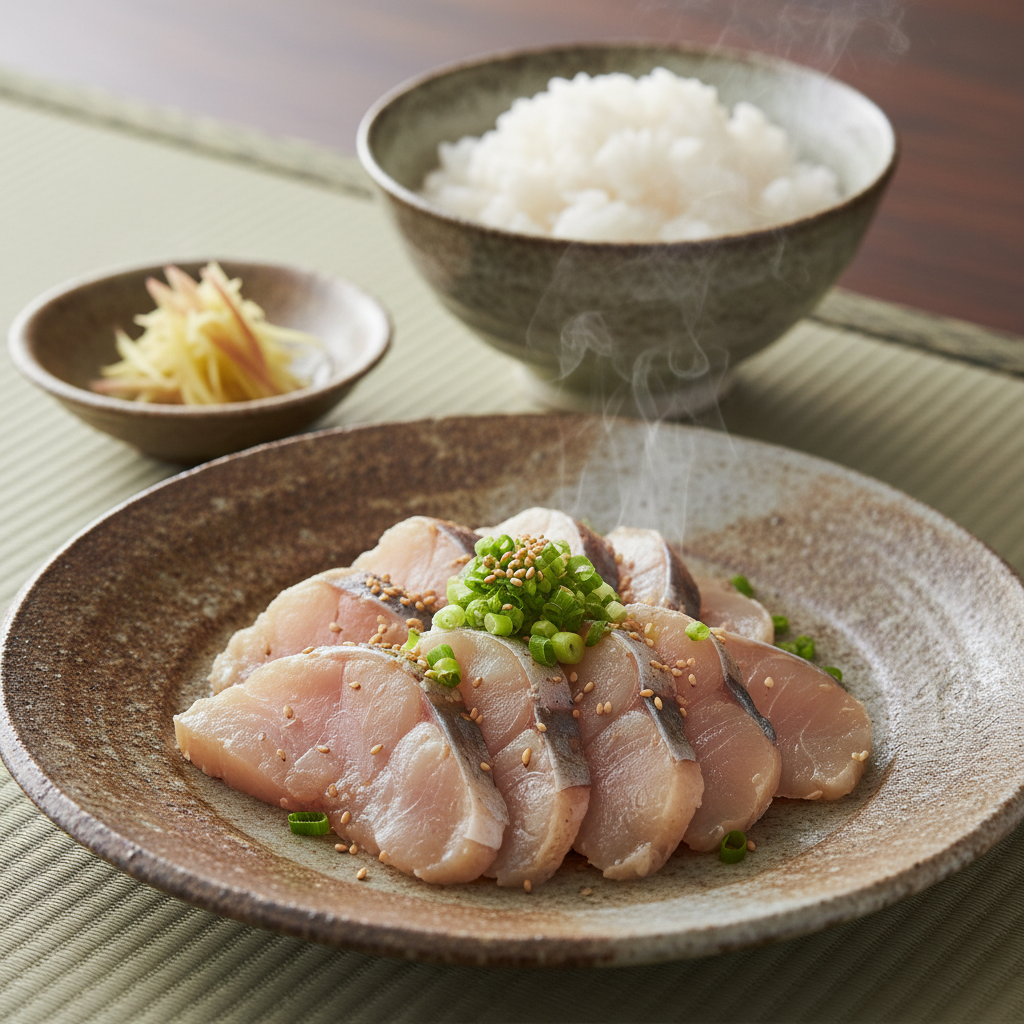
Funazushi is typically eaten sliced thinly. The flesh is sliced thin and eaten as is or lightly grilled. Grilling brings out a fragrant aroma and makes the unique flavor more pronounced.
The egg portion (ko) is particularly treasured and offers a rich flavor. Since the bones become soft through fermentation, they can be eaten whole.
Well-Matched Food Pairings
Japanese Sake: The strong flavor of funazushi pairs excellently with Japanese sake. Especially when paired with local sake from Shiga Prefecture, one can fully enjoy the region’s distinctive taste.
Tea over Rice: Thinly sliced funazushi placed on warm rice with tea poured over it, known as “funazushi chazuke,” is a traditional way of eating in Shiga Prefecture.
Grated Daikon: Eating funazushi with grated daikon radish results in a lighter flavor, and helps mellow the distinctive aroma of funazushi.
Advice for First-Time Eaters
Funazushi has a distinctive aroma and sourness, which may surprise first-time eaters. It is recommended to start with a small amount of thinly sliced funazushi. With a cheese-like fermented smell and tangy, deep flavor, many people become addicted to it once they develop a taste for it.
Many specialty shops serve versions that suppress the strong smell and are easier to enjoy, allowing even beginners to appreciate it.
Preservation and Transmission Efforts | Efforts to Pass Tradition to the Future
Practitioners and Preservation Society Activities
Many specialty shops and restaurants in Shiga Prefecture continue to preserve the funazushi tradition. At long-established shops, unique manufacturing methods passed down through generations are maintained while producing high-quality funazushi.
In some regions, funazushi preservation societies and food culture transmission groups have been organized to work on transmitting manufacturing methods and promoting the tradition. These organizations hold classes and experience sessions at local schools and work to convey funazushi culture to younger generations.
Modern Initiatives and SNS Utilization
In recent years, information dissemination using SNS has become active. Specialty shops and producers introduce manufacturing processes and eating methods on Instagram and Facebook, working to increase awareness among younger generations.
Additionally, development of new dishes using funazushi is progressing. Creative dishes such as funazushi pasta, funazushi pizza, and funazushi canapés have appeared and are attracting attention, moving beyond traditional ways of eating.
Commercialization and Distribution Efforts
Advances in vacuum-packing technology have made distribution of funazushi easier. Funazushi, which was once obtainable only locally, can now be shipped nationwide through online shops, allowing more people to enjoy it.
Additionally, product development pursuing ease of eating is advancing, with increasing numbers of products such as thinly sliced and packaged versions or bite-sized cuts, allowing even beginners to easily enjoy funazushi.
Nigoro Buna Resource Protection
Nigoro buna, the raw material for funazushi, has seen declining resources due to environmental changes in Lake Biwa and the impact of invasive fish species. Shiga Prefecture conducts seed production and release of nigoro buna to work toward resource recovery.
Furthermore, to preserve sustainable funazushi culture, work is underway on product development using other types of buna and improving aquaculture techniques.
Health Benefits and Nutritional Value of Funazushi
Health Effects as a Fermented Food
Funazushi is a fermented food made with lactic acid bacteria, and various health benefits are expected. Lactic acid bacteria help regulate the intestinal environment and are thought to contribute to digestive promotion and immune system enhancement.
The ancient custom in Shiga Prefecture of eating funazushi as a substitute for medicine when experiencing stomach pain or poor health likely stems from these effects being recognized empirically.
Nutritional Content
Funazushi contains abundant amino acids as proteins are broken down through fermentation. It also contains B vitamins, calcium, and other nutrients, making it a nutritionally rich food.
Since the fish bones also soften through fermentation, a notable characteristic is the ability to efficiently intake calcium.
Places to Taste Funazushi | Introduction to Famous Shops in Shiga Prefecture
Specialty Shops and Long-Established Restaurants
Numerous shops specializing in funazushi and long-established traditional restaurants can be found throughout Shiga Prefecture. In areas around Lake Biwa such as Nagahama City, Hikone City, Omihachiman City, and Otsu City, there are distinctive renowned shops in each area.
Specialty shops carry a variety of products, from traditionally wooden-barrel-fermented funazushi to modern arrangements that are easy to eat. Some shops allow visitors to observe the manufacturing process, enabling a deeper understanding of funazushi culture.
How to Purchase
Funazushi can be purchased at specialty shops, product halls, and roadside stations throughout Shiga Prefecture. Additionally, many shops have set up online shops, allowing orders from anywhere in the country.
Prices vary depending on the manufacturing method, aging period, and type of buna used, but it is generally treated as a premium ingredient. Options range from gift boxes for formal gifts to affordable household versions, allowing selection according to use.
Funazushi and Japanese Sushi Culture | Importance as the Root of Sushi
From Narezushi to Edo-Style Sushi
“Narezushi” like funazushi is thought to be the prototype of modern sushi. From ancient to medieval times, narezushi was made throughout Japan, but as time progressed, “hayazushi” with shortened fermentation periods appeared, and during the Edo period, vinegar-based “hayazushi” developed.
This is said to have become the prototype for modern hand-formed and rolled sushi. In other words, funazushi occupies an extremely important position in food culture history as the root of Japanese sushi culture.
The Oldest Existing Sushi in Japan
Funazushi is thought to be the form of narezushi that retains the oldest characteristics among those currently existing in Japan and is also called “Japan’s oldest sushi.” The fact that manufacturing methods have been passed down for more than a thousand years and continue to be made today is a precious example demonstrating the continuity and diversity of Japanese food culture.
Conclusion | Funazushi is a Treasure of Shiga Prefecture’s Food Culture
Funazushi is a representative local dish of Shiga Prefecture and a precious food culture heritage as Japan’s oldest narezushi with a history spanning more than a thousand years. The unique flavor created through natural fermentation by lactic acid bacteria from simple ingredients—nigoro buna from Lake Biwa, rice, and salt—has been loved by regional people over long periods.
The wisdom of preserved food that emerged in an era without refrigeration technology is being reevaluated in modern times for its health effects as a fermented food and its value as the root of Japanese food culture. As a “hare no hi” dish and as an everyday appetizer for sake, funazushi deeply rooted in Shiga Prefecture’s food culture is also a symbol of the region’s identity.
Tradition is being preserved while continuing to evolve through specialty shops, preservation societies, and new initiatives by younger generations. When visiting Shiga Prefecture, be sure to taste this local dish with a thousand-year history and experience the profound depth of Japanese food culture. You may be surprised by its distinctive flavor at first, but by learning about the history and culture behind it, you will understand the true value of funazushi.