Fugu Sashimi (Tessa) is a Local Specialty of Yamaguchi Prefecture | Complete Guide to History, Culture, and How to Enjoy the Authentic Taste
What is Fugu Sashimi (Tessa)?
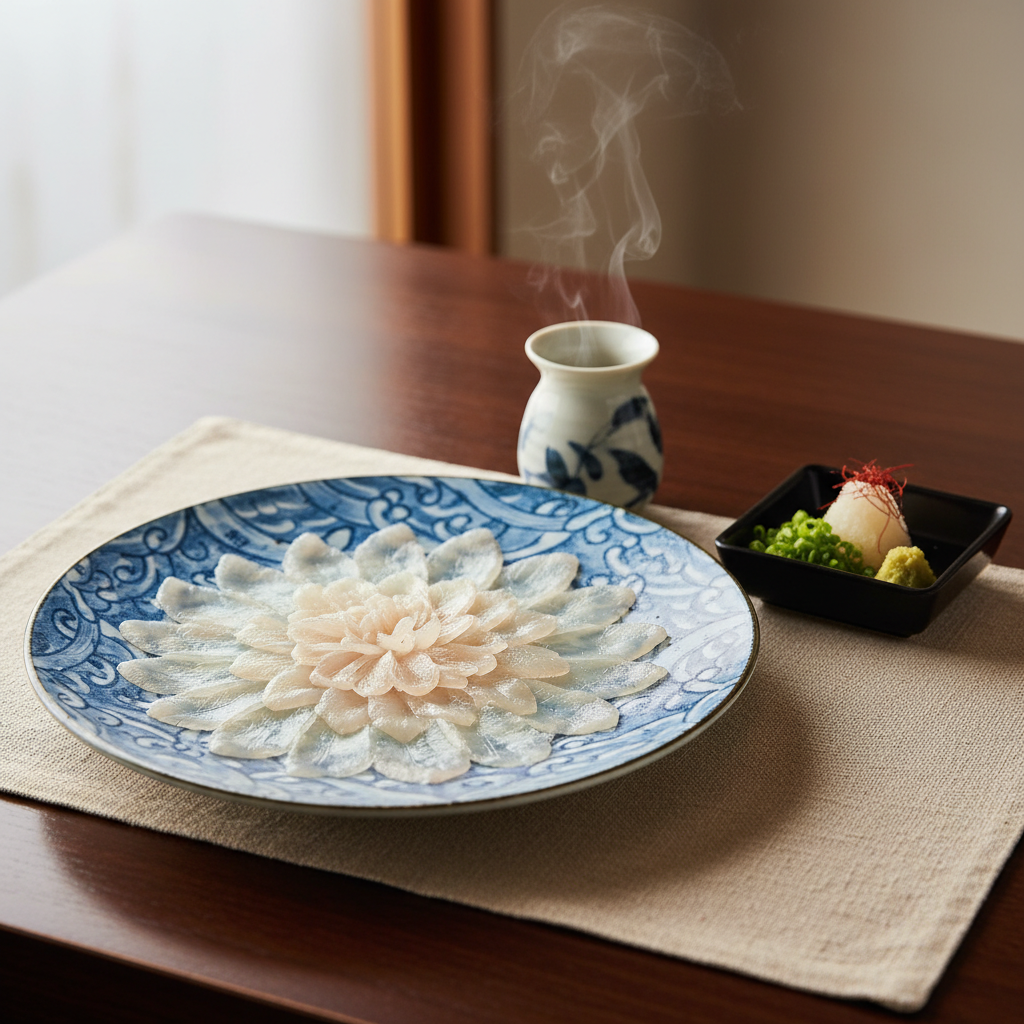
Fugu sashimi is a representative local dish of the Shimonoseki area in Yamaguchi Prefecture and is also known nationwide by the affectionate nickname “tessa.” It is a sashimi dish made from fugu (blowfish) sliced extremely thin and beautifully arranged on a plate so transparent that the pattern of the plate shows through.
Yamaguchi Prefecture, particularly Shimonoseki City, is known as “the home of fugu,” and it is said that approximately 80% of tiger pufferfish that circulate domestically in Japan pass through the Haedomari Market in Shimonoseki. In this region, fugu is called “fuku” (fortune), and it is cherished as a lucky charm.
Fugu sashimi is not merely a sashimi dish but rather a work of art that concentrates the techniques of skilled craftspeople, the region’s history, and its culture. Its delicate flavor and beautiful presentation continue to fascinate food lovers both domestically and internationally.
The Deep Historical Relationship Between Yamaguchi Prefecture and Fugu
Fugu Food Culture Continuing from Ancient Times
The history of fugu consumption in Yamaguchi Prefecture is ancient, with fugu bones discovered in shell mounds from the Jomon period, showing that fugu has been eaten in this region since long ago. However, because fugu contains deadly poison, food prohibition edicts were issued multiple times throughout history.
Particularly during Toyotomi Hideyoshi’s Korean campaign (Bunroku and Keicho Wars), soldiers gathered in Shimonoseki who ate fugu and suffered poisoning deaths in succession, leading Hideyoshi to issue strict fugu consumption bans. This prohibition continued through the Edo period and was strictly enforced, especially among the samurai class.
Deregulation in the Meiji Period and the Development of Shimonoseki
The turning point came in the Meiji period. In 1888 (Meiji 21), when Prime Minister Ito Hirobumi visited the restaurant “Shunpanro” in Shimonoseki, fish could not be caught due to bad weather, so the proprietess, with resolve, served fugu dishes, which Ito Hirobumi greatly enjoyed.
Following this incident, through the efforts of Ito Hirobumi, Yamaguchi Prefecture legalized fugu consumption ahead of the rest of the nation. Shunpanro remains in operation today as the first restaurant in Japan to receive a business license for fugu cuisine.
With this deregulation, Shimonoseki developed as the center of fugu cuisine, and fugu sashimi techniques advanced dramatically. Artisans competed to refine their techniques for slicing thinly and beautifully, and the artistic form of modern tessa was established.
The Origin of the Name “Fuku”
In Yamaguchi Prefecture, particularly Shimonoseki, fugu is called “fuku.” This has become established as an auspicious way of speaking, as it echoes the word “福” (fortune). The word “fugu” has connotations of “fugu” being unfortunate, so it became customary to call it “fuku” (fortune) for good luck.
This way of speaking has become part of the region’s identity, and in Shimonoseki, expressions like “fuku cuisine” and “fuku sashimi” remain common today.
Characteristics and Preparation of Fugu Sashimi (Tessa)
The Art of Paper-Thin Slicing
The greatest characteristic of fugu sashimi is its thinness. Skilled artisans slice fugu flesh to less than 1mm, and sometimes to approximately 0.5mm thickness. This thinness is indispensable for bringing out the unique texture and umami that fugu flesh possesses to their fullest.
By slicing thin, the unique crispy texture of fugu is softened to an appropriate degree, and as you chew, sweetness and umami spread throughout your mouth. Moreover, because it is thin, multiple pieces can be layered together when eating, allowing you to enjoy a unique textured layer.
Specialized Knife “Fugu Deba”
Preparing fugu sashimi requires a specialized knife called a “fugu deba” or “tessa knife.” This knife has a thin, long, sharp blade and a special shape different from a typical sashimi knife.
Artisans use this knife with a technique called “drawing cut” to slice fugu flesh. By pulling the knife forward while cutting, they prevent the flesh fibers from being crushed and achieve a beautiful cut. Mastering this technique requires many years of training.
Beautiful Presentation
Fugu sashimi is also known for the beauty of its presentation. The thinly sliced fugu flesh is arranged on a large plate in radiating or chrysanthemum-like patterns. The translucent white flesh overlaps, and the plate pattern shows through, making it truly a work of art.
Traditional presentations include various styles such as “chrysanthemum arrangement,” “peony arrangement,” and “crane arrangement.” Especially at high-end restaurants, the arrangement changes according to the season and purpose, providing visual enjoyment as well.
How to Eat Fugu Sashimi and Dining Etiquette
Basic Eating Method
When eating fugu sashimi, special ponzu sauce and condiments are used. Common condiments include momiji oroshi (grated daikon radish mixed with red chili pepper), chopped green onion, and citrus fruits such as sudachi or kabosu.
The basic eating method is as follows:
- Pour a small amount of ponzu into a small dish
- Add appropriate amounts of momiji oroshi and chopped green onion
- Take 2-3 pieces of fugu sashimi and lightly dip in sauce
- Put in your mouth and chew slowly
Because fugu sashimi is thin, it is common to eat multiple pieces layered together. This provides an appropriate texture and depth of flavor.
Local Way of Enjoying It
In Yamaguchi Prefecture locally, there are unique ways to further enjoy fugu sashimi.
“Maki” of Fugu Sashimi: A method of taking several pieces of fugu sashimi, rolling them with momiji oroshi and green onion, and eating them. The aroma of the condiments and the umami of the fugu become one, providing a rich flavor.
How to Use Citrus: Squeezing sudachi or kabosu adds freshness to the acidity of the ponzu. Using Yamaguchi Prefecture citrus allows you to enjoy more of the local flavor.
Pairing with Japanese Sake: Yamaguchi Prefecture is also home to excellent Japanese sake such as “Dassai” and “Toyo Bijin.” Combining fugu sashimi with local sake allows you to fully savor the taste of the region.
Order of Meals
In a full-course fugu meal, fugu sashimi (tessa) is typically served relatively early, after appetizers. This is to enjoy the delicate flavor of fugu while the palate is not yet tired.
Following that, fugu hotpot (nabé), fried pieces, and rice porridge typically come next. This order allows you to progressively enjoy various cooking methods and flavors of fugu.
Types of Fugu and Peak Season
Tiger Pufferfish – Premium Grade
The premium variety used for fugu sashimi is the “tiger pufferfish.” It gets its name from the tiger-like stripe pattern on its body. The flesh is firm, has strong umami, and is considered the king of fugu cuisine.
Tiger pufferfish caught near Yamaguchi Prefecture, especially in the waters around Shimonoseki, are known to be of particularly high quality. Tiger pufferfish raised in the cold seas during winter have firm flesh and plenty of fat, resulting in the finest flavor.
Other Fugu Species
Besides tiger pufferfish, various species are used for fugu sashimi:
- Mafugu: A high-grade variety second only to tiger pufferfish. The flavor is delicate and elegant
- Shiro Sabafugu: Relatively affordable, with a plain flavor
- Karasusfugu: Small in size but with deep, rich umami
High-end restaurants primarily use tiger pufferfish, but some establishments use multiple species in different ways.
Peak Season
The peak season for fugu is said to be “from autumn equinox to spring equinox,” with October through March being the busiest period. During this time, fugu have not yet spawned, their flesh is plump, and they are at their most delicious with fat content.
The period from December to February, the height of winter, is considered the best, treasured as “winter fugu.” Fugu sashimi during this time reaches peak levels of flesh firmness, umami, and sweetness.
In Yamaguchi Prefecture, February 9 is designated as “Fugu Day” (fuku=2-9), and many fugu cuisine events and campaigns are held during this period.
Shimonoseki’s Fugu Culture and Market
Haedomari Market – Japan’s Largest Fugu Market
The Haedomari Market in Shimonoseki City is Japan’s largest and one of the world’s largest fugu specialty markets. Fugu gathered from throughout the nation are auctioned here and shipped to restaurants and markets throughout the country.
Every morning at the market, auctions are held with the eyes of experienced professionals. Assessing fugu quality, size, place of origin, and more instantly, trading at appropriate prices—this is truly the world of professionals.
Viewing by tourists is possible during certain periods, allowing visitors to experience the center of fugu culture.
The Fugu Handler Licensing System
Because fugu contains deadly tetrodotoxin poison, preparing it improperly can be fatal. Therefore, in Japan, preparing fugu requires a “fugu handler” license recognized by prefectural governors.
The fugu handler license in Yamaguchi Prefecture is particularly strict, requiring passing both written and practical examinations. In practical exams, distinguishing fugu species, properly removing poisonous parts, and cutting sashimi are strictly checked.
This licensing system ensures that safe, high-quality fugu cuisine is provided, keeping food poisoning accidents nearly zero.
Shimonoseki Fugu Culture Facilities
Shimonoseki has several facilities where you can learn about fugu culture:
Karato Market: A market that general consumers can use, where you can purchase fresh fugu and other seafood. On weekends, an event called “Ikikiki Bakan-gai” is held, where you can enjoy fugu sushi at reasonable prices.
Kaio-kan (Shimonoseki City Aquarium): Features the world’s first exhibition corner specializing in fugu, where you can see over 100 species of fugu. An educational facility where you can learn about fugu ecology and history.
Camon Wharf: A complex commercial facility along Shimonoseki’s waterfront where many fugu restaurants line the streets. A popular spot with tourists.
Nutritional Value and Health Benefits of Fugu Sashimi
High Protein, Low Calorie
Fugu flesh has an excellent nutritional balance. It is characterized by high protein while being low in fat and low in calories, gaining attention as a healthy food ingredient.
Nutritional value per 100g (tiger pufferfish):
- Calories: Approximately 84kcal
- Protein: Approximately 19.3g
- Fat: Approximately 0.3g
- Carbohydrates: 0g
These figures indicate that fugu is a protein source comparable to chicken breast.
Rich in Amino Acids
Fugu flesh contains essential amino acids in well-balanced proportions. Particularly abundant are amino acids that create umami, such as glycine, alanine, and glutamic acid, producing the unique sweetness and umami of fugu.
Additionally, fugu is rich in taurine, which is expected to improve liver function, aid recovery from fatigue, and normalize blood pressure.
Vitamins and Minerals
Fugu contains abundant B vitamins, particularly niacin. Niacin plays an important role in maintaining the health of skin and mucous membranes and in energy metabolism.
For minerals, potassium, phosphorus, selenium, and others are included, supporting various body functions.
Collagen
Fugu skin is rich in high-quality collagen. While fugu sashimi mainly features the flesh, fugu cuisine full courses also serve blanched fugu skin called “fugu skin,” providing expected beauty benefits.
Renowned Fugu Sashimi Restaurants in Yamaguchi Prefecture
Shunpanro
A historic restaurant that was the first to receive a business license for fugu cuisine in Japan. Since its founding in 1888, it has continued to serve traditional fugu cuisine. As the restaurant associated with Ito Hirobumi, it holds high historical value, and you can enjoy a complete fugu course in a formal atmosphere.
The location overlooking the Kanmon Strait is also appealing, making it ideal for dining on special occasions.
Fuku Cuisine Tanaka
A long-established local favorite in Shimonoseki. While the prices are relatively reasonable, high-quality fugu cuisine is served. At the counter seating, you can watch artisans prepare fugu in front of you, providing a sense of immediacy.
Unzen
A popular restaurant near Karato Market, specializing in cuisine made with fresh fugu. The presentation of fugu sashimi is particularly beautiful and is said to be Instagram-worthy. During lunch hours, you can enjoy fugu cuisine at relatively reasonable prices.
Kappo Tenjiiro
A hidden gem frequented by local food connoisseurs. They procure the finest fugu seasonally and prepare it using traditional techniques. Operating by reservation only and limiting the number of guests per day allows for a relaxed dining atmosphere.
How Tourists Should Choose
While Shimonoseki has many fugu restaurants, points to consider when choosing are:
- Fugu Handler License: Always choose a restaurant with licensed practitioners (most restaurants make this explicit)
- Reputation and Reviews: Refer to evaluations by locals and trustworthy review sites
- Budget: Fugu cuisine is expensive, but lunch or individual dishes are relatively affordable
- Reservations: Especially on winter weekends, restaurants fill up, so advance reservations are essential
How to Enjoy Fugu Sashimi at Home
Purchasing by Mail Order
In recent years, it has become possible to purchase fugu sashimi through internet mail order. Many specialty shops in Shimonoseki, Yamaguchi Prefecture, offer nationwide shipping.
Points to note when purchasing by mail order:
- Choose Trustworthy Retailers: Select shops with fugu handlers and a track record
- Shipping Method: Confirm that the product arrives in fresh condition via refrigerated or frozen delivery
- Expiration Date: It is recommended to eat immediately upon arrival
- Defrosting Method: If frozen, follow the shop’s defrosting instructions
Plating at Home
Fugu sashimi purchased by mail order typically arrives already sliced thin. At home, arrange it as follows:
- Prepare a large flat plate (preferably one with a pattern)
- Arrange fugu sashimi gradually overlapping in a radiating or circular pattern
- Add condiments (momiji oroshi, chopped green onion) in the center
- Add sliced sudachi or kabosu
Perfect chrysanthemum arrangement is difficult, but careful arrangement alone produces beautiful results.
Preparing Condiments and Sauce
The condiments and sauce essential to fugu sashimi can be easily prepared at home:
Ponzu: While commercial ponzu sauce is fine, you can also make your own by mixing citrus juice and soy sauce. Using Yamaguchi Prefecture sudachi or kabosu brings you closer to the authentic local taste.
Momiji Oroshi: Grate daikon radish, pierce a hole, insert a red chili pepper, and grate them together. Adjust spiciness with the amount of chili pepper.
Chopped Green Onion: Finely chop Japanese bunching onion or the white part of negi onion.
Safety Precautions
When enjoying fugu sashimi at home, always observe the following:
- Never Prepare It Yourself: Always purchase fugu sashimi prepared by a licensed handler
- Purchase from Trustworthy Sources: Use established specialty shops or trustworthy mail order sites
- Eat While Fresh: Consume promptly upon arrival
- Avoid Storage: Basically, eat it all on the day of arrival
The Relationship Between Fugu Sashimi and Other Regional Dishes
Its Position Within Yamaguchi Prefecture’s Food Culture
Yamaguchi Prefecture has many regional dishes besides fugu sashimi. Representative examples include Iwakuni soba on roof tile, Iwakuni sushi, kenchō, and ōhira.
Among these, fugu sashimi is positioned as the most luxurious and special dish. It is not eaten daily but served on special occasions such as celebrations, ceremonial events, and formal entertaining—a “festival day” dish.
Differences from Fugu Cuisine Nationwide
Fugu cuisine is served in regions other than Yamaguchi Prefecture, but Shimonoseki fugu sashimi in particular has unique characteristics:
- Slicing Thinness: Shimonoseki fugu sashimi is said to be sliced thinner than anywhere in Japan
- Beauty of Presentation: The tradition of artistic presentation is preserved
- Commitment to Freshness: Taking advantage of being able to source directly from the market
- Cultural Background: Treasured not merely as cuisine but as an expression of regional identity
Full Fugu Course
Fugu sashimi is typically served as part of a full fugu course. A typical course progression is:
- Fugu Skin Blanched: Collagen-rich skin with ponzu
- Fugu Sashimi (Tessa): The main sashimi
- Fugu Hotpot (Techiri): Fugu stew
- Fried Pieces: Fried fugu bones and flesh
- Rice Porridge: A finishing dish made from the pot broth
- Fugu Fin Sake: Roasted fin placed in Japanese sake, a fragrant drink
Through this progression, you can enjoy every part of fugu and various cooking methods.
The Future and Challenges of Fugu Sashimi
Resource Conservation and Sustainability
In recent years, wild tiger pufferfish catches have been declining, making resource conservation a pressing issue. Overfishing and changes in marine environments are considered the cause, and sustainable fishing is required.
In response, Yamaguchi Prefecture is focusing on improving aquaculture techniques. Currently, much of the tiger pufferfish in circulation is farmed, and technological advances have made it possible to produce fish of quality comparable to wild-caught.
The “Shimonoseki Fuku” brand has also been established, receiving high ratings despite being farm-raised.
Evolution of Aquaculture Techniques
Aquaculture operators in Yamaguchi Prefecture continue researching the production of higher-quality tiger pufferfish. By optimizing feed formulation, rearing environment, and stress reduction, delicious fugu with firm flesh are being farmed.
Fostering Young Artisans
The technique of slicing fugu sashimi beautifully requires long-term training. However, in recent years, fewer young people are pursuing careers as chefs, making the transmission of traditional techniques a challenge.
Yamaguchi Prefecture and Shimonoseki City are implementing fugu cook training programs to foster young talent. Efforts are also being made to promote the appeal of fugu cuisine and increase the number of young people pursuing this path.
Overseas Expansion
Against the backdrop of Japanese cuisine booms globally, interest in fugu cuisine is increasing abroad. However, due to fugu’s toxicity and the difficulty of preparation, overseas expansion requires careful consideration.
In some countries, fugu handlers trained in Japan have opened restaurants overseas. Efforts to promote Yamaguchi Prefecture’s fugu culture to the world will likely continue.
Trivia for Enjoying Fugu Sashimi
The Origin of the Name “Tessa”
The alternate name for fugu sashimi, “tessa,” derives from “teppō” (firearm). Because being poisoned by fugu can be fatal, the danger is compared to being shot by a firearm, leading fugu to be called “teppō.” Thus, fugu sashimi became “tessa” (iron-stabbed).
Similarly, fugu hotpot is called “techiri.”
About Fugu Poison
The fugu poison tetrodotoxin is said to be approximately 1,000 times more toxic than cyanide. It is mainly found in the liver, ovaries, skin, and intestines, with the flesh portion normally containing none.
Properly prepared fugu sashimi is completely safe, but this is only possible thanks to the skills of experienced fugu handlers. It must absolutely never be prepared by amateurs.
Identifying Premium Grade
The finest fugu sashimi has the following characteristics:
- Translucence: Fresh fugu has a transparent white appearance
- Elasticity: Has appropriate elasticity and is firm
- Luster: Natural shine on the surface
- Aroma: Fresh ocean aroma with no off-smells
- Cut Surface: Fibers are aligned and smooth
Taste Variations by Season
Even among the same tiger pufferfish, flavor varies by season:
- Early Winter (October-November): Light, refreshing flavor; flesh begins to firm
- Depth of Winter (December-February): Most fat, sweetness and umami at their peak
- Early Spring (March): Before spawning, with accumulated nutrition and concentrated flavor
Connoisseurs enjoy these seasonal flavor variations.
Conclusion: Fugu Sashimi is a Cultural Heritage Yamaguchi Prefecture Takes Pride In
Fugu sashimi (tessa) is not merely a luxury dish but a regional specialty that concentrates the history, culture, and techniques of Yamaguchi Prefecture, particularly Shimonoseki. For over 130 years since deregulation in the Meiji period, artisans have honed their skills, pursuing ever more beautiful and delicious fugu sashimi.
Flesh sliced paper-thin with translucence, artistic presentation, delicate flavor—all of these make fugu sashimi one of the highest peaks of Japanese cuisine.
When visiting Yamaguchi Prefecture, be sure to taste authentic fugu sashimi. Eating genuine tessa made by skilled artisans at a historic restaurant will become a lifelong memory. Additionally, using mail order allows you to enjoy the authentic taste at home.
Through fugu sashimi, you can touch the rich food culture of Yamaguchi Prefecture and the passion of the people who have supported it. We hope this wonderful regional specialty will continue to be passed down to future generations and loved by many people.