Chicken Nanban is a local cuisine originating from Nobeoka City, Miyazaki Prefecture | Thorough explanation from history and origins to authentic recipes
What is Chicken Nanban (Tori no Nanban)?
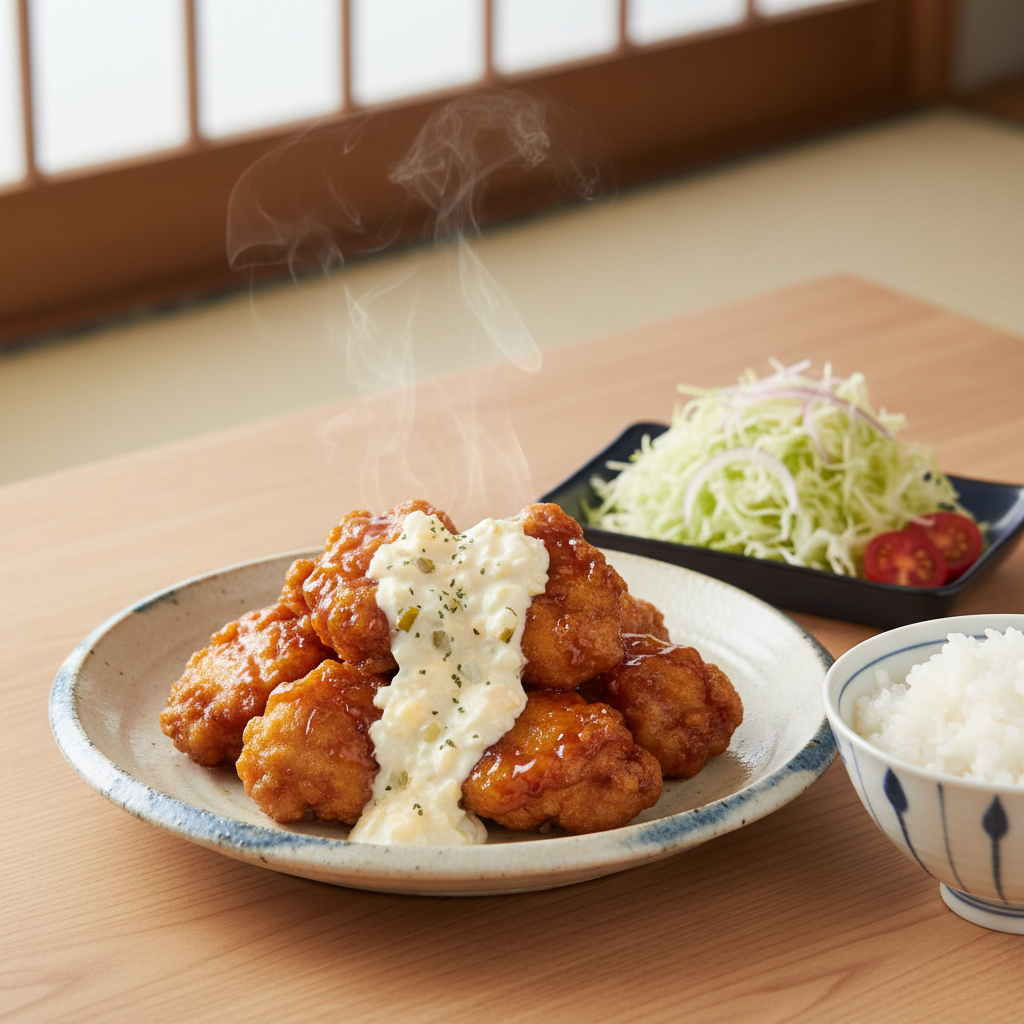
Chicken Nanban is a chicken dish originating from Nobeoka City, Miyazaki Prefecture, made by coating chicken meat in wheat flour and beaten egg, deep-frying it in oil, and then immersing it in sweet vinegar sauce (nanban sweet vinegar sauce). Currently, it is common to serve it with tartar sauce in addition to the sweet vinegar, and it has become a popular menu item enjoyed at restaurants throughout the country.
As a local cuisine representative of Miyazaki Prefecture, it was selected by the Ministry of Agriculture, Forestry and Fisheries in the “One Hundred Local Dishes of Agricultural and Fishing Villages.” In the hometown of Nobeoka City, a civic volunteer promotion group was established in 2009, and July 8 was designated as “Nanban Day,” with various events and information sharing activities being held.
Main Areas of Transmission
While Chicken Nanban originated in Nobeoka City, Miyazaki Prefecture, it has now spread throughout Miyazaki Prefecture and is established as a representative local cuisine of the prefecture. In particular, within Nobeoka City there are multiple restaurants claiming to be the original and established long-established shops, each offering the dish with their own manufacturing methods and commitment to quality.
Many restaurants in Miyazaki City also include Chicken Nanban on their menus, and it has become a specialty dish that tourists visiting Miyazaki must taste. Furthermore, related products for the sauce are sold in large quantities for home use and as souvenirs, spreading throughout the country beyond Miyazaki Prefecture.
Main Ingredients Used
The main ingredients for Chicken Nanban are as follows:
Chicken: Thigh meat or breast meat is used. One of the originating restaurants developed it as a way to make dry-textured chicken breast meat taste juicy.
Breading ingredients: Wheat flour and beaten egg are used, and the chicken is breaded and fried. This method of dipping in egg liquid and frying produces a crispy texture.
Sweet vinegar sauce: The chicken is immersed in a nanban sweet vinegar sauce based on vinegar, sugar, and soy sauce while still hot from frying. This sweet vinegar is also the origin of the dish’s name.
Tartar sauce: A sauce made by mixing mayonnaise as a base with boiled egg, onion, pickles, and other ingredients. However, one of the originating restaurants uses a method without tartar sauce.
History, Origins, and Related Events
Background of Chicken Nanban’s Birth
Chicken Nanban was born in the 1950s (late 1950s) at a Western-style restaurant in Nobeoka City, Miyazaki Prefecture. There are two lineages to its origin, each claiming to be the “original.”
One is the theory that it was conceived as a staff meal at the Western-style restaurant “London” in Nobeoka City. It is said that the origin was fried chicken served as a meal for employees at the time, immersed in sweet vinegar, which later became offered as an official menu item.
The other is the birth theory at “Ogura,” a Western-style restaurant founded in 1956 by the late Yoshimitsu Kai. About three years after its founding, the idea of Chicken Nanban with tartar sauce was created to figure out how to make dry-textured chicken breast meat taste juicy. This “Ogura” style became the prototype for the now-common style of Chicken Nanban topped with tartar sauce.
The Origin of the Name “Nanban”
The name “Nanban” originates from a term meaning people from southern countries such as Portugal and Spain who came to Japan during the Sengoku period, or their culture. In Japanese cuisine, “Nanban-zuke” (nanban pickling) refers to a cooking method where fish or meat is deep-fried and immersed in sweet vinegar, and this method is thought to have been influenced by food culture brought through nanban trade.
Chicken Nanban is an application of this nanban pickling method to chicken, and the name “Nanban” was given because of the cooking method of immersing fried chicken in sweet vinegar sauce. It is a dish that exemplifies the Showa era, representing a fusion of Western food culture with traditional Japanese cooking methods.
July 8 is “Nanban Day”
In Nobeoka City, to pass on Chicken Nanban to future generations as a local treasure, the “Nobeoka-Origin Chicken Nanban Party,” a civic volunteer group, was established in 2009. This organization designated July 8 as “Nanban Day” and conducts various events and information sharing activities centered around this day each year.
On “Nanban Day,” restaurants in Nobeoka City offer special menus, and Chicken Nanban comparison eating events are held, with efforts being made throughout the region to promote Chicken Nanban culture.
Occasions and Seasons for Eating
Chicken Nanban is a local cuisine enjoyed throughout the year without being limited to specific seasons or occasions. It appears on daily dining tables as well as on tables for family gatherings and special days.
At schools throughout Miyazaki Prefecture, it is provided as a standard lunch menu item, making it a familiar taste for children. Additionally, as a local specialty that tourists must eat when visiting Miyazaki, it is enjoyed by many people year-round.
Restaurants typically serve it as a set meal, popular as “Chicken Nanban Set Meal” with rice, miso soup, and pickles. Because it is voluminous and satisfying, it is widely supported as a lunch menu item.
How to Make | Authentic Recipe
Ingredients (Serves 2)
Chicken Preparation
- Chicken thigh or breast meat: 300-400g
- Salt and pepper: A small amount
- Wheat flour: As needed
- Beaten egg: 2 eggs’ worth
- Frying oil: As needed
Nanban Sweet Vinegar Sauce
- Vinegar: 4 tablespoons
- Sugar: 3 tablespoons
- Soy sauce: 2 tablespoons
- Mirin: 1 tablespoon
- Water: 2 tablespoons
- Red chili pepper (sliced into rings): A small amount (to taste)
Tartar Sauce
- Mayonnaise: 5 tablespoons
- Boiled egg: 2 (finely chopped)
- Onion: 1/4 (minced)
- Pickles: 2 (minced)
- Parsley: A small amount (minced)
- Salt and pepper: A small amount
- Lemon juice: 1 teaspoon
Cooking Steps
1. Prepare the Tartar Sauce
First, make the tartar sauce. Mince the onion, soak it in water to remove the sharp taste, then drain thoroughly. Finely chop the boiled egg, and also mince the pickles and parsley.
Put mayonnaise in a bowl, add all the prepared ingredients, and mix well. Season with salt, pepper, and lemon juice, then refrigerate. Tartar sauce tastes better if left for a while after preparation, as the flavors blend together.
2. How to Make the Nanban Sweet Vinegar Sauce
Put vinegar, sugar, soy sauce, mirin, and water in a small pot and heat over medium heat until the sugar completely dissolves. Add red chili pepper to taste if desired for a spicy accent. Turn off the heat, let cool slightly, and transfer to a shallow container such as a baking tray.
3. Chicken Preparation and Frying Method
Cut the chicken into bite-sized pieces and season with salt and pepper. Coat lightly with wheat flour, brushing off any excess. Prepare beaten egg and dip the flour-coated chicken into the egg liquid.
Heat the frying oil to 170-180°C, add the chicken, and fry. Fry for about 5-7 minutes until the surface is golden brown and the inside is thoroughly cooked. The chicken is done when the breading is crispy and feels light when lifted with chopsticks.
4. Immerse in Sweet Vinegar
Immediately immerse the piping hot fried chicken in the nanban sweet vinegar sauce. By immersing the hot chicken, the sweet vinegar soaks in well. Gently stir while immersing for about 2-3 minutes so the sauce coats everything evenly.
5. Plating
Plate the chicken and generously top with tartar sauce. Adding shredded cabbage or lettuce as a side improves the color and nutrition balance.
Tips for Delicious Preparation
Choosing the chicken: Thigh meat results in a juicy dish, while breast meat results in a healthier version. Although one of the originating restaurants uses breast meat, thigh meat is less prone to failure at home and yields a more tender result.
Frying tips: The chicken should be brought to room temperature before frying so the inside cooks evenly. Avoid adding too much at once as this lowers the oil temperature; fry in several batches instead.
Sweet vinegar immersion: If the chicken is immersed too long, the breading becomes soggy, so aim for about 2-3 minutes. If you want to keep a crispy texture, simply pour the sauce on top.
Tartar sauce variations: In addition to the basic recipe, adding capers or anchovies creates a more authentic flavor. Adding a small amount of yogurt will also give a lighter taste.
Dining Method
Chicken Nanban is best eaten while still warm. The crispy texture of freshly fried chicken, the juicy flavor soaked in sweet vinegar, and the mellow tartar sauce combine in perfect harmony.
When served as a set meal, it pairs excellently with white rice. The tartness of the sweet vinegar and the richness of the tartar sauce make people want to keep eating rice. Adding fresh vegetables such as shredded cabbage or lettuce provides a refreshing taste and better nutritional balance.
Because it remains delicious even when cooled, it is also popular as a lunch box item. In that case, it’s best to carry the tartar sauce in a separate container and add it just before eating for maximum deliciousness.
Nutrition and Health
Since Chicken Nanban primarily uses chicken as its main ingredient, it is rich in high-quality protein. Protein is an essential nutrient needed by all generations, from growing children to the elderly, as it builds muscles, bones, and blood.
Chicken also contains abundant B vitamins, with vitamin B6 in particular being involved in maintaining immune function and energy metabolism. Additionally, chicken breast contains imidazole dipeptide, which is said to have fatigue recovery effects and has attracted health attention.
Eggs used in tartar sauce contain vitamins A and D and iron, which enhance nutritional value. However, since it is a fried dish, oil intake is higher, and calories are elevated due to the sweet vinegar and tartar sauce, so caution is advised.
For health-conscious choices, it’s good to use chicken breast, carefully control the frying oil temperature to prevent excess oil absorption, and add more vegetables as garnish.
Preservation and Inheritance Efforts
Heritage Activities in the Community
In Nobeoka City, various initiatives are being undertaken to pass on Chicken Nanban to future generations as a source of community pride. The “Nobeoka-Origin Chicken Nanban Party,” established in 2009, is a civic organization aimed at promoting and sharing information about Chicken Nanban, holding events throughout the year centered on July 8, “Nanban Day.”
In local schools, classes teaching the history and preparation of Chicken Nanban are held as part of food education, providing opportunities for children to deepen their understanding of local cuisine. It also regularly appears in school lunches, playing a role in passing local flavors to the next generation.
Commercialization and Modern Initiatives
Chicken Nanban is being actively commercialized, with numerous related products such as nanban sweet vinegar sauce and tartar sauce being sold. These products are popular not only for home use but also as souvenirs, as they allow easy reproduction of authentic flavors at home.
In recent years, information sharing via social media has become active. Restaurants in Nobeoka and Miyazaki cities introduce their Chicken Nanban on Instagram and Twitter to attract tourists. Through hashtags such as “#ChickenNanban” and “#MiyazakiGourmet,” enthusiasts nationwide share its appeal.
It has also been commercialized as retort food and frozen products, now available at supermarkets nationwide. This allows people outside Miyazaki Prefecture to enjoy the taste of Chicken Nanban, contributing to increased recognition as a local cuisine.
Use as a Tourism Resource
For tourists visiting Miyazaki Prefecture, Chicken Nanban is one of the must-eat local delicacies. Tourism associations in Miyazaki and Nobeoka cities have created “Chicken Nanban Maps” and propose gourmet tours visiting famous restaurants, advancing its use as a tourism resource.
Restaurants claiming to be the original and long-established shops continue to operate while preserving their respective methods and commitments, with many tourists visiting for comparison eating. Differences such as the presence or absence of tartar sauce, the ratio of sweet vinegar, and the cut of chicken create diversity in Chicken Nanban culture, with each restaurant having its own personality.
Nationwide Spread and Regional Characteristics
While Chicken Nanban is a local cuisine originating from Miyazaki Prefecture, it has become a popular menu item served at cafes, izakayas, and set meal restaurants throughout the country. This is because it uses accessible ingredients like chicken and features flavors with sweet vinegar and tartar sauce that appeal to a wide audience.
However, as it spread nationwide, variations different from the original Miyazaki version have emerged. For example, some restaurants serve “Chicken Nanban” without sweet vinegar, using only tartar sauce, or simply adding tartar sauce to fried chicken.
The characteristic of authentic Miyazaki Chicken Nanban is that it is always immersed in sweet vinegar sauce. This sweet vinegar is the origin of the name “Nanban” and the core of the dish. While the presence of tartar sauce varies by restaurant, the method of immersing in sweet vinegar is the identity of this local cuisine of Miyazaki.
Famous Restaurants Serving Chicken Nanban
Miyazaki Prefecture, particularly Nobeoka City where it originated, has many renowned Chicken Nanban restaurants. “Naokachan” and “Ogura” are famous as originals, each offering different styles of Chicken Nanban.
“Naokachan” is characterized by a simple style using only sweet vinegar without tartar sauce. It offers crispy breading dipped in egg liquid and fried, with gentle, delicate flavors of sweet vinegar. This popular restaurant is crowded from opening time on weekdays.
“Ogura” is a long-established Western-style restaurant founded in 1956, known for establishing the style of Chicken Nanban topped with tartar sauce. The recipe created by founder Yoshimitsu Kai is still carried on by many restaurants and has multiple branches in Miyazaki City.
There are also numerous other restaurants in Miyazaki and Nobeoka cities offering distinctive Chicken Nanban, bustling with locals and tourists alike. Each restaurant maintains its own manufacturing methods and commitments, and enjoying comparison eating is the essence of Miyazaki gourmet cuisine.
Summary
Chicken Nanban is a local cuisine born in Nobeoka City, Miyazaki Prefecture in the 1950s and has become a popular menu item loved throughout the country. The basic preparation method involves coating chicken in wheat flour and beaten egg, deep-frying it, and immersing it in nanban sweet vinegar sauce, with the common style adding tartar sauce on top, though one of the originals uses a simpler style without tartar sauce.
The name “Nanban” derives from nanban culture in the Sengoku period and was given because the cooking method of applying nanban pickling technique to chicken and immersing it in sweet vinegar sauce. Nobeoka City designated July 8 as “Nanban Day” and is working community-wide to preserve and promote Chicken Nanban culture.
It can be made relatively easily at home with readily available ingredients. The excellent harmony of high-quality protein from chicken, the tartness of sweet vinegar, and the richness of tartar sauce makes it beloved by people of all ages from children to adults.
When visiting Miyazaki Prefecture, be sure to taste authentic Chicken Nanban. By enjoying comparison eating at the original and long-established restaurants, you can appreciate the depth and diversity as a local cuisine. When making it at home, you might try recreating Miyazaki flavors using the recipe introduced in this article.