What is Obi-ten? A Thorough Explanation of Miyazaki Prefecture’s Exquisite Local Cuisine
“Obi-ten” is one of Miyazaki Prefecture’s representative local dishes, a traditional fish paste dish that has been cherished for a long time in the Obi district of Nichinan City. With its unique manufacturing method and taste that differs from ordinary tempura, it has gained high popularity not only among local residents but also among tourists.
This article provides a detailed explanation of everything about obi-ten, from its historical background and characteristics to how to make it at home and must-visit restaurants in Nichinan City.
Basic Information About Obi-ten
What is Obi-ten?
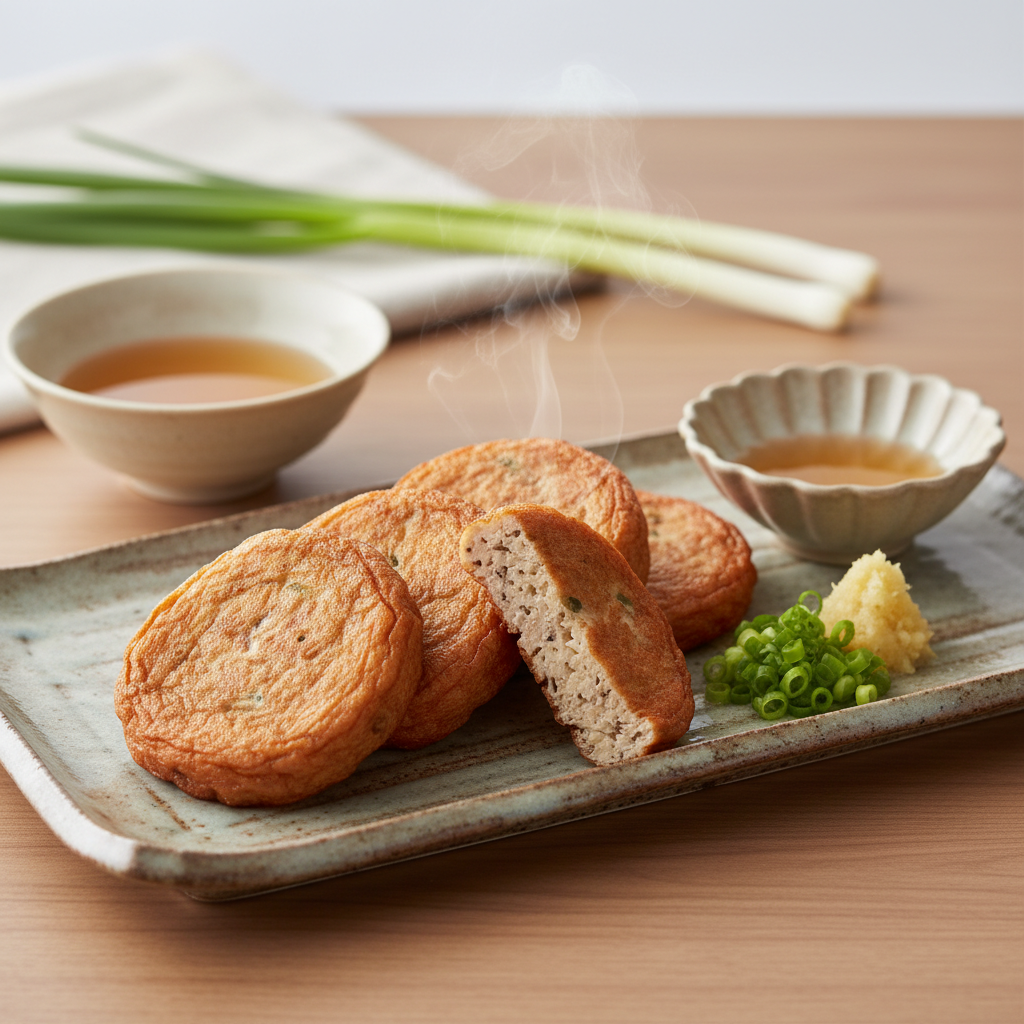
Obi-ten is a local dish that originated in the Obi district of Nichinan City in Miyazaki Prefecture, made by mixing fish paste with tofu and frying it in oil. Although it has the name “tempura,” it is completely different from ordinary tempura, which is made by coating ingredients in batter and frying them.
The unique manufacturing method involves mixing fish paste with tofu, brown sugar, miso, and other ingredients and kneading them, then frying this mixture directly in oil. The result has a crispy exterior and a fluffy interior, with a delicate sweetness and the umami of fish blending together perfectly.
The Origin of the Name “Obi-ten”
The “Obi” in obi-ten comes from the Obi district in Nichinan City, where it originated. Obi was a flourishing castle town of the Obi Domain during the Edo period and is currently known as a tourist destination with historical structures such as samurai residences and castle ruins still remaining.
“Ten” is an abbreviation for tempura, but as mentioned earlier, the cooking method differs from ordinary tempura. In the local area, it is often simply called “tempura,” and the term “obi-ten” became widespread to distinguish it from tempura in other regions.
History and Cultural Background of Obi-ten
A Tradition Dating Back to the Obi Domain Period
The origins of obi-ten trace back to the Edo period Obi Domain. Obi was a castle town facing the sea, where fresh fish was abundantly available. At the same time, there was a need to find ways to eat fish—a valuable source of protein for the samurai and townspeople—deliciously and without waste.
At that time, fish paste dishes were valued as a cooking method to improve shelf life and make fish with many bones easier to eat. In the Obi district, local people created a highly nutritious dish by adding tofu to the paste of small fish caught locally, which increased the quantity while maintaining nutritional value.
Local Wisdom Creating a Regional Taste
The idea of mixing tofu into fish paste came from the common sense of ordinary people trying to make maximum use of limited ingredients. By adding tofu to what would otherwise be expensive fish paste alone, they increased the quantity while creating a fluffy texture.
The seasoning of adding brown sugar and miso reflects the characteristics of food culture in southern Miyazaki Prefecture. The slightly sweet seasoning also has the effect of improving shelf life, and the dish tastes delicious even when cold.
A Tradition Passed Down to Modern Times
From the Meiji period onward, obi-ten was passed down as a home-cooked dish in the Obi district. Each household had slightly different recipes, with individuality expressed in the type of fish used, the ratio of tofu, and the combination of seasonings.
From the Showa to Heisei periods, obi-ten gained attention as a local specialty along with tourism promotion in Nichinan City, and today it has become a standard gourmet item for tourists visiting the Obi castle town. Many shops in the local shopping arcade allow tourists to eat fresh fried obi-ten while walking around, making it one of the pleasures of tourism.
Characteristics and Appeal of Obi-ten
Unique Texture and Flavor
The most distinctive characteristic of obi-ten is its unique texture. While the outside is crispy and fragrant when fried, the inside is soft and fluffy, with the smoothness of tofu and the chewy texture of fish paste blending together exquisitely.
The flavor is characterized by the umami of fish as a base, with the faint sweetness of brown sugar and the richness of miso added on top. This sweet and salty seasoning can be enjoyed not only as a side dish with rice but also as a snack or appetizer.
Excellent Nutritional Balance
Obi-ten is a nutritionally well-balanced dish that allows you to consume both the protein in fish and the plant-based protein in tofu at the same time. In addition to high-quality protein, fish contains abundant unsaturated fatty acids such as DHA and EPA.
Tofu is low in calories while containing nutrients such as calcium, iron, and isoflavones. By combining these, it becomes a healthy and nutritious dish.
Practicality of Being Delicious Even When Cold
Obi-ten is delicious when freshly fried, but also retains its taste when cold, which is a distinctive characteristic. This is thanks to robust seasoning and the moist texture created by the addition of tofu.
For these reasons, it has been valued as a side dish in lunch boxes or as prepared food that can be made in advance, and has been cherished in local homes for a long time. Even today, it is regularly sold in local supermarkets and prepared food shops.
How to Make Obi-ten
Basic Ingredients
The basic ingredients for making obi-ten at home are as follows (for about 10 pieces):
- Fish paste: 300g (flying fish, horse mackerel, mackerel, etc.)
- Firm tofu: 150g
- Brown sugar: 2 tablespoons
- Miso: 1 tablespoon
- Egg: 1
- Grated ginger: 1 teaspoon
- Potato starch: 2 tablespoons
- Salt: a pinch
- Oil for frying: as needed
You can use commercially available fish paste or make your own from fresh fish if available. Traditionally, flying fish (ago) is used, but horse mackerel, mackerel, sardines, and other locally caught fish are also used.
Detailed Instructions
1. Draining the tofu
Firmly drain the firm tofu. Wrap it in paper towels, place a weight on it, and let it sit for about 30 minutes, or heat it in the microwave for 2-3 minutes and squeeze out the moisture. If there is too much moisture, the oil will splatter when frying and the texture will be poor, so it is important to drain it thoroughly.
2. Mixing fish paste and tofu
Place the fish paste and drained tofu in a bowl and mix well, crushing the tofu with your hands as you go. Work it together until there are no lumps of tofu and it is completely combined with the paste. Doing this step carefully creates a smooth texture.
3. Adding seasonings
Add brown sugar, miso, egg, grated ginger, potato starch, and salt, and knead the mixture further. If brown sugar is difficult to dissolve, dissolve it in a small amount of water first, then add it. Mix thoroughly until everything is uniform.
4. Shaping
Wet your hands with water and shape the mixture into small oval patties about the size of your palm. The thickness should be about 1.5cm. If it’s too thick, the inside will be difficult to cook through; if too thin, the texture will be compromised.
5. Frying
Fry in oil heated to 170-180 degrees until both sides turn golden brown. The trick is to first fry over medium heat to cook the inside thoroughly, then finish with high heat to crisp the surface. Don’t add too many pieces at once, as this will lower the oil temperature; fry in small batches.
6. Draining oil
Once fried, drain the oil well and arrange on a baking sheet to remove excess oil. Placing them on paper towels will make them even crispier.
Tips for Making It Delicious
Freshness of the fish paste is crucial
The most important factor determining the taste of obi-ten is the freshness of the fish paste. If possible, making your own paste from fresh fish will make a significant difference in taste. When using store-bought paste, try to select the freshest available.
Ratio of tofu to fish
In traditional recipes, the ratio of fish paste to tofu is approximately 2:1. Increasing the tofu adds more fluffiness and is more economical, but the fish flavor becomes milder. Adjust according to your preference.
Using brown sugar
Brown sugar creates a unique richness and flavor. While white sugar can be substituted, brown sugar is recommended for an authentic obi-ten taste. Cane sugar or muscovado sugar can also be used.
Oil temperature control
If the oil is too cool, the result will be oily; if too hot, the surface will burn while the inside remains undercooked. The right temperature is when thin bubbles form around a chopstick (170-180 degrees). A thermometer, if available, makes this precise.
Obi-ten Arrangement Recipes
Obi-ten with Vegetables
Adding finely chopped vegetables to basic obi-ten is also popular. Adding carrot, burdock, onion, green onion, and other vegetables provides textural contrast and increased nutrition.
Vegetables release moisture easily, so it’s good to lightly stir-fry them beforehand to remove moisture before mixing. The result is also more colorful and visually appealing.
Cheese-filled Obi-ten
As a modern arrangement, obi-ten with processed cheese or mozzarella cheese inside is becoming popular. Shape the fish paste and tofu mixture to encase the cheese, then fry.
Eaten piping hot, the cheese melts from the inside, creating a flavor that appeals to everyone from children to adults. It’s also popular as an addition to lunch boxes.
Curry-flavored Obi-ten
Adding curry powder to the mixture is also delicious. Adding 1-2 teaspoons of curry powder adds a spicy flavor that makes it perfect as a beer appetizer.
When making a curry version, reduce the amount of brown sugar slightly for better balance.
Obi-ten Burger
Some shops in Nichinan City sell “obi-ten burgers,” which feature obi-ten sandwiched in buns. Simply place freshly fried obi-ten with shredded cabbage and tartar sauce in a bun for a simple dish that offers a new fusion of Japanese and Western flavors.
It’s easy to make at home too and is recommended for lunch or snacks.
How to Eat and Enjoy Obi-ten
Eating it plain
The simplest way, and one that best showcases obi-ten’s original flavor, is to eat it plain. Biting into piping hot, freshly fried obi-ten, you get the crispy exterior and fluffy interior, and the umami of fish and tofu spreads throughout your mouth.
Locally, the standard style is to buy fresh obi-ten at shops in the shopping arcade and eat it while walking around sightseeing.
Varying the taste with condiments and seasonings
While obi-ten is delicious enough on its own, adding the following condiments and seasonings expands the range of flavors:
- Grated daikon radish + ponzu sauce: A refreshing way to eat it that doesn’t make it feel oily
- Ginger soy sauce: Ginger flavor eliminates any fishy smell and makes it even more delicious
- Mayonnaise: Popular with children
- Shichimi togarashi (seven-spice chili pepper): The spicy kick adds an accent
- Tartar sauce: Offers a Western-style flavor
As a side dish with rice
Obi-ten also works excellently as a side dish with rice. The sweet and salty seasoning pairs well with rice, and even a simple meal with obi-ten as the only side dish becomes satisfying.
When included in lunch boxes, obi-ten’s quality of tasting good even when cold shines through. The convenience of making it the day before and just packing it in the morning is also appealing.
As an appetizer for alcohol
Obi-ten is perfect as an appetizer for beer, shochu, and other alcoholic beverages. The pairing with Miyazaki shochu is especially excellent, and locally it is cherished as a companion to evening drinks.
Reheating leftover cold obi-ten lightly in a toaster oven restores its crispiness and makes it even more delicious.
Must-Visit Restaurants Serving Obi-ten in Nichinan City
Long-established shops in the Obi castle town
In Nichinan City’s Obi castle town, there are several long-established restaurants serving obi-ten. Part of the fun of exploring the castle town is trying and comparing obi-ten from different shops.
Many shops serve freshly fried obi-ten on the spot, allowing tourists to enjoy it hot while walking around. The type of fish and seasoning vary slightly from shop to shop, so there’s pleasure in finding your personal favorite flavor.
Specialty shops for “Obi-ten”
There are several specialty shops dedicated to obi-ten (also called “Obi-ten” locally) in the Obi castle town shopping arcade. In addition to traditional obi-ten, these shops offer various variations such as shrimp, squid, and vegetable versions.
Vacuum-sealed products are also sold, making it possible to take them home as souvenirs. They can be stored at room temperature for several days and taste delicious when reheated in a toaster or frying pan at home.
Local supermarkets and prepared food shops
Obi-ten is also sold regularly in supermarkets and prepared food shops throughout Nichinan City. Unlike tourist-oriented shops, you can find the homestyle obi-ten that local residents eat daily.
Prices are often more reasonable than at tourist area shops, allowing you to experience local food culture more intimately.
Roadside stations and souvenir shops
You can also purchase obi-ten at roadside stations and prefectural souvenir shops around Nichinan City. In particular, shops like “Michi-no-Eki Phoenix” and “Michi-no-Eki Nangou” sell obi-ten made locally, making it easy to stop by during a drive.
How to Bring Obi-ten Home as a Souvenir
Selecting vacuum-sealed products
For bringing obi-ten home as a souvenir, vacuum-sealed products are convenient. They can be stored at room temperature for several days, so it’s safe to purchase them on the last day of your trip.
When purchasing, check the expiration date and try to select products with recent manufacturing dates. Also check the storage method (room temperature, refrigerated, or frozen).
Using frozen obi-ten
Some shops also sell frozen obi-ten. Since frozen products have a longer shelf life, they’re suitable for souvenirs going to distant locations or for large purchases.
After thawing, reheating in an oven toaster or frying pan gives a texture close to freshly fried. When using a microwave, heat for a short time while checking progress.
Purchasing via mail order
Recently, it has become possible to purchase obi-ten through internet mail order. It’s sold through online shops run by Nichinan City restaurants and through mail-order sites dealing in Miyazaki specialties.
Using mail order allows you to enjoy authentic obi-ten without visiting Nichinan City. However, consider shipping costs and the time needed for delivery.
Obi-ten and Other Miyazaki Prefecture Local Dishes
Pairing with Chicken Nanban
Another famous Miyazaki Prefecture local dish is chicken nanban. Enjoying both obi-ten and chicken nanban together allows you to experience Miyazaki’s food culture more deeply.
There are restaurants around Nichinan City that serve both obi-ten and chicken nanban, where you can fully savor Miyazaki cuisine.
Compatibility with Hiyajiru
The pairing of obi-ten with “hiyajiru,” another Miyazaki local dish, is also recommended. Hiyajiru is a cold soup made by loosening roasted fish mixed with miso in dashi broth, and is a standard summer dish.
The refreshing hiyajiru and the rich obi-ten pair well together, making a balanced meal.
Miyazaki’s Shochu Culture
Miyazaki Prefecture is also known as a shochu-producing region, with sweet potato shochu being particularly famous. Obi-ten pairs perfectly with shochu as an appetizer and is cherished locally as a companion to evening drinks.
When visiting Nichinan City, definitely try the combination of local shochu and obi-ten.
Nutritional Value and Health Benefits of Obi-ten
A high-quality protein source
Obi-ten contains two types of protein sources: fish paste and tofu. Fish contains amino acids well-balanced as essential nutrients, while tofu is rich in plant-based protein.
By combining these, you get both animal and plant proteins simultaneously, offering excellent nutritional balance.
Obtaining DHA and EPA
Fish paste contains DHA (docosahexaenoic acid), important for brain health, and EPA (eicosapentaenoic acid), which has effects on keeping blood smooth.
These unsaturated fatty acids are said to help prevent lifestyle diseases and maintain cognitive function, making them indispensable nutrients for a healthy diet.
Calcium and isoflavones
Tofu contains calcium, which is important for bone health. Soy isoflavones are known to work similarly to female hormones, and are said to be effective in alleviating menopausal symptoms and preventing osteoporosis.
Cautions
Since obi-ten is fried in oil, its calorie content is somewhat high. Be careful not to overeat and try to eat it in a well-balanced way with vegetables.
Also, it contains salt and sugar, so those with conditions like hypertension or diabetes should watch their portions.
Tourist Routes Centered on Obi-ten
Exploring the Obi castle town
To fully enjoy obi-ten, exploring the Obi castle town where it originated is recommended. You can walk through the streets maintaining Edo period castle town atmosphere while sampling and comparing obi-ten from different shops.
The standard course involves visiting tourist sites like Obi Castle ruins, samurai residences, and merchant house museums while enjoying obi-ten as a snack.
Nichinan Coast Drive
Nichinan City is also known for its beautiful coastline, making a drive along the Nichinan coast a popular form of sightseeing. There are various ways to enjoy it, such as stopping at roadside stations to purchase obi-ten or enjoying obi-ten while viewing the sea.
You can fully experience Nichinan City over a day by combining it with tourist spots like Udo Shrine and Sun Messe Nichinan.
A day trip from Miyazaki City
Nichinan City is about an hour by car from Miyazaki City, a perfect distance for a day trip. A popular plan is to explore the Obi castle town in the morning while enjoying obi-ten, then drive along the Nichinan coast in the afternoon.
If using public transportation, you can reach Obi Station via JR Nichinan Line. The Obi castle town is within walking distance of the station.
Storage Methods and How to Reheat Obi-ten
Refrigerated storage
If you make too much obi-ten or have leftover purchased obi-ten, refrigeration is possible. After cooling completely, wrap tightly in plastic wrap and store in an airtight container in the refrigerator.
When refrigerated, eat within 2-3 days. As time passes, the flavor deteriorates, so eating it sooner is recommended.
Freezing method
For longer-term storage, freezing is appropriate. Wrap each piece individually in plastic wrap, place in a freezer bag, and store in the freezer.
When frozen, obi-ten can be eaten deliciously for about a month. When thawing, either thaw slowly in the refrigerator or use the microwave’s defrost function.
Delicious reheating methods
Oven toaster
The most recommended reheating method is using an oven toaster. Place aluminum foil on a baking sheet, arrange obi-ten on it, and heat for 5-7 minutes. The surface becomes crispy and the texture approaches that of freshly fried obi-ten.
Frying pan
Another method is to heat gently in a frying pan over low heat with a small amount of oil. Cooking both sides makes the exterior crispy. You can also heat without oil, but using a small amount of oil produces a more delicious result.
Microwave
When using a microwave, be careful not to overheat, as it can become tough. Heat without covering at 500W for 30 seconds to 1 minute. Adjust heating time gradually while checking progress.
After heating in a microwave, lightly toasting in an oven toaster makes the exterior crispy and more delicious.
Common Obi-ten Making Mistakes and Solutions
Mixture won’t come together
If tofu isn’t drained thoroughly enough, the mixture becomes mushy and won’t hold together. In this case, adding more potato starch helps the mixture stick together.
Thoroughly mixing the fish paste and tofu is also important. Crush and mix well with your hands until uniform.
Mixture falls apart during frying
If the mixture is too soft, it can fall apart while frying. When shaping, make the form firm and smooth the surface to make it less likely to break apart.
Also, if the oil temperature is too low, it falls apart easily, so maintaining proper temperature (170-180 degrees) is important.
Undercooked inside
If shaped too thickly or oil temperature is too high, the surface burns while the inside remains undercooked. Shape to about 1.5cm thickness and fry slowly over medium heat.
If concerned, remove one piece to check the inside before frying the rest.
Too oily
If the oil temperature is too low, it absorbs too much oil and becomes overly oily. Maintain proper temperature and drain well after frying.
Placing on paper towels to absorb excess oil results in a crispier finish.
The Future of Obi-ten and Regional Revitalization
Value as a tourism resource
Obi-ten is positioned as an important tourism resource for Nichinan City. Many tourists visiting the Obi castle town come specifically for obi-ten, and it contributes to the local economy.
In recent years, information sharing on social media has increased awareness among younger tourists, and obi-ten’s recognition nationwide is growing.
New product development efforts
While preserving tradition, development of new obi-ten suited to modern times is underway. Innovative products like cheese-filled or curry-flavored variations are appearing.
Development of health-conscious low-calorie versions and allergen-free products is also being considered.
Successor training and technique preservation
Passing on obi-ten-making techniques to the next generation is an important issue. Efforts are underway at local schools and cooking classes to teach obi-ten making, allowing younger generations to learn the appeal of local cuisine.
By preserving traditional methods while incorporating new ideas, obi-ten will continue to evolve.
Conclusion: Obi-ten, a Treasure of Miyazaki Prefecture’s Nichinan City
Obi-ten is a local dish born in Nichinan City’s Obi district and nurtured through long history. With its unique manufacturing method combining fish paste and tofu, its sweet and salty seasoning, and its crispy exterior and fluffy interior texture, it is cherished by both locals and many tourists.
The traditional taste passed down from the Edo period Obi Domain continues to be enjoyed in modern times and has become the standard gourmet item for tourists visiting the Obi castle town. It can be made relatively easily at home and offers many possibilities for creative arrangements.
When visiting Nichinan City, definitely try authentic obi-ten. The experience of enjoying fresh obi-ten while strolling through the atmospheric Obi castle town will surely become an unforgettable memory.
Attempting to make obi-ten at home is also recommended. By enjoying obi-ten with family and friends while experiencing Miyazaki’s food culture, you can gain a deeper appreciation for the charm of local cuisine.
Obi-ten is a treasure of Miyazaki Prefecture’s Nichinan City and will continue to be cherished by many. As it continues to preserve tradition while pursuing new challenges, obi-ten’s appeal will continue to expand.