Soba Rice Porridge – A Complete Guide to the Homeland Cuisine of the Heike Legend, Pride of Tokushima Prefecture’s Iya Region
What is Soba Rice Porridge – Tokushima’s Representative Traditional Regional Cuisine
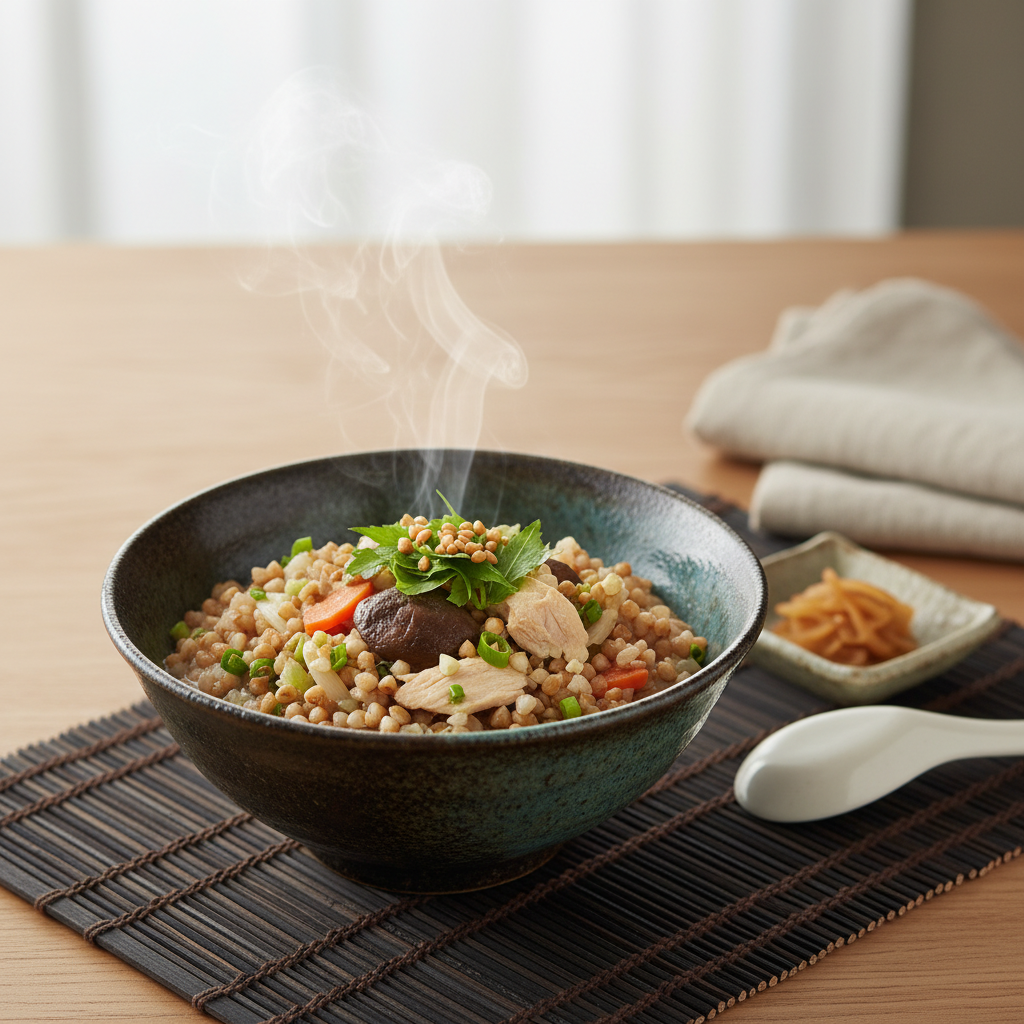
Soba rice porridge (sobagome zousui) is a traditional regional cuisine that has been cherished since ancient times in the Iya region of western Tokushima Prefecture. The greatest characteristic is the use of “soba rice,” which is processed soba seeds into granules rather than being ground into flour like ordinary buckwheat, and it is known nationwide as a unique cooking method of Tokushima Prefecture.
Soba rice porridge was also selected for the “100 Regional Dishes of Agricultural, Mountain, and Fishing Villages” chosen by the Ministry of Agriculture, Forestry and Fisheries, and is highly evaluated as a food culture representing Tokushima Prefecture. It is characterized by its unique crispy texture, fragrant soba flavor, and the gentle broth taste that comes from vegetables and chicken, and for Tokushima residents, it is truly a soul food.
What is Soba Rice?
Soba rice refers to soba seeds that are salt-boiled, have their shells removed, and are then dried. While ordinary buckwheat has its seeds ground into flour to make noodles, soba rice uses the seeds in granular form, which has the advantage of allowing more direct intake of soba’s nutrients. In appearance, it is small triangular granules with a tea-brown color, and has a unique shape different from rice.
This cooking method is unique to Tokushima Prefecture, especially the Iya region, and is rarely seen in other areas—a precious food culture. By drying the soba rice, it becomes possible to store it long-term, and it has been treasured as a precious preserved food in the harsh environment of mountainous regions.
History and Origins – The Heike Refugee Legend and Iya’s Food Culture
The Genpei War and the Heike Refugee Tradition
The origin of soba rice porridge has a historical background related to the Genpei War. In 1185, according to tradition, Heike refugees who were defeated by the Genji in the Battle of Dan-no-ura fled to the Iya region in western Tokushima Prefecture. The Iya region was a hidden land surrounded by steep mountains, making it an ideal place to hide from pursuers.
The Heike refugees began a new life in this land while longing for their lives in the capital. The beginning of “soba rice porridge” is said to be when they created it as New Year’s cuisine, remembering the rice porridge they ate in Kyoto. While they attempted to recreate the rice porridge they had eaten in the imperial capital, rice cultivation proved difficult in the Iya region, so the theory that they used soba rice as a substitute is most widely accepted.
Geographic Characteristics and Agriculture of the Iya Region
The Iya region of Mie City (formerly Higashi-Iya Village and Nishi-Iya Village), located in western Tokushima Prefecture, is counted as one of Japan’s three great hidden lands, with steep mountainous terrain. With many steep slopes and almost no flat land, the environment was completely unsuitable for rice cultivation. The altitude was high and temperatures low, making rice cultivation virtually impossible in this climate.
In this harsh natural environment, the people of the Iya region made millet (awa) and barnyard millet (hie) and other coarse grains their staple foods. Soba cultivation techniques brought by the Heike refugees were added to this mix, and soba culture took root. Soba has the characteristics of a short cultivation period (approximately 75 days) and grows easily in poor soil, making it very well-suited to the Iya region’s environment.
Slash-and-Burn Agriculture and Soba Cultivation
The Heike refugees cleared primeval forests through slash-and-burn farming and cultivated soba. Slash-and-burn agriculture is a traditional farming method where forests are felled, burned to clear the land, and crops are grown using the ash as fertilizer. Since water paddies could not be created on the Iya region’s steep slopes, this slash-and-burn method became the primary form of agriculture.
Soba was processed into various forms as a substitute staple food, not only as porridge but also as dumplings and soba noodles (cut buckwheat). Among these, soba rice porridge became established as an important nutritional source in the cold mountainous regions because it is highly nutritious and has the effect of warming the body.
Ingredients and Preparation Method for Soba Rice Porridge
Basic Ingredients (Serves 4)
Main ingredients:
- Soba rice: 100g
- Chicken thigh: 150g
- Firm tofu: 1/2 block
- Chikuwa (fish cake): 1 piece
Vegetables:
- Daikon radish: 100g
- Carrot: 50g
- Burdock root: 50g
- Shiitake mushroom: 3 pieces
- Japanese leek: 1 piece
- Mitsuba (Japanese parsley): appropriate amount (for finishing)
Seasonings:
- Dashi broth (kombu seaweed and dried sardines): 1200ml
- Light soy sauce: 2 tablespoons
- Sake: 1 tablespoon
- Salt: a small amount
Detailed Preparation Instructions
1. Preparing the Soba Rice
Rinse the soba rice lightly with water and soak it in water for about 30 minutes. This makes the soba rice soften more easily. Commercially available soba rice already has its shells removed, so it can be used as is.
2. Preparing the Ingredients
- Cut the chicken thigh into bite-sized pieces
- Peel the daikon radish and carrot and cut them into thin strips or into a ginkgo shape
- Scrape the burdock root and soak it in water to remove its astringency
- Remove the stem base from the shiitake mushrooms and slice them thinly
- Cut the Japanese leek on the diagonal
- Cut the tofu into approximately 1.5cm cubes
- Slice the chikuwa into rings
3. Cooking Steps
First, put the dashi broth in a pot and heat it. Using broth made with kombu seaweed and dried sardines will give it a more authentic flavor. Once the broth is warm, add the chicken and cook over medium heat. Once the surface of the chicken turns white, carefully remove any scum.
Next, add the drained soba rice. Since the soba rice takes 20 to 30 minutes to cook through, it is important to add it first. After adding the soba rice, add root vegetables such as daikon radish, carrot, burdock root, and shiitake mushroom.
Once the vegetables begin to soften, adjust the seasoning with light soy sauce, sake, and salt. In keeping with Tokushima’s regional cuisine style, finish with a gentle, mild flavor. Add the tofu and chikuwa and simmer for about 5 more minutes.
Finally, add the Japanese leek and remove from heat, then transfer to a serving dish and garnish with mitsuba.
Cooking Tips
- Soba rice texture: The texture of the soba rice changes depending on cooking time. For a crispy texture, simmer for about 20 minutes; for a softer finish, simmer for 30 minutes or more
- How to make dashi: Broth made with kombu seaweed and dried sardines is traditional, but adding chicken stock will give it a deeper flavor
- Variations in ingredients: Depending on the region or household, wild vegetables (such as warabi ferns or ostrich ferns) may be added, or deep-fried tofu may be included as an arrangement
- Adjusting seasoning: If light soy sauce is unavailable, regular soy sauce can be substituted, but reduce the amount to prevent the color from becoming too dark
Major Areas Where It Is Transmitted and Occasions for Eating It
Details of Transmission Areas
Soba rice porridge has been primarily transmitted through Mie City’s Iya region (formerly Higashi-Iya Village and Nishi-Iya Village) in western Tokushima Prefecture. The Higashi-Iya region in particular is considered the birthplace, and is still regularly prepared in many households today.
Beyond the Iya region, soba rice porridge culture has spread to mountainous areas throughout Tokushima Prefecture, particularly throughout Mie City, Mima City, and Tsuruga Town. It has now become a regional cuisine enjoyed throughout Tokushima Prefecture, and is also served in restaurants in Tokushima City.
Occasions and Seasons for Eating It
Traditionally, soba rice porridge held special significance as a New Year’s dish. Stemming from the tradition of Heike refugees creating it to remember their home during the New Year, it has been passed down as a dish for celebrating the new year. Many households still eat it during the first three days of the year.
It is also treasured as a winter daily food. It is cherished as a health food for the cold season because of its body-warming effect and high nutritional value. Since the Iya region experiences severe winter cold, hot soba rice porridge was an indispensable part of life.
In modern times, it is served regardless of season in school lunches. In elementary schools throughout Tokushima Prefecture, soba rice porridge has become a standard menu item as part of regional cuisine education, playing an important role in passing on local food culture to children.
How to Eat and Dining Etiquette
Soba rice porridge is traditionally eaten in a hot state. After transferring to a bowl, mitsuba or Japanese leek is sprinkled on top, and seven-spice chili or yuzu pepper may be added according to preference.
In the Iya region, it is common to eat soba rice porridge as the main dish along with side dishes such as pickles or simmered vegetables. It is also sometimes served as a soup called “soba rice soup (sobagome jiru),” in which case it is called by that name. Whether it is served as porridge or soup depends on the amount of liquid, and the name differs depending on the region or household.
Nutritional Value and Health Benefits
Rich Nutrients in Soba Rice
Soba rice is known as an extremely nutritious ingredient. Its main nutritional components include the following:
Protein: Soba contains high-quality plant-based protein, with an excellent balance of essential amino acids. It is particularly rich in lysine, an amino acid that tends to be lacking in rice and wheat, and can supplement this deficiency.
Dietary fiber: Soba rice contains abundant dietary fiber, which has the effect of improving intestinal environment. Both soluble and insoluble dietary fiber are contained in a well-balanced manner, helping with constipation relief and suppressing rapid blood sugar rises.
Rutin: Rutin, a polyphenol unique to soba, is said to strengthen capillaries and lower blood pressure. It also has strong antioxidant properties and is effective for anti-aging.
B vitamins: It is rich in vitamins B1 and B2, which promote energy metabolism and are effective for fatigue recovery.
Minerals: Minerals such as magnesium, iron, and zinc are also contained abundantly.
Value as a Health Food
Soba rice porridge is an excellent health food that allows efficient intake of these nutrients. In particular, the following health benefits can be expected:
- Gradual blood sugar rise: Since buckwheat, a low-GI food, is used, rapid blood sugar spikes can be prevented
- Body-warming effect: By eating it as hot porridge, it warms the body from within and helps improve poor circulation
- Easy to digest: The porridge form makes it easily digestible and gentle on the stomach and intestines
- Well-balanced nutrition: By combining vegetables, chicken, and tofu, balanced nutritional intake is possible
Preservation and Transmission Efforts
Community Preservation Activities
Tokushima Prefecture and Mie City are actively working to preserve and transmit soba rice porridge and other regional cuisines. Centered on regional nutrition improvement promoters and hometown cuisine research groups, activities are underway to pass on traditional cooking methods to the next generation.
Cooking classes: Hometown cuisine classes are held regularly, with local elderly people serving as instructors to teach young generations how to make soba rice porridge. This ensures that traditional flavoring and cooking techniques are reliably transmitted.
Collaboration with school education: In elementary and middle schools, opportunities are provided to learn about regional cuisine using comprehensive learning time. Through cooking practice using local ingredients such as soba rice, children are provided opportunities to experience local food culture.
Commercialization and Modern Initiatives
Retort product development: Food manufacturers in Tokushima Prefecture have developed and sell retort-packaged soba rice porridge. Because it can be enjoyed simply by heating, it has become popular as a souvenir for tourists.
Soba rice mail order: Tokushima Prefecture-produced soba rice is sold nationwide through internet mail order. Since recipes are included, people outside the prefecture can also make authentic soba rice porridge at home.
Menu offerings at restaurants: Restaurants in tourist areas of the Iya region serve soba rice porridge as a standard menu item. It is popular with tourists as a regional specialty dish alongside “Iya soba.” Particularly at famous restaurants such as “88-ya (hachihachiya),” you can enjoy soba rice porridge made with adherence to traditional methods.
Social Media and Information Sharing
In recent years, information sharing through social media has also become active. Tokushima Prefecture’s official tourism accounts and local restaurants are working to raise awareness among younger generations by sharing the appeal of soba rice porridge through photographs and videos.
On Instagram, many posts can be seen with hashtags such as “#soba rice porridge” and “#Tokushima cuisine,” sharing beautiful plating and household recipe arrangements. On YouTube, cooking videos are published, making it possible to learn preparation methods visually.
Places Where You Can Enjoy Soba Rice Porridge
Famous Restaurants in the Iya Region
Regional cuisine restaurants in the Iya area: The Iya region of Mie City has several regional cuisine restaurants scattered throughout, serving traditional soba rice porridge. Particularly around the “Kazura Bridge” tourist area, there are many restaurants where authentic soba rice porridge made with local ingredients can be enjoyed.
Inns and hotels: Some inns and hotels in the Iya region serve soba rice porridge to overnight guests for breakfast or dinner. It is a precious opportunity to experience the taste of local households.
Restaurants in Tokushima City
Restaurants in Tokushima City that handle regional cuisine also serve soba rice porridge. With easily accessible locations, visitors to Tokushima can casually enjoy it.
Roadside Stations and Product Centers
Soba rice and retort soba rice porridge are sold at roadside stations and product centers throughout Tokushima Prefecture. At places such as “Michi-no-Eki (Roadside Station) Ooboke,” there are also food service areas where you can eat on the spot, allowing you to stop by during a drive and enjoy a meal.
The Expansion of Soba Rice Culture
Connections with Other Regional Cuisines
Soba rice is used in various dishes beyond porridge.
Soba rice soup: A version served as a soup with more liquid than porridge. The ingredients are almost the same as porridge, but it is characterized by having more broth.
Soba rice dumplings: Made by grinding soba rice into powder to make dumplings, it can be added to soup or eaten with soybean powder sprinkled on top.
Soba rice rice: White rice mixed with a small amount of soba rice and cooked, enjoying a crispy texture.
Modern Arrangements
In recent years, soba rice dishes with modern arrangements based on traditional recipes have also appeared.
Western-style soba rice risotto: A Western arrangement using tomatoes and cheese, popular with younger generations.
Soba rice salad: Cooled cooked soba rice mixed with vegetables, a healthy salad.
Soba rice soup: A Western arrangement with soba rice added to a consommé-based soup.
These modern arrangements are drawing attention as attempts to enjoy traditional ingredients in new forms, suggesting new possibilities for soba rice culture.
Conclusion – Tokushima’s Food Culture Passed Down Through the Ages
Soba rice porridge is Tokushima Prefecture’s representative regional cuisine, passed down from over 800 years ago with the Heike refugee legend to the present day. This dish, born from wisdom and ingenuity in a harsh natural environment and imbued with nostalgia for the imperial capital, holds cultural value beyond mere food.
The soba culture nurtured in the steep mountains of the Iya region, the unique cooking method of using the grains whole, and the traditional flavor passed down through generations—all of these make soba rice porridge a special existence.
In modern times, soba rice porridge culture is being preserved and developed in various forms, including provision in school lunches, commercialization, and information sharing via social media. While protecting tradition, it will surely be reliably passed on to the next generation by incorporating new initiatives.
When visiting Tokushima Prefecture, be sure to try authentic soba rice porridge. You will surely feel the long history and thoughts of the region’s people contained within its crispy texture and gentle flavor. You can also purchase soba rice and make it at home to experience Tokushima’s food culture more intimately.
Soba rice porridge is truly a living cultural heritage born from the unity of a region’s history, natural environment, and people’s daily lives.