What is Harakofan? Complete Explanation of Miyagi Prefecture’s Local Cuisine History, How to Make It, and Famous Restaurants
“Harakofan,” an autumn local dish representing Miyagi Prefecture. A luxurious dish with fatty salmon meat and ikura (harakko) generously piled on top of rice cooked in salmon broth. This article conveys the charm of harakofan in full, from its history and origins, authentic preparation methods, to information about famous restaurants throughout Miyagi Prefecture.
What is Harakofan? Miyagi Prefecture’s Proud Autumn Local Cuisine
Basic Information About Harakofan
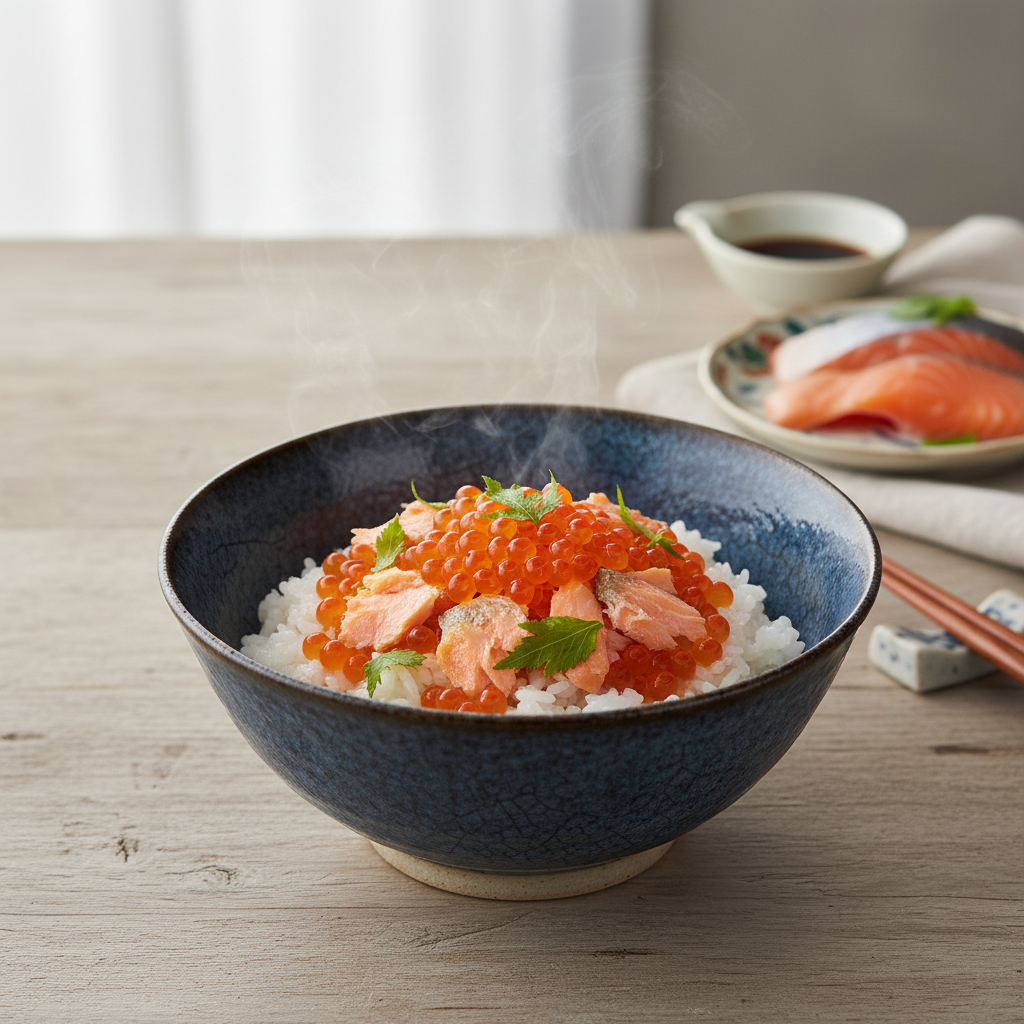
Harakofan is a local dish originating from Watari Town, Watari County, Miyagi Prefecture. “Harakko” is a northeastern dialect term for salmon roe, in other words, ikura. It is a rice bowl dish with fatty cooked salmon meat and raw ikura lavishly served on top of rice cooked in salmon broth. Due to its gorgeous appearance and rich flavor, it is known as a representative autumn delicacy of Miyagi Prefecture.
Characteristics of Harakofan
The greatest characteristic of harakofan lies in its cooking method that uses every part of the salmon. Not only the salmon flesh but also the broth made from bones and heads is used to cook the rice, allowing the umami of salmon to permeate each grain of rice. On top of this, fatty autumn salmon flesh and fresh ikura with a piquant texture are served, creating an exquisite harmony of texture and flavor.
Additionally, using raw ikura is the traditional style of harakofan. This allows one to fully enjoy the freshness and authentic taste of the ikura.
History and Origins of Harakofan
History Beginning in the Edo Period
The history of harakofan dates back to the Edo period. A prominent theory holds that it was devised by Shigezane Date, the second lord of the Watari Date clan, as a dish using salmon caught in the Abukuma River. At that time, the Abukuma River was known as a bountiful fishing ground for salmon, with many salmon migrating upstream in autumn.
Local fishermen and cooks created this special dish using fresh salmon and ikura to present to the Date clan lord, which is said to be the beginning of harakofan.
Deep Connection with Watari Town
Watari Town in Miyagi Prefecture is known as the birthplace of harakofan. Located at the mouth of the Abukuma River, Watari Town has long been a region where salmon fishing thrives. Every autumn, salmon migrating upstream for spawning are caught, and harakofan is prepared using this fresh salmon and ikura.
Today, Watari Town positions harakofan as an important tourism resource, and events such as the “Harakofan Festival” are held annually.
Reconstruction After the Great East Japan Earthquake
In the 2011 Great East Japan Earthquake, Watari Town suffered major damage. The tsunami devastated many restaurants and fishing facilities, leaving the harakofan tradition in peril. However, through the efforts of local people, salmon fishing gradually recovered, and harakofan service resumed.
Today, harakofan is also positioned as a symbol of reconstruction, with many tourists visiting Watari Town to savor this traditional cuisine.
How to Make Harakofan: Authentic Recipe
Ingredients Needed (Serves 4)
For the rice:
- Rice: 3 cups
- Fresh salmon: 1 whole fish (approximately 2 kg) or 4-6 fillets
- Water: as needed
- Sake: 3 tablespoons
- Soy sauce: 4 tablespoons
- Mirin: 2 tablespoons
- Sugar: 1 teaspoon
- Salt: a pinch
For topping:
- Raw ikura (salmon roe sack): 200-300g
- Soy sauce (for ikura): 2 tablespoons
- Sake (for ikura): 1 tablespoon
- Japanese parsley or green onion: as needed
- Shredded nori seaweed: as needed
Preparation: Processing Ikura
If using raw salmon roe sacks, first you need to remove the ikura from the sack.
- Fill a bowl with lukewarm water around 40°C and salt (approximately 1 tablespoon salt per 1 liter of water)
- Add the salmon roe sack and gently separate the ikura while removing the thin membrane
- Once the membrane floats to the surface, remove it, leaving only the ikura
- Drain the ikura and marinate it in a mixture of soy sauce and sake for 15-30 minutes
Cooking Rice in Salmon Broth
- Cut the salmon into appropriate sizes (including head and bones)
- Fill a pot with water, add salmon, sake, soy sauce, mirin, sugar, and salt, and heat over medium flame
- Once boiling, remove scum, and simmer over low heat for 15-20 minutes
- Once the salmon is cooked through, remove it, and strain and cool the broth
- Rinse the rice and place it in a rice cooker
- Add the salmon broth up to the 3-cup mark (add water if there is not enough broth)
- Cook as usual
Preparing the Salmon Flesh
- Carefully remove bones and skin from the cooked salmon flesh
- Break the flesh into large pieces (do not break into small pieces)
- Keep warm until serving
Plating
- Place the cooked rice in a rice bowl
- Scatter the separated salmon flesh throughout
- Generously pile on the soy sauce-marinated ikura
- Garnish with Japanese parsley or shredded nori seaweed and complete
Tips for Delicious Preparation
Use fresh ingredients:
The deliciousness of harakofan is greatly influenced by the freshness of the salmon and ikura. Especially since ikura is eaten raw, choose fresh pieces.
Keep the broth seasoning mild:
The broth for cooking rice should taste slightly subtle. Combined with the saltiness of ikura, overall balance is achieved.
Keep salmon flesh in large pieces:
If the salmon flesh is broken into pieces that are too small, the texture is diminished. Maintain a size with good bite.
Temperature contrast:
By combining warm rice and salmon with cold ikura, a temperature contrast emerges, making it taste even better.
When Harakofan is Available
Peak Season is September to November
The peak season for harakofan is autumn when salmon migrate upstream the Abukuma River, particularly from September to November. Salmon in this season are fat in preparation for spawning, and ikura reaches its most delicious period.
Many restaurants throughout Miyagi Prefecture offer harakofan during this season. Particularly in October, when salmon fishing is at its peak, one can enjoy the freshest and most delicious harakofan.
Some Restaurants Offer It Year-Round
Some specialty shops and tourist-oriented restaurants provide harakofan year-round using frozen salmon and ikura. However, the taste differs from fresh harakofan enjoyed during peak season, so visiting the birthplace in autumn is recommended if possible.
Famous Harakofan Restaurants: Recommended Shops in Miyagi Prefecture
Famous Restaurants in Watari Town
Shun-gyo Shirahata
An established restaurant located in the center of Watari Town. Their harakofan made with fresh salmon and ikura caught locally receives high praise from both locals and tourists. The deep flavor of rice cooked in salmon broth and the freshness of the generously piled ikura are their signature qualities.
Matsushima Kamaboko Honten Watari Branch
The Watari branch of Matsushima Kamaboko Honten, famous for fish cakes, offers harakofan as a seasonal limited item in autumn. Cooking by a fish cake shop skilled in handling seafood is characteristic.
Famous Restaurants in Sendai City
Shun-sai Cuisine Taketei
A Japanese restaurant in central Sendai. They are particular about using ingredients from Miyagi Prefecture and offer authentic harakofan in autumn. You can leisurely enjoy local cuisine in a calm atmosphere.
Izakaya Robata
An izakaya near Sendai Station where you can casually enjoy harakofan. It is served as a set meal with small side dishes and soup, making it popular with tourists.
Michi-no-Eki Watari
The roadside station in Watari Town offers harakofan from multiple restaurants in autumn. You can enjoy the authentic local taste at relatively affordable prices, making it a worthwhile stop during sightseeing. You can also purchase fresh salmon and ikura here, making it convenient for sourcing ingredients when making it at home.
Differences Between Harakofan and Other Local Dishes
Difference from Ikura Don
A typical ikura don is a simple dish with ikura piled on white rice. In contrast, harakofan uses rice cooked in salmon broth and allows you to enjoy both salmon flesh and ikura. A major difference is that the rice itself is infused with salmon umami, resulting in a more complex and profound flavor.
Relationship with Oyakodon (Seafood Version)
Harakofan can be called a seafood version of oyakodon since it uses salmon (parent) and ikura (child). However, the cooking method differs greatly from the typical oyakodon made with chicken and egg, with harakofan having its own traditional preparation method.
Comparison with Hokkaido Salmon Dishes
Hokkaido also has many dishes using salmon and ikura, but the cooking method unique to harakofan—cooking rice in salmon broth—is specific to Miyagi Prefecture. In Hokkaido, different salmon-based local dishes such as chanちゃん焼き and ishikari nabe have developed instead.
Nutritional Value and Health Effects of Harakofan
Abundant Nutrients
Harakofan is not only delicious but also has high nutritional value.
Salmon nutrition:
- DHA and EPA: Improve brain function and blood flow
- Astaxanthin: Powerful antioxidant effects
- Vitamin D: Maintains bone health
- Protein: Maintains and builds muscle
Ikura nutrition:
- DHA and EPA: Abundantly contained like salmon
- Vitamin E: Antioxidant effects
- Vitamin B12: Prevents anemia
- Iron: An important mineral especially for women
Health Considerations
While harakofan is nutrient-rich, ikura contains high levels of salt and cholesterol. Those with high blood pressure or lipid disorders should be careful of the amount consumed. Ikura also contains high levels of purines, so those with gout are advised to consume it in moderation.
That said, when enjoyed in appropriate amounts, it is an excellent dish that provides many health-beneficial nutrients.
Tips for Enjoying Harakofan at Home
How to Obtain Ingredients
At fish shops and markets:
In autumn, many fish shops sell fresh autumn salmon and salmon roe sacks. Particularly in Miyagi Prefecture and Tohoku region markets, fresh items are easy to obtain.
Online shops:
Even for those living far away, salmon and ikura for harakofan can be purchased from online shops dealing in Miyagi Prefecture specialties. Since they arrive frozen, thaw before using.
Roadside stations and farmers’ markets:
At roadside stations throughout Miyagi Prefecture, you can purchase fresh locally-caught salmon and ikura. It is recommended to stop by and purchase when visiting the area.
Simplified Recipe
If you are short on time or trying for the first time, starting with a simplified version is also good.
- Prepare commercial salmon flakes (or flaked grilled salmon)
- Mix mentuyu or salmon broth into white rice
- Top with commercially available soy-marinated ikura
This method also allows you to enjoy the atmosphere of harakofan.
Storage Methods
Storing salmon:
Cooked salmon can be refrigerated for 2-3 days. If freezing, divide into portions, wrap in plastic wrap, and store for approximately one month.
Storing ikura:
Soy-marinated ikura can be refrigerated for 3-4 days. If freezing, divide into portions, freeze, and use within one month. Thaw slowly in the refrigerator.
Events for Enjoying Harakofan
Harakofan Festival
The “Harakofan Festival” held in Watari Town every autumn allows one to fully enjoy harakofan. Multiple restaurants throughout town serve harakofan, and you can enjoy comparisons. Local specialty product sales and salmon-related exhibits are also held.
The festival is held around October to November each year, centered on weekends. Details can be confirmed on the Watari Town tourism association website.
Miyagi Prefecture’s Autumn Flavors Fair
In autumn, department stores and commercial facilities in Sendai City hold events such as “Miyagi Flavor Fairs.” At these events, you can enjoy harakofan and other Miyagi Prefecture local cuisines.
Cultural Value of Harakofan
Positioning as a Local Cuisine
Harakofan has been selected as one of Japan’s “One Hundred Best Local Dishes” by the Ministry of Agriculture, Forestry and Fisheries, officially recognized as a representative local dish of Miyagi Prefecture. Efforts to pass this tradition on to the next generation as an important regional food culture are underway.
Role as a Tourism Resource
Harakofan is also an important tourism resource for Miyagi Prefecture. In autumn, many tourists visit Watari Town and Miyagi Prefecture with harakofan as their destination. It is a dish that significantly contributes to the revitalization of the regional economy.
Tradition Transmission
In local schools, harakofan cooking classes are conducted to pass the tradition to younger generations. Community cooking classes also offer harakofan preparation courses, continuing efforts to preserve tradition.
Trivia About Harakofan
Etymology of “Harakko”
The word “harakko” comes from the meaning of children (eggs) in a fish’s belly. It has long been used in northeastern dialects, particularly referring to salmon roe.
Regional Variations in Names
Even within Miyagi Prefecture, there are different writings such as “harakomeshi,” “fukuko gohan,” and “harakigo gohan” depending on region. However, all refer to the same dish.
Harakofan as a Gift
Recently, gifts sets of harakofan ingredients are also sold. Seasoning for cooking rice in salmon broth, salmon flesh, and ikura are bundled together, allowing you to prepare authentic harakofan at home.
Conclusion: Harakofan is Miyagi’s Autumn Treasure
Harakofan is an autumn local dish that Miyagi Prefecture takes pride in. It is a dish filled with tradition continuing from the Edo period, a luxurious combination of salmon and ikura, and the affection of local people.
The deep umami of rice cooked in salmon broth, the satisfying bite of fatty salmon flesh, and the piquant texture of bursting ikura. These three elements come together to create a flavor that can only be savored in autumn Miyagi.
If you have the opportunity to visit Miyagi Prefecture during its peak season from September to November, by all means taste authentic harakofan at its birthplace. Also, it can be made relatively easily at home, so if you can obtain fresh salmon and ikura, please try your hand at it.
Through harakofan, we hope you experience the rich food culture of Miyagi Prefecture and the traditional tastes that local people have carefully preserved. With the arrival of autumn, please savor the deliciousness of harakofan.