What is Okuzukake? A Complete Guide to Miyagi Prefecture’s Representative Local Cuisine: History, How to Make It, and Where to Eat It
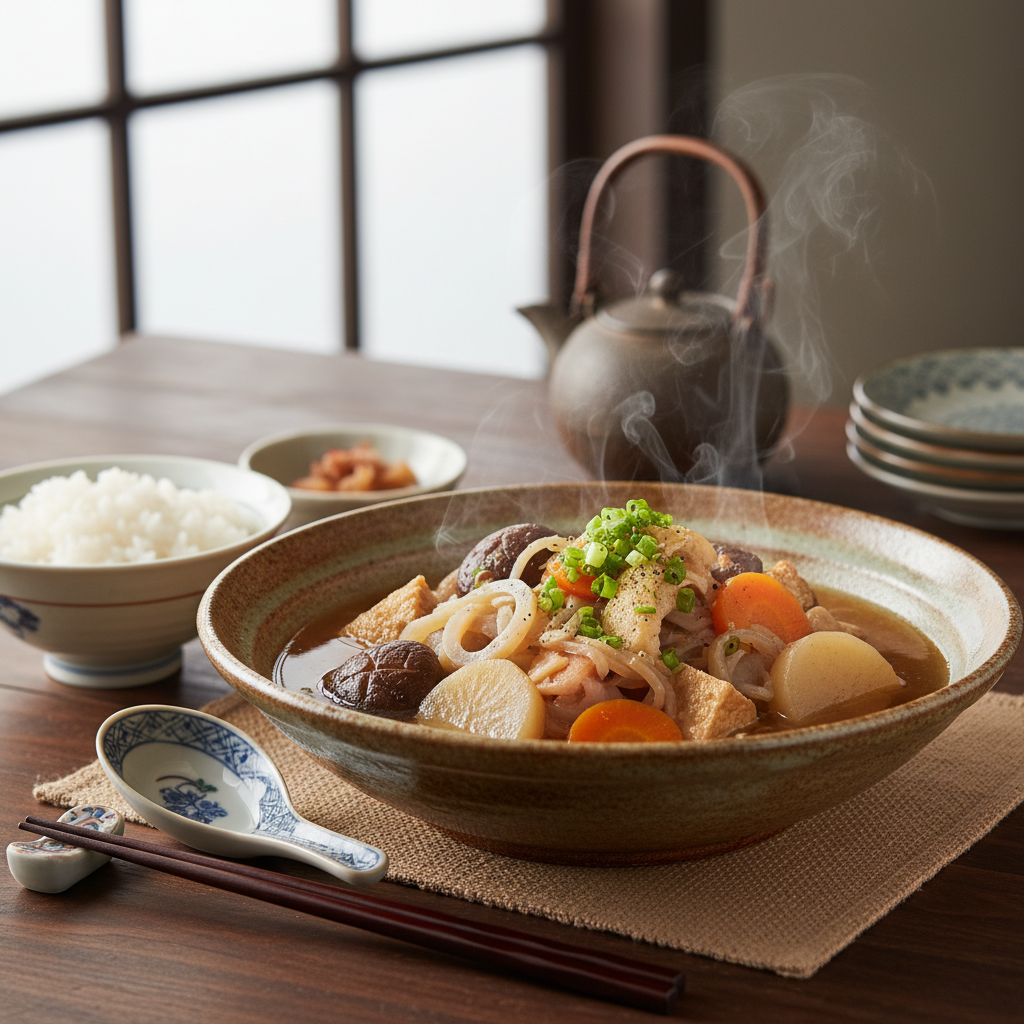
Okuzukake, a local dish of Miyagi Prefecture, is a traditional vegetarian cuisine made during the Obon and Higan periods. It is a hearty soup containing several types of vegetables, tofu, fried tofu, bean fu and other ingredients simmered in a dashi broth, with Shiraishi Udon noodles added and thickened. This dish has been passed down through generations, particularly in southern Miyagi Prefecture.
This article will comprehensively explain the appeal of this local cuisine, covering its history and origins, detailed cooking methods, and information about restaurants where you can actually taste it.
What is Okuzukake?
Basic Characteristics
Okuzukake is one of the representative local dishes of Miyagi Prefecture, a warm soup made by adding a variety of ingredients to a soy sauce-based dashi broth and thickening it with potato starch or kuzu (arrowroot). The name is said to derive from the practice of using kuzu powder to create the thickening effect, calling it “okuzukake.”
In modern times, potato starch is commonly used, but in traditional preparation methods, genuine kuzu was used, achieving a more refined mouthfeel and smooth thickening.
Main Ingredients Used
The characteristic of okuzukake lies in its abundant ingredients. The main ingredients used are as follows:
Vegetables
- Carrot
- Burdock
- Daikon radish
- Taro
- Shiitake mushroom
- Eggplant
- Zuiki (taro stem)
Protein Sources
- Tofu
- Fried tofu
- Mame-fu (bean fu)
Noodles
- Shiraishi Udon (uumen)
Seasonings and Thickening
- Soy sauce
- Shiitake mushroom soaking liquid
- Potato starch or kuzu
Shiraishi Udon is a specialty product of Shiraishi City in Miyagi Prefecture. These noodles are shorter than somen and are made without oil. The use of these udon noodles is one of the major characteristics of okuzukake.
Main Transmission Regions and Regional Differences
Southern Miyagi Prefecture (Sennan Region) as the Center
Okuzukake has been primarily transmitted in the Sennan region of southern Miyagi Prefecture. It is particularly popular in areas such as Shiraishi City, Kakuda City, Shibata Town, and Ogawara Town, where it has been passed down through generations in each household.
It is also eaten in a wide area from Sendai City to the southern part of the prefecture, and slight differences can be seen in the vegetables and ingredients used depending on the region.
Similar Dishes in the Northern Prefecture Region
There are multiple local dishes similar to okuzukake within Miyagi Prefecture:
Suppoko (Northern Prefecture Region)
A dish served to those who worked behind the scenes at memorial services, with a similar ingredient composition to okuzukake, but the occasion and significance of serving differ.
Noppei Jiru
A soup eaten more routinely, sharing the thickened quality with okuzukake, but differing in that it does not include udon noodles.
History, Origins, and Related Events
Origins of Okuzukake
The exact origins of okuzukake are unclear, but it is believed to have emerged in rural areas of southern Miyagi Prefecture during the Edo to Meiji periods. In areas with strong Buddhist influence, it was customary to prepare shojin ryori (Buddhist vegetarian cuisine) using no meat or fish during the Obon and Higan periods.
The dish developed as a nutritionally balanced creation by abundantly using seasonal vegetables and combining plant-based proteins such as tofu and fried tofu.
Etymology of the Name
The name “okuzukake” derives from “kake” (to pour/add), referring to the practice of adding kuzu powder to the dish. Kuzu powder was an expensive ingredient, but it was used to elevate special occasion dishes and the status of vegetarian cuisine.
By thickening with kuzu powder, the dish becomes slower to cool, allowing the umami of the ingredients to dissolve into the broth, creating a unified flavor. This “thickening” becomes the greatest characteristic of okuzukake.
Significance as Vegetarian Cuisine
Okuzukake developed as Buddhist shojin ryori. Since it contains no animal ingredients and is made only with vegetables and soy products, it has been considered ideal for Buddhist observances such as Obon and Higan.
It is a dish that carries the sentiment of honoring ancestors and gratitude for the bounty of the seasons, passed down across generations.
Occasions and Seasons for Eating
Obon Season
August’s Obon season is when okuzukake is most frequently prepared. There is a custom of making large quantities in a big pot when returning family members and relatives gather, with everyone sharing portions.
It is also a time when summer vegetables are abundantly available, and using seasonal ingredients such as eggplant and zuiki creates a dish full of seasonal character.
Spring and Autumn Equinoxes
Okuzukake is an essential dish during the Higan periods centered around the spring and autumn equinoxes. Particularly during autumn Higan, when taro and root vegetables are at their delicious best, one can enjoy okuzukake with deeper flavor.
Memorial Services and Gatherings
Beyond Buddhist observances, it is sometimes served at community gatherings and life events. Its efficiency in being prepared in large quantities at once and its mild flavor palatable to all ages makes it suitable for group meals.
Modern Eating Habits
In recent years, it has come to be enjoyed year-round not only as a traditional ritual food but also as home cooking for cold seasons. Particularly in the Sennan region centered on Shiraishi City, more restaurants have begun offering it year-round for tourists.
How to Make Okuzukake (Detailed Recipe)
Ingredients (Serves 4)
Main Ingredients
- Shiraishi Udon noodles: 100g
- Carrot: 1/2
- Burdock: 1/2
- Daikon radish: 100g
- Taro: 3 pieces
- Dried shiitake mushroom: 4 pieces
- Eggplant: 1
- Zuiki (if available): 50g
- Tofu: 1/2 block
- Fried tofu: 1 sheet
- Bean fu: about 10 pieces
Seasonings
- Dashi broth (including shiitake soaking liquid): 800ml
- Soy sauce: 3 tablespoons
- Mirin: 2 tablespoons
- Salt: 1/2 teaspoon
- Potato starch (or kuzu): 2 tablespoons
- Water (for dissolving starch): 4 tablespoons
Preparation
- Rehydrate Shiitake: Soak dried shiitake in water the day before. Reserve the soaking liquid to use as dashi broth.
- Vegetable Preparation:
- Carrot and daikon: cut into 1cm cubes or thin rectangular slices
- Burdock: cut into thin shavings and soak in water
- Taro: peel and cut into bite-sized pieces
- Eggplant: cut lengthwise in half, then slice diagonally
- Zuiki: cut into manageable lengths
- Shiitake: remove stem and slice thinly
- Other Ingredients:
- Tofu: cut into 1.5cm cubes
- Fried tofu: blanch in boiling water to remove oil, then cut into thin strips
- Bean fu: rehydrate in water if dried
Cooking Instructions
Step 1: Simmer Root Vegetables
Pour dashi broth (including shiitake soaking liquid) into a pot and begin simmering over medium heat, starting with root vegetables that take longer to cook (burdock, carrot, daikon, taro).
Step 2: Add Other Ingredients
Once root vegetables have softened, add shiitake, eggplant, zuiki, tofu, fried tofu, and bean fu, and continue simmering.
Step 3: Season
Add soy sauce, mirin, and salt to taste. A slightly bold seasoning is traditional for this Miyagi local dish, but adjust to your preference.
Step 4: Add Udon Noodles
Add Shiraishi Udon noodles and simmer for 2-3 minutes until the noodles soften. Since udon noodles cook quickly, be careful not to overcook.
Step 5: Create Thickening
Dissolve potato starch in water to create a slurry, and slowly drizzle it into the simmering pot. Stir the whole pot slowly until the desired thickening is achieved.
Step 6: Finish
Once thickened, remove from heat and serve in bowls to complete.
Tips for Delicious Preparation
Utilize Shiitake Soaking Liquid
The shiitake soaking liquid is rich in umami components. Using it as dashi creates okuzukake with deep flavor.
Cut Vegetables Small
Cutting ingredients into small pieces makes them easier to eat and ensures even cooking. Aim for bite-sized pieces.
Thicken Last
Always thicken at the end. Adding thickening early can make the ingredients cook more slowly.
When Using Genuine Kuzu
In traditional preparation using genuine kuzu, dissolve it more carefully than potato starch and heat slowly over low heat for a transparent, beautiful thickening effect.
Delicious When Cold
The thickening effect means it cools slowly and remains warm over time. It is also suitable for make-ahead preparation.
Eating Methods and Variations
Traditional Way of Eating
Okuzukake is basically eaten warm as a soup. Serve in a fairly large bowl and enjoy the ingredients and broth together. The thickening ensures it remains warm until the end.
It works well as a side dish with rice or as a standalone dish sufficient on its own. When served as vegetarian cuisine, okuzukake is presented as the main dish, along with side dishes such as pickles and lightly cooked greens.
Modern Arrangements
Ingredient Variations
- Increase mushroom varieties (shimeji, enoki, maitake, etc.)
- Add seasonal vegetables (bamboo shoots in spring, Chinese cabbage in winter)
- Use thick fried tofu for added volume
Seasoning Variations
- Add a small amount of miso for miso flavor
- Add ginger to enhance warming effects
- Add shichimi togarashi for a spicy touch
Serving Style Innovations
- Serve in small bowls as an appetizer
- Serve in a bowl as a main course
- Chill for summer as a light menu option
Restaurants Where You Can Eat Okuzukake (Miyagi Sennan)
Dining Establishments in Shiraishi City
Shiraishi City is the birthplace of Shiraishi Udon and one of the origins of okuzukake, with many restaurants serving this local dish.
Restaurants for Tourists
There are restaurants around Shiraishi Castle and in the city center that serve okuzukake year-round. Many establishments offer it paired with Shiraishi Udon, particularly during tourist season.
Local Eateries
Local restaurants frequented by residents often serve okuzukake seasonally. It particularly appears on menus during Obon and Higan periods.
Roadside Stations and Product Halls
Miyagi Sennan Area Roadside Stations
Roadside stations in the Sennan region have facilities serving okuzukake as a local dish. You can eat it at restaurant corners, and it may also be available for purchase as retort packages.
Product Halls and Direct Sales Shops
Local agricultural product direct sales shops sometimes sell homemade okuzukake. Especially during holiday periods, you can enjoy traditional flavors made by local mothers.
Offerings at Events
Local Cuisine Fairs
Okuzukake is frequently introduced at food events and local cuisine fairs held throughout Miyagi Prefecture.
Regional Festivals
Okuzukake may be offered at festivals and community events in the Sennan region.
Nutritional Value and Health Characteristics
Well-Balanced Nutritional Composition
Since okuzukake is vegetable-based, it is rich in vitamins, minerals, and dietary fiber. It provides plant-based protein from tofu, fried tofu, and bean fu, making it a nutritionally well-balanced dish.
Main Nutrients
- Dietary Fiber: Abundantly obtained from root vegetables and burdock
- Vitamins: Vitamin A from carrots, Vitamin C from daikon
- Minerals: Potassium from taro, Vitamin D from shiitake
- Protein: Quality plant-based protein from tofu, fried tofu, and bean fu
Easy to Digest
Because it is thickened, it places little burden on the stomach and intestines, making it easy to digest and absorb. It is palatable to the elderly and children and is also suitable as recovery food after illness.
Low Calorie and Healthy
Since no animal fat is used, calories are modest. It is recommended for those on diets and those concerned with health.
Okuzukake and Miyagi’s Food Culture
Relationship with Shiraishi Udon
Shiraishi Udon, essential to okuzukake, is a specialty product of Shiraishi City, Miyagi Prefecture, with a history spanning over 400 years. Made without oil, it is easy on the stomach and aids digestion.
The udon noodles are approximately half the length of somen, around 9 centimeters. This shorter length makes them easy to eat when placed in soups like okuzukake and pairs well with the broth.
Agriculture and Ingredients of the Sennan Region
The Sennan region in southern Miyagi Prefecture has long been active in agriculture. Beyond rice cultivation, vegetable farming is also thriving, with diverse vegetables used in okuzukake produced locally.
Particularly, cultivation of root vegetables such as taro, burdock, and daikon is active, and numerous local dishes utilizing these ingredients have been transmitted.
Shojin Ryori Tradition
Buddhist culture has long been rooted in Miyagi Prefecture, and the tradition of shojin ryori has been passed down. Okuzukake stands as one of its representative dishes, conveying the culture of Buddhist observances and ritual foods to the present day.
Inheritance in Households and Modern Significance
Transmission Across Generations
Okuzukake has been passed down from grandmother to mother to daughter within households. By preparing it together during Obon and Higan seasons, not only cooking techniques but also the spirit of honoring ancestors and valuing seasonal observances are transmitted.
Role of Community
The opportunity to make okuzukake at community gatherings becomes precious time for deepening community bonds. The custom of making large quantities in a big pot and sharing portions among all nurtures a spirit of mutual support.
Application to Food Education
Some regions provide okuzukake in school lunches, offering children opportunities to learn about local cuisine. Understanding local ingredients and traditional cooking methods deepens appreciation for food culture.
Conclusion
Okuzukake is a local dish rich in history and culture, transmitted primarily in the Sennan region of Miyagi Prefecture. Using Shiraishi Udon noodles, diverse vegetables, and soy products, this dish with its thickened, gentle flavor continues to be loved by many as both a Buddhist vegetarian dish for Obon and Higan and as home cooking that deepens family bonds.
With abundant ingredients providing excellent nutritional balance and thickening that aids digestion, okuzukake aligns with modern health consciousness. Beyond traditional ritual foods, it is expected to be passed down as a dish also enjoyable at the everyday table.
When visiting Shiraishi City, please be sure to taste authentic okuzukake. Similarly, by gathering ingredients at home and preparing it yourself, you can connect with Miyagi’s rich food culture. Made with seasonal vegetables and prepared together with family and loved ones, okuzukake will surely become a heartwarming culinary experience.