Sanma Sushi | Thorough Explanation of Mie Prefecture’s Local Cuisine! History, How to Make It, and Recommended Restaurants
“Sanma sushi,” a traditional local dish passed down since ancient times in the Kumano region of southern Mie Prefecture. Pressed sushi made with Pacific saury has continued to be loved by local people and is an indispensable traditional flavor for special occasions such as festivals and New Year. This article provides a thorough explanation of Mie Prefecture’s proud local cuisine, covering the history and cultural background of sanma sushi, how to make it at home, regional differences, and recommended restaurants to visit.
What is Sanma Sushi? A Local Cuisine Representing Mie Prefecture
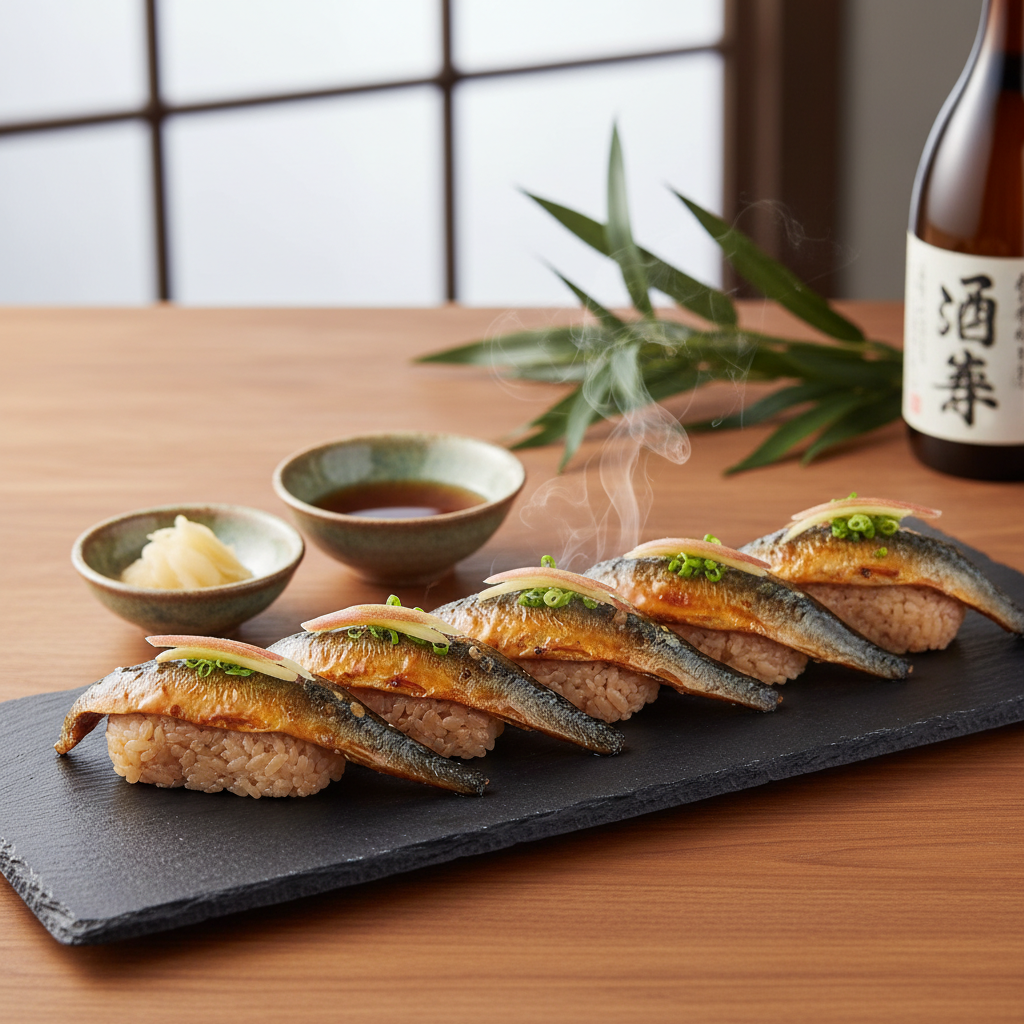
Sanma sushi is a type of pressed sushi that has been made since ancient times in the Kumano region of southern Mie Prefecture (Owase City, Kumano City, Kihoku Town, etc.). Fresh Pacific saury is filleted, preserved with salt and vinegar, placed on vinegared rice, and pressed firmly. Locally, it is also called “sanma zushi” or “sanma sushi.”
Characteristics of Sanma Sushi
Visual Beauty
The beautifully gleaming silver skin of the Pacific saury is striking, and a whole-fish sushi using an entire fish is spectacular. It is sometimes wrapped in bamboo leaves or persimmon leaves, making it a visually elegant local dish.
Unique Flavor
Pacific saury preserved with salt and vinegar loses its fishy smell and takes on a refined taste. Its compatibility with vinegared rice is excellent, and the umami of the saury’s fat spreads throughout the mouth.
Wisdom of Food Preservation
In an era without refrigerators, preservation techniques using salt and vinegar were important. Sanma sushi can be preserved for several days and was made in large quantities for festivals and events.
History and Cultural Background of Sanma Sushi
Origins in the Kumano Region
The origins of sanma sushi are said to date back to the Edo period. The Kumano region is a sacred pilgrimage site known for the Kumano Kodo trail, and it was visited by many pilgrims. Additionally, the Kumano-nada Sea, where the Kuroshio Current flows, is known as a prime fishing ground for Pacific saury, and large quantities of saury are landed in autumn.
Sanma sushi was born as a way to preserve the abundant saury and eat it deliciously. Initially, it developed as a preserved food for fishermen and mountain dwellers, but gradually became established as a special dish for festivals and New Year celebrations.
An Essential Dish for Festivals and Events
In the Kumano region, sanma sushi is made in each household on special days such as autumn festivals, New Year, and the Bon festival. Particularly during the “Owase Yaya Festival” and regional autumn festivals, scenes can still be seen where relatives and neighbors gather and make large quantities of sanma sushi.
As a dish that binds regional communities together, sanma sushi has played an important role. The method of preparation and seasoning differs subtly from household to household, and is passed down as “grandmother’s taste.”
Connection to the Kumano Kodo
The Kumano Kodo, part of the UNESCO World Heritage site “Sacred Sites and Pilgrimage Routes in the Kii Mountain Range.” In this area where pilgrims have traveled since ancient times, sanma sushi was also served as a dish to entertain travelers. With high nutritional value and portability, sanma sushi was a valuable meal for pilgrims walking long distances.
How to Make Sanma Sushi | Traditional Recipe
Here is a basic method for making sanma sushi at home. While there are subtle differences depending on region and household, this explains the most common method.
Ingredients (for 4-5 fish)
Pacific Saury
- Fresh Pacific saury: 4-5 fish
- Coarse salt: as needed (approximately 10% of the saury’s weight)
Vinegared Rice
- Rice: 3 cups
- Rice vinegar: 5 tablespoons
- Sugar: 2 tablespoons
- Salt: 1 teaspoon
Other Ingredients
- Sudachi, yuzu, or kabosu: as needed
- Pickled ginger: as needed
- Bamboo leaves or persimmon leaves (if available)
Preparation: Cleaning the Pacific Saury
- Fillet the Pacific saury into three pieces
Remove the head and organs from fresh Pacific saury, and fillet using a back-opening or belly-opening cut into three pieces. Carefully remove the center bone and belly bones.
- Preserve with salt
Coat both sides of the filleted saury generously with coarse salt, arrange on a tray. Sprinkle salt on top as well, and let it rest in the refrigerator for 2-3 hours. Moisture will emerge from the saury and the flesh will firm up.
- Rinse away the salt
Rinse the salt away under running water and pat dry with paper towels.
- Preserve with vinegar
Soak the saury in rice vinegar (or a 1:1 mixture of rice vinegar and water) for 30 minutes to 1 hour. Adjust the soaking time according to your preference.
- Remove the thin skin
Gently remove the thin membrane from the surface of the saury. This results in a more refined flavor. However, some regions leave the skin on.
Preparing the Vinegared Rice
- Cook the rice
Cook the rice slightly firmer than usual.
- Make the vinegar mixture
Mix rice vinegar, sugar, and salt together until the sugar dissolves completely.
- Make the vinegared rice
Pour the vinegar mixture over the freshly cooked rice and mix with a rice paddle in a cutting motion. Cool by fanning with a paper fan while stirring to bring out the sheen.
Shaping the Sanma Sushi
- Prepare the bamboo mat
Place plastic wrap on the bamboo mat. If using bamboo or persimmon leaves, arrange them on top of the plastic wrap.
- Arrange the saury
Place the vinegar-preserved saury skin-side down on the bamboo mat.
- Spread the vinegared rice
Spread the vinegared rice evenly over the saury. The thickness should be about 2-3 cm.
- Press firmly
Wrap everything with the bamboo mat and press firmly from above with your hands. If you have a sushi press mold, using it will result in a more beautiful finish.
- Set the shape
Leave wrapped in the bamboo mat and refrigerate for 30 minutes to 1 hour. This allows the flavors to blend and makes it easier to cut.
- Cut into portions
Remove the bamboo mat and plastic wrap, and cut into bite-sized pieces while moistening the knife.
Plating and Serving
Arrange beautifully on a plate and garnish with sudachi or yuzu. Adding pickled ginger serves as a palate cleanser.
Regional Differences | Sanma Sushi from Around the Kumano Region
Even within the Kumano region of southern Mie Prefecture, the preparation methods and flavors of sanma sushi differ by area.
Owase City’s Sanma Sushi
Owase City is a particularly active region for sanma sushi. In Owase, the saury is often back-filleted with the skin left on. Additionally, it is characteristic to mix sudachi or yuzu zest into the vinegared rice for a refreshing aroma.
At the Owase Yaya Festival, large quantities of sanma sushi are made in each household and distributed to relatives and friends.
Kumano City’s Sanma Sushi
In Kumano City, the saury is often belly-filleted, and many households remove the thin skin for finishing. The vinegared rice is kept simple, with a style focused on enjoying the natural flavor of the saury.
During the Kumano Fireworks Festival in Kumano City, sanma sushi is served at restaurants and inns throughout the city and is popular with tourists.
Kihoku Town’s Sanma Sushi
In Kihoku Town, sanma sushi wrapped in persimmon leaves is traditional. The aroma of the persimmon leaves transfers to the saury and vinegared rice, creating a unique flavor. Additionally, Kihoku Town makes “small sanma sushi,” where small saury are cut and pressed.
Mihama Town and Kihō Town’s Sanma Sushi
In Mihama Town and Kihō Town at Mie Prefecture’s southernmost tip, zest from locally produced mikan oranges and ponkan can be mixed into the vinegared rice. The citrus aroma is refreshing with a distinctive taste.
Recommended Restaurants Where You Can Eat Sanma Sushi
Here are recommended restaurants where you can enjoy authentic sanma sushi when visiting southern Mie Prefecture.
Owase City
Sakana Masaru
An long-established fresh fish shop and restaurant in Owase City. Sanma sushi made with fresh saury landed locally is well-regarded. Reservations are necessary during autumn season due to its popularity.
Owase Bussan
At the merchandise hall near Owase Station, you can purchase sanma sushi made by local craftspeople. Perfect as a souvenir, it can be taken home in vacuum-sealed packaging.
Kumano City
Kumano Club
At the luxury inn “Kumano Club,” you can enjoy traditional sanma sushi reimagined in a contemporary style. It is served as one dish in kaiseki cuisine featuring local ingredients.
Shin Himeyaya
A local cuisine restaurant in Kumano City. In addition to sanma sushi, you can enjoy Kumano region local dishes such as mehari sushi all at once.
Kihoku Town
Michi-no-Eki Kii-Nagashima Manbō
At Kihoku Town’s roadside station, sanma sushi made locally is sold. You can stop by during a drive and enjoy freshly made sanma sushi.
Kina no Za
A hot spring inn in Kihoku Town. Traditional sanma sushi is served at dinner for lodging guests. Enjoying local cuisine while overlooking the Kumano-nada is exceptional.
Ise City and Matsusaka City
In northern Mie Prefecture, such as Ise City and Matsusaka City, you can also enjoy sanma sushi at restaurants serving local cuisine from the Kumano region.
Okage Yokocho
Near Ise Grand Shrine, Okage Yokocho has shops handling local cuisine from throughout Mie Prefecture, where sanma sushi can be purchased at times.
Nutritional Value and Health Benefits of Sanma Sushi
Sanma sushi is not only delicious but also a nutritious and healthy local dish.
Nutrients in Pacific Saury
EPA and DHA
Pacific saury contains abundant EPA (eicosapentaenoic acid) and DHA (docosahexaenoic acid), which are omega-3 fatty acids. These are said to thin the blood and help prevent arteriosclerosis and myocardial infarction.
Vitamin D
Pacific saury ranks among the top fish for vitamin D content. Vitamin D aids in calcium absorption and strengthens bones and teeth.
Vitamin B12
Vitamin B12, important for preventing anemia and maintaining nerve function, is also abundant.
High-Quality Protein
Pacific saury is high in protein and low in calories. It contains essential amino acids well-balanced for muscle maintenance and growth.
Health Benefits of Vinegar
Vinegar used in sanma sushi also has various health benefits.
Fatigue Recovery
Acetic acid and citric acid in vinegar promote the breakdown of lactate, a fatigue substance, and aid in fatigue recovery.
Gradual Rise in Blood Sugar
Vinegar has the effect of suppressing sudden spikes in blood sugar after meals, which also helps prevent diabetes.
Promotes Calcium Absorption
Vinegar aids in calcium absorption, allowing efficient intake of calcium contained in Pacific saury.
Well-Balanced Nutrition
Sanma sushi is a well-balanced combination of the protein and fat in Pacific saury and the carbohydrates in rice. As a single dish serving as both staple and side dish, it excels in nutritional balance.
Arrangement Recipes Using Sanma Sushi
While traditional sanma sushi is delicious, arranging it in a modern style allows for enjoying new flavors.
Western-Style Sanma Sushi
Adding olive oil and lemon juice to the vinegared rice and topping the saury with capers or dill creates a Mediterranean-style arrangement. It pairs excellently with white wine.
Sanma Sushi Canapés
Cut sanma sushi into small pieces and place on crackers for canapé-style appetizers. It’s also welcome as party hors d’oeuvres.
Sanma Sushi Tea Rice
Break apart sanma sushi, place in a rice bowl, and pour hot broth for tea rice style. The saury’s fat dissolves, creating a rich flavor.
Sanma Sushi Salad Style
Break apart sanma sushi and toss with fresh vegetables for a salad. No dressing is needed as the acidity of the vinegared rice pairs well with the vegetables.
Tips and Pointers When Making Sanma Sushi
Here are tips for making delicious sanma sushi at home.
How to Select Pacific Saury
Freshness is Key
Since sanma sushi uses raw Pacific saury, freshness is most important. Select saury with clear eyes, firm flesh with elasticity, and a silvery luster.
Well-Marbled Pacific Saury
Pacific saury caught from September to October is well-marbled and ideal for sanma sushi. Choose those with thick, rounded belly sections.
Salt and Vinegar Balance
Salt Intensity
If the salt-curing time is too long, the flesh becomes too firm. Aim for 2-3 hours and adjust while observing the flesh condition.
Vinegar Intensity
The vinegar soaking time is also important. There are methods of light preservation around 30 minutes and methods of firm preservation for over an hour. Adjust according to preference.
Pressing Intensity
When pressing sanma sushi, pressing too hard will crush the vinegared rice. Press with appropriate force so that the whole is evenly pressed.
Storage Method
Sanma sushi can be stored in the refrigerator for 2-3 days. Wrap tightly in plastic wrap to prevent drying. Remove from the refrigerator 30 minutes before eating for better flavor.
Differences Between Sanma Sushi and Other Local Cuisine
Mie Prefecture and the Kii Peninsula have many local dishes besides sanma sushi. Let’s compare their characteristics.
Difference from Mehari Sushi
“Mehari sushi,” another local dish from the Kumano region, is an onigiri rice ball wrapped in lightly pickled takana (mustard greens). While sanma sushi is a dish for special occasions like festivals and New Year, mehari sushi has been eaten as everyday food or as a lunch box.
Mehari sushi has high preservation quality and was valued as portable food for mountain work and farm labor. In contrast, sanma sushi requires fresh Pacific saury, so it is made only during the limited autumn season as a special dish.
Difference from Mackerel Sushi (Kansai Region)
Mackerel sushi, famous particularly in the Kansai region and Kyoto, is also pressed sushi using fish, but has several differences.
Type of Fish
Mackerel sushi uses mackerel, but sanma sushi uses Pacific saury. Pacific saury has softer flesh and different fat quality.
Shape
Mackerel sushi is often formed into a bar shape, while sanma sushi is pressed flat.
Cultural Background
Mackerel sushi is deeply connected to Kyoto festivals, while sanma sushi is a fusion of Kumano region fishing culture and mountain area preservation food culture.
Difference from Persimmon Leaf Sushi (Nara)
Persimmon leaf sushi, a local dish from Nara Prefecture, is also pressed sushi using fish, with a characteristic wrapping in persimmon leaves. Sanma sushi from Kihoku Town in Mie is also sometimes wrapped in persimmon leaves, but Nara’s persimmon leaf sushi often uses mackerel or salmon and is cut into bite-sized pieces.
Sanma sushi is characterized by its bold use of whole Pacific saury, with great visual impact.
The Future of Sanma Sushi | Preserving Tradition and New Challenges
Preserving Tradition
In recent years, the number of households making sanma sushi has decreased due to young people leaving their hometowns and changes in eating habits. However, local schools and community centers hold sanma sushi-making workshops to pass on traditional techniques.
Owase City and Kumano City, centered on local fishing cooperatives and tourism associations, conduct sanma sushi promotion activities. Experience classes for tourists are also popular, and the appeal of local cuisine is conveyed through the experience of actually making sanma sushi.
Commercialization and Market Expansion
Sanma sushi is being commercialized in vacuum-sealed and frozen formats, with sales expanding outside the prefecture. Using internet mail order, authentic sanma sushi from the home region can be ordered from anywhere in Japan.
Some restaurants offer modern arrangements of sanma sushi on their menus to appeal to younger generations.
Utilization as a Tourism Resource
For tourists visiting the UNESCO World Heritage Kumano Kodo trail, sanma sushi is an attractive local dish. Local inns and restaurants offer courses featuring sanma sushi and other local cuisine, making it one of the highlights of tourism.
Events such as “Sanma Sushi Festivals” are held, contributing to regional revitalization.
Conclusion | Experiencing Mie Prefecture’s Food Culture Through Sanma Sushi
Sanma sushi is a traditional local dish passed down since ancient times in the Kumano region of southern Mie Prefecture and is a food that embodies the region’s history and culture. The exquisite balance of fresh Pacific saury and vinegared rice, preservation techniques using salt and vinegar, and the differences in taste passed down through each household all contain much appeal.
When visiting the Kumano region in autumn, be sure to taste authentic sanma sushi. Furthermore, making it at home allows you to experience traditional food culture and pass it on to the next generation.
Sanma sushi is not merely a dish, but a cultural heritage that Mie Prefecture takes pride in, containing the livelihood and wisdom of the region’s people and gratitude for nature’s blessings.