Arame Maki | History and How to Make This Traditional Local Dish of Toba and Ise-Shima, Mie Prefecture
“Arame maki,” a traditional local dish long cherished in the Ise-Shima region of Mie Prefecture, particularly around Toba City. This dish wraps seasonal fish in “arame,” a rare seaweed that has been presented to Ise Grand Shrine, and simmers it slowly in a sweet and savory sauce, embodying the blessings of the sea and tradition that characterize Mie Prefecture. This article comprehensively introduces the appeal of this local dish, covering its historical background, characteristics of ingredients used, detailed preparation methods, and modern efforts toward preservation and transmission.
What is Arame Maki?
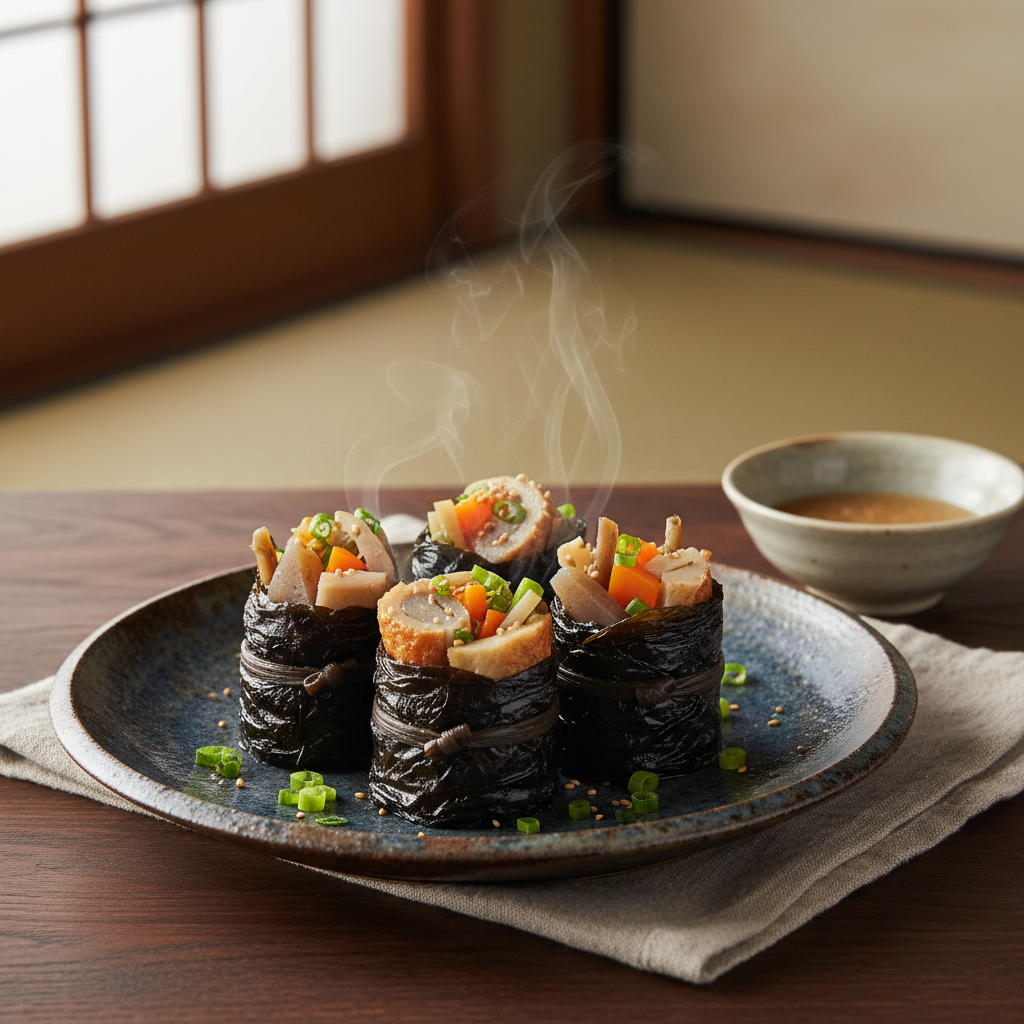
Arame maki is a traditional local dish transmitted through the Ise-Shima region of Mie Prefecture, particularly centered on Toba City. It is made by carefully wrapping seasonal fish such as sardines, mackerel pike, and cutlassfish in seaweed called “arame,” which belongs to the kelp family, and simmering it in a sweet and savory sauce of soy sauce, sugar, sake, and mirin.
Arame maki, which concentrates the rich umami of seaweed and the nutrition of fish, has long been loved by local people as a side dish for rice, a sake snack, and an indispensable dish for celebrations such as New Year. While it resembles kelp rolls in appearance, it is characterized by the distinctive flavor and texture unique to arame, making it a dish that makes use of seafood unique to Mie Prefecture.
Main Transmission Regions
Arame maki is particularly transmitted in the following regions within Mie Prefecture.
Toba City and Surroundings
Toba City is known as the birthplace of arame maki and remains the region where this dish is most actively prepared today. In fishing villages of the Toba-Shima area, it has been passed down through generations as a home-cooked dish.
The Entire Ise-Shima Region
The Ise-Shima region, which occupies the Shima Peninsula, has a history of flourishing as the “Mikes no Kuni” (御食国), presenting marine products to the imperial court, and a food culture making use of the abundant blessings of the sea has taken root. Arame maki is enjoyed throughout this region, with unique recipes passed down in each household.
Kamishima Island
Kamishima Island, an island off Toba City, is particularly known as a rare arame production site. On Kamishima, female divers are permitted to harvest arame for only one hour per year, and the thick, high-quality arame battered by the rough waves of Ise Bay is treasured.
Main Ingredients Used
Arame (Rough Seaweed)
Arame, which serves as the star ingredient of arame maki, is a seaweed belonging to the order Laminariales of the brown algae class, with the scientific name “Eisenia bicyclis.” In appearance, it resembles kelp, but it came to be called “arame” (rough seaweed) because its surface has coarser wrinkles than kelp.
Characteristics of Arame:
- Grows to a length of 1 to 2 meters
- Thicker than kelp with a firm texture
- Has an astringent taste, requiring a drying and aging process
- Mie Prefecture accounts for the majority of domestic production
- Particularly harvested in the Toba-Shima region during summer
Arame is a sacred ingredient that has long been presented to Ise Grand Shrine and holds special significance for the people of the region. After harvest, it is sun-dried and aged until autumn, at which point the astringent taste disappears and a unique umami is concentrated.
Fish
The fish used in arame maki varies by season.
Primarily Used Fish:
- Sardines: The most commonly used fish. Rich in fat with strong umami
- Mackerel Pike: Popular as an autumn delicacy. The flavor unique to blue fish pairs well with arame
- Cutlassfish: White fish with an elegant taste. Used in premium arame maki
- Mackerel: High fat content creates a rich flavor
- Horse Mackerel: Light taste, easy to eat
Using seasonal fish allows one to enjoy different flavors depending on the season, which is part of arame maki’s appeal.
Seasonings
- Soy sauce
- Sugar
- Sake
- Mirin
- Ginger (for removing fishy odors and adding flavor)
The sweet and savory sauce varies in composition from household to household, with each family having its own traditional “taste.”
History, Origins, and Related Events
Tradition as a Food-Offering Province
The Ise-Shima region has long served as the “Mikes no Kuni” since ancient times, playing an important role in presenting marine products to the imperial court. In particular, arame, presented to Ise Grand Shrine as a sacred ingredient, has been carefully handled in the region throughout history.
Relationship Between Arame and Ise Grand Shrine
Arame has long been used as “shinsen” (sacred food offerings) at Ise Grand Shrine and was an indispensable ingredient in Shinto rituals. Therefore, arame harvesting was subject to strict rules, and on Kamishima Island in particular, harvesting was permitted only once a year for just one hour, a tradition that continues to be observed today.
It is thought that arame maki was born from the idea of incorporating this sacred ingredient into everyday cooking. Using ingredients offered to the gods reflects the spirituality inherent in Japanese food culture, incorporating gratitude and respect into daily meals.
Wisdom of Fishing Villages
In the fishing villages of the Toba-Shima region, ingenuity was repeatedly applied to preserve the abundant fish caught and prepare them deliciously. By wrapping fish in arame, the fish’s umami is sealed in, while arame’s umami components soak into the fish, creating a synergistic effect that produces a deep flavor. Additionally, simmering increases preservation, making it a valuable dish in times before refrigeration.
Position as New Year’s Dish
Arame maki holds an important place as a New Year’s dish. The act of “wrapping” carries the auspicious meaning of “wrapping in good fortune,” making it established as a dish to celebrate the new year. Also, similar to kelp rolls, it has become an indispensable dish for celebrations due to the wordplay of “kombu” (kelp) with “yorokobu” (to rejoice).
Occasions and Seasons of Consumption
As Everyday Food
Arame maki is commonly eaten as home cooking in the Ise-Shima region. It appears on dining tables as a rice side dish or sake snack. Since it can be made ahead, it is also valued as a preserved dish during busy periods.
As New Year’s Dish
The most important consumption occasion is New Year’s. Traditionally, large quantities are made at year’s end and eaten by the family during the first three days of January. As a dish in the New Year’s feast or as a local flavor brightening the New Year’s table, it has become an indispensable presence.
For Celebrations and Memorial Services
Arame maki is also served at life events such as weddings and memorial services. It is frequently provided at regional gatherings and festivals as a traditional dish, becoming a dish that symbolizes the region’s identity.
Peak Seasons
Arame is harvested in summer (primarily July to August), but because it requires drying and aging after harvest, arame maki making becomes active from autumn through winter. Particularly at year’s end, scenes of families making arame maki for New Year are visible.
Regarding fish, autumn when sardines and mackerel pike reach their peak, and summer through autumn when cutlassfish is at its best, are ideal times for making arame maki.
How to Make (Ingredients and Detailed Steps)
Ingredients (Serves 3-4)
Main Ingredients:
- Dried arame: 30–40g
- Sardines (or mackerel pike, cutlassfish, etc.): 6–8 fish
- Kanpyo (dried gourd strips): as needed (for tying arame)
Simmering Liquid:
- Water: 400ml
- Soy sauce: 4 tablespoons
- Sugar: 3 tablespoons
- Sake: 3 tablespoons
- Mirin: 2 tablespoons
- Ginger (thinly sliced): 1 piece
Preparation
How to Rehydrate Arame
- Rinse dried arame quickly in water to remove surface dirt
- Soak in abundant water for 30 minutes to 1 hour to rehydrate
- Place rehydrated arame in a large pot and simmer slowly in abundant water for approximately 8 hours
- When arame becomes soft and the astringent taste is removed, turn off heat and cool
- Cut into appropriate lengths (lengths that can wrap fish)
※In the traditional method, simmering in a large pot for 8 hours brings out arame’s umami to the maximum. In modern times, using a pressure cooker can reduce this time.
Fish Preparation
- Remove the head and internal organs from sardines, and hand-filet them
- Carefully remove the central bones (using a bone remover is convenient)
- Rinse in water and wipe off moisture thoroughly with paper towels
- Lightly salt and let sit for about 10 minutes to remove fishy odors
- Wipe away any moisture that has emerged with paper towels
※With mackerel pike, hand-fillet similarly. With cutlassfish, cut into 3–4cm widths for use.
Kanpyo Preparation
- Rehydrate kanpyo in water
- Rub with salt and wash, then simmer until soft
- Squeeze out moisture and cut into appropriate lengths
Wrapping Method
- Place rehydrated arame on a cutting board
- Place the prepared fish fillet on the arame (skin side facing outward)
- Wrap the fish firmly with arame
- Tie the end with kanpyo (tie securely so it doesn’t come undone)
- Wrap all fish in the same manner
Tips:
- Wrap arame firmly to prevent falling apart during simmering
- Wrap kanpyo in double layers and tie securely for safety
- When wrapping, adjust so the fish thickness is uniform
Simmering
- Place all simmering liquid ingredients in a deep pot and mix
- Arrange arame rolls in the pot (without overlapping)
- Cover with a drop lid and bring to medium heat
- Once boiling, reduce to low heat and simmer slowly for 30–40 minutes
- Occasionally spoon simmering liquid over rolls to infuse flavor
- When the liquid is reduced and gloss appears, turn off heat
- Cool while still in the pot to deepen flavor absorption
Tips:
- Using a drop lid ensures even flavor distribution with minimal liquid
- Slow simmering over low heat allows arame and fish umami to become unified
- If the liquid reduces too much, add a little water
- Cooling first allows flavor to penetrate more deeply
Plating
- Cut cooled arame rolls into appropriate sizes (2–3cm width)
- Arrange in a dish
- Pour a little simmering liquid over
- Serve with julienned ginger or grated daikon radish for added flavor
How to Eat
Served Warm
Freshly simmered warm arame maki, with the umami of arame and fish spreading across the palate, has exceptional deliciousness. It is ideal as a rice side dish or sake snack.
Served Cold
Arame maki chilled in the refrigerator has a more concentrated flavor, offering a different kind of deliciousness. Particularly in summer, serving it cold is recommended.
Cutting Variations
- Wheel cuts: The most common method. The cross-section is beautiful and attractive for plating
- Diagonal cuts: Larger surface area allows sauce to cling better
- Whole: For celebrations, it is sometimes served uncut as a single piece
Paired Dishes
- White rice: The sweet and savory flavor pairs excellently with rice
- Tea over rice: Arame maki flaked into tea rice is also delicious
- Sake: Pairs perfectly with local Mie sake
- Clear soup: Pairing with a light soup balances the meal well
Nutritional Value and Health Benefits
Nutrition of Arame
Arame is rich in the following nutrients.
- Dietary Fiber: Improves intestinal environment
- Minerals: Calcium, iron, iodine, and others
- Alginic Acid: Lowers cholesterol levels
- Fucoidan: Enhances immunity, antioxidant effects
Nutrition of Blue Fish
Blue fish such as sardines and mackerel pike are rich in the following nutrients.
- DHA/EPA: Enhances brain function, thins blood
- Protein: High-quality protein source
- Vitamin D: Maintains bone health
- B Vitamins: Promotes energy metabolism
Synergistic Effects
Combining arame and fish allows simultaneous intake of both seaweed and fish nutrients, resulting in a nutritionally balanced dish. Additionally, despite the sweet and savory seasoning, seaweed’s dietary fiber can moderate sugar absorption.
Preservation and Transmission Efforts
Regional Preservation Society Activities
In Toba City, Mie Prefecture, cooking classes and food education activities are conducted to pass down arame maki and other local dishes to the next generation. Led by local fishing cooperatives and tourism associations, instructional seminars on traditional methods are held regularly.
School Education Initiatives
In local elementary and middle schools, opportunities to learn about local cuisine are provided during integrated learning time. By inviting local fishermen and culinary masters as instructors, classes where students experience making arame maki firsthand are conducted, allowing children to experience regional food culture directly.
Commercialization Efforts
In recent years, arame maki products in vacuum packs have been developed and sold as souvenirs. This has increased opportunities for people outside the region to learn about Mie’s local cuisine.
Primary Sales Locations:
- Souvenir shops in Toba City
- Roadside stations
- Tourist facilities in the Ise-Shima region
- Online shops
Restaurant Service
Restaurants serving local cuisine and inns in the Ise-Shima region provide arame maki as a signature menu item, playing a role in conveying regional flavors to tourists. In particular, long-established restaurants in Toba City offer authentic arame maki prepared using secret sauces passed down through generations.
Social Media Information Sharing
Official social media accounts of Mie Prefecture and Toba City, as well as regional tourism association accounts, regularly share information about arame maki and other local cuisines. Cooking videos and regional event information are regularly posted, working to increase awareness among younger generations.
Use as Tourism Resource
In the Ise-Shima region, efforts are underway to utilize the history of “Mikes no Kuni” as a tourism resource. Arame maki, as a dish symbolizing the unique food culture of this region, has become an important element of gastronomy tourism (food culture tourism).
Primary Tourism Programs:
- Arame maki making experience tours
- Guided tours exploring fishing village food culture
- Accommodation plans featuring local cuisine
Introduction in the Ministry of Agriculture, Forestry and Fisheries’ “Our Local Dish” Database
Arame maki is listed in the “Our Local Dish” database operated by the Ministry of Agriculture, Forestry and Fisheries, contributing to increased national recognition. In this database, its preparation method and history are detailed, serving as reference for those wishing to recreate it at home.
Arame Maki Arrangement Recipes
While maintaining traditional methods, arrangements suited to modern lifestyles have emerged.
Western-Style Arrangements
- Italian-style arame maki simmered in tomato sauce
- Mediterranean-style using olive oil and herbs
- Western arrangement with cheese rolled inside
Modern Flavoring
- Low-sodium type: Reduced soy sauce with stronger broth for health-conscious version
- Spicy version: Chili peppers or Sichuan pepper added for piquant flavor
- Yuzu-flavored: Fresh and aromatic with yuzu peel or juice added
Fish Variations
Beyond traditional sardines and mackerel pike, arame maki is sometimes made with:
- Salmon: Rich in fat, popular with children
- Bonito: Rich, concentrated flavor
- Yellowtail: Winter delicacy
- White fish (sea bream, sea bass, etc.): Refined taste
Relationship with Other Mie Prefecture Local Dishes
Mie Prefecture has many local dishes besides arame maki, each forming part of the region’s food culture.
Tekone Sushi
Another representative local dish of the Ise-Shima region. Bonito or tuna sashimi marinated in soy sauce marinade, mixed into vinegared rice. The name comes from fishermen “kneading by hand” it onboard ship.
Ise Udon
Thick and soft udon centered on Ise City. Served topped with a concentrated soy sauce glaze, it has long been enjoyed by Ise Grand Shrine visitors.
Sanma Sushi
A local dish of the Kumano region. A pressed sushi made with mackerel pike, an indispensable dish for festivals and celebrations.
Kokera Sushi
A local dish of the North Seiyo region. A pressed sushi with thinly sliced ingredients layered in many rows, characterized by beautiful appearance.
These local dishes each reflect the climate, geography, history, and culture of their respective regions, forming Mie’s rich food culture.
Ise-Shima Food Culture Sphere
The Ise-Shima region, with a history as the “Mikes no Kuni” presenting marine products to the imperial court since ancient times, developed a unique food culture.
Tradition of Mikes no Kuni
Mikes no Kuni refers to provinces that presented food to the imperial court, with the Ise-Shima region being one of three major food-offering provinces along with Wakasa (Fukui Prefecture) and Awaji (Hyogo Prefecture). Marine products were particularly abundant in offerings, including abalone, spiny lobster, bonito, and arame.
Culture of Female Divers
The Ise-Shima region is known as one of Japan’s premier areas for female divers. Abalone and turban shells harvested by diving female divers, as well as arame, have formed the foundation of regional food culture. In particular, arame harvested by female divers of Kamishima Island is known for its rarity and high quality.
Deep Connection with Ise Grand Shrine
The presence of Ise Grand Shrine has profoundly influenced this region’s food culture. The awareness of handling ingredients offered to the deity cultivated respect for ingredients and careful cooking methods, forming a high-quality food culture.
Places to Experience Arame Maki
Restaurants in Toba City
Several local cuisine restaurants in Toba City serve traditional arame maki. In long-established restaurants, authentic flavors made using methods passed down through generations can be enjoyed.
Inns and Hotels in the Ise-Shima Region
Inns and hotels in the Ise-Shima region frequently serve arame maki as local cuisine at dinner. As a dish making use of local ingredients, it is well-received by guests.
Roadside Stations and Tourist Facilities
Roadside stations and tourist facilities in the Ise-Shima region sell vacuum-packed arame maki as souvenirs. Simply warming it at home allows one to enjoy authentic flavors.
Regional Events
Arame maki may be served at food events held in Toba City and the Ise-Shima region. Opportunities to taste it exist at local festivals and product exhibitions.
Conclusion
Arame maki is a local dish transmitted through the Ise-Shima region of Mie Prefecture, particularly centered on Toba City. This dish, wrapping seasonal fish in rare arame seaweed that has been presented to Ise Grand Shrine and simmering it in a sweet and savory sauce, embodies the proud history as a food-offering province and the gratitude for the blessings of the sea.
Arame maki, concentrating the umami of seaweed and nutrition of fish, has been enjoyed from everyday side dishes to celebrations such as New Year. Traditional preparation methods continue to be carefully preserved in the region, and transmission to future generations is pursued through various means including school education, utilization as a tourism resource, and commercialization.
When visiting Mie Prefecture, be sure to experience this regionally unique and flavorful local dish. Additionally, since it can be recreated at home if ingredients are gathered, challenging yourself with traditional flavors is recommended. Through arame maki, one can feel Japan’s rich food culture and regional history.