What is Hoba Miso? History and How to Make This Representative Local Dish of the Hida Takayama Region in Gifu Prefecture
Hoba miso (朴葉味噌) is a local dish that has been cherished in the Hida Takayama region of Gifu Prefecture since ancient times. It is characterized by a simple yet profound flavor created by grilling miso and ingredients on a large leaf of the hoba tree, and in 2007 it was selected for the Ministry of Agriculture, Forestry and Fisheries’ “100 Selection of Local Dishes from Agricultural, Mountainous and Fishing Villages.”
In this article, we introduce the full appeal of this local dish, from the history and origins of hoba miso to traditional and modern arrangements, as well as restaurants where you can enjoy it throughout Gifu Prefecture.
Overview of Hoba Miso (朴葉味噌)
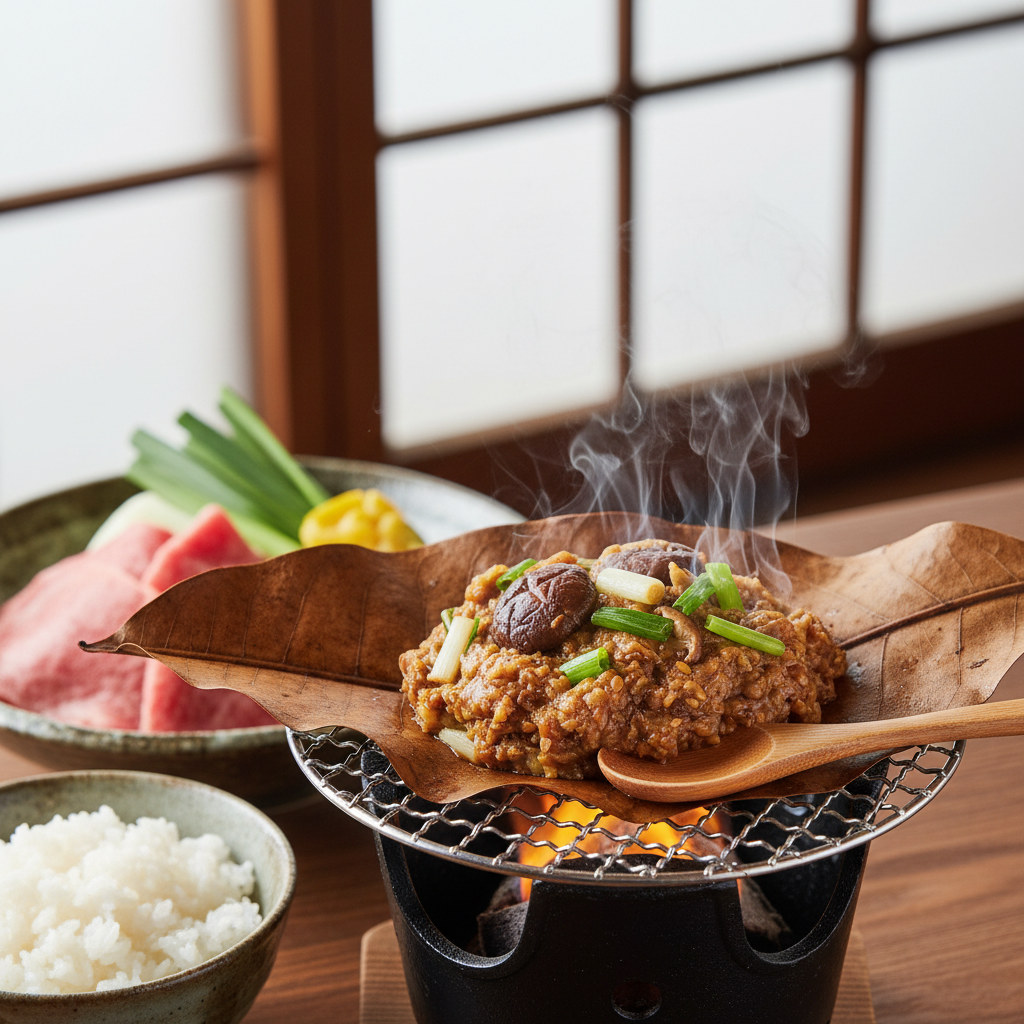
Hoba miso is a dish made by grilling miso mixed with vegetables such as green onions and shiitake mushrooms, and wild mushrooms on a leaf of the hoba tree (Magnolia hypoleuca), which serves as a vessel. It is known not only as a side dish for rice but also as an excellent accompaniment to Japanese sake.
The hoba leaf grows to be 20 to 40 centimeters in diameter, has antibacterial properties, and has a pleasant aroma, so it has long been used to wrap food items and as a vessel. When miso is grilled on this leaf, the distinctive aroma of the hoba leaf transfers to the miso, creating a unique flavor.
Main Regions of Transmission
Hoba miso is primarily a local dish transmitted in the Hida region of Gifu Prefecture (present-day northern Gifu Prefecture). It is particularly popular in the Hida Takayama area centered on Takayama City, and has been passed down as a standard dish on winter dining tables in this region.
The Hida region is at high altitude and experiences extremely harsh winters. These severe climatic conditions cultivated a food culture of hoba miso, a dish that utilizes miso, a preserved food.
History, Origins, and Related Events of Hoba Miso
There are various theories about the origins of hoba miso, but the most prominent is that in the Hida region, where forestry was thriving, woodcutters called somabito (杣人) who worked in the mountains began grilling miso on hoba leaves as plates in the mountains.
For people working in the mountains, hoba leaves were a readily available natural tableware. Grilling miso on a large and sturdy hoba leaf meant there was no need to carry dishes around, and after eating, they could simply return to nature—a practical cooking method.
Connection to Winter Food Preservation Culture
Winters in the Hida region are extremely harsh, and pickles in pickle barrels would sometimes freeze. There are records that in such times, people would place a grate over the fire in the hearth, lay hoba leaves on it, place frozen pickles on top, and eat them while heating and thawing them.
From such life wisdom, the cooking method of grilling miso on hoba leaves became established as a home-cooked dish. Miso, being a fermented food, can be preserved for long periods and was also an important source of protein for surviving harsh winters.
Selection for the 100 Selection of Local Dishes from Agricultural, Mountainous and Fishing Villages
In December 2007, hoba miso was selected by the Ministry of Agriculture, Forestry and Fisheries for the “100 Selection of Local Dishes from Agricultural, Mountainous and Fishing Villages.” This means that it was recognized as having particularly high historical and cultural value among local dishes passed down in various regions and as representative of the region’s food culture.
This selection elevated hoba miso to status as a local dish representing Gifu Prefecture, and its recognition throughout the country increased.
Main Ingredients and Materials (Serves 4)
The ingredients used in hoba miso center on the blessings of the mountains long cherished in the Hida region. The basic materials are as follows:
Basic Materials
- Hoba leaves (dried): 4 leaves
- Miso: 200g (Hida miso or red miso is recommended)
- Long green onion: 1 (sliced diagonally)
- Shiitake mushrooms: 4 (thinly sliced)
- Enoki mushrooms: 1 bag (remove stem end and loosen)
- Ginger: 1 piece (minced)
- Mirin: 2 tablespoons
- Sugar: 1 tablespoon
- Sake: 1 tablespoon
Additional Ingredients (Optional)
- Hida beef: 100-150g (thinly sliced)
- Mountain vegetables: warabi, zenmai, etc.
- Konjac: appropriate amount (thinly sliced)
- Tofu: 1/2 block (drained and cut into cubes)
Hida miso has a high proportion of koji and is sweet; traditionally, homemade koji miso has been used for hoba miso. Today, commercially available red miso or blended miso also makes delicious hoba miso.
How to Obtain Hoba Leaves
Hoba leaves are collected in autumn after they have fallen, dried, and stored. In the Hida region, the custom of gathering hoba leaves in autumn remains today.
Tourists and people from outside the prefecture can purchase dried hoba leaves at specialty shops in Gifu Prefecture or online shops. Lightly moistening with water before use makes them less likely to burn.
How to Make Hoba Miso
The method for making hoba miso is very simple. We detail both the traditional cooking method using a hearth and methods that can be replicated in modern homes.
Preparation
- Prepare the miso sauce: In a bowl, combine miso, mirin, sugar, and sake and mix well. Add minced ginger and mix further.
- Prepare the ingredients: Slice the green onion diagonally, slice the shiitake mushrooms thinly, remove the stem end of the enoki mushrooms and loosen them. If using Hida beef, cut it into bite-sized pieces.
- Prepare the hoba leaves: If using dried hoba leaves, lightly moisten them with water. This makes them less likely to burn and allows the aroma to emerge more readily.
Traditional Cooking Method (Using a Hearth)
- Place a grate over the hearth fire and lay a hoba leaf on it.
- Spread the miso sauce in the center of the hoba leaf.
- Arrange the ingredients on top.
- Grill slowly, and when the miso begins to simmer, mix it with the ingredients.
- When the miso is fragrant and roasted, it is ready.
Modern Cooking Method (Using a Hot Plate or Frying Pan)
Cooking on a Hot Plate:
- Set the hot plate to medium heat (150-160 degrees).
- Arrange hoba leaves and spread the miso sauce on top.
- Arrange the ingredients and cover with a lid, heating for 5 to 7 minutes.
- When the miso begins to simmer, mix it with the ingredients and heat for another 2 to 3 minutes.
- When the aroma of the hoba leaf rises and the miso becomes fragrant and roasted, it is ready.
Cooking in a Frying Pan:
- Heat a frying pan over medium heat.
- Lay a hoba leaf (adjusting size to fit in the pan) and place the miso sauce and ingredients on top.
- Cover with a lid and heat over low heat for 7 to 10 minutes.
- Mix occasionally, and when the miso is fragrant and roasted, it is ready.
Cooking Tips
- Heat level: If the heat is too high, the hoba leaf will scorch, so cook slowly over medium to low heat.
- Mixing method: When the miso begins to simmer, mixing it with the ingredients ensures even flavor distribution.
- Roasting level: A light char on the surface of the miso is best for a fragrant and delicious result.
Occasions and Seasons for Eating
Hoba miso frequently appeared on winter dining tables in the Hida region. The sight of families gathered around a hearth grilling and eating hoba miso in the harsh cold was a winter spectacle of Hida.
Eating Habits in Past Households
Until the Showa era, hoba miso was made daily in many households. Especially during winter, when farming was dormant, it was highly valued as an easy-to-make dish using miso, a preserved food, and hoba leaves gathered in autumn.
At dinner time, when family gathered around the hearth, each person would grill miso on their own hoba leaf and eat it with hot rice. Such moments of family togetherness accompanied hoba miso.
Eating Habits in Modern Times
Today, the opportunity to make hoba miso at home in everyday life has decreased, but instead it is enjoyed as a hospitality dish for tourists and as a dish for special occasions.
Especially for tourists visiting Hida Takayama, hoba miso is one of the local dishes that must be tasted, and it is served at many restaurants. Additionally, hoba miso sets for souvenirs have become popular products.
How to Eat and Enjoy Hoba Miso
The greatest appeal of hoba miso lies in the experience of grilling and eating it right before you. The essence is to enjoy the miso gradually warming and the aroma of the hoba leaf rising while savoring it piping hot.
Basic Ways to Eat It
- As a side dish for rice: The most common way. Place the finished hoba miso on a bowl of hot rice and eat. The rich flavor of the miso and the aroma of the hoba leaf make you want more rice.
- As an accompaniment to alcoholic beverages: It pairs excellently with Japanese sake. Especially when combined with local sake from Hida, you can fully enjoy the local flavors.
- In rice balls: Another delicious way is to use the finished hoba miso as a filling for rice balls.
Combination with Hida Beef
Modern popular arrangements include adding Hida beef to hoba miso. Grilling marbled Hida beef on the hoba leaf together with the miso creates a luxurious dish in which the beef fat and umami of the miso intertwine exquisitely.
At tourist-oriented restaurants, this Hida beef hoba miso has become a signature menu item for many, establishing itself as a modern arrangement combining traditional cuisine with premium ingredients.
Variations with Vegetables and Mountain Vegetables
By adding various ingredients such as mushrooms, mountain vegetables, konjac, and tofu, you create a nutritionally balanced dish with an unforgettable taste. Using seasonal mountain vegetables allows you to enjoy the flavors of each season.
Efforts for Preservation and Transmission
Various initiatives are underway throughout Gifu Prefecture to pass down hoba miso as a local dish to future generations.
Provision at Restaurants
Many restaurants in the Hida Takayama region offer hoba miso as a standard menu item. Restaurants in converted traditional houses allow visitors to taste authentic hoba miso in a traditional atmosphere and are popular with tourists.
Particularly in Takayama City, many restaurants feature hoba miso as their signature menu, each showing its individuality through unique miso blends and ingredient combinations.
Product Development Efforts
Hoba miso is also widely sold as a souvenir product. Products have been developed such as sets containing hoba leaves, miso, and ingredients, as well as ready-to-eat hoba miso, allowing people to easily enjoy it at home.
At specialty shops and online stores in Gifu Prefecture, “hoba miso sets” containing hoba leaves, special miso, and instructions are proving popular. This allows people outside the prefecture to enjoy authentic hoba miso at home.
School Lunches and Food Education Activities
Some schools in Gifu Prefecture incorporate hoba miso into school lunch menus as part of food education to learn about local cuisine. By creating opportunities for children to experience their region’s food culture, transmission to the next generation is being promoted.
Additionally, hoba miso-making is featured in cooking classes and experience events, with activities underway to convey the appeal of local cuisine through the hands-on experience of grilling miso on hoba leaves.
Information Dissemination Through SNS and Media
In recent years, information dissemination through SNS has become active. When tourists visiting Hida Takayama post photos and videos of hoba miso on SNS, its appeal spreads throughout the country.
Gifu Prefecture’s official tourism website also features hoba miso, disseminating recipes and information about restaurants where it can be eaten, working to increase awareness of the local dish.
Efforts by Transmitters
In the Hida region, households and restaurants that have long made hoba miso continue to preserve its methods and flavors. In particular, traditional hoba miso made with homemade koji miso is carefully passed down as each household’s or restaurant’s “secret recipe.”
Some miso breweries manufacture and sell miso dedicated to hoba miso, continuing to make miso that preserves traditional methods while adapting to modern tastes.
Restaurants in Gifu Prefecture Where You Can Enjoy Hoba Miso
When visiting the Hida Takayama region, by all means try authentic hoba miso. You can enjoy it at the following types of restaurants:
Local Cuisine Specialty Restaurants
At restaurants specializing in Hida local cuisine, you can taste hoba miso made using traditional methods. Many have converted traditional houses as storefronts, allowing you to experience Hida food culture in its entirety, including the atmosphere.
Hida Beef Restaurants
Restaurants serving hoba miso grilled with Hida beef are also popular. The combination of marbled Hida beef and miso is a luxurious flavor particularly favored by tourists.
Izakayas and Set Meal Restaurants
Hoba miso is a standard menu item at local izakayas and set meal restaurants where locals dine. You can enjoy local flavors at more reasonable prices than tourist-area restaurants.
Inns and Hotels
Many inns and hotels in Hida Takayama serve hoba miso as one dish in dinner. You can savor local cuisine leisurely along with your stay.
Conclusion
Hoba miso is a local dish nurtured in the Hida Takayama region of Gifu Prefecture, embodying the wisdom and ingenuity of those who came before. It is a simple dish using a natural hoba leaf as a vessel, combining homemade miso with local ingredients, yet its profound flavor and cultural value have been inherited across generations.
Once a home-cooked dish for surviving harsh winter cold, hoba miso has now evolved as both a hospitality dish for tourists and as a luxury gourmet when combined with Hida beef.
Selected for the Ministry of Agriculture, Forestry and Fisheries’ “100 Selection of Local Dishes from Agricultural, Mountainous and Fishing Villages,” the value of hoba miso has been nationally recognized. When visiting Hida Takayama, by all means experience the authentic taste. You might also purchase a souvenir set and enjoy the pleasure of grilling it with the aroma of hoba leaves at home.
Preserving tradition while continuing to evolve in new forms, hoba miso will undoubtedly remain beloved as a representative local dish of Gifu Prefecture by many people in the years to come.