Buri Daikon: Ishikawa Prefecture’s Local Dish – Comprehensive Explanation of History, Preparation, and Regional Culture
What is Buri Daikon (Buri Daikon)?
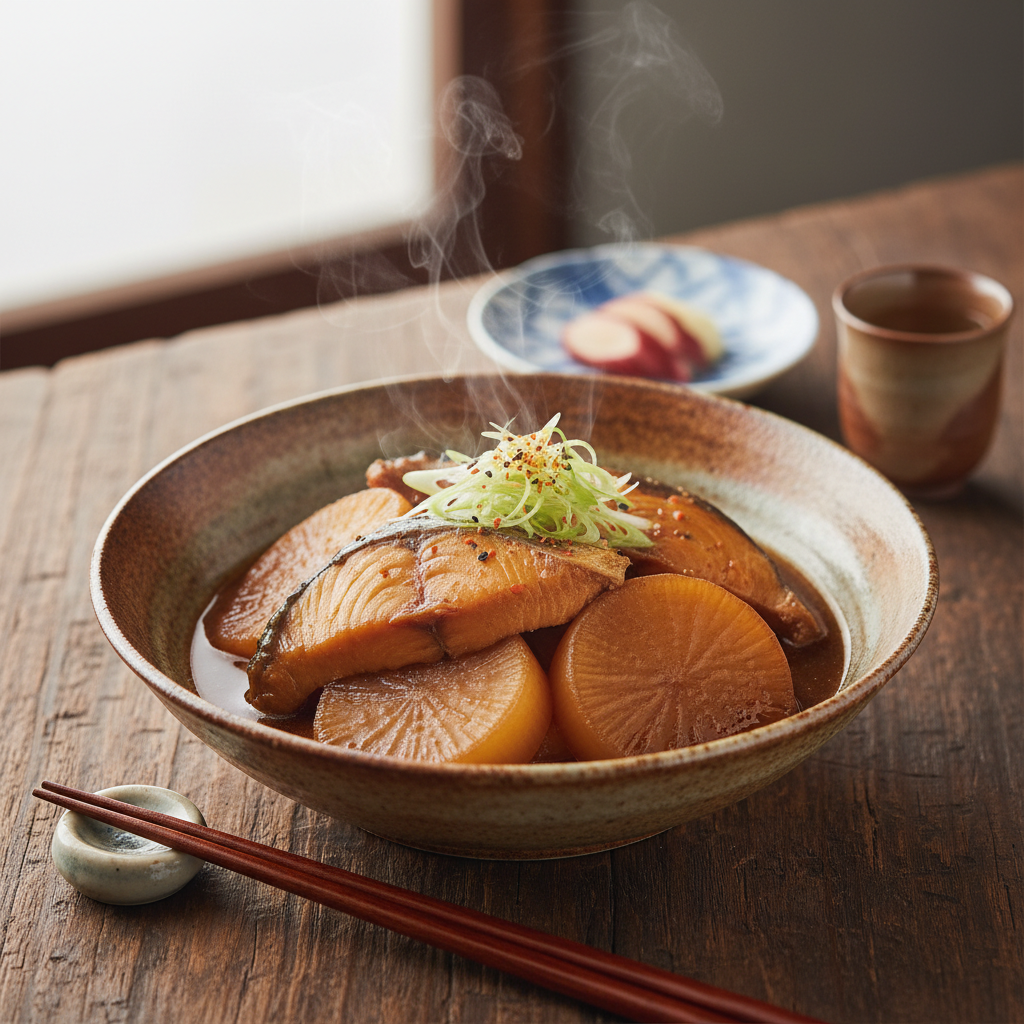
Buri daikon is a representative local dish of Ishikawa Prefecture, made by simmering yellowtail (buri) scraps with daikon radish in a soy-based broth. While it is now known throughout the country as a home-cooked meal, it originally originated and developed in the Hokuriku region, particularly in Ishikawa and Toyama prefectures.
In Kanazawa dialect, it is called “jiwamon,” a classic side dish, and remains a staple on winter tables in many households today. The daikon radish infused with the rich flavor of yellowtail has an exceptional taste and is enjoyed both as a rice accompaniment and as a sake pairing.
Characteristics of Buri Daikon
The most distinctive feature of buri daikon is the use of yellowtail scraps. In the Hokuriku region, fish shops and supermarkets stock more scraps than fillets, and locals prefer to purchase the scraps. The scraps contain meat around the bones, the central bone, head parts, and other pieces that are more concentrated in umami than fillets, making them ideal for simmered dishes.
Daikon radish reaches its peak season in winter, becoming sweeter and more tender. By combining this seasonal daikon with yellowtail, a nostalgic and gentle-tasting dish is created where the flavors complement each other.
The Deep Connection Between Ishikawa Prefecture and Buri Daikon
Yellowtail Fishing in Ishikawa and “Buri Okoshi”
When discussing traditional food ingredients in Ishikawa Prefecture, yellowtail is indispensable. From late autumn to early winter, the thunder phenomenon is called “buri okoshi,” and when this thunder sounds, full-scale yellowtail fishing using fixed nets begins in the Noto Uchino district.
During this period, wild yellowtail traveling through the Japan Sea gathers off the Noto Peninsula, and during the depths of winter becomes “kanaburi” (winter yellowtail) with substantial fat content. The peak season runs from November through February of the following year, and during this time the local markets are filled with yellowtail of all sizes, creating a lively scene.
Cultural Significance of Yellowtail in Ishikawa Prefecture
Yellowtail has been treasured as a lucky charm because its name changes with growth, making it a fish of good fortune. In Ishikawa Prefecture, it is an essential item for year-end festivals and gifts, and the tradition of giving a whole yellowtail at the end of the year still remains today.
There is also a custom of sending yellowtail from the bride’s family home to her new family, a tradition said to continue from the Edo period. There are records of the Kaga clan feudal lord offering yellowtail to the shogun’s household, proving that yellowtail is deeply rooted in Ishikawa’s history and culture.
Principal Traditional Regions
Buri daikon is prepared throughout Ishikawa Prefecture, but it is particularly popular in the Kaga region centered on Kanazawa City and the Noto region. The Noto Peninsula’s Uchino district is the center of yellowtail fishing, and because fresh yellowtail is abundantly available, various yellowtail dishes including buri daikon have developed.
History, Origins, and Related Events
Origins of Buri Daikon
The exact origin of buri daikon is unclear, but it is believed to have been eaten in the Hokuriku region already during the Edo period. In the Noto region, where yellowtail fishing was thriving, after the meat was used for sashimi or salt-grilled preparation, the scraps were naturally combined with daikon and simmered to avoid waste.
Daikon radish keeps well and was prized as a valuable winter vegetable. By combining it with yellowtail scraps, a nutritious and warming dish was created, embodying the wisdom of surviving cold winters and becoming a regional home-cooked dish.
The Kaga Clan and Yellowtail
During the Edo period, the Kaga clan had a custom of the feudal lord offering yellowtail caught in Noto to the shogun’s household. Records remain of fresh yellowtail being transported from Kanazawa to Edo via a route called the “Buri Kaido” (Yellowtail Highway). This demonstrates how important yellowtail was as a food ingredient to Ishikawa Prefecture.
Occasions and Seasons for Consumption
Buri daikon is primarily prepared from November through February during the winter season. Particularly during year-end and New Year celebrations, there remains a strong custom of families preparing buri daikon using yellowtail received as gifts. It also appears on the New Year meal table and has become an indispensable dish for occasions when families gather.
Additionally, on the day “buri okoshi” occurs, many households prepare buri daikon to celebrate the arrival of winter, making it a dish that reflects the changing of seasons.
Primary Ingredients Used
The main ingredients used in buri daikon are as follows:
Yellowtail (Scraps)
Wild Ishikawa-grown yellowtail is considered the finest, particularly the winter yellowtail caught in Noto, which has excellent fat content and deep umami. The scraps include head parts, central bones, belly bones, and collar, where the meat around the bones releases gelatin when simmered, creating a rich broth.
Daikon Radish
Winter daikon is used. Daikon cultivated within Ishikawa Prefecture is sweet and resistant to falling apart when cooked. The daikon is cut into thick round slices or half-moon shapes, and pre-boiling helps the flavors absorb better.
Seasonings
- Soy sauce: Dark soy sauce is typically used
- Sake: Japanese sake is used to remove the fishiness from the yellowtail
- Mirin: Adds sweetness and gloss
- Sugar: Adjusted according to household preference
- Ginger: Used thinly sliced or cut into thin strips to remove fishiness
Ingredients (Serves 4)
Standard ingredients for preparing buri daikon at home are as follows:
- Yellowtail scraps: 600–800g
- Daikon radish: 1 (approximately 1kg)
- Ginger: 1 piece
- Sake: 100ml
- Soy sauce: 4 tablespoons
- Mirin: 3 tablespoons
- Sugar: 2 tablespoons
- Water: As needed
- Salt (for preparation): As needed
Preparation Method
Preliminary Preparation
- Preliminary treatment of yellowtail scraps: Rinse the yellowtail scraps well with water, sprinkle with salt, and let sit for about 10 minutes. Then pour boiling water over them for blanching, wash with cold water, and carefully remove blood and slime. This step is crucial for removing any fishy odor.
- Pre-boiling the daikon: Peel the daikon thickly and cut into 2–3cm-wide round slices or half-moon shapes. Pre-boil in rice-washing water or plain water for 15–20 minutes until a bamboo skewer passes through easily, then drain in a colander.
- Ginger preparation: Peel the ginger and cut into thin slices.
Cooking Steps
- Prepare the broth: Pour 400ml water, sake, soy sauce, mirin, and sugar into a pot and bring to a boil.
- Simmer the yellowtail: Once the broth boils, add the yellowtail scraps and ginger. Once it returns to a boil, carefully remove any scum.
- Add the daikon: Add the pre-boiled daikon, place a drop lid on top, and simmer over medium heat for 20–30 minutes.
- Infuse the flavors: Occasionally ladle the broth over the daikon as it simmers. When a bamboo skewer passes easily through the daikon and the broth has reduced to about half, remove from heat.
- Cool: Let cool as is to allow flavors to fully infuse. Reheating just before serving further develops the flavors.
Tips for Delicious Preparation
- Careful blanching: The most important step for removing any fishiness from the yellowtail. Completely removing blood and slime results in a refined, clean taste.
- Use a drop lid: A drop lid ensures even seasoning with less broth and prevents the daikon from falling apart.
- Cool once: Simmered dishes absorb flavors as they cool. If time allows, letting it sit overnight develops deeper flavors.
- Choosing scraps: Select pieces with substantial meat, such as the collar or head, for better texture and substance.
How to Eat
Buri daikon is typically eaten warm. Serve in a large bowl with an appropriate amount of broth poured over it. It is enjoyed both as a rice accompaniment and as a sake pairing.
In Ishikawa Prefecture, when eating buri daikon, emphasis is placed on savoring the umami of the yellowtail infused into the daikon. Carefully separating the meat around the bones with chopsticks while eating is also one of the pleasures of this dish.
Any remaining broth can be poured over rice the next day or used to simmer other vegetables. This reflects the Hokuriku food culture of using ingredients without waste.
Nutrition and Health Benefits
Buri daikon is a highly nutritious dish. Yellowtail is rich in omega-3 fatty acids such as DHA and EPA, which have the effect of improving blood circulation and maintaining brain health. It is also rich in high-quality protein and contains B vitamins and vitamin D.
Daikon radish contains the digestive enzyme diastase, which aids digestion. It is also rich in vitamin C and dietary fiber, contributing to improved immunity and better intestinal health.
It is an ideal dish for warming the body during cold winter months while providing nutritional replenishment.
Other Yellowtail Dishes of Ishikawa Prefecture
Beyond buri daikon, Ishikawa Prefecture has various other yellowtail dishes:
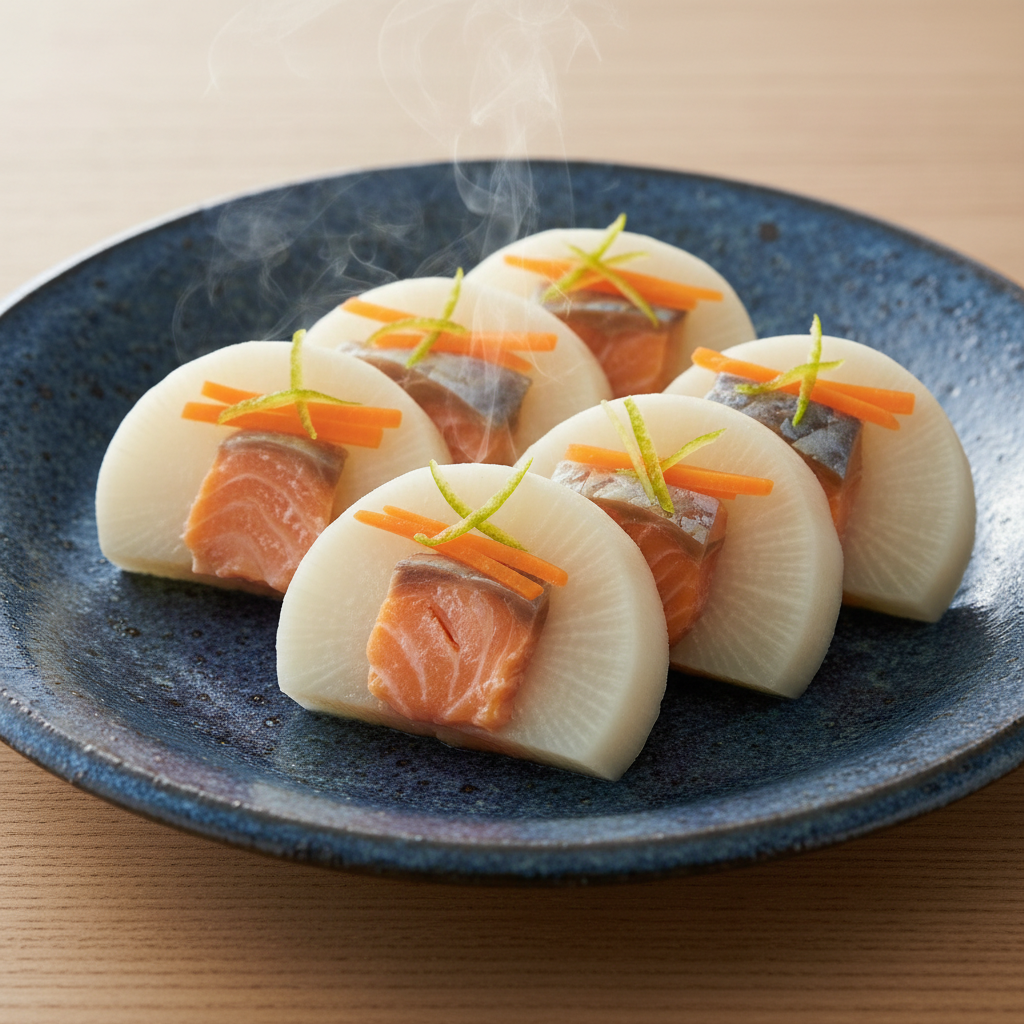
Kaburazushi
A fermented food made by inserting slits into turnips and sandwiching yellowtail inside, then pickling in koji. It is an indispensable New Year’s dish with distinctive flavor and texture.
Maki Buri
Salted and fermented yellowtail, a traditional dish of the Noto region and a preserved food.
Yellowtail Sashimi
Fresh winter yellowtail sashimi is rich with fat and sweetness, delicious whether eaten with soy sauce or salt.
Yellowtail Teriyaki
Yellowtail teriyaki with a glossy finish from soy sauce and mirin is a standard home-cooked dish.
Conservation and Transmission Efforts
Practitioners and Preservation Groups
While buri daikon has been passed down in households as a home-cooked dish, in recent years transmission to younger generations is occurring through cooking classes and regional food culture preservation activities. Throughout Ishikawa Prefecture, cooking schools and public halls offer local cuisine courses teaching buri daikon preparation.
Ministry of Agriculture, Forestry and Fisheries Recognition
Buri daikon is recognized by the Ministry of Agriculture, Forestry and Fisheries as part of “Our Regional Cuisine,” officially recorded and preserved as part of Japan’s food culture. This recognition has increased nationwide awareness and reappraised the value of this regional dish.
Commercialization and Modern Initiatives
Food manufacturers within Ishikawa Prefecture have commercialized buri daikon as retort pouches and frozen foods, allowing households to easily enjoy authentic flavors at home. Additionally, restaurants and izakayas serve buri daikon with modern arrangements while maintaining traditional cooking methods, making it popular with tourists.
Social Media Outreach
Young cooking enthusiasts share buri daikon recipes and cooking processes on social media, generating new interest. Many posts appear under hashtags such as “#buridaikon” and “#ishikawa regional cuisine,” allowing traditional dishes to spread through modern communication tools.
Places to Enjoy Buri Daikon in Ishikawa Prefecture
As a Home-Cooked Dish
Throughout Ishikawa Prefecture, many households prepare buri daikon in winter. Local supermarkets and fish shops sell yellowtail scraps specifically for buri daikon, and preparation recipes are sometimes distributed.
Restaurants and Izakayas
Many restaurants and izakayas in Kanazawa City offer buri daikon as a winter-season limited menu. Particularly around Omicho Market, restaurants specializing in dishes made with fresh yellowtail are concentrated.
Roadside Stations and Direct Sales Centers
Roadside stations and farm direct sales shops in the Noto region occasionally sell homemade buri daikon made with locally caught yellowtail and daikon.
Buri Daikon and Ishikawa’s Food Culture
Buri daikon is a dish where Ishikawa Prefecture’s abundant ocean bounty, the wisdom of avoiding food waste, and a culture of valuing seasonal changes converge. Beginning with the natural phenomenon of “buri okoshi” as a signal for yellowtail fishing, the pairing of seasonal yellowtail and daikon has long enriched winter tables.
Behind buri daikon lies the custom of exchanging yellowtail, a fish of good fortune whose name changes with growth, and the tradition of sending yellowtail from the bride’s family home to her new family—all reflecting unique Ishikawa culture.
While now known nationwide as a dish, deeper appreciation of buri daikon comes from understanding Ishikawa’s original traditions and culture. This nostalgic and gentle-tasting buri daikon will continue to be cherished and passed down as an important regional dish on Ishikawa’s winter tables for generations to come.