Daikon Sushi (大根ずし) – What Is It? A Comprehensive Explanation of the History, Preparation Method, and How to Enjoy This Traditional Local Dish of Kanazawa, Ishikawa Prefecture
Daikon sushi (大根ずし), a traditional local dish passed down for centuries in Kanazawa City, Ishikawa Prefecture, is a traditional fermented food representing the Kaga region alongside kabu sushi. This dish, made by pickling dried herring and daikon radish in sweet sake made from rice koji, has been enjoyed as a winter delicacy, particularly in New Year’s cuisine. This article provides a comprehensive explanation of daikon sushi, from its historical background to preparation methods, ways to enjoy it, and where to purchase it.
Basic Information and Characteristics of Daikon Sushi
What is Daikon Sushi?
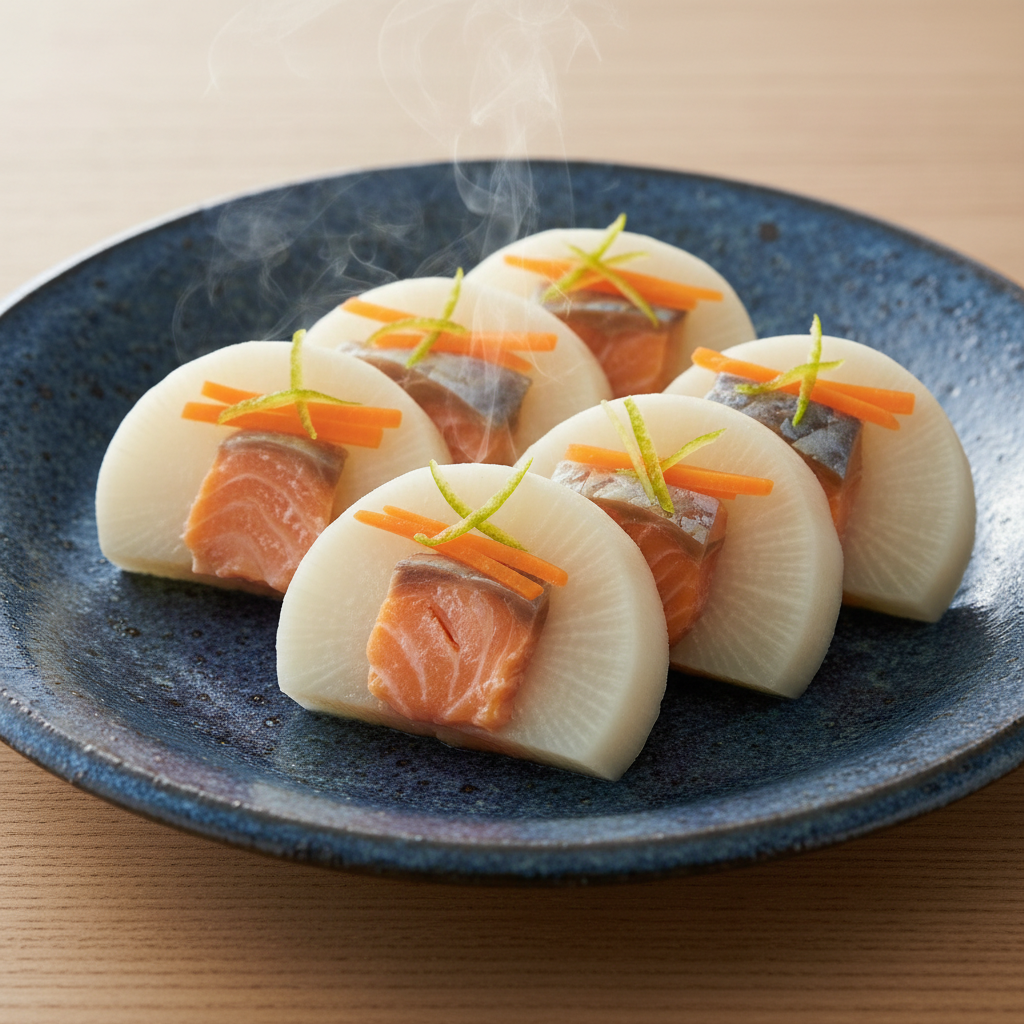
Daikon sushi is a type of “narezushi” made by pickling salted daikon radish and dried herring together with sweet sake made from rice koji. It is traditionally made in Kanazawa City and the former Ishikawa County Tsurugidani area of Hakusan City, and is enjoyed primarily from winter through New Year’s as a seasonal dish.
“Narezushi” is a fermented sushi representing the prototype of sushi made with seafood and rice, and daikon sushi is also called “hanzushi” because it includes vegetables in the pickle. Unlike modern nigiri sushi, it is a fermented food characterized by a unique sourness and umami flavor from lactic acid fermentation.
Main Characteristics of Daikon Sushi
Daikon sushi has the following characteristics:
Unique flavor from fermentation: Pickling in sweet sake made from rice koji promotes lactic acid fermentation, creating a mellow sourness and deep umami. It offers a complex flavor unique to fermented foods.
Umami of dried herring: Dried herring from Hokkaido, often transported on kitamaebune (northern trading ships), is frequently used, with the herring’s rich umami seeping into the daikon. In some regions, mackerel or salmon are used instead.
Seasonality: Primarily made during the cold season from November to March, appearing on tables as a New Year’s dish. Making it during this period allows fermentation to proceed at an appropriate temperature, resulting in delicious flavor.
Role as preserved food: Since before refrigeration, it has served as a preserved food, providing a valuable source of protein during winter.
Difference Between Daikon Sushi and Kabu Sushi
Ishikawa Prefecture also has “kabu sushi,” a local dish alongside daikon sushi. While their preparation is similar, they differ in the following ways:
- Vegetables used: Daikon sushi uses daikon radish, while kabu sushi uses kabu (turnip)
- Type of fish: Daikon sushi primarily uses dried herring, while kabu sushi mainly uses yellowtail
- Texture: Daikon has a crispy texture, while kabu has a softer texture
- Regional recognition: Kabu sushi is more widely known, with more shops manufacturing and selling it
Both are important local dishes representing Ishikawa Prefecture, integral to the region’s winter food culture.
History and Cultural Background of Daikon Sushi
The Relationship Between Kitamaebune and Daikon Sushi
The establishment of daikon sushi in Ishikawa Prefecture was greatly influenced by the “kitamaebune” (northern trading ships) that traveled the Japan Sea from the Edo period through the Meiji period. These trading ships connected Hokkaido and Osaka, with ports in the Kaga domain (present-day Ishikawa Prefecture) serving as important stops.
Dried herring transported from Hokkaido by kitamaebune was a valuable protein source at the time. Dried herring refers to herring with the head and organs removed and dried, highly valued as a food that could be preserved long-term. Meanwhile, rice cultivation flourished in Ishikawa Prefecture, with abundant high-quality rice and koji available.
The combination of Hokkaido’s dried herring with local daikon and rice koji created daikon sushi. Through exchanges dating from the domain period, a unique fermented food culture unique to the Hokuriku region was cultivated, and daikon sushi became established as a winter preserved food.
Positioning in Kaga Food Culture
The Kaga domain, called “Kaga Hyakumangoku” (One Million Koku of Kaga), was a wealthy region where samurai culture and merchant culture fused to develop a unique food culture. Kaga cuisine, influenced by Kyoto cuisine, is distinctive in its use of seafood from the Japan Sea and mountain produce from the Kaga Plain.
Daikon sushi has played the following roles in Kaga’s food culture:
Tradition as New Year’s cuisine: There is a custom of preparing it at year-end and eating it during New Year’s, occupying an important position as a New Year’s dish.
Symbol of fermented food culture: Ishikawa Prefecture is rich in fermented foods such as miso, soy sauce, and koji, with daikon sushi serving as part of this culture.
Inheritance of home cooking: Each household has traditionally passed down recipes with slightly different flavors enjoyed for generations.
Daikon Sushi in the Modern Era
While making daikon sushi at home has declined, specialty shops and long-established pickle stores in Kanazawa continue to manufacture it using traditional methods. Established shops such as “Shijimayadon” in Kanazawa produce and sell daikon sushi alongside kabu sushi, enjoyed by tourists and local residents alike.
Additionally, from the perspectives of food education and preservation of regional food culture, efforts are increasing to incorporate it into school meals and offer cooking classes teaching preparation methods. Initiatives to pass on this traditional local dish to the next generation are underway in various regions.
Ingredients and Preparation Method for Daikon Sushi
Basic Ingredients
The main ingredients needed to make daikon sushi are as follows:
Main ingredients:
- Daikon radish: Select thick, fresh daikon. Slice into rounds or half-moons
- Dried herring: Rehydrate with water before use. In some regions, mackerel or salmon may be used instead
- Rice koji: Used to make sweet sake
- Rice: Combined with koji to make sweet sake
Supplementary ingredients:
- Carrot: Julienne and add for color and flavor
- Citron: Julienne the skin for aromatic flavor
- Kombu: Sometimes used to add umami
- Salt: Used for daikon’s preliminary pickling
Preparation Steps
Daikon sushi preparation is divided into three main stages: “preparation,” “main pickling,” and “fermentation and aging.”
1. Preparation (Ingredient Preparation)
Daikon preliminary pickling:
- Slice daikon into approximately 1cm-thick rounds or half-moons
- Sprinkle salt, weight down with stones, and pickle for 2-3 days to remove moisture
- Once appropriately dehydrated, lightly rinse away the salt
Dried herring preparation:
- Soak dried herring in water overnight to rehydrate
- Once softened, cut into appropriate sizes
- Remove bones if desired
Sweet sake preparation:
- Cook rice and cool to approximately 60 degrees Celsius
- Add rice koji and mix well
- Maintain around 60 degrees Celsius while fermenting for 8-12 hours to make sweet sake
- Complete once sweetness develops
2. Main Pickling
- Spread a thin layer of sweet sake on the container bottom
- Arrange salted daikon slices
- Place dried herring on top of daikon
- Scatter julienned carrot and citron skin
- Pour sweet sake evenly over
- Repeat to create layers
- Cover completely with sweet sake
- Place an otoshibuta (drop-in lid) and weight appropriately
3. Fermentation and Aging
- Place in a cool, dark location (5-10 degrees Celsius)
- Ready to eat within 1-10 days
- As fermentation progresses, sourness increases; refrigerate once desired flavor is reached
- The optimal eating period is approximately 2 weeks to 1 month from manufacture date
Preparation Tips and Precautions
Temperature control: Fermentation is greatly affected by temperature. Making during the cold season (January-February) allows fermentation to proceed at an optimal temperature, resulting in delicious flavor. Temperature too high causes over-fermentation and excessive sourness; too low prevents fermentation and umami development.
Weight balance: Stones too heavy crush the daikon; too light results in uneven fermentation. Approximately 1-1.5 times the weight of daikon is appropriate.
Sanitation: Containers and utensils should be sterilized with boiling water to maintain cleanliness. Contamination from harmful bacteria causes spoilage.
Sweet sake concentration: Sweet sake should be neither too thick nor too thin. Adjust the rice-to-koji ratio to achieve appropriate sweetness and consistency.
Regional and Household Variations
Daikon sushi preparation varies slightly by region and household:
- Fish type: Dried herring is standard in Kanazawa, while mackerel is used in some Hakusan households
- Cutting method: Some slice daikon into rounds, others into half-moons
- Supplementary ingredients: Some households add kombu or chili peppers
- Fermentation period: Fermentation time varies from 1-2 weeks depending on preference
These differences are preserved as each family’s distinctive “home cooking.”
How to Enjoy and Appreciate Daikon Sushi
Basic Way of Eating
Daikon sushi is typically enjoyed as follows:
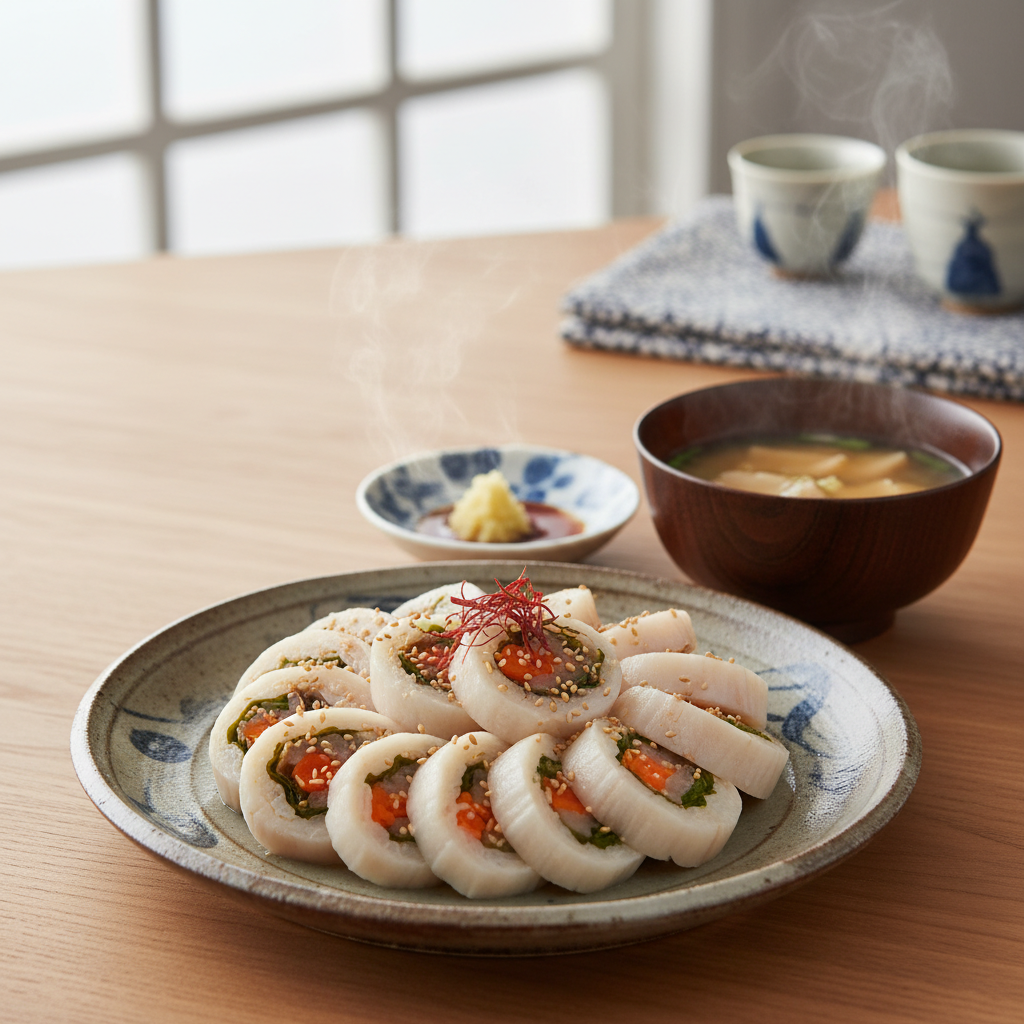
Cutting: Remove from container and cut into appropriate sizes. Plate with daikon, herring, and sweet sake together.
Plating: Arrange on a small plate with sweet sake. Plate attractively with visible carrot and citron skin for color.
Eating: Eat as-is. Enjoy the harmonious combination of daikon’s crispy texture, herring’s umami, and sweet sake’s sweetness and sourness in this complex-flavored dish.
Recommended Food Pairings
Due to its distinctive flavor, daikon sushi pairs well with:
Sake: Ishikawa is also famous for sake production, with exceptional pairing. Dry sake particularly complements daikon sushi’s sweetness and sourness.
Tea: Enjoying with hot green tea or roasted tea cleanses the palate, making daikon sushi’s flavor more prominent.
Rice: Traditional enjoyment with plain white rice as a New Year’s dish.
Other local dishes: Serving alongside other Ishikawa dishes like kabu sushi, jibuni, and sasazushi fully showcases Kaga food culture.
Storage Methods and Shelf Life
Storage method:
- Once ready to eat, store in the refrigerator
- Use airtight containers
- Use clean chopsticks when removing to prevent bacterial contamination
Shelf life:
- Homemade: Approximately 2 weeks to 1 month from manufacture date
- Commercial products: Typically 15-60 days depending on product
- As fermentation progresses, sourness intensifies; consume while at your preferred flavor intensity
Nutritional Value and Health Benefits
As a fermented food, daikon sushi offers the following nutritional value and health benefits:
Lactic acid bacteria: Bacteria generated during fermentation help regulate intestinal environment.
B vitamins: Fermentation of rice koji provides abundant B vitamins.
Protein: Dried herring provides high-quality protein.
Dietary fiber: Daikon contains dietary fiber that aids digestion.
Enzymes: Enzymes unique to fermented foods promote digestion and absorption.
Note that salt content is relatively high, so avoid overconsumption.
Where to Purchase Daikon Sushi
Specialty Shops and Established Stores in Ishikawa Prefecture
Main shops where daikon sushi can be purchased:
Shijimaya Honpo:
A long-established pickle shop representing Kanazawa that manufactures and sells daikon sushi alongside kabu sushi. Multiple direct-operated shops exist within Kanazawa, popular with tourists. Traditional manufacturing methods are maintained while quality control is thorough.
Yoneda:
Manufactures daikon sushi using “benizagane,” a red-centered daikon variety. Unlike standard white daikon, the distinctive red appearance is characteristic. The miso-pickled mackerel and red-centered daikon combination is popular.
JA Hakui (Hakusan City):
Sells daikon sushi made by local women using traditional methods. Tastes rooted in the local community.
Purchasing Considerations
Seasonal product: Daikon sushi is primarily a seasonal product from November-March. Few shops sell year-round, so purchase timing requires attention.
Advance reservation recommended: Demand increases before New Year’s, so advance reservation is recommended.
Check expiration date: As a fermented food, shelf life is relatively short. Check the expiration date at purchase and consume promptly.
Shipping: Some shops offer refrigerated shipping for distant customers. Purchase is also possible through online shops like Rakuten Ichiba.
Online Purchase
Recently, daikon sushi can be purchased through online shops like Rakuten Ichiba. However, note the following:
- Shipping may be limited to certain regions
- Refrigerated shipping increases postage costs
- Availability is limited to specific seasons
- Check the number of days since manufacture
Experiencing in Kanazawa
When visiting Kanazawa, daikon sushi can be enjoyed at:
Omicho Market: Kanazawa’s kitchen has daikon sushi-selling shops during winter.
Kanazawa Station interior: Shops in Anto (Kanazawa Hyakuban-gai) sell it as souvenirs.
Local cuisine restaurants: Daikon sushi may appear as a course dish in Kanazawa restaurants serving regional cuisine.
Modern Challenges and Future Prospects Surrounding Daikon Sushi
Challenges in Tradition Inheritance
Daikon sushi, while representing Ishikawa Prefecture, faces several modern challenges:
Declining home production: Time and effort requirements have reduced home preparation. Younger generations increasingly lack knowledge of preparation methods.
Material sourcing difficulty: Dried herring is less commonly available than previously, making procurement challenging.
Resistance to fermented foods: The distinctive flavor and appearance deter those unfamiliar with fermented foods.
Inheritance Efforts
Various efforts work to preserve tradition and pass it to future generations:
Cooking class offerings: Community centers and food education facilities offer daikon sushi-making classes.
School meal integration: Initiatives introduce it to children as regional cuisine in school lunches.
Tourism resource utilization: Some facilities offer daikon sushi-making experiences as part of programs showcasing Kanazawa’s food culture.
Media coverage: Television and magazine features as regional cuisine raise awareness.
New Developments
While maintaining tradition, modern adaptations address contemporary needs:
Small packaging: Packages for single-person and small households are increasingly available.
New ingredient use: Product development using varieties like red-centered daikon differs from conventional approaches.
Year-round sales expansion: Improved refrigeration technology enables year-round sales availability in some shops.
Connection with fermented food trends: Rising health consciousness has increased fermented food interest, with promotional activities capitalizing on this trend.
Conclusion: The Appeal and Future of Daikon Sushi
Daikon sushi is a traditional local dish passed down primarily in Kanazawa City, Ishikawa Prefecture, and a unique fermented food combining dried herring brought by kitamaebune, local daikon, and rice koji.
As a dish symbolizing Kaga food culture continuing from the Edo period, it has been enjoyed as New Year’s cuisine and winter delicacy. The complex flavor harmonizing the unique sourness and umami from lactic acid fermentation, daikon’s crispy texture, and dried herring’s rich flavor creates an unforgettable impression.
Though preparation is time-consuming and labor-intensive, this investment produces profound flavor depth. Whether homemade or purchased from specialty shops, daikon sushi prepared during the cold season enriches winter tables.
While homemade production has declined, long-established pickle shops and specialty stores in Kanazawa continue traditional manufacturing, popular with tourists. Food education and cultural preservation initiatives continue efforts to transmit it to future generations.
Noted as a fermented food with health benefits, including lactic acid bacteria regulating intestinal environment and B vitamins from rice koji, it is nutritionally excellent.
When visiting Ishikawa Prefecture, be sure to experience this traditional local dish. During winter, attempting home preparation is also worthwhile. Through daikon sushi, one can experience Kaga’s rich food culture and fermentation’s profound depth.
Preserving regionally-rooted food culture and transmitting it to future generations is the responsibility of each individual. It is hoped that daikon sushi, as a traditional dish, will continue being loved as a symbol of Ishikawa Prefecture’s food culture for generations to come.