What is Jibu-ni? Complete Explanation from the History and Origins of Ishikawa Prefecture Kanazawa’s Representative Local Cuisine to an Authentic Recipe
The Basics and Characteristics of Jibu-ni
Jibu-ni (治部煮) is one of the representative local dishes of Kanazawa City, Ishikawa Prefecture. It was selected by the Ministry of Agriculture, Forestry and Fisheries as one of the “100 Selected Rural Dishes from Agricultural, Mountainous, and Fishing Villages,” and is widely known throughout the country as a representative dish of Kaga cuisine.
The Greatest Characteristic of Jibu-ni
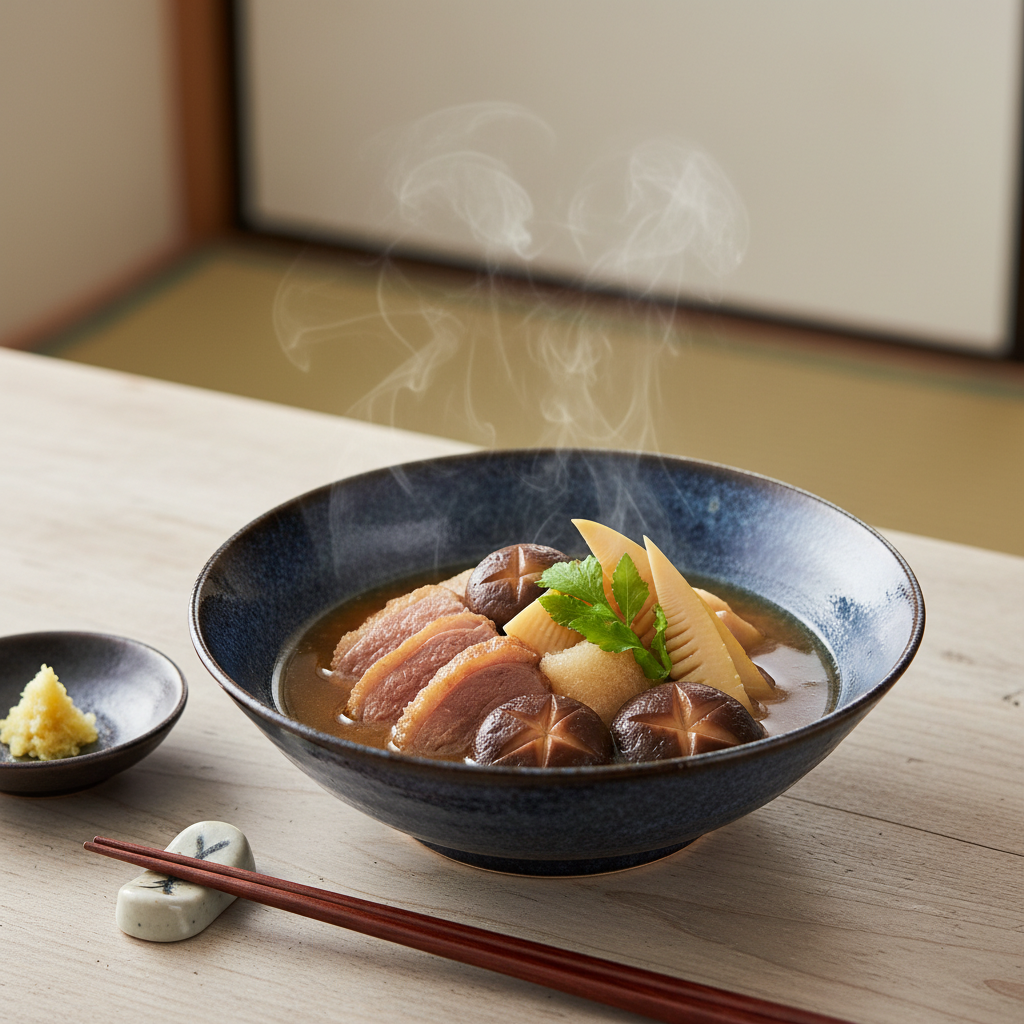
The most distinctive feature of jibu-ni is that duck meat or chicken is coated with wheat flour before simmering. This cooking method gives the broth a unique thickness and creates a mellow, refined flavor. The wheat flour acts as a coating, trapping the meat’s umami while creating a sense of unity with the dashi broth.
Served as a bowl dish, jibu-ni is plated with sudare-fu (thin layered wheat gluten), seasonal vegetables, and traditionally finished with wasabi as a condiment. The fresh, sharp heat of wasabi creates an exquisite balance with the thickened broth.
Main Ingredients and Composition
The basic ingredients of jibu-ni are as follows:
- Meat: Duck or chicken meat (traditionally duck is used)
- Sudare-fu: A traditional Kanazawa-style wheat gluten, an indispensable ingredient for jibu-ni
- Seasonal vegetables: Shiitake mushrooms, bamboo shoots, carrots, leafy greens (Japanese mustard greens or water dropwort), etc.
- Seasonings: Dashi broth, soy sauce, mirin, sake, sugar
- Condiments: Wasabi
Using seasonal vegetables throughout the year allows one to enjoy different flavors year-round, which is part of jibu-ni’s charm.
The History and Cultural Background of Jibu-ni
A Tradition Continuing from the Edo Period
Jibu-ni has a long history and is said to be a samurai dish eaten at least since the Edo period. As a local dish passed down to Kanazawa during the Kaga clan era, it has been enjoyed widely from samurai to commoners.
In Kanazawa, which flourished as the castle town of the Kaga Hyakuman-Goku (million-stone domain), a culture emphasizing hospitality to guests developed. As a central figure in “Kaga cuisine,” jibu-ni was pursued not only for its taste but also for its beautiful presentation on serving vessels.
From Samurai Cuisine to Common Tables
Originally developing as a samurai dish, jibu-ni gradually spread among common people over time. Today it has become established as home cooking and is an indispensable bowl dish at weddings and celebratory feasts, deeply rooted in Kanazawa’s food culture.
Formerly eaten as a winter dish, it has evolved into a dish enjoyed year-round through combining seasonal ingredients in modern times.
The Origin of the Name “Jibu-ni”
The origin of the unique name “jibu-ni” has several theories.
Main Theories
- Cooking Sound Theory: Named after the sound “jibu-jibu” made when simmering meat coated with wheat flour. This is the most widely known origin.
- Personal Name Theory: The theory that it was invented by a person named Okabe Jibei-emon (岡部治部右衛門), a cook or samurai who served the Kaga clan, and the name is derived from this person.
- Missionary Theory: The theory that it originated from a dish brought by Portuguese missionaries. There is also a theory that “jibie (gibier)” became corrupted into “jibu.”
- Place Name Theory: There is also a theory that it came from a place name “Jibu” in the Noto region.
Among these theories, it is unclear which is true, but each speaks to the depth of jibu-ni’s history.
An Authentic Recipe for Jibu-ni
Here is an authentic recipe for jibu-ni that can be made at home.
Ingredients (Serves 4)
Main Ingredients
- Duck meat or chicken thigh: 300g
- Wheat flour: as needed
- Sudare-fu: 4 pieces
- Fresh shiitake mushrooms: 4
- Carrot: 1/2
- Japanese mustard greens or water dropwort: 1 bunch
- Bamboo shoots (canned): 100g
Broth
- Dashi broth: 600ml
- Soy sauce: 3 tablespoons
- Mirin: 3 tablespoons
- Sake: 2 tablespoons
- Sugar: 1 tablespoon
Condiments
- Wasabi: as needed
Cooking Instructions
Preparation
- Preparing the meat: Cut duck or chicken meat into bite-sized pieces using an angled cut. Thickness should be about 5mm.
- Preparing the vegetables:
- Remove the stems from shiitake mushrooms and make decorative cuts
- Cut carrots into 5mm-thick rounds and use a mold to create flower shapes for an elegant appearance
- Cut bamboo shoots into easy-to-eat pieces
- Cut Japanese mustard greens into 4cm lengths
- Preparing sudare-fu: Soak in lukewarm water and squeeze out excess moisture.
Cooking Steps
- Preparing the broth: Place dashi broth, soy sauce, mirin, sake, and sugar in a pot and heat over medium heat until it comes to a boil.
- Simmering vegetables: Once the broth comes to a boil, add carrots, shiitake mushrooms, and bamboo shoots and simmer over medium heat for about 5 minutes.
- Coating meat with wheat flour: Lightly coat both sides of the meat with wheat flour. Brush off excess powder. Too much flour will make the broth cloudy.
- Simmering the meat: Add the flour-coated meat to the pot and simmer over low heat for 3-4 minutes. If scum rises, remove it carefully.
- Adding the fu: Add sudare-fu and simmer for another 2 minutes.
- Adding greens: Finally, add the Japanese mustard greens and cook quickly. Be careful not to overcook, as this will discolor them.
- Plating: Transfer to a bowl with broth and top with wasabi to complete.
Tips for Making it Delicious
- How to coat with wheat flour: It is important to coat thinly and evenly. Coating too thickly will make the broth cloudy and result in poor texture.
- Heat level: After adding the meat, simmer gently over low heat for tender results.
- Adjusting thickness: If the broth lacks thickness, you may add a small amount of water-dissolved potato starch, though traditionally thickness comes from wheat flour alone.
- Choice of dashi: A combination of kelp and bonito dashi is standard, but if using chicken, adding chicken stock will increase richness.
Choosing Between Duck and Chicken
Traditional Duck Meat
The original jibu-ni uses duck meat. The rich umami unique to duck and its somewhat wild flavor create the deep taste of jibu-ni. Duck is still often used in high-end restaurants and at special occasions.
When using duck meat:
- Breast meat with a good balance of fat and lean is recommended
- If concerned about odor, parboil before using
- Be careful not to overcook as it becomes tough
Home-Style Chicken
Nowadays, easily available and reasonably priced chicken is common. Using chicken thighs results in tender and easy-to-eat jibu-ni. As jibu-ni has become established as home cooking, chicken-based jibu-ni is now recognized as a legitimate preparation method.
When using chicken:
- Thigh meat is recommended for tenderness and juiciness
- If using breast meat, cut at an angle thinly and avoid overcooking
- Skin may be removed according to preference
About Sudare-fu
A Traditional Kanazawa Ingredient
Sudare-fu is a traditional wheat gluten from Kanazawa City, Ishikawa Prefecture, and an indispensable ingredient for jibu-ni. It is flat and thin in shape, and got its name from the lattice-like pattern resembling a bamboo blind (sudare).
It has a chewy texture and the characteristic of absorbing dashi, absorbing plenty of the umami of jibu-ni’s broth for delicious results.
Substitutes and How to Obtain
If sudare-fu is unavailable, these substitutes can be used:
- Kuruma-fu cut thinly
- Board-shaped fu
- Fresh fu
However, to enjoy the authentic taste of traditional jibu-ni, it is recommended to obtain sudare-fu through online shopping and similar channels.
Enjoying Jibu-ni by Season
Spring Jibu-ni
- Seasonal ingredients: Bamboo shoots, butterbur sprouts, water dropwort, udo
- Characteristics: The fresh aroma and subtle bitterness of spring vegetables add seasonal flavor to jibu-ni.
Summer Jibu-ni
- Seasonal ingredients: Eggplant, okra, winter melon, edamame
- Characteristics: Jibu-ni made with summer vegetables surprisingly becomes a refreshing dish.
Autumn Jibu-ni
- Seasonal ingredients: Matsutake mushroom, ginkgo, taro, shimeji
- Characteristics: Many mushrooms are used, allowing one to enjoy autumn’s rich flavors.
Winter Jibu-ni
- Seasonal ingredients: Lily root, turnip, red carrot, water dropwort
- Characteristics: Traditional winter jibu-ni. The sweetness of root vegetables stands out.
Where to Eat Jibu-ni
Restaurants and Tea Houses in Kanazawa City
When visiting Ishikawa Prefecture’s Kanazawa City, be sure to taste authentic jibu-ni. At traditional tea houses serving Kaga cuisine, you can enjoy authentic jibu-ni prepared using traditional cooking methods.
Representative establishments:
- At long-established tea houses, jibu-ni is served beautifully arranged on seasonal vessels
- Famous ryokan inns also serve it as a local dish
- Tourist-oriented restaurants offer it at relatively reasonable prices
Enjoying at Home
In the homes of Kanazawa residents, jibu-ni is still made regularly today. Especially at weddings and celebratory occasions, jibu-ni appears almost without fail.
Jibu-ni and Kaga Cuisine Culture
The Spirit of Hospitality
The characteristic of Kaga cuisine is valuing the spirit of hospitality toward guests. As its representative, jibu-ni is attended to not only in the taste of the food but also in the beauty of plating and choice of vessel.
Harmony with Vessels
Kanazawa is a region rich in traditional crafts such as Kutani ware and Wajima lacquerware. The vessels used for serving jibu-ni often employ these beautiful crafted items, with the harmony between dish and vessel enhancing the appeal of Kaga cuisine.
Nutritional Value and Health Characteristics
Nutritional Balance
Jibu-ni is a dish from which one can obtain a balanced intake of protein, vitamins, and minerals.
- Protein: High-quality protein from duck or chicken
- Vitamins: Various vitamins from seasonal vegetables
- Dietary fiber: Fiber from vegetables and fu
- Minerals: Various minerals from dashi and vegetables
Healthy Cooking Method
By coating with wheat flour, the meat’s umami can be retained with minimal oil. As a simmered dish, it uses little excess oil and finishes healthily.
The Evolution of Jibu-ni in Modern Times
Arranged Recipes
While maintaining tradition, modern arrangements have also emerged:
- Western-style jibu-ni: Richness added with butter or cream
- Chinese-style jibu-ni: Seasoning with oyster sauce or star anise
- Vegetarian jibu-ni: Using thick fried tofu or soy meat instead of meat
Frozen Foods and Retort Products
As tourist souvenirs, frozen and retort-packaged jibu-ni is also sold. Because it allows enjoying authentic flavors at home conveniently, it is popular with tourists visiting Kanazawa.
Common Failures When Making Jibu-ni and How to Address Them
Failure 1: Cloudy Broth
Cause: Too much wheat flour applied, or cooking over high heat
Solution: Apply flour thinly and brush off excess. Simmer gently over low heat
Failure 2: Tough Meat
Cause: Overcooking or heat too high
Solution: After adding meat, reduce to low heat and avoid overcooking. Be especially careful with duck
Failure 3: No Thickness
Cause: Too little wheat flour, or flour lost during cooking
Solution: Coat meat with flour and immediately add to broth
Failure 4: Weak Flavor
Cause: Weak dashi or poor seasoning balance
Solution: Make strong dashi. Taste and adjust seasonings as needed
Meals That Go Well with Jibu-ni
Since jibu-ni is a bowl dish, combine it with other dishes to create a menu.
Traditional Kaga Cuisine Menu
- Appetizers: Kaburazushi, berobero (shrimp dish)
- Sashimi: Alfonsino, sweet shrimp, and other Japan Sea fish
- Grilled dishes: Soy-glazed yellowtail
- Bowl dish: Jibu-ni
- Rice: Lotus steamed rice or plain rice
- Pickles: Daikon zushi, turnip thousand-layer pickles
Home-Style Menu Example
- Jibu-ni
- Plain rice
- Pickles (daikon radish pickle, Nozawa greens, etc.)
- Chawanmushi (savory egg custard)
- Small dish (blanched vegetables or dressed vegetables)
Conclusion: Jibu-ni is a Local Flavor Treasured by Ishikawa Prefecture
Jibu-ni is a local dish representing Kanazawa City, Ishikawa Prefecture, with a tradition continuing since the Edo period. Served as a bowl dish of duck or chicken meat coated with wheat flour, simmered with sudare-fu and seasonal vegetables, and finished with wasabi, it has been enjoyed widely from samurai to commoners.
The unique name, said to come from the sound “jibu-jibu” made during cooking, is also part of its appeal. Selected as one of the Ministry of Agriculture, Forestry and Fisheries’ “100 Selected Rural Dishes from Agricultural, Mountainous, and Fishing Villages,” it is widely known nationally and has become an indispensable dish at weddings and celebratory occasions as a representative of Kaga cuisine.
The thickened broth created by wheat flour is a distinctive characteristic, generating a refined flavor where dashi umami and meat flavor become unified. Using seasonal vegetables throughout the year allows jibu-ni to show different faces across the seasons, and can be said to embody Kanazawa’s spirit of hospitality.
It can be made relatively easily at home, so please try making this local flavor treasured by Ishikawa Prefecture using the recipe in this article. When visiting Kanazawa, tasting authentic jibu-ni at a traditional tea house is also highly recommended.