Dashi (Yamagata Prefecture Local Cuisine) Complete Guide | Preparation Methods, Arrangements, and History Thoroughly Explained
“Dashi,” a local dish representing summer in Yamagata Prefecture, is a refreshing dish made by finely chopping summer vegetables. It is enjoyed in various ways—served over rice, placed on tofu, or used as a condiment for somen noodles. This article comprehensively conveys the appeal of this beloved local Yamagata cuisine, from basics to advanced applications.
Dashi (Yamagata Prefecture Local Cuisine) Explained
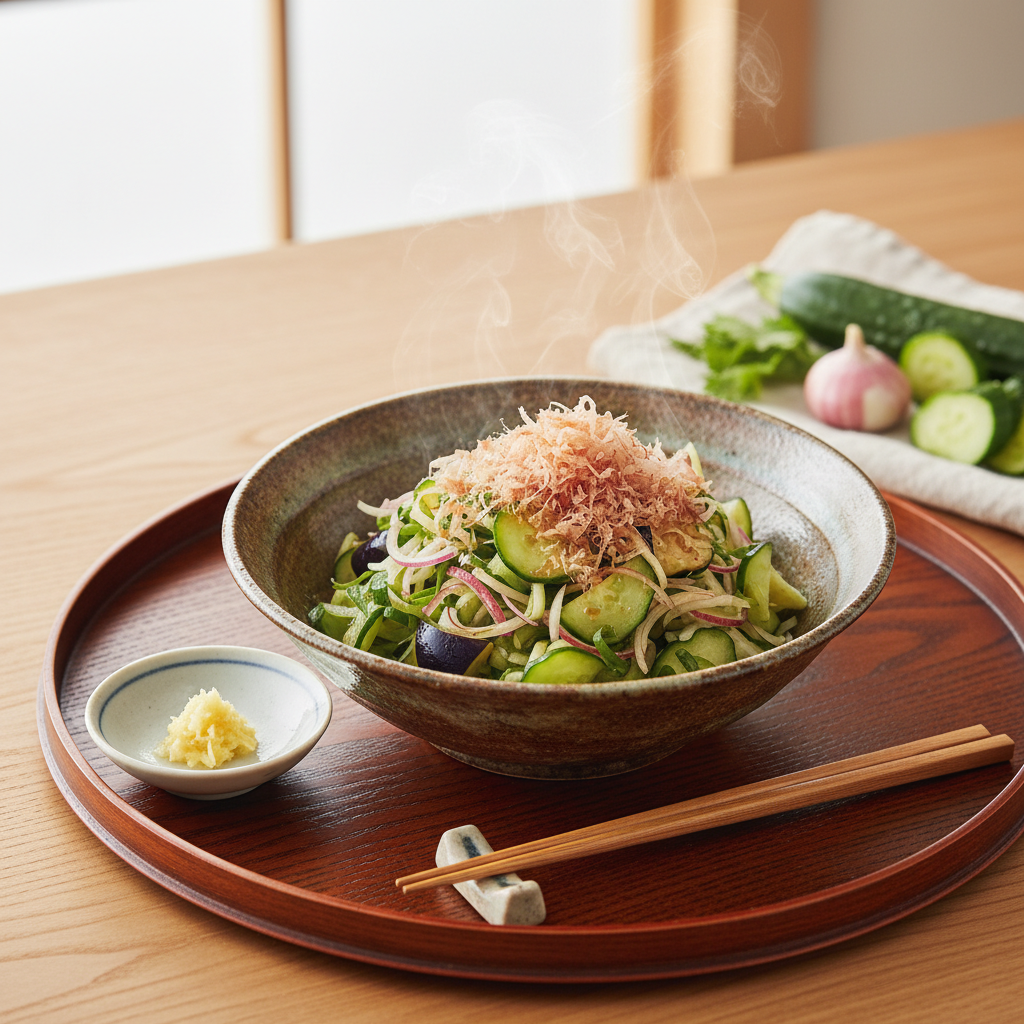
“Dashi” is a summer local dish eaten throughout Yamagata Prefecture, made by finely chopping summer vegetables such as cucumber, eggplant, myoga, and shiso leaves, then tossing them with soy sauce-based seasonings. There are several theories about the name’s origin, with the most famous being “it’s so delicious you don’t need dashi (broth)” or “it can be eaten right after preparation.”
Characteristics of Dashi
The greatest characteristic of dashi is the texture created by finely chopping vegetables and the natural umami that emerges from them. It is typically chilled in the refrigerator before eating and has become an indispensable part of Yamagata residents’ dining tables as the perfect dish to stimulate appetite during hot summers.
The chopped vegetables have a characteristic stickiness, which comes from components such as pectin in the vegetables being released through chopping. This stickiness creates an excellent compatibility with rice and tofu.
History and Cultural Background of Dashi
Background of Its Origin
Dashi spread throughout Yamagata Prefecture relatively recently, becoming established as home cooking from the late Showa period through the early Heisei period. Yamagata Prefecture is a region with severe summer heat, and there was a demand for easily prepared, nutritious dishes to prevent summer fatigue and stimulate appetite.
There is also a theory that farmers created this dish as a way to deliciously use surplus vegetables from their abundant summer vegetable harvests without waste.
Reasons for Its Regional Roots
Yamagata Prefecture has distinct four seasons, and summer is particularly characterized by humid heat typical of basin areas. In such a climate, chilled and refreshing dashi established itself as a well-suited local dish. Additionally, since the ingredients are only common vegetables and require no special cooking skills, it became easy for households to prepare, which was a factor in its popularization.
Today, dashi is sold as commercially prepared products in supermarkets and convenience stores throughout Yamagata Prefecture, having become a dish beloved by residents.
Basic Ingredients for Dashi
Main Vegetables
The basic vegetables used in dashi are as follows:
Essential vegetables
- Cucumber: The foundational vegetable for dashi, creating a crispy texture
- Eggplant: High in moisture, adds a soft texture to dashi
- Myoga: Its refreshing aroma and spiciness tighten the overall flavor
- Shiso leaves (Japanese basil): Fragrant and aromatic, adds accent to the flavor
Commonly used vegetables
- Okra: Strengthens the stickiness and increases nutritional value
- Chinese yam: Adds stickiness and texture
- Kelp: Increases umami and creates stickiness
- Ginger: Adds refreshing spiciness
Seasonings
Basic seasonings include:
- Soy sauce: The base seasoning
- Mentsuyu (noodle dipping sauce): Convenient for easily deciding the flavor
- Sugar: Adding a small amount rounds out the taste
- Vinegar: Added when wanting to create a refreshing taste
- Dashi seasoning: Used when wanting to strengthen umami
The proportions of seasonings vary by household, and each family having “their own taste” of dashi is part of its charm.
Basic Method for Making Dashi
Preparation (Preprocessing)
- Wash the vegetables: Thoroughly wash all vegetables and drain them
- Preprocess the eggplant: There are methods to prevent discoloration by salt-rubbing the chopped eggplant or briefly boiling it
- Prepare the kelp: If using dried kelp, rehydrate it with water before finely chopping
Basic Recipe (Serves 4)
Ingredients
- Cucumber: 2
- Eggplant: 2
- Myoga: 3
- Shiso leaves: 10
- Okra: 4 (optional)
- Chopped kelp: 2 tablespoons (optional)
- Soy sauce: 2-3 tablespoons
- Mentsuyu (3x concentrated): 1-2 tablespoons
Instructions
- Chop the vegetables: Finely mince all vegetables into 2-3mm cubes. Careful chopping with a knife is the secret to deliciousness
- Process the eggplant: Lightly salt the chopped eggplant, let sit for about 5 minutes, then squeeze out the moisture (to prevent discoloration and remove excess water)
- Mix together: Place all vegetables in a bowl, add soy sauce and mentsuyu, and mix everything well
- Chill: Refrigerate for 30 minutes to 1 hour. During this time, water releases from the vegetables and flavors blend
- Adjust taste: Taste just before eating and adjust with soy sauce or sugar as needed
Tips for Delicious Preparation
- Chop vegetables finely and uniformly: This improves texture and helps flavors blend better
- Let it sit for a while rather than eating immediately: Water and umami from vegetables blend the flavor
- Taste before serving: Since water releases from vegetables over time, the tip is to make it slightly strong initially
- Use fresh vegetables: Since dashi is a raw vegetable dish, freshness greatly affects the taste
Regional Differences and Variations
Differences Between Inland and Coastal Areas
The method of making dashi varies by region within Yamagata Prefecture.
Inland areas (Yamagata City, Tendo City, etc.)
- More myoga and shiso leaves used, resulting in an aromatic finish
- Many households add kelp
- A tendency toward stronger-flavored seasoning
Coastal areas (Sakata City, Tsuruoka City, etc.)
- Seafood (chopped squid or kelp) sometimes added
- Lighter seasoning preferred
- Some households add more ginger
Individual Household Variations
Dashi is a dish where “each household’s taste” is respected, with variations such as:
- Mixing in natto: Strengthens stickiness and boosts nutritional value
- Adding chopped umeboshi (pickled plum): Adds sourness and saltiness, increasing freshness
- Mixing in bonito flakes: Increases umami and creates rich flavor
- Adding a small amount of sesame oil: Adds richness and fragrance
- Adding chili peppers: Adds a spicy kick for further appetite stimulation
Delicious Ways to Eat Dashi
Standard Eating Methods
Served over rice
The most popular way to eat it. Dashi tastes delicious over both hot and chilled rice. The liquid from the dashi vegetables soaking into the rice is exquisite.
Topping cold tofu
The umami and texture of dashi perfectly match the bland flavor of tofu. Perfect as a companion to summer evening drinks.
As a condiment for somen or chilled udon noodles
Dashi is piled on generously in place of green onions or wasabi. The compatibility with noodle dipping sauce is excellent.
Arrangement Recipes
Dashi tea rice
Dashi topped on chilled rice, then chilled tea or broth poured over. Perfect for summer breakfast or late-night meals.
Dashi with natto
Dashi and natto mixed together. The stickiness increases and nutritional value rises.
Dashi pasta
Cold pasta tossed with dashi. Adding a small amount of olive oil creates a new Japanese-Western fusion flavor.
Dashi rolled omelet
Dashi mixed into rolled omelet. Creates an omelet with enjoyable vegetable texture.
Dashi rice balls
Rice mixed with dashi formed into rice balls. Perfect for boxed lunches.
Dashi bruschetta
Dashi topped on baguette for Japanese-style bruschetta. Also pairs well as a wine appetizer.
Nutritional Value and Health Benefits of Dashi
Abundant Nutrients
Since dashi uses multiple summer vegetables, it excels in nutritional balance.
Main nutrients
- Vitamin C: Found in cucumber and eggplant, promotes immunity and beautiful skin
- Dietary fiber: Found in all vegetables, improves intestinal environment
- Potassium: Abundant in cucumber and eggplant, helps reduce puffiness and regulate blood pressure
- Vitamin K: Abundant in shiso leaves, contributes to bone health maintenance
- Pectin: Found in okra and kelp, moderates blood sugar elevation
Health Benefits
Prevents summer fatigue
Vitamins and minerals from raw vegetables aid summer fatigue recovery. Additionally, the refreshing taste stimulates appetite.
Promotes digestion
Dietary fiber and enzymes in vegetables aid digestion and reduce digestive burden.
Low calorie
Since vegetables are the main ingredient and no oil is used, it is suitable for those on diets.
Hydration
Cucumber and eggplant have high water content and help with summer hydration.
Improves intestinal environment
High in dietary fiber, it is expected to increase beneficial gut bacteria.
Storage Methods and Shelf Life for Dashi
Refrigerator Storage
Storage period: About 2-3 days
Storage method
- Place in a clean airtight container
- Store in the refrigerator proper, not the vegetable compartment
- Take out portions each time with a clean spoon
Precautions
- Water releases from vegetables over time, making it watery
- The texture of vegetables gradually disappears
- If the taste becomes weak, adjust by adding a small amount of soy sauce
Freezer Storage
Basically, dashi as a raw vegetable dish is not suitable for freezing. Thawing causes loss of vegetable texture and makes it watery. It is recommended to make only the amount you can eat.
Tips for Longer Storage
- Keep hands and cooking utensils clean when preparing
- Thoroughly drain vegetable moisture
- Use clean storage containers
- Avoid direct contact with chopsticks when serving
Creative Dishes Using Dashi
Modern Arrangements
Dashi tartar-style
A small amount of mayonnaise added to dashi and used as a sauce for fish meunière or fried dishes.
Dashi dip
Dashi mixed with cream cheese as a dip for vegetable sticks.
Dashi spring rolls
Dashi wrapped in spring roll wrappers and fried. New sensation with crispy outside and juicy inside.
Dashi pizza
Dashi as topping on pizza dough. Enjoyed as Japanese-style pizza.
Dashi Dishes at Restaurants
In recent years, creative dishes using dashi have appeared at restaurants both within and outside Yamagata Prefecture. Combining with French and Italian techniques opens new possibilities.
Places to Purchase Dashi
Within Yamagata Prefecture
Supermarkets
Supermarkets throughout Yamagata Prefecture sell commercial dashi mainly during summer season. Many are produced by local manufacturers with various flavor profiles.
Roadside stations
Dashi made with local vegetables is sometimes sold at roadside stations throughout Yamagata Prefecture. Products with a homemade appeal are attractive.
Agricultural produce direct sales centers
Homemade dashi is sometimes sold alongside fresh vegetables.
Online Purchase
Recently, dashi (retort-packaged or bottled) can be purchased through online shops dealing in Yamagata specialty products. People outside the prefecture can now enjoy Yamagata flavors.
Best Season for Making Dashi and Seasonal Vegetables
Optimal Time
While dashi is enjoyed as a summer dish, the period when it can be made most deliciously is:
July-August
The period when summer vegetables are most delicious, when cucumber and eggplant reach peak season. Vegetables during this period have abundant moisture and sweetness.
June and September
Can be made deliciously in early summer or early autumn. Even in slightly cooler periods, the refreshing taste enriches the dining table.
How to Identify Seasonal Vegetables
Cucumber
- Uniform thickness and deep green color
- Bumps on the surface are firm
- Feels heavy when held
Eggplant
- Skin has shine and firmness
- Cut end of stem is fresh
- Feels heavy when held
Myoga
- Plump and vibrant in color
- Tip is not opened
- Has strong fragrance
Q&A About Dashi
What is the origin of the name “dashi”?
There are several theories, but the most plausible is “it’s so delicious you don’t need dashi (broth).” Because the vegetables themselves have strong umami, this name was given since special broth is not necessary.
There is also a theory that it comes from “dashi” (to take out), referring to the ease of preparation—you can eat it right away.
How long can dashi be stored?
About 2-3 days in refrigeration is the standard. Since raw vegetables are used, shelf life is short. Over time, water releases from vegetables, the taste becomes weaker, and texture deteriorates.
Freshly made is most delicious, though some say letting it sit for a day improves the blended flavor. It is recommended to make only the amount you can consume.
Are there vegetables that should not be added to dashi?
There are basically no restrictions, but vegetables with too much moisture (such as lettuce) or those not suitable for eating raw (such as potatoes) should be avoided.
Additionally, vegetables with overly strong flavor or aroma (such as raw onion) may upset the overall balance and require amount adjustment.
Is it okay to heat dashi?
Dashi is basically enjoyed as a raw vegetable dish, but it can be used in heated cooking. For example, it can be mixed into rolled omelets or used as seasoning in stir-fries, discovering new deliciousness.
However, heating eliminates the crispy texture characteristic of raw vegetables.
Can children eat it?
Since dashi is a dish with finely chopped vegetables, it is said to be easy for vegetable-averse children to eat. However, some children dislike the aroma of myoga or shiso leaves, so the amount can be reduced or omitted if necessary.
For children, making it slightly sweeter by reducing the amount of soy sauce makes it easier to eat.
Conclusion: Experience Yamagata Summer with Dashi
Yamagata Prefecture’s local dish “dashi” is a summer staple with simple yet profound charm. This dish, made by finely chopping fresh summer vegetables, is nutritious and has a refreshing flavor, making it ideal for preventing summer fatigue.
Once you master the basic recipe, you can enjoy it arranged to your preference. Whether served over rice, topped on tofu, or used as a somen condiment, the eating methods are completely free. Creating “your household’s taste” is one of the pleasures of enjoying dashi.
When visiting Yamagata Prefecture, try purchasing dashi from local supermarkets or roadside stations. Additionally, since it is easily made at home, please try making it during the season when summer vegetables are abundant. We hope you fully enjoy the summer tastes and culture of Yamagata through dashi.