A Complete Guide to Shinshu Soba | Thoroughly Explaining the History, Characteristics, and Famous Restaurants of Nagano Prefecture’s Signature Local Cuisine
Nagano Prefecture is so synonymous with “Shinshu soba” that soba is widely known throughout Japan as the representative local cuisine of Nagano. Soba cultivated in the Shinshu region, blessed with a cool climate and abundant nature, continues to captivate many people with its rich flavor and diversity. This article provides a thorough introduction to everything about Shinshu soba, Nagano Prefecture’s pride, from its history and characteristics to the region’s specialty soba varieties and must-visit restaurants.
What is Shinshu Soba? Defining Nagano Prefecture’s Signature Local Cuisine
Shinshu soba refers to soba that is primarily produced and served within Nagano Prefecture. “Shinshu” is the former name of Nagano Prefecture, and the term is widely used to refer to all soba made in this region.
All the diverse varieties of soba made throughout Nagano Prefecture constitute “Shinshu soba,” and both the preparation methods and ways of eating are highly varied. Specialty soba varieties dot the landscape across each region, and it is said there are more than 40 types, with unique cultures and traditions alive in each area.
Shinshu soba is not merely a food; it is a local cuisine in which the climate, geography, history, and culture of Nagano Prefecture are condensed, deeply rooted in the lives of local people. For tourists, it boasts enormous popularity as must-try cuisine when visiting Nagano Prefecture.
The History of Shinshu Soba | Why Soba Culture Developed in Nagano Prefecture
Geographical Conditions in Nagano Prefecture Suited for Soba Cultivation
The development of soba culture in Nagano Prefecture is largely related to the region’s geographical and climatic conditions. Nagano Prefecture has many mountainous and highland areas, and because of its high elevation, there is a large temperature difference between day and night. While such conditions were unsuitable for rice cultivation, they were ideal for soba cultivation.
In Shinshu, soba was cultivated as important food in highland and mountainous areas where rice could not be grown, and the tradition of soba-making was passed down through many generations. Because soba can be harvested in a relatively short period and grows in poor soil, it became a precious food source in mountainous Nagano Prefecture.
The Shinshu Soba Tradition Continuing from the Edo Period
The history of Shinshu soba is old, and it was already highly regarded in Edo during the Edo period. Among Edo’s three great sobas (Sarashina soba, Yabusoba, and Sunaba soba), Sarashina soba is said to originate from Shinshu Sarashina (present-day Nagano City), and the reputation of Shinshu soba spread throughout the nation at that time.
During the Edo period, many merchants transported soba flour from Shinshu to Edo, and soba flour from Shinshu was handled as a premium product. This historical evaluation became the foundation of the brand power of Shinshu soba that continues to the present day.
Background of Its Establishment as Local Cuisine
Because soba has been cultivated throughout various regions of Nagano Prefecture, soba became deeply rooted in regional society not merely as an ingredient but as local cuisine essential to ceremonies and annual events.
In particular, soba-making was an everyday practice carried out in each household, and the techniques were transmitted across generations from parent to child. This home soba-making culture contributed to raising the overall level of soba culture throughout Nagano Prefecture and became the foundation for producing numerous skilled soba craftspeople.
Characteristics of Shinshu Soba | What Sets It Apart from Other Soba
Rich and Flavorful Taste
The greatest characteristic of Shinshu soba lies in its rich flavor. Because it is grown in an environment blessed with a cool climate and abundant nature, soba has a distinctive aroma and deep taste.
The large temperature difference between day and night in Nagano Prefecture tightens the soba kernels and concentrates umami components. Additionally, clear water and fresh air bring out the inherent flavor of soba to the fullest.
Diversity in Soba Flour Grinding Methods and Blending Ratios
Shinshu soba has various variations depending on the ratio of soba flour to wheat flour and the grinding method. Generally, “nii-hachi soba” (8 parts soba flour, 2 parts wheat flour) is common, but juwari soba (100% soba flour) and Sarashina soba (made only from the center of soba kernels, white in color) are also served.
Each region and establishment has its own unique blending and production method, each creating different texture and flavor. This diversity is one of the charms of Shinshu soba.
Traditional Method of Setting Soba in Cold Water
A characteristic feature of the Shinshu soba production method is the process of setting the cooked soba in cold water. By using Nagano Prefecture’s pure spring water or mountain water, the soba becomes firm, producing a chewy texture and clear-tasting flavor.
The quality of this water is also an important element supporting the deliciousness of Shinshu soba. Within Nagano Prefecture, there are many water sources called famous waters, and the water from each region creates the character of the soba.
Specialty Soba from Each Region in Nagano Prefecture | Enjoying Each Area’s Individuality
Specialty soba varieties with distinctive characteristics exist in each region of Nagano Prefecture. Here we introduce representative soba from various regions.
Togakushi Soba (Togakushi District, Nagano City)
Togakushi soba is counted among Japan’s three greatest sobas and is the representative of Shinshu soba. The Togakushi district has high elevation with a large temperature difference between day and night, producing soba with rich flavor.
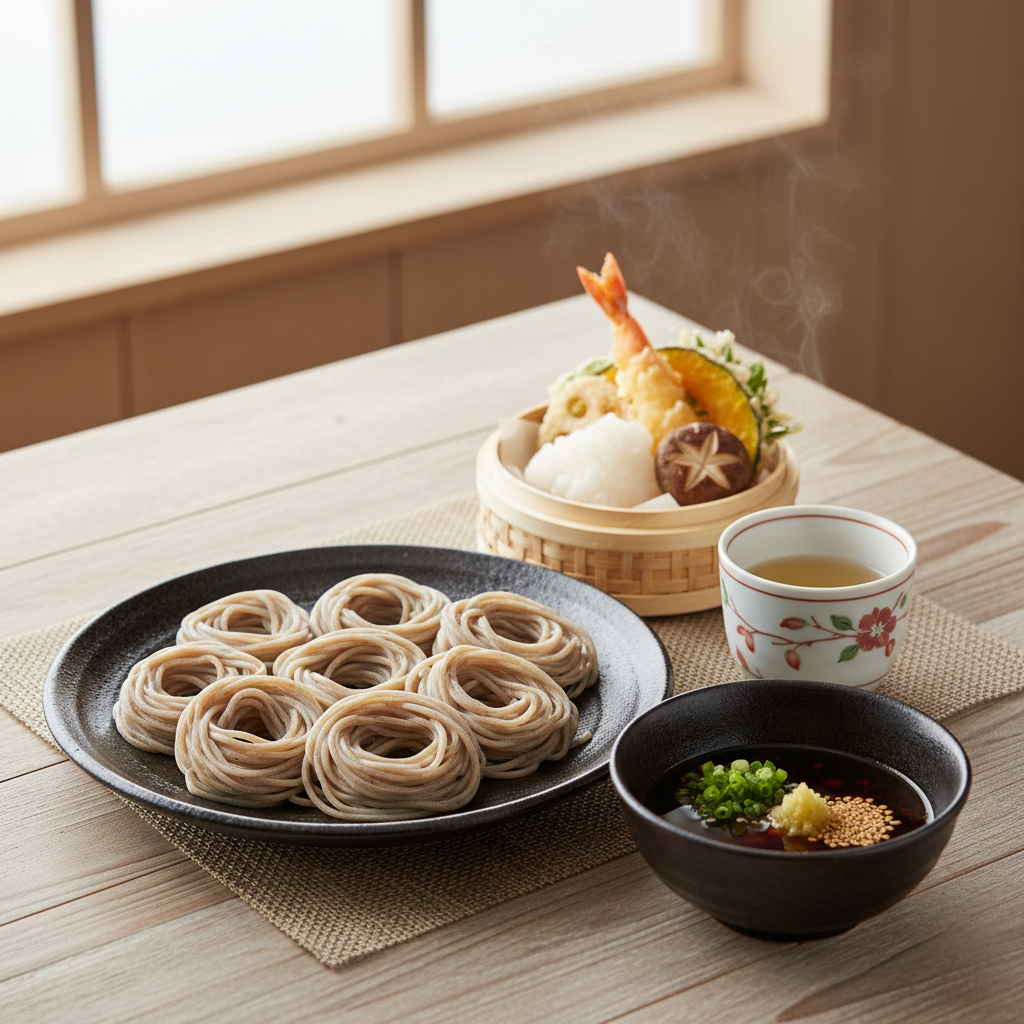
A characteristic of Togakushi soba is a unique serving style called “botchi-mori.” Individual servings of soba are bundled and rolled into portions called “botchi,” and five of these are traditionally arranged on a basket and served. This presentation is said to originate from Togakushi Shrine’s religious rituals.
Togakushi soba pays particular attention to how the soba flour is ground, with “hikigurumi,” which grinds the entire soba kernel, being the mainstream. This creates strong soba aroma and flavor, allowing you to enjoy a wild-tasting flavor.
Sarashina Soba (Sarashina District, Nagano City)
Sarashina soba is characterized by its white and elegant appearance, made using only the center part (first flour) of the soba kernel. It was transmitted from Shinshu Sarashina to Edo during the Edo period and was established as one of Edo’s three great sobas.
Sarashina soba is characterized by a delicate and refined taste, with subdued soba aroma but excellent throat-clearing sensation and smooth texture. It is positioned as premium soba and is cherished as soba for special occasions.
Touji Soba (Kiso Region and Matsumoto City Surroundings)
Touji soba is a warm soba dish that is especially delicious during winter. “Touji” refers to “hot water passing” in the local dialect—a style where a single serving of soba is placed in a small bamboo basket and dipped in hot pot containing seasonal vegetables and mushrooms while eating.
This is traditional local cuisine eaten in the Kiso region and Matsumoto City surroundings, cherished locally as a dish that warms the body during cold winters. By dipping the soba repeatedly in the pot, the broth’s umami soaks into the soba, and combined with the vegetables’ sweetness, you can enjoy deep flavor.
Shinshu Daisoba (Ueda City and Tomi City Surroundings)
Shinshu daisoba is soba cut thicker than usual, characterized by a substantial eating experience. It is frequently served in Ueda City and Tomi City surroundings, allowing you to strongly feel the presence of soba.
By cutting it thicker, the soba’s flavor is felt more intensely, and as you chew, sweetness spreads. Locally, this thickness is believed to bring out the original deliciousness of soba.
Gyoja Soba (Ina Region)
Gyoja soba is vegetarian-style soba said to have been eaten by ascetic monks (gyoja). Served in the Ina region, it is characterized by abundant use of local ingredients such as wild vegetables and mushrooms, with a simple yet deeply satisfying flavor.
This simple flavor utilizing the mountain’s bounty is a dish that lets you feel Shinshu’s nature.
Sunki Soba (Kiso Region)
Sunki soba is soba using “sunki,” a traditional fermented food from the Kiso region. Sunki is a pickle made by lactic acid fermenting red turnip leaves without salt, with distinctive sourness and umami.
By topping warm soba with sunki, one of winter’s traditional food ingredients, the fresh sourness and soba’s flavor match perfectly. It is often served seasonally during winter and is popular as seasonal taste.
How to Eat Shinshu Soba | From Standard Ways to Local Style
Basic Way of Eating: Zaru Soba and Mori Soba
The most orthodox way to eat Shinshu soba is zaru soba or mori soba. Boiled soba is set in cold water, arranged on a basket or plate, and eaten by dipping in broth—a simple style.
The broth is soy sauce-based with bonito and kombu dashi, garnished with chopped green onion, wasabi, grated radish, and other seasonings. Particularly in Nagano Prefecture, “grated daikon radish soba” using peppery radish is popular, with the sharp spiciness enhancing soba’s flavor.
Enjoyment of Soba Broth
One pleasure of eating Shinshu soba is “soba-yu” (soba broth). Soba-yu is the water left from boiling soba, which has soba flour’s nutrients dissolved in it and has a distinctive thickness and flavor.
The typical way to enjoy it is to pour soba-yu into remaining broth after eating and drink it. Soba-yu contains B vitamins and rutin and similar nutrients, gaining health attention. It warms the body and lets you enjoy soba’s aftertaste—a habit unique to Shinshu soba.
Local Way of Eating: Enjoying with Local Cuisine
In Nagano Prefecture, there is a culture of enjoying soba together with local dishes. For example, enjoying local cuisine such as nozawana pickles and oyaki as side dishes alongside soba is the local style.
Additionally, “sobaGaki,” soba flour mixed with hot water, is sometimes served at soba restaurants. With a chewy texture, it offers a different flavor than soba itself.
Nutritional Value and Health Benefits of Shinshu Soba
Shinshu soba is drawing attention not only as delicious but also as a nutritious health food.
Abundant Nutrients
Soba contains abundant protein, dietary fiber, B vitamins, and minerals (magnesium, iron, zinc, and others). Particularly, the protein in soba has a good balance of essential amino acids, making it a high-quality protein source.
Health Effects of Rutin
“Rutin,” a nutrient characteristic of soba, is a type of polyphenol that strengthens capillaries and is said to lower blood pressure. It also has antioxidant properties and is thought to help prevent lifestyle diseases.
Benefits as Low-GI Food
Soba is a low-GI food (food with gradual blood sugar elevation) that, compared to white rice and udon, can suppress rapid blood sugar elevation. For this reason, it is drawing attention as food suitable for diabetes prevention and dieting.
Famous Shinshu Soba Restaurants | Recommended Establishments in Nagano Prefecture
Numerous soba restaurants of note exist throughout Nagano Prefecture. Here we introduce representative famous restaurants from each region.
Famous Restaurants in Nagano City Area
Togakushi Soba Museum “Tonkururin”
A soba restaurant attached to the soba museum in the Togakushi district where authentic Togakushi soba can be enjoyed. Soba-making experiences are also available and it is popular with tourists.
Uzura-ya
An established soba restaurant beloved by locals in Nagano City. Carefully made soba is rich in flavor with excellent compatibility with broth. You can slowly savor soba in a calm atmosphere.
Soba no Mi
A popular restaurant in Nagano City offering various soba menu items including juwari soba. Seasonal limited menu items using local ingredients are also appealing.
Famous Restaurants in Ueda City and Tomi City Area
Katanaya
An established soba restaurant in Ueda City where Shinshu daisoba is famous. Thickly cut soba has substantial eating appeal and lets you fully appreciate soba’s original taste.
Senbon Zakura
A popular restaurant in Ueda City where you can enjoy soba with beautiful scenery. Cherry blossoms in spring and autumn leaves are also appealing season by season.
Famous Restaurants in Matsumoto City Area
Fukuden
A famous restaurant in Matsumoto City proud of hand-made soba using locally produced soba flour. The soba’s aroma stands out and the throat-clearing sensation is excellent.
Metori-wa Soba
A soba restaurant along the Metori-wa River in Matsumoto City where you can enjoy soba while viewing the clear stream. Tempura soba using seasonal wild vegetables is also popular.
Famous Restaurants in Shiojiri City Area
Soba-ya Shimizu
A popular restaurant in Shiojiri City where you can enjoy rich-flavored soba using locally produced soba flour. Careful work shines through in its simple quality.
Famous Restaurants in Ina City Area
Gyoja Soba Umean
A famous gyoja soba restaurant in Ina City. You can enjoy soba and ingredients making use of the mountain’s bounty with simple yet deep flavor.
Famous Restaurants in Kiso Area
Kurumaya Honten
An established soba restaurant in Kiso Fukushima where touji soba is famous. Many tourists visit this popular restaurant during the winter season.
Enjoying Shinshu Soba at Home
How to Purchase Shinshu Soba
Dried noodles and fresh soba are sold at rest areas and souvenir shops throughout Nagano Prefecture and are popular as souvenirs. Additionally, soba can be purchased through online shops, making it possible to enjoy the taste of the original location at home.
Tips for Delicious Boiling
When boiling soba at home, bring plenty of water to a boil, add soba, and gently separate it with chopsticks. Follow the product’s instructions for cooking time, and it is important to immediately set the cooked soba in cold water. This process creates chewy texture.
How to Make Broth
Authentic soba broth is made with soy sauce, mirin, sugar, bonito, and kombu. Even when using commercial noodle broth, adding bonito and bringing to a boil once creates more authentic flavor.
Shinshu Soba Tourism | Ways to Enjoy Soba Touring
Touring Soba Streets
Within Nagano Prefecture are several areas called “soba streets” where soba restaurants are concentrated. The Togakushi Soba Street and Kaida Kogen Soba Street are famous, allowing you to enjoy each establishment’s individuality while touring multiple shops.
Soba Festivals and Events
Various soba festivals are held throughout the year in Nagano Prefecture. During new soba season (autumn), new soba festivals are held in various places where you can taste soba harvested that year.
Representative events include the Togakushi Soba Festival and Shinshu・Matsumoto Soba Festival, which are crowded with many tourists.
Soba-Making Experience
Many facilities and restaurants throughout Nagano Prefecture offer soba-making experiences. Soba you make yourself has extraordinary deliciousness and is ideal for creating travel memories. Learning the soba-making process deepens understanding of Shinshu soba.
Shinshu Soba and Seasons | Seasonal Ways to Enjoy
Shinshu Soba in Spring
In spring, tempura soba using wild vegetables is popular. Spring wild vegetables such as fuki no tou, tara sprouts, and kogomi have excellent compatibility with soba’s flavor.
Shinshu Soba in Summer
Summer is the best season for cold zaru soba. Enjoying soba set in cold water with chilled broth on a hot day is extraordinary.
Shinshu Soba in Autumn (New Soba Season)
Autumn is new soba season when Shinshu soba is said to be at its most delicious. Freshly harvested soba has high aroma and exceptional flavor. During this season, many restaurants display “new soba” signs, making it a season not to be missed for soba lovers.
Shinshu Soba in Winter
In winter, warm touji soba and sunki soba are popular. Winter is said to be a season when soba has deep flavor, with increased sweetness and more concentrated taste. As local cuisine warming the body in cold winter, it is cherished locally.
The Future of Shinshu Soba | Inheriting Tradition and New Challenges
Efforts in Successor Development
Nagano Prefecture is putting effort into inheriting soba-making techniques and developing successors. Soba-making classes and artisan training courses are held, with technique transmission to younger generations taking place.
Development of New Varieties
Development of more delicious and easier-to-cultivate soba varieties is also progressing. At places such as the Nagano Prefecture Agricultural Experiment Station, research on new varieties that are climate-change resistant and have high yields continues.
Outreach to Overseas
Recently, with the Japanese food boom, Shinshu soba is gaining attention overseas. Nagano Prefecture is also working on information outreach to overseas markets and export promotion, and the day when Shinshu soba is enjoyed around the world may be near.
Conclusion | Fully Savor Shinshu Soba in Nagano Prefecture, the Original Location
Shinshu soba is local cuisine in which the nature, history, and culture of Nagano Prefecture are condensed. With more than 40 varieties said to exist, each with different character by region, Shinshu soba is a deep food culture where new discoveries await with each visit.
The world of Shinshu soba, woven together with rich flavor, diverse eating methods, and traditions of each region, provides cultural experience transcending mere dining. When visiting Nagano Prefecture, please be sure to taste soba in multiple regions and enjoy each area’s individuality.
Delicious soba, beautiful scenery, and encounters with warm people will turn your Shinshu trip into unforgettable memories. Please experience Shinshu soba’s charm at the original location.
Frequently Asked Questions (FAQ)
Q1: What is the difference between Shinshu soba and regular soba?
A1: Shinshu soba is a general term for soba made in Nagano Prefecture, and because it is grown in a cool climate with abundant natural environment, it is characterized by rich flavor and high aroma. Additionally, there are more than 40 varieties by region with diverse production methods and eating styles. Compared to regular soba, Shinshu soba shows stronger commitment to soba flour quality and production methods, with traditional techniques passed down.
Q2: What is the best season to eat Shinshu soba?
A2: Autumn (September through November) is new soba season, said to have the highest aroma and best taste. However, spring offers wild vegetable tempura soba, summer offers cold zaru soba, and winter offers warm touji soba and sunki soba, providing different pleasures in each season, making it possible to enjoy delicious soba year-round.
Q3: What is the difference between Togakushi soba and Sarashina soba?
A3: Togakushi soba is made with “hikigurumi,” grinding the entire soba kernel, with strong soba aroma and flavor, and a wild-tasting flavor. Conversely, Sarashina soba uses only the center of the soba kernel (first flour), with white elegant appearance, and is characterized by delicate, smooth throat-clearing sensation. The two differ greatly in both production method and taste.
Q4: Do you have to drink soba broth?
A4: Whether to drink soba-yu is a personal choice, but soba-yu contains abundant B vitamins and rutin with health benefits. Pouring it into remaining broth after eating is customary, letting you enjoy soba’s aftertaste—a habit unique to Shinshu soba. We recommend trying it at least once.
Q5: If you want to go soba touring in Nagano Prefecture, which area is recommended?
A5: For first-timers, the Togakushi Soba Street (Nagano City) is recommended. With one of Japan’s three greatest sobas, Togakushi soba, concentrated around it with famous restaurants and beautiful natural scenery to enjoy. Additionally, around Matsumoto City you can enjoy diverse soba such as touji soba. With time, touring multiple areas such as Ueda City and Kiso region lets you experience Shinshu soba’s diversity.
Q6: Where is recommended to purchase Shinshu soba souvenirs?
A6: Dried noodles and fresh soba can be purchased at rest areas and souvenir shops throughout Nagano Prefecture. Particularly, souvenir shops around Togakushi and Zenko-ji have abundant selection. Additionally, specialist shops are in station building shops at Nagano and Matsumoto stations. Online shops also allow purchases, making it possible to order additional items after returning home.