Complete Guide to “Kamoabe” (Duck Hot Pot), a Local Specialty of Shiga Prefecture | Savoring the Blessings of Lake Biwa and Winter’s Famous Dish
Kamoabe, a winter local dish representative of Shiga Prefecture, is a traditional hot pot dish made with wild mallards that fly to Lake Biwa. Selected as one of the “100 Local Dishes of Agricultural, Mountainous, and Fishing Villages” by the Ministry of Agriculture, Forestry and Fisheries, this dish has been beloved in the Kohoku region centered around Nagahama since ancient times. In this article, we will share the complete charm of this local specialty, from its history and characteristics to how to prepare it and the renowned restaurants where you can enjoy it in Shiga Prefecture.
What is Kamoabe? | Shiga Prefecture’s Proud Winter Local Dish
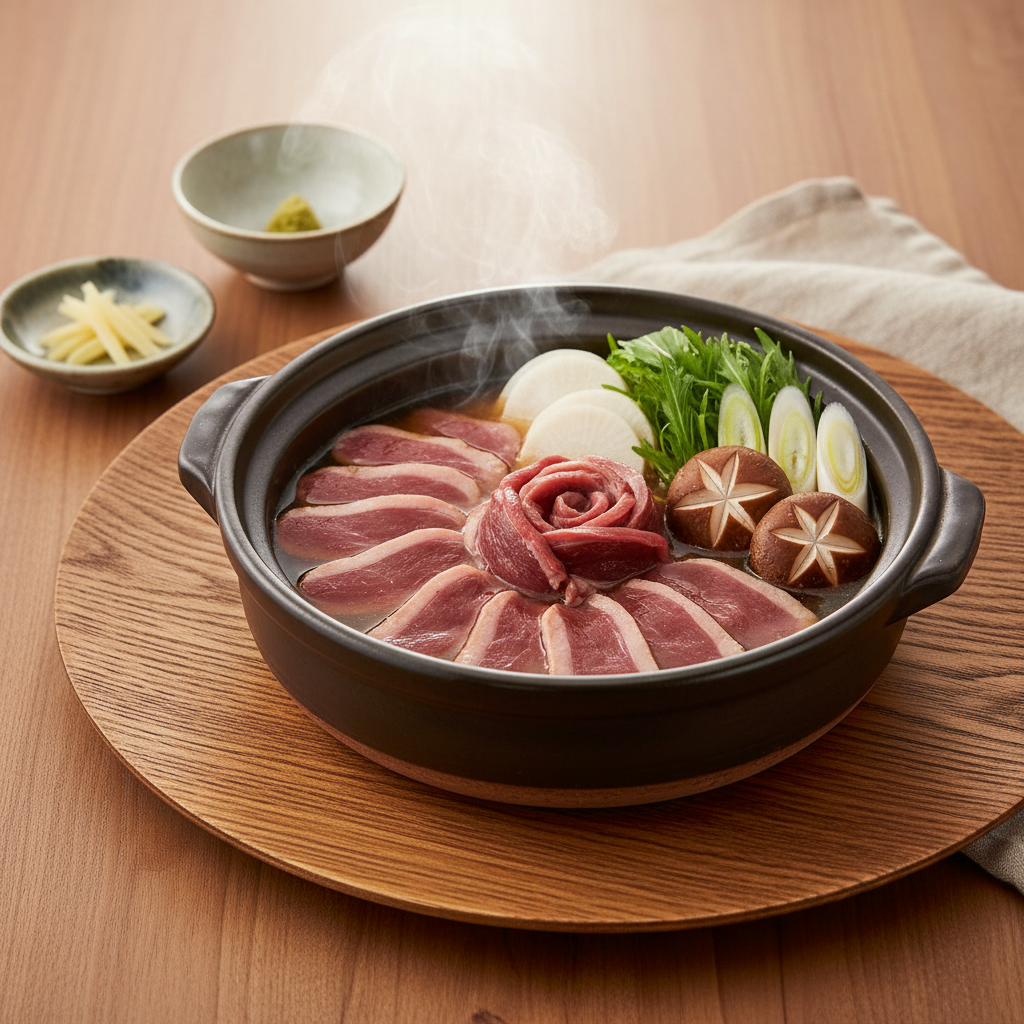
Kamoabe is a hot pot dish made by simmering mallards that fly to Lake Biwa from Siberia with the arrival of winter, together with tofu, green onions, Chinese cabbage, and other vegetables. Mallards that accumulate abundant fat to survive the cold winter are characterized by a firm bite and the sweetness of their fatty portions, making them a winter symbol for the people of Shiga Prefecture.
The Deep Connection Between Lake Biwa and Ducks
Lake Biwa, Japan’s largest lake, has long been known as an important wintering ground for migratory birds. Each year from around November to March, tens of thousands of mallards migrate to Lake Biwa from distant Siberia. The wild mallards that have traveled long distances, with their flesh tightened and abundant fat accumulated to protect themselves from the winter cold, are a supreme ingredient that can only be savored during this season.
The fishermen around Lake Biwa originally only ate ducks that were caught in the nets used to catch fish, but gradually the deliciousness spread, and the duck became established as a precious source of protein during winter and as a local dish.
Selected by the Ministry of Agriculture, Forestry and Fisheries as One of the 100 Local Dishes
Kamoabe was selected as one of the “100 Local Dishes of Agricultural, Mountainous, and Fishing Villages” designated by the Ministry of Agriculture, Forestry and Fisheries, as one of the representative dishes of Shiga Prefecture. This selection aims to pass on the regional food culture and traditions to the next generation, showing that kamoabe occupies an important position in Japanese food culture, rather than being merely a regional dish.
Along with kamoabe, “funazushi” (fermented carp sushi) was also selected from Shiga Prefecture, illustrating the richness of food culture utilizing the blessings of Lake Biwa.
History and Cultural Background of Kamoabe
Traditions Continuing from the Warring States Period
The history of kamoabe is ancient, tracing back to the Warring States period. There is a remaining account that Toyotomi Hideyoshi, a unifier of Japan, was fond of kamoabe and, during his time as lord of Nagahama Castle, recommended the rearing of ducks. It is said that Hideyoshi spent his youth in Nagahama and became deeply familiar with the regional food culture.
Nagahama was the place where Hisashi Hashiba (later Toyotomi Hideyoshi) became lord for the first time, and it is believed that duck cuisine spread among the samurai during this period. Through Hideyoshi’s influence, duck-rearing techniques also developed, and not only wild mallards but also farmed ducks came to be utilized.
Development of Kamoabe Culture in Nagahama
Nagahama is located in the northeast of Lake Biwa and has prospered since ancient times as a strategic point for lake transportation. Throughout the town of Nagahama, known for Kurogane Square, there are scattered established restaurants over 100 years old that pass down the techniques and flavors of kamoabe that have been inherited through generations.
In winter Nagahama, restaurants serving kamoabe line the streets, bustling not only with local people but also with tourists who come from afar seeking this taste. Kamoabe is not merely a dish but the winter culture of Nagahama itself.
Characteristics of Wild Mallards and the Secrets of Their Deliciousness
Differences Between Wild Mallards and Farmed Ducks
Ducks used in kamoabe include both wild mallards and farmed mallards, but in Shiga Prefecture’s traditional kamoabe, wild mallards are treasured.
Characteristics of wild mallards:
- Flesh is tightened because they fly long distances
- Abundant high-quality fat is accumulated in preparation for winter cold
- Deep umami with a wild character
- Firm bite and elasticity
- Exquisite balance between the sweetness of fat and the umami of meat
Comparison with farmed ducks:
- Wild mallards have firmer meat texture than farmed ducks
- The quality of fat differs, with wild mallards having a lighter, sweeter flavor
- Wild mallards are season-limited (November to March) and have high rarity value
- Farmed ducks are available year-round with stable pricing
Differences in Flavor by Cut
Kamoabe allows you to enjoy various cuts of duck without waste.
Loin (breast meat):
The most popular cut, thinly sliced and lightly cooked like shabu-shabu. It is tender with a refined sweetness of fat.
Daki-niku (thigh meat):
With a firmer meat texture than loin, it is cooked slowly. It has deep umami, and the more you chew, the more the duck’s flavor spreads.
Tsukune with bone:
Made by pounding meat around the bone into a dumpling, the bone releases broth that deepens the flavor of the entire pot. Rich in collagen.
Liver:
Often grilled and served, offering an intense creamy flavor. It is the most treasured part among duck offal.
Basic Recipe and How to Make Kamoabe
Ingredients (Serves 4)
Duck meat:
- Duck loin meat: 300g
- Duck thigh meat: 200g
- Duck tsukune: as needed
Vegetables:
- Long green onion: 2 stalks
- Chinese cabbage: 1/4 head
- Chrysanthemum greens: 1 bundle
- Enoki mushrooms: 1 package
- Shiitake mushrooms: 4 pieces
- Tofu (firm or silken): 1 block
- Shirataki noodles: 1 package
Broth:
- Kombu (kelp): 1 piece (10cm square)
- Water: 1.5 liters
- Soy sauce: 4 tablespoons
- Mirin: 3 tablespoons
- Sake: 3 tablespoons
- Sugar: 1 tablespoon
Preparation Steps
1. Preparing the broth
Place water and kombu in a pot and let sit for about 30 minutes, then heat over medium heat. Remove the kombu just before boiling and add soy sauce, mirin, sake, and sugar to taste. Shiga Prefecture’s traditional kamoabe is characterized by a light, soy-based broth.
2. Preparing the ingredients
- Slice duck loin meat thinly (for shabu-shabu)
- Cut duck thigh meat into bite-sized pieces
- Slice long green onions diagonally, roughly chop Chinese cabbage
- Cut tofu into easy-to-eat sizes
- Remove the root ends of mushrooms and break apart into manageable pieces
- Remove root ends of chrysanthemum greens and cut length in half
3. Cooking kamoabe
Bring the prepared broth to a boil, first add duck thigh meat and tsukune and simmer slowly. Remove any scum that rises to the surface carefully. Once the thigh meat is cooked through, add Chinese cabbage, green onions, tofu, and mushrooms.
Once the vegetables are cooked through, add duck loin meat one slice at a time and cook lightly like shabu-shabu. The key point is to pull out the loin meat as soon as its color changes, as cooking it too much makes it tough.
Finally, add the chrysanthemum greens and cook briefly for completion.
Tips for Delicious Preparation
Adjusting heat:
Duck meat becomes tough if cooked too much, so especially for loin meat, it is best to eat it when the surface just changes color.
Removing scum:
Surprisingly, a lot of scum comes out of duck meat. By removing it frequently, the broth becomes clear with a refined taste.
Order of vegetables:
Add vegetables that take longer to cook, such as Chinese cabbage and green onions first, and add leafy vegetables like chrysanthemum greens last so you can enjoy each vegetable’s texture.
How to enjoy the finale:
Making udon or rice porridge with the broth infused with duck umami is the standard. The broth with an appropriate amount of duck fat remaining elevates the finishing dish to a special taste.
Points for Making at Home and Alternative Ingredients
How to Obtain Wild Mallards
Since wild mallards are seasonal and rare, they are difficult to obtain at regular supermarkets.
Where to obtain:
- Specialty poultry shops or game meat specialist stores
- Internet mail order (winter only)
- Shiga Prefecture specialty shops and roadside stations
- Department store special corners (winter)
Alternative ingredients:
If wild mallards are unavailable, farmed mallards make a delicious dish too. Farmed mallards are easier to obtain year-round with stable pricing. When using chicken as a substitute, thigh meat provides a texture closest to duck.
Broth Variations
In addition to the basic soy-based broth, variations can be made to suit home preferences.
Miso-based:
Using white or red miso instead of soy sauce creates a richer flavor.
Salt-based:
Seasoning simply with salt lets you feel the duck’s original flavor more distinctly.
With yuzu-kosho:
Adding yuzu-kosho as a condiment pairs brilliantly with the duck’s fat, offering a refreshing aroma.
Renowned Restaurants Serving Kamoabe in Shiga Prefecture
Sumimoto | Long-Established Nagahama Restaurant
“Sumimoto,” an established restaurant in Nagahama with about 130 years of history, is nationally recognized as a renowned kamoabe restaurant. Committed to Lake Biwa fish and seasonal ingredients, it serves dishes using simple cooking methods to enjoy the ingredients’ inherent flavors.
Characteristics of Sumimoto’s kamoabe:
- Uses wild mallards
- Loin is served shabu-shabu style, thigh meat and tsukune are simmered, and liver is grilled
- Allows you to savor all parts of the duck meat
- Light, soy-based broth
Located within walking distance from Nagahama Station, it can be visited together with Kurogane Square sightseeing. Advance reservations are recommended as winter brings heavy crowds.
Other Renowned Restaurants
Chimoto:
One of the restaurants that provided recipes to the Ministry of Agriculture, Forestry and Fisheries’ 100 Local Dishes selection. It maintains traditional methods while adapting to modern tastes.
Kanbumon-go-nen-dou:
A restaurant serving kamoabe in a historic building. You can also learn about the connection between Toyotomi Hideyoshi and kamoabe.
Hashisho-koji:
Serves rich duck dishes from November to March. Offers local cuisine in a casual atmosphere.
Local Dishes to Enjoy Along with Kamoabe
Lake Fish Cuisine
Most restaurants serving kamoabe are also skilled in lake fish dishes.
Funazushi:
A fermented food representative of Shiga Prefecture with a distinctive flavor. Perfect with Japanese sake.
Biwa Trout:
An endemic species living only in Lake Biwa, a summer seasonal ingredient. Enjoyed as sashimi or salt-grilled.
Wild Lake Biwa Eel:
A summer blessing of Lake Biwa. Distinguished by a lighter taste than sea eel.
Seasonal Local Sake
Shiga Prefecture is also known as a sake-producing region, and the pairing of kamoabe with local sake is exceptional.
Recommended local sake:
- Shichihonhoko (Nagahama City)
- Matsunotsukasa (Ryuo Town)
- Furorousen (Takashima City)
- Waraiishiki (Koka City)
The sweetness of duck fat and the umami of sake harmonize, bringing out each other’s qualities.
Seasons and Events for Enjoying Kamoabe
Optimal Season
Kamoabe is most deliciously enjoyed from November to March when mallards migrate to Lake Biwa. Particularly from December to February during the coldest period, the duck’s fat is at its best and the flesh is at its finest condition.
Monthly characteristics:
- November: Just after arrival, fat content is still moderate
- December to January: Fat begins to accumulate, flavor deepens
- February: Most fat is present, peak kamoabe season
- March: Before northward migration, flavor begins to change
Winter Events in Nagahama
Nagahama Hot Pot Festival:
During winter in Nagahama, various hot pot dishes including kamoabe are enjoyed at festivals. Local restaurants line up, providing a rare opportunity to compare flavors.
Kurogane Square Winter Events:
The Nagahama sightseeing spot “Kurogane Square” hosts various winter events with many participating kamoabe-serving restaurants.
Nutritional Value and Health Benefits of Kamoabe
Nutritional Components of Duck Meat
Duck meat is high in protein and rich in B vitamins and iron, making it an excellent food ingredient.
Main nutritional components (per 100g):
- Protein: approximately 23g
- Fat: approximately 4-7g (depending on cut)
- Rich in vitamins B1, B2, and B6
- Iron: approximately 4mg
- High in unsaturated fatty acids
Health Benefits
Fatigue recovery:
Rich in B vitamins, effective for fatigue recovery and metabolic promotion.
Anemia prevention:
High iron content makes it especially suitable for women’s anemia prevention.
Quality fat:
Duck fat contains many unsaturated fatty acids, said to help improve cholesterol levels.
Compatibility with vegetables:
Kamoabe allows consumption of many vegetables together, resulting in nutritionally balanced meals.
Preservation and Future of Kamoabe Culture
Continuation of Tradition
Shiga Prefecture is putting effort into preserving local dishes including kamoabe. At established restaurants, technology is being passed on to younger generations, with restaurants over 100 years old maintaining traditions while incorporating new sensibilities.
Local elementary and middle schools offer classes teaching local cuisine, continuing efforts to pass kamoabe culture to the next generation.
Modern Arrangements
While maintaining tradition, new styles of kamoabe adapted to contemporary food culture are also emerging.
Western arrangement:
Styles such as simmering duck in tomato-based broth or Western kamoabe using herbs are gaining popularity.
Health-conscious:
Low-sodium broths and health-conscious kamoabe abundantly featuring organic vegetables are appearing.
Single-serving style:
With individualization of meals advancing, more restaurants are offering single-serving kamoabe sets.
Conclusion: The Appeal of Enjoying Shiga Prefecture’s Kamoabe
Shiga Prefecture’s local specialty “kamoabe” is an exquisite winter dish where wild mallards that fly to Lake Biwa and the food culture nurtured in the region converge. Wild mallards, characterized by their firm bite and sweet fat, can be savored to the fullest when simmered together with tofu and vegetables.
Selected as one of the Ministry of Agriculture, Forestry and Fisheries’ 100 Local Dishes, this dish holds an important position in Japanese food culture, far beyond being merely a regional specialty. Long-established restaurants in Nagahama maintain the traditional flavor passed down since their founding while proposing new styles adapted to contemporary food culture.
Kamoabe, savored exclusively during winter from November to March, is absolutely a local specialty that should be experienced when visiting Shiga Prefecture. Please savor in person the exquisite taste created by Lake Biwa’s blessings and cooking techniques refined through long history.
While kamoabe can be reproduced at home by gathering ingredients, experiencing kamoabe at an established restaurant in Nagahama becomes a special experience enhanced by its history, tradition, and craftspeople’s skill. Why not take a winter trip to Shiga Prefecture to enjoy kamoabe combined with a stroll through Kurogane Square?