
Sanga-yaki | History and Preparation Method of Fishermen’s Local Cuisine Prided by Boso Peninsula in Chiba Prefecture
“Sanga-yaki,” a local dish passed down for generations in the Boso Peninsula of Chiba Prefecture. This dish, made by finely pounding fresh fish with miso and seasonings, then grilling until fragrant, is a creation filled with the wisdom and ingenuity of fishermen. This article provides a detailed explanation of this representative local cuisine of Chiba Prefecture, covering the history and origins of sanga-yaki, basic preparation methods, modern arrangements, and preservation and transmission activities in the region.
What is Sanga-yaki?
Sanga-yaki is a traditional local dish born in the coastal areas of the Boso Peninsula in Chiba Prefecture. It refers to a dish made by finely pounding blue fish such as horse mackerel, sardines, and mackerel with a knife, adding miso, green onions, ginger, and other seasonings, mixing until sticky, forming into barrel or hamburger shapes, and then grilling.
The characteristic of this dish lies in its deep flavor where the umami of fresh fish, the richness of miso, and the aroma of seasonings blend exquisitely. Grilling adds a fragrant quality, offering a different kind of deliciousness from the raw version called “namerō.” It is an ideal dish whether as a side for rice or as a drinking snack.
History and Origins of Sanga-yaki
Birth as Fishermen’s Cuisine
The roots of sanga-yaki lie in the dishes that fishermen of the Boso Peninsula ate aboard ships. Fishermen who went out to fish had a habit of cooking and eating freshly caught fish on the spot. In the unstable environment of a ship, liquid seasonings like soy sauce would easily spill, so the use of miso was devised.
The cooking method of pounding fish with a knife was also suited to work aboard ship. By finely chopping the fish on a cutting board, the bones became fine and easier to eat, and additionally, the mixture became sticky, making it easier to shape.
Origins of the Name “Sanga-yaki”
There are several theories about the origin of the name “sanga-yaki.” The most prevailing theory is that fishermen would take namerō made aboard ship when going to the mountains and grill it in mountain huts (yamaya), which became known as “yamaya-yaki” (mountain hut grilling), eventually transforming into “sanga-yaki.”
Another theory suggests the name comes from the appearance of filling and grilling in shells of abalone or scallops, reminiscent of “three-layered shellfish,” while yet another theory proposes it derives from stacking and grilling in layers like “sankai” (three floors).
Differences Between Namerō and Sanga-yaki
Understanding sanga-yaki requires understanding its relationship with “namerō.” Namerō is the raw dish that serves as the base for sanga-yaki, referring to fish such as horse mackerel pounded together with miso and seasonings in its raw state.
The name “namerō” is said to derive from licking even the plate clean due to its deliciousness. When this namerō is shaped and grilled or steamed, it becomes “sanga-yaki.”
In other words, the difference is that namerō is raw while sanga-yaki is heated. Raw namerō depends on fish freshness, while sanga-yaki gains improved shelf life through grilling and offers different textures and flavors.
Main Transmission Regions and Ingredients Used
Spread Within Chiba Prefecture
Sanga-yaki is said to originate from coastal areas of the Boso Peninsula, particularly regions with fishing ports such as Minami-Boso City, Tateyama City, Kamogawa City, and Katsuura City. It has now spread throughout Chiba Prefecture and is recognized as a representative local cuisine of the prefecture.
It is served in restaurants near Chiba Station, izakayas throughout the prefecture, and local cuisine restaurants, becoming a popular menu item not only among locals but also tourists.
Main Ingredients Used
The main ingredients used in sanga-yaki are as follows:
Fish
- Horse mackerel (most common)
- Sardines
- Mackerel
- Saury
- Flying fish
Seasonings and Aromatics
- Miso (red miso or blended miso)
- Long green onion
- Ginger
- Shiso leaves
- Japanese pepper plant (seasonally)
The fish used should be fresh catch of the day. Since the Boso Peninsula has various fish landed year-round, one can enjoy sanga-yaki made with different fish by season.
Basic Preparation Method for Sanga-yaki
Ingredients (for 5 people)
- Horse mackerel (three-piece filleted): 5 fish worth (approximately 500g)
- Miso: 3-4 tablespoons
- Long green onion: 1 stalk
- Ginger: 1 piece
- Shiso leaves: 5-10 leaves
- Sesame oil: as needed (for grilling)
Preparation Steps
- Preparation
- Fillet the horse mackerel into three pieces, remove the skin and bones
- Mince the long green onion, grate the ginger, and finely chop the shiso leaves
- Pounding Process
- Place the fish on a cutting board and pound finely with a knife
- The secret to deliciousness is pounding thoroughly until sticky
- The pounding time should be approximately 10-15 minutes
- Seasoning
- Add miso, long green onion, ginger, and shiso leaves to the pounded fish
- Continue pounding while mixing until everything is evenly combined
- Confirm that the mixture is sufficiently sticky
- Shaping
- Divide the mixture into 5 portions and shape into barrel or hamburger forms
- Wetting your hands makes shaping easier
- Grilling
- Lightly oil a frying pan or grill with sesame oil
- Grill over medium heat for 3-4 minutes per side until both sides are golden brown
- In traditional methods, the mixture is sometimes placed in abalone or scallop shells for grilling
- Finishing
- Complete when the surface is fragrant and golden
- Plate and garnish with shiso leaves
Tips for Delicious Preparation
Develop sufficient stickiness: The most important step is pounding until sufficiently sticky at the namerō stage. The stickiness creates a soft and fluffy texture when grilled.
Use fresh fish: The deliciousness of sanga-yaki greatly depends on fish freshness. Use the freshest fish possible.
Adjust miso quantity: Adjust miso amount according to the size and type of fish. Taste and adjust to your preferred saltiness.
Mind the grilling heat: Grilling over high heat will char only the outside, so grill slowly over medium heat. Ensure the heat reaches the center.
Occasions and Seasons for Eating
Sanga-yaki is eaten regularly in the coastal regions of Chiba Prefecture. It is particularly preferred on the following occasions:
Daily dining table: It is enjoyed at home as a rice side dish and drinking snack.
After fishing: Fishermen still sometimes prepare sanga-yaki from freshly caught fish and eat it aboard ship or on the beach.
Tourism and hospitality: It is served as a regional local dish to tourists visiting the Boso Peninsula.
Seasonal relationship: Blue fish like horse mackerel and sardines are especially delicious from spring through fall, so more people enjoy sanga-yaki during this period. However, since various fish are caught year-round in Chiba Prefecture, one can make sanga-yaki with different fish by season.
Eating Methods and Arrangements
Traditional Ways of Eating
Eaten as is: The most basic way is eating it hot straight from the grill.
With rice: The compatibility with white rice is outstanding, making it ideal as a rice side dish.
As tea rice: A preparation called “mago-cha” involves breaking apart sanga-yaki and pouring hot tea or broth over it.
Shell grilling: The traditional method of filling abalone or scallop shells with namerō and grilling.
Modern Arrangements
Curry flavor: Added curry powder for a Western-style arrangement popular with children.
With cheese: Adding cheese to namerō before grilling increases richness.
Hamburger style: Sandwiched in bread as a Japanese-style fish burger.
Pasta sauce: Shredded sanga-yaki mixed with pasta as a Japanese-style pasta.
Onigiri filling: Finely chopped sanga-yaki used as onigiri rice ball filling.
Nutritional Value and Health Benefits
Sanga-yaki is nutritionally rich as well as delicious.
Blue fish nutrition: Blue fish like horse mackerel and sardines are rich in omega-3 fatty acids such as DHA (docosahexaenoic acid) and EPA (eicosapentaenoic acid). These support brain health maintenance and blood-thinning effects.
Protein: Fish is a good quality protein source, allowing efficient intake of nutrients necessary for muscle maintenance and growth.
Vitamins and minerals: Fish contains B vitamins, vitamin D, calcium, iron, and other nutrients.
Effects of aromatics: Ginger warms the body, green onions have antimicrobial properties, and shiso leaves have antioxidant properties.
Fermented power of miso: As a fermented food, miso can improve intestinal environment.
Preservation and Transmission Efforts
Regional Transmission Activities
Various efforts are underway in Chiba Prefecture to pass sanga-yaki to the next generation.
School lunch provision: Sanga-yaki is served in school lunches throughout Chiba Prefecture as a local cuisine, providing children opportunities to learn about regional food culture.
Cooking class offerings: Cooking classes teaching sanga-yaki preparation are regularly held at community centers and fisheries cooperatives.
Tourism promotion coordination: Facilities and restaurants where visitors can experience sanga-yaki are increasing as a tourism resource of the Boso Peninsula.
Specialist Shops
Minami-Boso City has “Fushihime Sanga-yaki,” said to be Japan’s first sanga-yaki specialist shop. The existence of such specialist shops greatly contributes to preservation and development of local cuisine.
Local cuisine restaurants like “Kokkara” near Chiba Station also offer various variations from traditional sanga-yaki to daily creative sanga-yaki.
Commercialization Efforts
In recent years, frozen foods and vacuum-packed sanga-yaki products have been developed, allowing people outside Chiba Prefecture to easily enjoy authentic flavors. They are also sold at roadside stations and souvenir shops, becoming popular souvenirs.
SNS Information Sharing
Chiba Prefecture, regional tourism associations, restaurants, and others use SNS to promote the appeal of sanga-yaki domestically and internationally. Publishing recipe videos and sharing beautiful food photographs increases awareness among younger generations and foreign tourists.
Ministry of Agriculture, Forestry and Fisheries Initiatives
The Ministry of Agriculture, Forestry and Fisheries’ “Our Regional Cuisine” project also introduces sanga-yaki as Chiba Prefecture’s representative local dish, contributing to increased national recognition.
Restaurants Where Sanga-yaki Can Be Eaten
Several representative establishments in Chiba Prefecture where sanga-yaki can be enjoyed are introduced below.
Local cuisine restaurants on the Boso Peninsula: Many restaurants near fishing ports in Minami-Boso City, Tateyama City, and Kamogawa City serve sanga-yaki made with fresh fish.
Izakayas in Chiba City: Multiple izakayas serving Chiba local cuisine surround Chiba Station, allowing easy enjoyment of sanga-yaki.
Roadside stations: Roadside stations on the Boso Peninsula sometimes sell freshly made sanga-yaki.
Specialist shops: Specialist shops like the aforementioned “Fushihime Sanga-yaki” offer various sanga-yaki variations.
Tips for Enjoying Sanga-yaki at Home
Fish Selection
When purchasing from supermarkets or fish shops, choose fresh fish with clear eyes, firm flesh, and no off-odors. Purchasing pre-filleted three-piece fish simplifies preparation.
Tool Preparation
Use a sharp knife for cutting. A large cutting board makes work easier. The pounding process creates noise, so consider the time of day.
Storage Methods
If you make too much, the namerō can be frozen before grilling. Divide into portions, wrap in plastic wrap, and store in freezer bags. Thaw naturally before grilling when eating.
Grilled sanga-yaki can also be frozen, though texture may change somewhat.
Enjoyment of Arrangements
Once you master the basic recipe, try various arrangements. Changing the fish used, adding seasonings, or incorporating cheese or curry powder allows discovery of new flavors.
Relation to Other Chiba Prefecture Local Cuisines
Sanga-yaki is one of many local cuisines utilizing the rich seafood of Chiba Prefecture. The Boso Peninsula has other local cuisines including:
Namerō: The raw base dish of sanga-yaki
Mago-cha (Grandchild Tea): Namerō or sanga-yaki with tea or broth poured over
Various sardine dishes: Sardine sesame pickles, sardine dumpling soup, and more
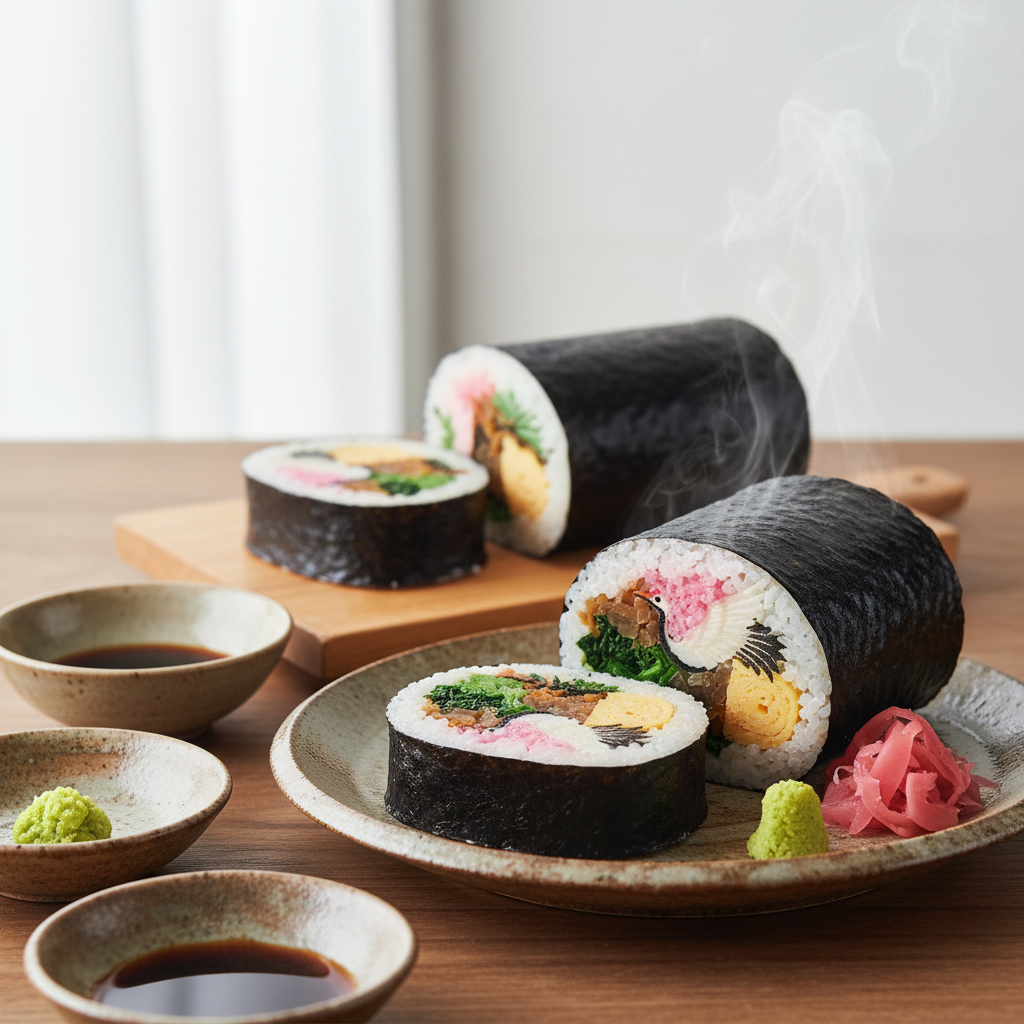
Futomaki sushi: A stunning sushi essential to Boso celebrations
These local cuisines all contain the wisdom of ancestors in utilizing the region’s abundant ingredients. Enjoying these together with sanga-yaki allows deeper understanding of Chiba’s food culture.
Introduction to Foreign Tourists
In recent years, growing numbers of foreign tourists visit Chiba Prefecture, and sanga-yaki attracts attention as traditional Japanese fish cuisine. In English it is often introduced as “Sanga-yaki” or “Grilled Fish Paste,” and health-conscious foreigners increasingly appreciate it as cuisine using miso, a Japanese fermented food.
Being near Narita Airport, Chiba Prefecture is where foreign visitors to Japan often first encounter Japanese local cuisine, making sanga-yaki an increasingly popular choice.
Conclusion
Sanga-yaki is a traditional local dish created by Boso Peninsula fishermen, combining fresh fish, miso, and aromatics. The ingenuity born from the harsh environment of eating aboard ship has now become beloved by many as a delicious dish representing Chiba Prefecture.
Sanga-yaki offers deep flavor and high nutritional value through simple cooking that merely requires pounding fish until sticky. It can be easily prepared at home with wide room for arrangement.
When visiting Chiba Prefecture, please try authentic sanga-yaki. Additionally, when fresh fish becomes available at home, why not challenge sanga-yaki preparation using this article as reference? Please enjoy the taste of this local cuisine packed with the bounty of the Boso Sea and fishermen’s wisdom.