
Why Sukiyaki is Beloved as a Local Dish in Gunma Prefecture | Comprehensive Explanation of History, Ingredients, and How to Eat
Gunma Prefecture is known as a treasure trove of agricultural and livestock products blessed with abundant nature and favorable conditions. Among them, “sukiyaki” has long been deeply cherished by prefecture residents as a representative local dish that Gunma takes pride in. This article provides a detailed explanation of why sukiyaki became established as a local dish in Gunma Prefecture, from its historical background to the ingredients and cooking methods used, and the efforts to preserve and pass on this tradition in modern times.
The Deep Relationship Between Gunma Prefecture and Sukiyaki
Gunma Prefecture as a “Sukiyaki Support Prefecture”
Gunma Prefecture is a rare region in Japan where all ingredients necessary for sukiyaki can be sourced locally. For this reason, Gunma Prefecture operates a prefecture-wide PR campaign as the “Sukiyaki Support Prefecture.” Beef, pork, vegetables, konjac (shirataki), chrysanthemum greens, shiitake mushrooms, tofu, and even seasonings—being able to source all ingredients used in sukiyaki from the highest-quality locally produced items symbolizes Gunma Prefecture’s abundant agricultural production capacity.
Gunma Prefecture’s Food Culture: A Treasure Trove of Agricultural and Livestock Products Created by Abundant Nature and Favorable Conditions
Gunma Prefecture is blessed with diverse terrain featuring significant elevation differences and abundant water resources, which enables the production of a wide variety of agricultural and livestock products. From the mountainous regions in the northern part of the prefecture to the plains in the southern part, agriculture has been conducted utilizing the distinctive characteristics of each region. This geographical condition has resulted in a unified food culture through the dish of sukiyaki.
History, Origins, and Related Events of Sukiyaki in Gunma Prefecture
The Background of Sukiyaki Becoming a Local Dish
The history of sukiyaki in Gunma Prefecture is deeply connected with the Meiji Restoration and Western cultural enlightenment. Until the Edo period, meat consumption had been restricted due to Buddhist influence in Japan; however, after the Meiji Restoration, beef eating spread along with the influx of Western culture. Since cattle raising had long been practiced in Gunma Prefecture in conjunction with the prosperous silk-weaving industry, beef dishes became relatively widespread at an early stage.
The abundance of high-quality wagyu beef produced throughout the prefecture (such as Joshu beef) and specialty vegetables like the Shimonitayonnegi (Shimoniita negi) were major factors in establishing sukiyaki in the local region. Additionally, in Gunma Prefecture, which is a major production area for konjac, the practice of adding konjac and shirataki to sukiyaki naturally became established.
Occasions and Seasons for Eating Sukiyaki
In Gunma Prefecture households, sukiyaki has been positioned as a special treat for celebrations and important occasions. It continues to be prepared in many homes for New Year’s, seasonal festivals, family birthdays, and as a dish for entertaining guests. Additionally, during cold winter months, the dish is frequently served as a meal to warm the body and on occasions when families gather together.
In recent years, centered around “Gunma Sukiyaki Day” (November 29, Good Meat Day), events and campaigns are held throughout the prefecture to improve awareness of sukiyaki as a local dish and promote local production and consumption.
Main Ingredients Used and Information on Their Origins
Joshu Beef and Joshu Wagyu
Joshu beef, a brand of beef that Gunma Prefecture takes pride in, is characterized by fine marbling. Wagyu cattle raised with utmost care throughout the prefecture are highly regarded as ideal ingredients for sukiyaki, featuring sweet-tasting fat and tender meat quality. Akagi wagyu is also known as a representative brand in the prefecture.
Use of Pork
In Gunma Prefecture, many households use pork in sukiyaki. Prefectural pork products, such as Joshu barley pork, are characterized by sweet fat and a light taste, offering a different deliciousness compared to beef. In some regions, both beef and pork are used, which is also one of the characteristic features representing Gunma’s regional flavor in sukiyaki.
Shimonitayonnegi (Shimoniita Negi)
Shimonitayonnegi produced in Shimonitayonnegi Town, Gunma Prefecture has a thick and short shape, and when heated, develops an unexpectedly sweet and melt-in-the-mouth texture. As an indispensable ingredient in sukiyaki, it is highly valued both within and outside the prefecture.
Konjac and Shirataki
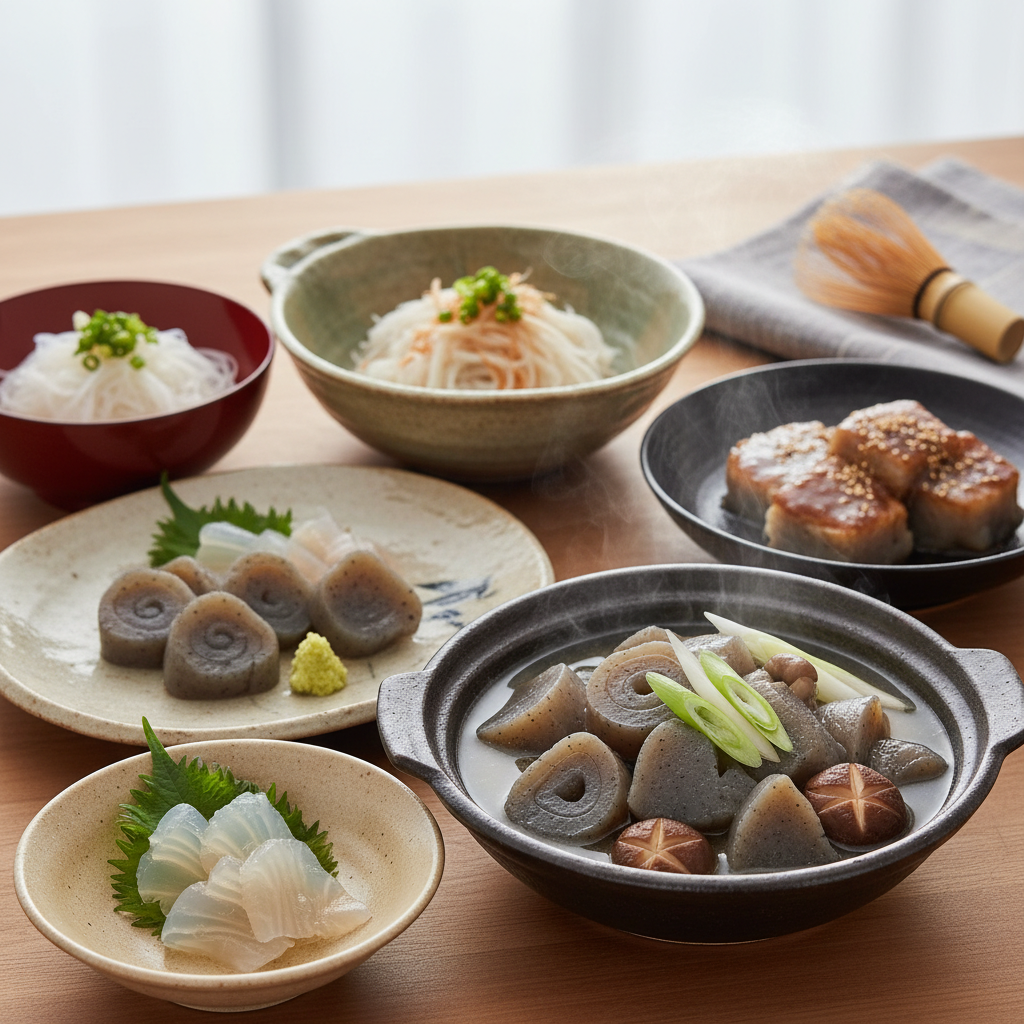
Gunma Prefecture boasts Japan’s highest production volume of konjac plants, accounting for approximately 90% of the national share. Prefecture-produced konjac and shirataki provide sukiyaki with unique texture and satisfaction as important ingredients.
Other Vegetables
Spring greens, Chinese cabbage, shiitake mushrooms, enoki mushrooms, tofu, and other vegetables and mushrooms used in sukiyaki are abundantly produced within Gunma Prefecture. The ability to use fresh, locally produced vegetables year-round through vegetable cultivation that takes advantage of elevation differences is also a major strength of Gunma’s sukiyaki.
Main Regions of Transmission
Sukiyaki is a local dish enjoyed throughout Gunma Prefecture, but particularly distinctive food cultures have been developed in the following regions.
Central/Maebashi Area
In the area centered around Maebashi City, the prefectural capital, traditional sukiyaki using Joshu beef is served in many households and restaurants.
Western/Takasaki Area
In the Takasaki City area, sukiyaki combining locally produced vegetables and meat is popular, with many famous restaurants lined up.
Shimonitayonnegi Area
This region, known as the production area for Shimonitayonnegi, is characterized by sukiyaki that uses Shimonitayonnegi abundantly. Many specialty restaurants that focus on ingredients from Shimonitayonnegi Town exist in this area.
Eastern/Ota and Tatebayashi Area
In the eastern part of the prefecture as well, many sukiyaki specialty restaurants use beef and pork raised in the region, with active efforts toward local production and consumption.
Preparation Method and How to Eat
Ingredients (Serves 4)
Meat:
- Joshu beef (or Joshu wagyu) thinly sliced: 400-500g
- Or Joshu barley pork thinly sliced: 400-500g
Vegetables and Others:
- Shimonitayonnegi: 2-3 stalks
- Chinese cabbage: 1/4 head
- Spring greens: 1 bunch
- Shiitake mushrooms: 8 pieces
- Enoki mushrooms: 1 pack
- Grilled tofu: 1 block
- Shirataki (konjac): 1 bag
- Gluten cake (fu) (optional): as desired
Warishita (Sauce):
- Soy sauce: 100ml
- Mirin: 100ml
- Sake: 100ml
- Sugar: 3-4 tablespoons
- Dashi stock: 100ml
Other:
- Beef tallow: as needed
- Eggs: 4 (for beaten egg)
Cooking Steps
- Preparation: Parboil shirataki to remove impurities and cut to an easy-to-eat length. Wash vegetables and cut to appropriate sizes. Cut Shimonitayonnegi diagonally, roughly chop Chinese cabbage, and trim the roots off spring greens.
- Prepare the warishita: Mix soy sauce, mirin, sake, sugar, and dashi stock to prepare the warishita. Adjust the sweetness and saltiness according to family preference.
- Prepare the pot: Heat a sukiyaki pot and melt beef tallow to coat the entire bottom of the pot.
- Cooking: In the Kanto region, including Gunma, the style of simmering all ingredients in warishita is common. First, warm the warishita in the pot, then gradually add meat and vegetables. However, some famous restaurants in the prefecture adopt the Kansai style where meat is cooked first before adding the warishita.
- How to eat: Dip cooked ingredients in beaten egg and eat. The key is not to overcook the meat and to eat it at the right doneness.
Regional Differences in Eating Style
Like typical sukiyaki, the way to eat varies by household, restaurant, and region. In the Kanto region, including Gunma, all ingredients are often simmered in warishita, but some famous restaurants in the prefecture use the Kansai-style approach of cooking meat first. Additionally, in households using pork, the meat tends to be cooked slightly longer than beef.
Efforts in Preservation and Transmission
Official Efforts by Gunma Prefecture
Gunma Prefecture works as the “Sukiyaki Support Prefecture” to promote sukiyaki and local production and consumption at the prefecture level. Under the leadership of the Agriculture and Livestock Division, efforts are being made to promote the use of prefectural ingredients and raise awareness of sukiyaki as a local dish.
Gunma Sukiyaki Navi
“Gunma Sukiyaki Navi,” operated by the Gunma Agricultural and Livestock Products Sales Promotion Council, is a website that aggregates information about sukiyaki-serving restaurants in the prefecture. Restaurants can be searched by area and price range, and it disseminates information about restaurants serving sukiyaki using prefectural ingredients. This type of online information dissemination is receiving attention as a modern initiative.
Activities of the JA Gunma Women’s Organization Council
The JA Gunma Women’s Organization Council works on developing and promoting sukiyaki arrangements such as “Gunma Gyu! Sukiyaki Bowl.” With themes of local production and consumption, and regional characteristics, the council proposes recipes that allow families to easily enjoy sukiyaki at home.
Product Development and Modern Efforts
Food manufacturers within the prefecture are advancing the commercialization of sukiyaki warishita using Gunma-produced ingredients and sukiyaki sets. Additionally, through the use of SNS, efforts are being made to expand awareness among younger generations. In the tourism sector, tourist plans and events that feature sukiyaki prominently are being planned, and Gunma’s local dish is widely introduced to tourists from outside the prefecture.
Transmission Through Dining Establishments
Within the prefecture, there are numerous long-established restaurants that have maintained and continue to preserve the sukiyaki flavor passed down through generations. These establishments play an important role not only in providing food but also in passing on sukiyaki food culture to the next generation. Specialty restaurants such as “Funaki-tei” serve authentic sukiyaki using Joshu beef and Joshu barley pork, preserving Gunma’s food culture.
Health Benefits of Sukiyaki from Gunma Prefecture
Sukiyaki prepared using Gunma-produced ingredients is also a health-conscious dish with excellent nutritional balance. Eating one dish provides a variety of nutrients, including high-quality protein from meat, vitamins and minerals abundant in vegetables, and dietary fiber obtainable from konjac and shirataki.
In particular, vegetables from Gunma Prefecture are fresh and have high safety standards; through local production and consumption, transportation distances are shorter, resulting in less nutritional loss. Additionally, the format of a hot pot dish shared by family is thought to promote communication and contribute to mental health.
Tourism and Sukiyaki
For tourists visiting Gunma Prefecture, sukiyaki made with prefectural ingredients is positioned as a must-try local specialty. Enjoying sukiyaki for dinner during hot spring stays or at specialty restaurants along the way during sightseeing is one of the major attractions of Gunma tourism.
On tourism information sites such as “Gugutto Gunma,” sukiyaki is prominently featured as a local specialty of Gunma, creating a synergistic effect between tourism promotion and the preservation of local cuisine.
Summary
Gunma Prefecture’s sukiyaki has established itself as a local dish transcending a mere recipe, symbolizing the prefecture’s abundant agricultural and livestock products and food culture. Utilizing the regional strength of being able to source all ingredients necessary for sukiyaki locally, the prefecture pursues comprehensive initiatives as the “Sukiyaki Support Prefecture.”
Sukiyaki made with high-quality ingredients unique to Gunma Prefecture—such as Joshu beef, Joshu barley pork, Shimonitayonnegi, and konjac—plays an important role as home cooking, hospitality cuisine, and a tourism resource. From its historical background to modern efforts, Gunma’s sukiyaki culture, being transmitted and continually developing as a multilayered cultural practice, will undoubtedly continue to be passed down as part of the prefecture residents’ identity.
When visiting Gunma Prefecture, be sure to taste authentic sukiyaki made with local ingredients and experience its rich food culture.