Grilled Mackerel is a Signature Local Dish of Fukui Prefecture | Complete Explanation from History and Origins to Cooking Methods and How to Eat
“Yaki-saba” (grilled mackerel), known throughout Japan as a local specialty of Fukui Prefecture, is a traditional flavor passed down through the Wakasa region since ancient times. A whole fat mackerel is skewered and grilled boldly in the beachside grilling style. This article provides a comprehensive introduction to Fukui Prefecture’s mackerel culture, from the historical background of grilled mackerel to cooking methods, ways of eating, and its continuation into modern times.
What is Grilled Mackerel? Characteristics of Fukui Prefecture’s Representative Local Dish
Grilled mackerel is a local dish of Fukui Prefecture made by skewering a whole fresh mackerel, sprinkling it with salt, and slowly grilling it over charcoal fire. It has been particularly cherished since ancient times in the Wakasa region (the Sennan area centered around Obama City).
Characteristics of Whole Grilled Mackerel (Maruyaki-saba)
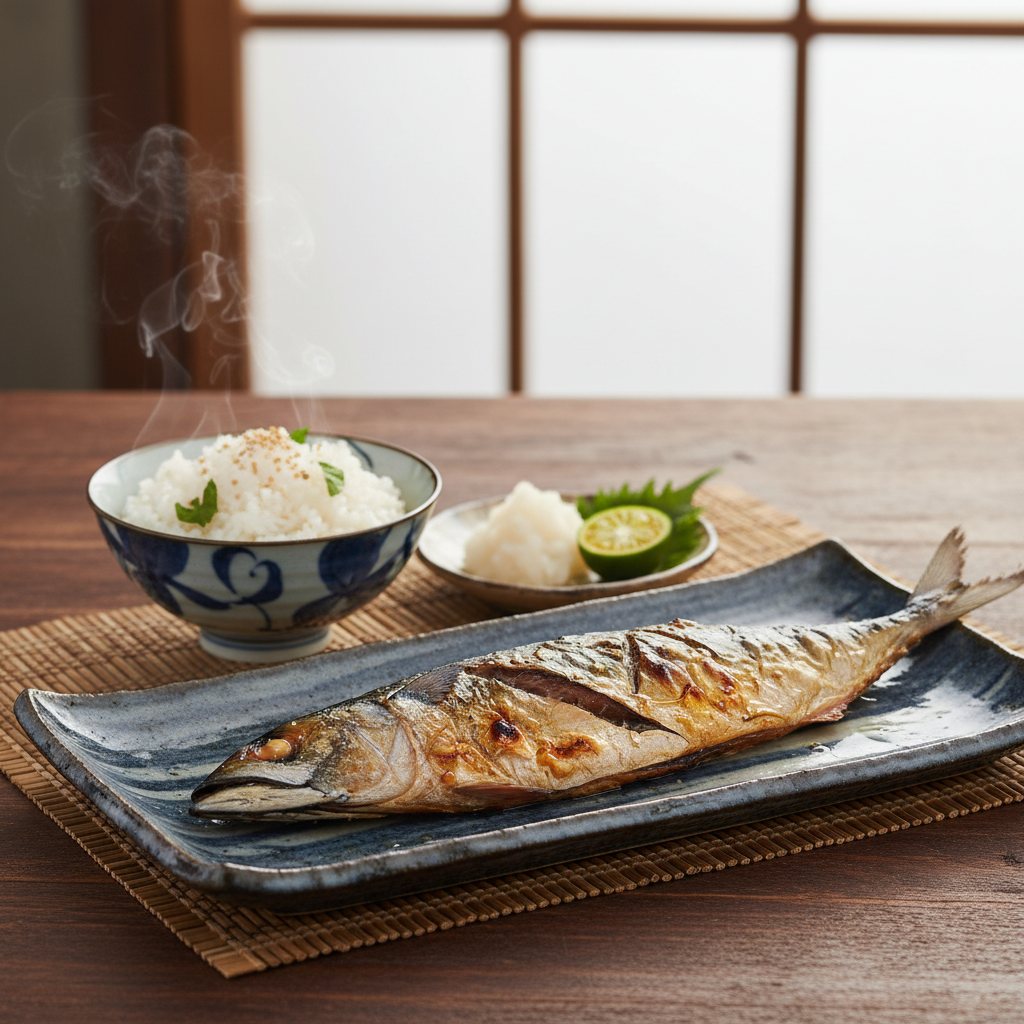
The defining characteristic of whole grilled mackerel is that an entire mackerel is used without being filleted. A bamboo skewer is inserted from head to tail, salt is sprinkled, and it is grilled over charcoal fire. Despite its bold appearance, delicate heat control is required to prevent the flesh from crumbling or the fat from seeping out excessively, as mackerel contains large amounts of moisture and fat.
The surface becomes fragrant and golden brown, while the inside is fluffy and juicy. The umami of the mackerel is concentrated, offering a rich and satisfying taste. In Fukui Prefecture, it is also called “hamayaki-saba” (beachside grilled mackerel), and fresh grilled versions can be enjoyed in fishing ports and seaside towns.
Diversity of Mackerel Dishes in Fukui Prefecture
In Fukui Prefecture, there are various local mackerel dishes besides grilled mackerel.
- Heshiko: A fermented food made by pickling mackerel in rice bran, valued as a preserved food
- Shoyu-boshi: Dried mackerel marinated in a sauce made from soy sauce
- Yaki-saba sushi: Pressed sushi using grilled mackerel, said to originate in Fukui Prefecture
These mackerel dishes tell the story of high-quality mackerel caught in Wakasa Bay and the richness of the region’s food culture that has utilized it.
Historical Relationship Between Fukui Prefecture and Mackerel | From Miketsukuni to the Mackerel Road
The relationship between Fukui Prefecture, especially the Wakasa region, and mackerel dates back to ancient times. The history of this region serving as “Miketsukuni” (the Imperial Food Land) by supplying food to the imperial court forms the foundation of current mackerel culture.
Wakasa as Miketsukuni (Imperial Food Land)
The Wakasa region was granted the special privilege of supplying seafood and other foodstuffs to the imperial court from the Asuka and Nara periods through the Heian period. The title of Miketsukuni was granted to only a limited number of regions throughout Japan, and Wakasa played a particularly important role among them.
Wakasa Bay is blessed with abundant fishing grounds in the Japan Sea, and mackerel in particular was known for its high fat content and excellent flavor. This high-quality mackerel became an important ingredient supporting the food culture of the capital.
The Mackerel Road and Transport of Mackerel to Kyoto
Mackerel caught in Wakasa was transported to Kyoto via routes called the “Mackerel Road.” The Mackerel Road actually consisted of multiple routes, with the main ones being:
- Wakasa Road (Haribata Pass): A route from Obama through Kumagawa station to Kyoto
- Yamashina Road: A route from Obama through Nata-sho and Miyama to Kyoto
- Negoro/Kutaki Route: A route from Obama through Negoro and Kutaki to Kyoto
Mackerel was transported via these roads using a method called “seoi” (carrying on the back) on foot. The journey from Obama to Kyoto covered approximately 70-80 kilometers and was completed in a day and night. During this time, the salted mackerel would gradually cure, and by the time it arrived in Kyoto, it would have reached the perfect level of saltiness.
Why Mackerel from Wakasa Bay is Special
The reason mackerel caught in Wakasa Bay is considered particularly high-quality lies in the special environment of this sea area. Wakasa Bay is influenced by the Tsushima Current, rich in plankton, and abundant small fish that serve as mackerel food. Additionally, the complex topography and swift tidal flows of the bay result in firm-fleshed mackerel.
Mackerel caught from autumn through winter is particularly prized, with abundant fat and thick flesh at its highest quality. Mackerel from Wakasa during this season is called “kan-saba” (winter mackerel) and has been especially treasured.
History and Origins of Grilled Mackerel and Occasions for Eating
Grilled mackerel is not merely a dish but a cultural food deeply intertwined with the lives and annual events of Fukui Prefecture’s people.
Birth and Development of Beachside Grilled Mackerel
In the Wakasa region, salt-cured mackerel for transport to Kyoto was the mainstream, but locals could enjoy fresh mackerel immediately. While salt-cured mackerel excels in preservation, time is required before eating. Thus, “hamayaki-saba,” made by skewering and grilling freshly caught mackerel whole, became valued as a dish that could be eaten immediately.
In fishing towns, scenes of fishermen and local people enjoying freshly grilled mackerel caught right then were everyday occurrences. This bold and simple cooking method became the prototype of grilled mackerel transmitted to the present day.
The Custom of Hange-sho and Grilled Mackerel
Fukui Prefecture has a unique custom of eating grilled mackerel on Hange-sho, the day of “Hange-sho” (Halfway Point of Summer). Hange-sho is a day that falls about 11 days after the summer solstice (around July 2), traditionally marking a turning point in agricultural work.
This period comes after rice planting is finished, providing a time for farmers to catch their breath. Eating nutritious mackerel was meant to build up strength to endure the hot summer. Even today in Fukui Prefecture, when Hange-sho season arrives, whole grilled mackerel lines the shelves of supermarkets and fish shops, much like eels appear on Japan’s “Day of the Ox” in midsummer.
This grilled mackerel is called “Hange-sho saba” and in some regions goes by the dialectal name “hagessho-saba.” The custom of gathering as a family around a single grilled mackerel to eat has become a summer symbol of Fukui Prefecture.
Major Regions of Transmission and Eating Occasions
While grilled mackerel is enjoyed throughout Fukui Prefecture, it is particularly prevalent in the following areas:
- Obama City: The center of the Wakasa region and the heart of mackerel culture
- Tsuruga City: A port town facing Wakasa Bay where fresh mackerel is landed
- Mikuni Town (Sakai City): Known as the birthplace of grilled mackerel sushi
- Fukui City: As the prefectural capital, grilled mackerel and grilled mackerel sushi are widely popular
As for eating occasions, besides Hange-sho, grilled mackerel often appears on the table during festivals, celebrations, and family gatherings on special days. Additionally, an increasing number of restaurants serve it year-round for tourists, making it an established specialty when visiting Fukui Prefecture.
How to Make Grilled Mackerel | Ingredients and Cooking Steps
Here is a basic method for preparing grilled mackerel that can be made at home. While charcoal fire is ideal, a grill or oven can also produce delicious results.
Ingredients (serves 1)
- Mackerel (1 whole fish, approximately 400-500g)
- Salt: as needed (approximately 3-5% of the mackerel’s weight)
- Bamboo skewer: 1 (30cm or longer)
Preparation
- Processing the mackerel: Choose fresh mackerel and remove the internal organs. Keep the head intact and carefully remove only the gills and internal organs.
- Rinsing: Rinse the inside and outside of the mackerel under running water to remove blood and impurities.
- Drying: Wipe the mackerel thoroughly with paper towels to remove all moisture.
Cooking Method
- Salting: Sprinkle salt over the entire mackerel. Apply more salt to the thicker parts of the flesh and ensure the salt is evenly distributed. After salting, let it sit for 30 minutes to 1 hour to allow the salt to blend in.
- Skewering: Insert the bamboo skewer from the base of the head toward the tail along the spine. It is important to keep the mackerel straight and insert the skewer firmly so it does not come loose during grilling.
- Grilling (charcoal fire method):
- Start a charcoal fire at medium heat
- Begin grilling the mackerel skin-side down on the skewer
- Grill until the surface browns and the skin becomes crispy (approximately 7-10 minutes per side)
- Flip and grill the same way
- Insert a bamboo skewer into the thickest part; if clear liquid emerges, grilling is complete
- Grilling (grill method):
- Preheat the fish grill
- Grill both sides on medium heat (approximately 8-12 minutes per side)
- Watch carefully as it burns easily
- Grilling (oven method):
- Preheat the oven to 200°C
- Line a baking sheet with aluminum foil and place the mackerel on it
- Bake for approximately 20-25 minutes, flipping once during cooking
Points for Perfect Grilling
- Crispy skin and fluffy flesh: The surface should be fragrant and golden brown while the interior remains moist and fluffy
- Fat seepage: Ideally, an appropriate amount of fat should emerge from the mackerel, giving the surface a glossy appearance
- Browning: Adjust heat and cooking time to achieve uniform browning across the entire fish
How to Eat Grilled Mackerel and Ways to Enjoy It
Grilled mackerel is most simply and deliciously enjoyed as is, but various arrangements are also possible.
Basic Way of Eating
The standard way is to eat it piping hot with grated daikon radish, sudachi citrus, or lemon. The combination of mackerel’s fat and grated daikon radish is excellent and creates a fresh taste.
The typical way to eat it in Fukui Prefecture is to flake the flesh with chopsticks and enjoy it with rice. A single mackerel is often shared among family members, creating a communication moment around the dinner table.
Evolution into Grilled Mackerel Sushi
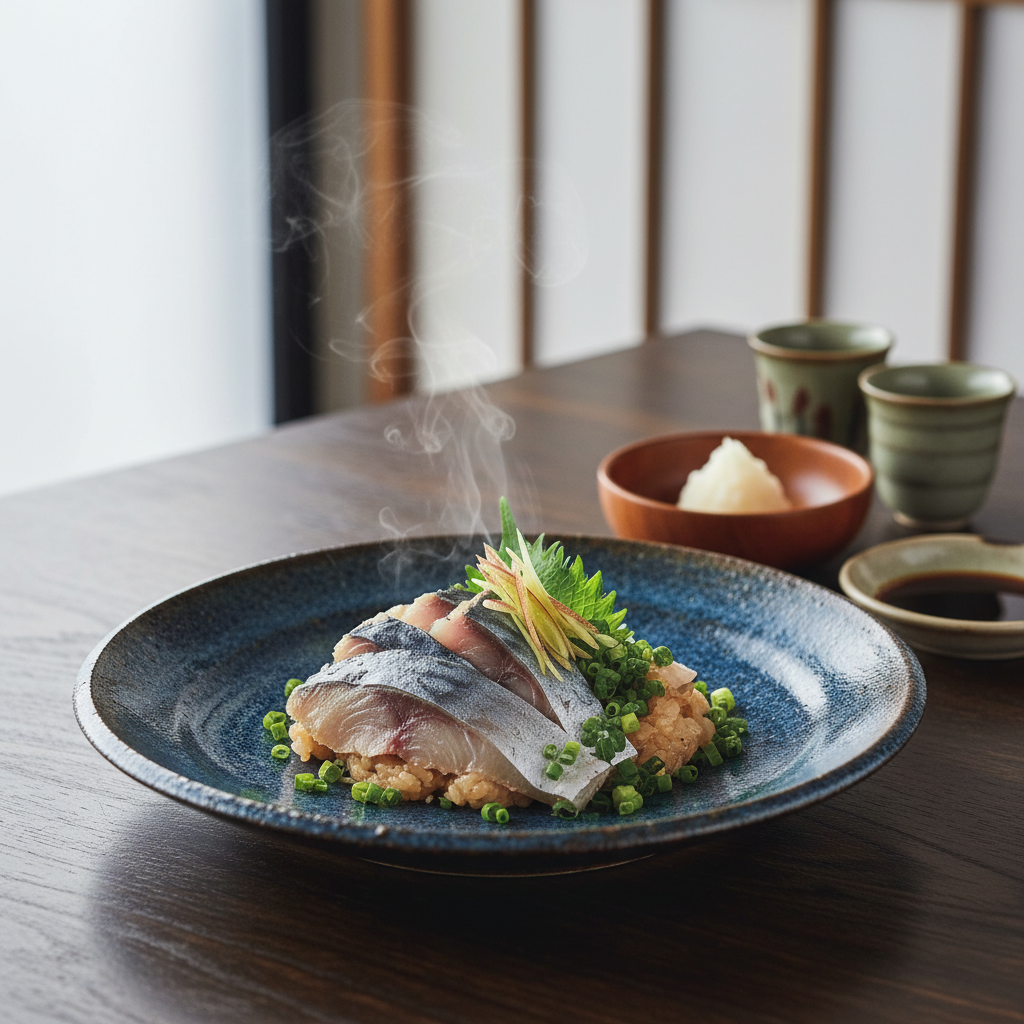
“Grilled mackerel sushi,” a dish using grilled mackerel, is said to originate in Fukui Prefecture. It was created in May 2000 at “Echizen Mikuni Minato-ya” in Mikuni Town (now Sakai City) with the desire to create a local specialty.
Grilled mackerel sushi is made by combining grilled mackerel flesh with vinegar rice into pressed sushi, featuring a fragrant, grilled flavor distinct from raw mackerel sushi. Because the vinegar flavor of raw mackerel sushi can be difficult for some, grilled mackerel sushi is more accessible and popular with a wider audience.
Depending on the restaurant, the ingredients stuffed inside and seasoning differ, offering grilled mackerel sushi with ginger, shiso leaves, and shiitake mushrooms, those marinated in soy sauce, and those seasoned with Sichuan pepper, among many creative varieties. At Fukui Station and major tourist sites, grilled mackerel sushi is sold as souvenirs and station box lunches, having become established as a new specialty of Fukui Prefecture.
Other Ways to Eat It
- Grilled mackerel rice bowl: Flaked grilled mackerel served over rice with sauce poured on top
- Grilled mackerel tea rice: Grilled mackerel served over rice with tea poured over it for a refreshing meal
- Flaked grilled mackerel: Flesh from cooled grilled mackerel flaked and used as filling for rice balls or in lunch boxes
Places to Enjoy Grilled Mackerel in Fukui Prefecture
Here are places where you can enjoy authentic grilled mackerel when visiting Fukui Prefecture.
Obama City Area
Obama City, the center of the Wakasa region, has many restaurants serving traditional grilled mackerel. Dining establishments near fishing ports offer grilled mackerel made with freshly landed mackerel. Particularly at tourist facilities such as “Wakasa Obama Fish Center,” freshly grilled beachside grilled mackerel can be purchased.
Tsuruga City
Tsuruga City, also a port town facing Wakasa Bay, offers fresh seafood. Around Tsuruga Station and at tourist spots like Japan Sea Fish Street, many restaurants serve grilled mackerel and grilled mackerel sushi.
Fukui City and Mikuni Town
In Fukui City and Mikuni Town, restaurants serving grilled mackerel sushi are abundant. Around Fukui Station, grilled mackerel sushi is sold as a station lunch box, allowing travelers to take home a souvenir of their journey. As the birthplace of grilled mackerel sushi, Mikuni Town has many specialty shops lining its streets.
Special Scenes During Hange-sho Season
In early July during Hange-sho season, whole grilled mackerel line the shelves of supermarkets and fish shops throughout Fukui Prefecture. Visiting Fukui Prefecture during this time allows you to directly experience the local food culture.
Preservation of Grilled Mackerel and Efforts in Its Succession
Grilled mackerel, a traditional local dish of Fukui Prefecture, is being preserved and transmitted in various forms in modern times.
Local Preservation Societies and Transmission Activities
In the Wakasa region, preservation societies for local cuisine and organizations dedicated to cultural food transmission are actively engaged. These groups hold cooking classes teaching the preparation of grilled mackerel and events to learn about food culture to pass it on to the next generation.
At local schools, opportunities are sometimes provided for students to experience grilling mackerel as part of lessons on local cuisine. Through hands-on experience of grilling mackerel, children deepen their understanding of regional food culture.
Commercialization and Modern Approaches
With developments in vacuum-packing and freezing technology, grilled mackerel is sold as a product that can be enjoyed anywhere in Japan. It is also available for purchase through internet mail order, spreading the deliciousness of grilled mackerel to people outside Fukui Prefecture.
The birth of grilled mackerel sushi is an excellent example of modernly reinterpreting traditional beachside grilled mackerel. By making it portable and easy to eat, new demand was created as a station lunch box and souvenir.
SNS and Information Dissemination
In recent years, Fukui Prefecture’s tourism associations and restaurants use SNS to promote the appeal of grilled mackerel. On Instagram and Twitter, photos of freshly grilled mackerel and beautiful cross-sections of grilled mackerel sushi are posted, capturing many people’s interest.
Searching with hashtags such as “#yaki-saba,” “#Fukui gourmet,” and “#Wakasa mackerel” reveals various posts of grilled mackerel dishes, also serving as motivation to visit Fukui Prefecture.
Introduction in the Ministry of Agriculture, Forestry and Fisheries’ “Our Local Cuisine” Database
Fukui Prefecture’s whole grilled mackerel is registered in the “Our Local Cuisine” database operated by the Ministry of Agriculture, Forestry and Fisheries, further raising national recognition as a local dish. Such official documentation and information dissemination are important efforts in transmitting the cultural value of grilled mackerel to future generations.
Differences Between Grilled Mackerel and Other Mackerel Dishes
Besides grilled mackerel, Fukui Prefecture has various other mackerel dishes, each with its own characteristics.
Difference from Heshiko
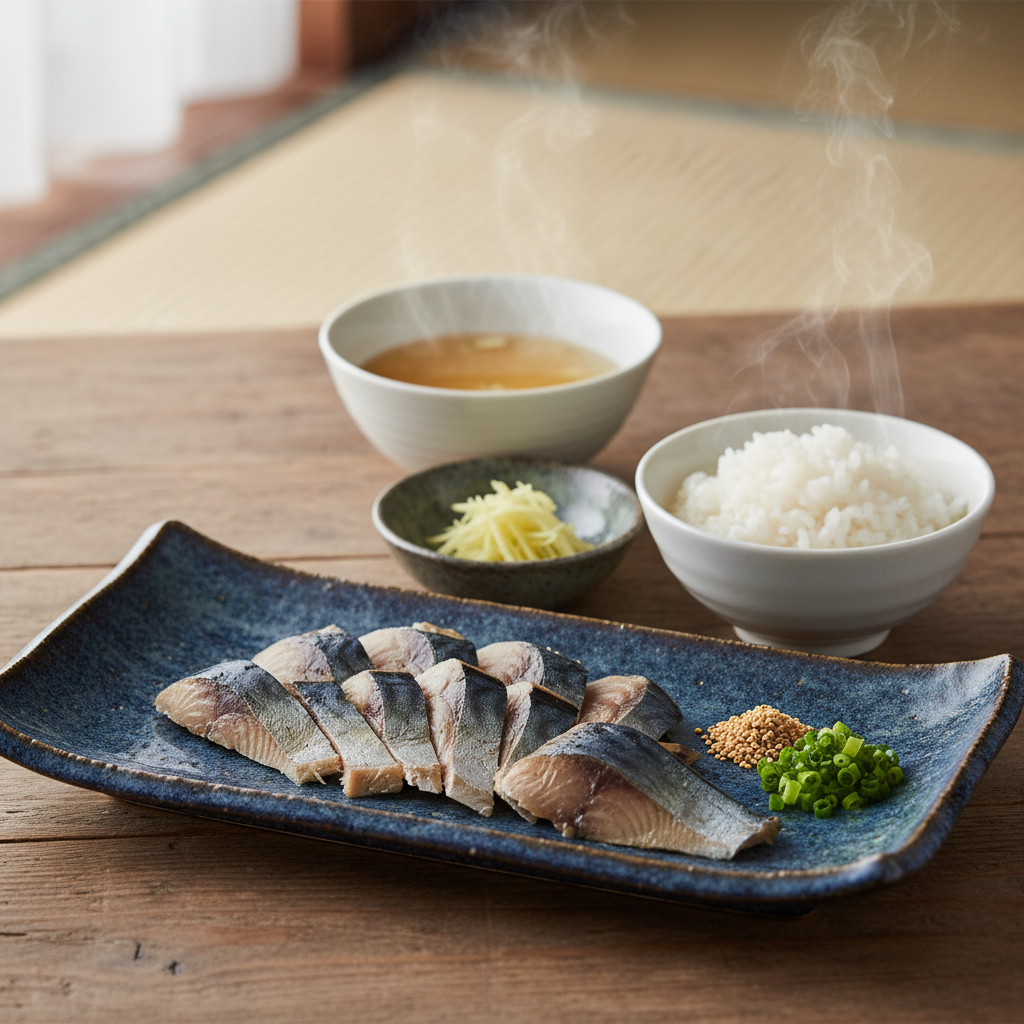
Heshiko is a fermented food made by pickling mackerel in rice bran and salt and developed as a preserved food. While grilled mackerel is a dish eaten immediately with fresh mackerel, heshiko is a dish designed for long-term storage. Heshiko is characterized by a distinctive fermented aroma and saltiness and is enjoyed as a sake accompaniment.
Difference from Soy Sauce Dried Mackerel
Soy sauce dried mackerel is mackerel marinated in a soy sauce-based sauce and then dried, which is then grilled before eating. While grilled mackerel uses a whole mackerel, soy sauce dried mackerel often uses filleted mackerel, with the addition of a soy sauce’s fragrant flavor.
Difference from Shime-saba (Vinegar-Cured Mackerel)
Shime-saba uses raw mackerel cured in vinegar, while grilled mackerel sushi uses grilled mackerel. Grilled mackerel sushi is easier for those who find vinegar flavor unpleasant and is characterized by a grilled aroma.
Prime Season and Best Time for Mackerel
Mackerel from Fukui Prefecture changes in taste by season.
Winter Mackerel from Autumn to Winter
The most fatty and delicious mackerel is the “kan-saba” (winter mackerel) from autumn through winter. From October to February, mackerel accumulates nutrition before spawning, with fat content reaching its peak. Grilled mackerel during this season is so juicy that fat drips, offering an intensely rich flavor.
Mackerel from Spring to Summer
Mackerel from spring through summer has less fat as it is after spawning, but offers a refreshingly light taste. The grilled mackerel eaten during Hange-sho season (early July) typically uses mackerel from this period, with a clean and fresh flavor that is easy to eat even in the hot season.
Conclusion | Passing Fukui Prefecture’s Grilled Mackerel Culture to the Next Generation
Fukui Prefecture’s grilled mackerel transcends being merely a dish, standing as a local specialty deeply intertwined with the region’s history, culture, and people’s lives. From ancient times when the region supplied food to the imperial court as Miketsukuni, through the medieval period when Wakasa mackerel supported Kyoto’s food culture via the Mackerel Road, to the present day, Wakasa mackerel has remained a source of pride for Fukui Prefecture.
Boldly grilled whole mackerel, grilled mackerel gathered as a family on Hange-sho, and grilled mackerel sushi reinterpreted for modern times—while the form changes, the spirit of gratitude for Wakasa Bay’s bounty and the sharing of its deliciousness remains unchanged.
When visiting Fukui Prefecture, be sure to taste the authentic grilled mackerel. The fragrant aroma of freshly grilled fish, the fluffy flesh, and the rich umami of flowing fat offer an incomparable experience found only in Fukui Prefecture. And it is hoped that this traditional local dish will continue to be passed down to future generations.