Complete Guide to Mimi Udon | History, How to Make, and Preservation Efforts of Tochigi Prefecture’s Auspicious Local Cuisine
What is Mimi Udon? A Local Dish Representative of Tochigi Prefecture
Mimi udon (みみうどん) is a traditional local dish that has been passed down for centuries in the Kuzuu district of Sano City (formerly Kuzuu Town) and the Shiroyama district of Utsunomiya City (formerly Shiroyama Village) in Tochigi Prefecture. While typical udon is imagined as long, thin noodles, mimi udon, true to its name, has a distinctive shape resembling human ears or the ears of an ogre.
This dish, made by kneading wheat flour into dough, stretching it thin, and shaping it like an earlobe, is more than just a noodle dish—it has become rooted in the region as a traditional auspicious food for New Year’s. As a local dish of Tochigi Prefecture, it has been selected for the Ministry of Agriculture, Forestry and Fisheries’ “Our Regional Dishes,” symbolizing the region’s food culture.
Distinctive Shape of Mimi Udon
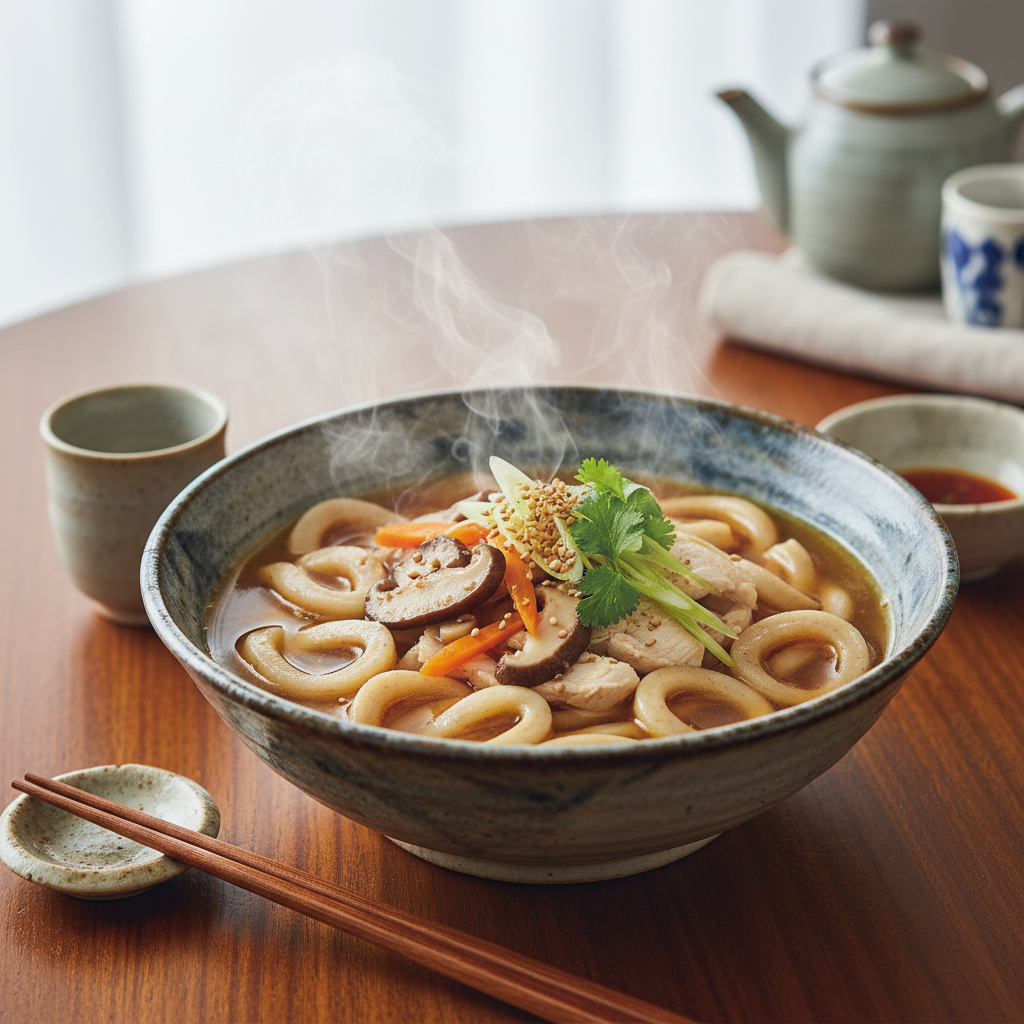
The most distinctive feature of mimi udon is its unique shape. Wheat flour dough is stretched thin, cut into small oval shapes, and then pressed in the center with a finger to create an indentation, resulting in a three-dimensional earlobe-like form. This shape is not merely visually interesting but is deeply connected to the auspicious meaning described later.
Compared to ordinary udon, it has a texture closer to gyoza skin or suimono than noodles, characterized by a smooth, slippery feel and chewy bite.
Major Regions of Transmission and Regional Differences
Kuzuu District of Sano City (Around Senba Town)
The primary region for transmitting mimi udon culture is the Kuzuu district of Sano City, Tochigi Prefecture, particularly centered on Senba Town. In households of the former Kuzuu Town, mimi udon has long been made as a New Year’s dish. In this region, the tradition of boiling large quantities of mimi udon before the end of the year and keeping it in cold water to serve to New Year’s visitors has been passed down.
In Senba Town, Sano City, mimi udon is viewed as the “ears of an evil deity,” with the belief that eating them prevents a household’s affairs from being heard by evil spirits. By consuming the ears, one is spared from hearing anything bad for the entire year, bringing good fortune—a form of auspicious thinking with this intention.
Shiroyama District of Utsunomiya City
Shiroyama district in Utsunomiya City (formerly Shiroyama Village) is also an important region for transmitting mimi udon culture. In this area, centered on the parishioners of Hoshino-miya Shrine, the culture of mimi udon has been passed down. There is a custom of serving mimi udon at New Year’s festivals and when receiving guests, with careful preparation expressing the region’s hospitality.
Like Sano City, the mimi udon of Shiroyama district has the same shape and preparation method, though slight differences in seasoning and ingredients can be seen depending on location.
History, Origins, and Related Events
Origins of Mimi Udon
There are various theories about the origin of mimi udon, but it is believed to have been created in agricultural villages in southern Tochigi Prefecture during the Edo to Meiji periods. In Tochigi Prefecture, where wheat cultivation flourished, various flour-based food cultures developed. Among these, mimi udon with its auspicious shape is said to have been created as a special New Year’s dish.
The reason for the ear shape is rooted in the meaning of warding off evil and misfortune—”eating the ears so that one doesn’t hear bad things.” This is based on the traditional Japanese way of thinking about auspiciousness: at the beginning of a new year, keeping away misfortune and wishing for a good year.
Connection to New Year’s Celebrations
Mimi udon has traditionally been eaten as a substitute for ozoni (New Year’s soup) in southern Tochigi Prefecture. While most Japanese regions feature mochi-based ozoni as the New Year’s standard, in Kuzuu district of Sano City and Shiroyama district of Utsunomiya City, mimi udon is the central New Year’s dish.
The tradition of the entire family making large quantities of mimi udon at the end of the year and serving it to visitors during the New Year period was also an important event in deepening community bonds. Various auspicious sayings have been passed down in the region, such as “eating mimi udon means hearing no bad things all year,” “living disease-free,” and “good neighborhood relations.”
Relationship with Hoshino-miya Shrine
In Shiroyama district of Utsunomiya City, the culture of mimi udon has been passed down primarily through parishioners of Hoshino-miya Shrine. Mimi udon is sometimes served at the shrine’s festivals, with local beliefs and food culture intertwined in its transmission.
How to Make Mimi Udon (Ingredients and Cooking Method)
Ingredients (Serves 4)
Mimi udon noodles:
- Wheat flour (medium or cake flour): 300g
- Water: approximately 150ml (adjust according to dough consistency)
- Salt: 1/2 teaspoon
Broth (tsuyu):
- Dashi stock: 800ml (made from dried sardines or bonito flakes)
- Soy sauce: 3-4 tablespoons
- Mirin: 2 tablespoons
- Sake: 1 tablespoon
Ingredients (examples):
- Chicken: 100g
- Carrot: 1/2
- Burdock root: 1/2
- Daikon radish: 100g
- Green onion: 1
- Shiitake mushrooms: 3-4
- Fried tofu: 1 sheet
- Spinach or komatsuna: as desired
Directions
1. Making the dough
Mix salt into the wheat flour, then gradually add water while kneading. Knead thoroughly until the dough reaches an earlobe-like consistency, then wrap it in plastic wrap and let it rest for 30 minutes to 1 hour. This resting period is an important step that makes the dough smooth and easier to shape.
2. Shaping
Spread the rested dough thin on a floured surface (approximately 2-3mm thick). Cut the stretched dough into oval pieces about 3cm long and 2cm wide. Press the center of each piece with your thumb to create an indentation, shaping it like an earlobe. Making the edges slightly thinner will create a more ear-like shape.
3. Boiling
Bring plenty of water to a boil in a large pot and add the shaped mimi udon. Boil for 2-3 minutes after they float to the surface, then drain in a colander and rinse in cold water. When making ahead for New Year’s, keep the boiled mimi udon submerged in cold water for storage.
4. Preparing the broth (tsuyu)
Bring dashi stock to a boil in a pot and season with soy sauce, mirin, and sake. A rich soy sauce flavor is traditional in southern Tochigi Prefecture.
5. Preparing ingredients and serving
Cut the chicken into bite-sized pieces and cut vegetables into appropriate sizes. Add the chicken and vegetables to the broth and simmer until cooked through, then add the boiled mimi udon to warm it. Serve in bowls, garnishing with shichimi togarashi (seven-spice blend) or yuzu if desired.
Cooking Tips and Pointers
- Kneading the dough thoroughly and letting it rest creates a chewy, soft texture
- When shaping, cover with a damp cloth to prevent the dough from drying out
- The shapes of mimi udon don’t need to be uniform; the irregular homemade appearance adds to the charm
- Using dried sardines for the dashi stock creates a more traditional flavor
- When making ahead for New Year’s, keep the boiled mimi udon submerged in cold water and store in the refrigerator for 2-3 days
Primary Ingredients Used and Nutrition
Wheat Flour
Wheat flour, the main ingredient of mimi udon, is a grain that has been cultivated in Tochigi Prefecture since ancient times. Wheat is rich in carbohydrates and serves as an excellent energy source. Using medium flour produces appropriate springiness and a soft, chewy texture.
Vegetables and Chicken
The ingredients used in mimi udon vary by season and household, but root vegetables (carrot, burdock root, daikon radish) and chicken are common. Combining these ingredients creates a nutritionally balanced dish.
Root vegetables are rich in dietary fiber, vitamins, and minerals, while chicken is an excellent source of high-quality protein. As a New Year’s dish, it warms the body and provides the nutritional vitality for the new year, making it a nutritious local cuisine.
Occasions and Seasons for Eating
Standard New Year’s Dish
Mimi udon is primarily eaten during New Year’s. Most households make large quantities in late December, boil them, and keep them submerged in cold water for storage. From New Year’s Day through the third day of the new year, this stored mimi udon is reheated for eating or served to guests.
Based on the saying “eating ears at the new year means hearing nothing bad for the entire year, in hopes of a good year,” it has become an indispensable auspicious dish for New Year’s.
Modern Ways of Eating
While traditionally eaten as a New Year’s dish, mimi udon can now be enjoyed throughout the year. Some restaurants and roadside stations in Sano City serve mimi udon year-round, making it a popular local gourmet dish for tourists.
More people are making mimi udon at home for special occasions or weekend meals outside of New Year’s, with the traditional dish increasingly enjoyed in everyday cooking.
Dining Methods and Arrangements
Traditional Way of Eating
The most traditional way is as a “soup dish” with mimi udon and ingredients in a soy sauce-based warm broth. A rich soy sauce dashi broth containing chicken, root vegetables, mushrooms, and other ingredients is simmered, then mimi udon is added to warm through.
During New Year’s, it is typically served in bowls as a family meal, replacing ozoni.
Modern Arrangements
In recent years, various arranged recipes have emerged alongside traditional preparations:
- Chilled mimi udon: A refreshing cold broth style for summer months
- Curry mimi udon: A Western-style arrangement with curry-flavored soup
- Stir-fried mimi udon: A yakiudon-style dish fried with vegetables and meat
- Salad mimi udon: Boiled mimi udon used as an ingredient in salads
Through such arrangements, the dish has become more accessible to younger generations.
Preservation and Succession Efforts
Community Preservation Activities
In Kuzuu district of Sano City, women’s associations and preservation societies centered in the community are leading efforts to pass mimi udon culture to the next generation. Organizations like JA Sano Women’s Association hold regular mimi udon-making workshops and events to teach preparation methods to younger generations and newcomers.
Through these activities, mimi udon-making at home, which had nearly died out, has been revitalized, and the dish is once again recognized as a regional food culture.
School Education Initiatives
Elementary and middle schools throughout Tochigi Prefecture have incorporated mimi udon-making into curriculum as part of learning about local cuisine. By actually preparing traditional foods, children connect with local culture and deepen their attachment to the region.
Some schools serve mimi udon as part of school lunch menus, creating an environment where students regularly encounter local cuisine.
Commercialization and Tourism Resources
Mimi udon is gaining attention as a tourism resource in Tochigi Prefecture. Roadside stations and specialty shops in Sano City sell fresh and dried mimi udon products, which have become popular souvenirs.
Some restaurants serve mimi udon year-round on their menus, providing tourists an accessible way to experience local cuisine. Sano City is known particularly for “Sano Ramen,” recognized as a town with noodle culture, and mimi udon is positioned as a representative dish of the region’s noodle traditions.
Information Sharing Through Social Media
In recent years, information about mimi udon has been actively shared on social media. Local restaurants and individuals share photos, recipes, and instructional videos of mimi udon on platforms, spreading awareness of mimi udon to people outside Tochigi Prefecture.
Its distinctive shape has strong visual impact and easily becomes trending on Instagram and Twitter, gaining attention as “unusual local cuisine.”
Selection for Ministry of Agriculture, Forestry and Fisheries’ “Our Regional Dishes”
Mimi udon has been selected for the “Our Regional Dishes” database promoted by the Ministry of Agriculture, Forestry and Fisheries, raising its nationwide recognition. In this database, regional cuisines from throughout Japan are introduced, with mimi udon featured as one of Tochigi Prefecture’s representative dishes.
Through this official recognition, the cultural value of mimi udon has been re-evaluated, and momentum for its preservation and succession has increased.
Places to Eat Mimi Udon
Restaurants in Sano City
There are several restaurants in Sano City, particularly around Kuzuu district, that serve mimi udon. From traditional establishments preserving original flavors to modern shops offering creative arrangements, mimi udon can be enjoyed in various styles.
Roadside Stations and Specialty Shops
Facilities like “Michi-no-Eki Domannakatanuma” and specialty shops in Sano City sell mimi udon and hold tasting events. Fresh mimi udon can be purchased for home preparation.
Events and Festivals
Throughout the year, various food events are held in Sano City where mimi udon is served. Opportunities to taste mimi udon increase particularly during New Year’s and local festivals.
Mimi Udon and Other Tochigi Prefecture Local Dishes
Tochigi Prefecture has diverse local cuisines besides mimi udon. Shimotsukarei (salmon head and soybeans with sake lees), chitake soba (buckwheat noodles using chitake mushrooms), and imo fry (fried potato on skewers) represent regionally distinctive food cultures developed in different areas.
Among these, mimi udon stands out for its uniquely distinctive shape and auspicious meaning, symbolizing the diversity of Tochigi Prefecture’s food culture.
Conclusion: The Appeal and Future of Mimi Udon
Mimi udon is a traditional local dish passed down in Sano and Utsunomiya cities in Tochigi Prefecture, holding cultural value far beyond a mere food. Its distinctive ear-shaped noodles embody the auspicious wish to “hear nothing bad and spend a good year,” becoming a New Year’s symbol rooted in the region.
Though a simple dish made from kneaded wheat flour, it contains the region’s history, beliefs, and community bonds. The tradition of families working together to make mimi udon and serving it to guests symbolizes regional social connections.
Today, mimi udon culture is being passed to future generations through diverse efforts: preservation society activities, school education, commercialization, and social media promotion. By preserving tradition while welcoming new arrangements and dining methods, the dish evolves to appeal to younger generations.
When visiting Tochigi Prefecture, please taste mimi udon and experience its distinctive form, flavor, and embedded wishes. Attempting to make it at home provides deeper understanding of regional food culture. Mimi udon is a culinary treasure of Tochigi Prefecture, teaching us the richness of Japan’s local cuisines and the importance of cultural preservation through food.