Dekomawashi: A Complete Guide to a Traditional Local Dish from the Iya Region of Tokushima Prefecture
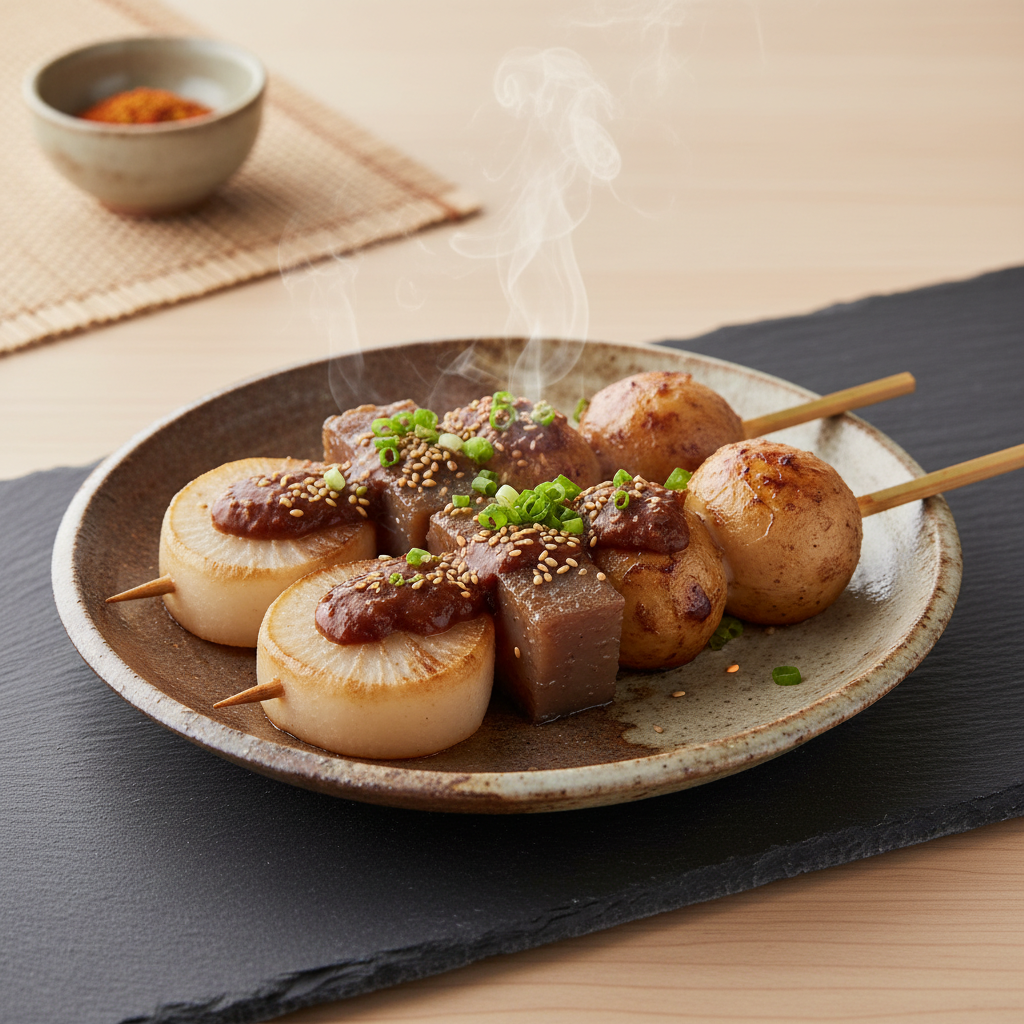
In the Iya region, known as a hidden gem of Tokushima Prefecture, a unique food culture still thrives today. A prime example is “dekomawashi,” a traditional local dish. This dish, made by skewering tofu or potatoes and slowly grilling them over charcoal while coating them with a special miso paste, has long been cherished by local people as a taste of tradition.
In this article, we will provide a detailed introduction to this charming local dish, covering the history of dekomawashi, the origin of its name, how to make it, where to eat it, and how to recreate it at home.
What is Dekomawashi?
Dekomawashi is a local dish passed down mainly in the Iya region of Miyoshi City, Tokushima Prefecture. Firm tofu, potatoes, konjac, and other ingredients are skewered and grilled over charcoal while being coated with a sweet and spicy miso sauce.
Despite its simple ingredients, the savory aroma of charcoal and the flavor of miso harmonize beautifully, creating a modest yet deep taste. It is a dish full of wisdom and ingenuity born from the cool climate of the Iya region and the mountain food culture.
Characteristics of Dekomawashi
- Skewered Grilling Style: Three types of ingredients are skewered on one stick
- Miso Sauce: A sweet and spicy sauce based on locally produced miso
- Charcoal Grilling: Far-infrared heating for slow, thorough cooking
- Regional Character: Reflects the traditions and culture of the Iya region
The Origin of the Name Dekomawashi
The unique name “dekomawashi” has several theories behind it.
The Puppet Theory (Most Widely Accepted)
The most widely known theory is that it derives from “deko” (puppet) from Awa ningyo joruri puppet theater. It is said that the appearance of tofu and potatoes skewered on sticks resembles the act of manipulating puppets in puppet theater, leading to the name “dekomawashi” (operating puppets).
Since Tokushima Prefecture is a region where puppet theater flourishes, this cultural background is believed to have influenced the naming of the dish.
Other Theories
- Dekobo Theory: Named after the bumpy, uneven appearance of the skewered ingredients
- Rotation Theory: Named after the rotating motion of the skewer when grilling over charcoal
Each theory connects to the visual characteristics or cooking methods of the dish, reflecting the playful spirit of the local people.
The History and Cultural Background of Dekomawashi
The Food Culture of the Iya Region
The Iya region is known as a hidden gem surrounded by steep mountains. In this area, where legends of fleeing Heike clan members remain, a unique food culture has developed.
In the harsh environment characteristic of mountainous regions, dishes were born utilizing preserved foods such as tofu and konjac, as well as locally grown potatoes. Dekomawashi is a representative local dish born from the combination of regional ingredients and cooking methods.
The Inheritance of Tradition
While dekomawashi was once made as a home dish, it has now become established as a famous local dish for tourists. Many visitors to the Iya region seek out this traditional taste at local restaurants.
Through this local dish, residents pass on the culture and traditions of Iya to the next generation, and by utilizing it as a tourism resource, they are contributing to the revitalization of the region.
Ingredients for Dekomawashi
The Basic Three Ingredients
- Tofu (Iwa-tofu): Use firm tofu or rock tofu. Characterized by low moisture content and not crumbling even when skewered
- Potatoes: Small, locally grown potatoes are ideal. Provides a fluffy, enjoyable texture
- Konjac: The elastic texture adds an accent. Use slab konjac cut to an appropriate size
Ingredients for the Miso Sauce
- Miso (barley miso or mixed miso): 100g
- Sugar: 3-4 tablespoons
- Mirin: 2 tablespoons
- Sake: 1 tablespoon
- Dashi stock: 2-3 tablespoons (for density adjustment)
- Yuzu peel (grated): A small amount (for flavoring, if available)
Regional Variations
Within the Iya region, the ingredients used and the miso sauce proportions vary slightly between households and restaurants. Some use taro potato, while others include seasonal vegetable variations.
How to Make Dekomawashi
Preparation
- Draining Tofu: If using firm tofu, place a weight on top and drain thoroughly for 30 minutes or more
- Pre-boiling Potatoes: Peel potatoes and boil until a bamboo skewer goes through easily (avoid over-boiling)
- Preparing Konjac: Cut slab konjac into bite-sized pieces, pre-boil, and remove impurities
- Cutting Ingredients: Cut tofu and potatoes into 3-4cm cubes
Making the Miso Sauce
- Place miso, sugar, mirin, and sake in a small pot over low heat
- Mix with a wooden spatula until the sugar dissolves
- Add dashi stock gradually to adjust to a brushable consistency
- Simmer while stirring to avoid burning until the sauce thickens
- Remove from heat and add yuzu peel if available
Skewering and Grilling
- Skewering: Skewer tofu, potatoes, and konjac in order (or in your preferred order) on bamboo or metal skewers
- Pre-grilling: Grill over charcoal (or in a fish broiler) until the surface is lightly browned
- Applying Miso: Brush the miso sauce over the entire surface with a brush
- Main Grilling: Return to the heat and cook until the miso is aromatic and browned
- Multiple Coatings: Repeat the process of applying miso sauce and grilling 2-3 times
- Finishing: Complete when the entire surface is nicely browned
Tips for Grilling
- Heat Level: Use medium to low heat to prevent the miso from burning, as high heat will scorch it
- Rotation: Rotate the skewer while grilling to ensure even browning
- Amount of Miso: Rather than applying a thick coat at once, apply thinly and repeat the grilling process
- Charcoal Fire: If possible, grilling over charcoal results in a fluffy interior thanks to far-infrared heating
Places to Eat Dekomawashi
Renowned Restaurants in the Iya Region
Soya Bijin (Iya Beauty)
A ryokan in the Iya Hot Spring area where non-guests can also enjoy dekomawashi at the dining facility. The dekomawashi made using traditional methods receives high praise from many tourists.
Soya Soba Momiji-tei
A popular restaurant that serves dekomawashi alongside Iya soba. Committed to local ingredients, it maintains traditional flavors.
Michi no Eki Oobooke (Oobooke Rest Area)
Near the Oobooke Gorge, this rest area has a light meal corner where you can purchase dekomawashi. It’s a convenient spot to enjoy it while sightseeing.
Availability at Events
In the Iya region, dekomawashi is sometimes served at local festivals and events. Especially at autumn harvest festivals, you have the chance to enjoy authentic dekomawashi made by local people.
Availability in Tokushima City
Some local cuisine restaurants and izakayas in Tokushima City also feature dekomawashi on their menus. There are opportunities to enjoy it even if you cannot travel to the Iya region.
Arranged Recipes for Home Cooking
Easy Dekomawashi (Broiler Version)
You can make it without charcoal using a fish broiler or toaster oven.
Instructions:
- Skewer the ingredients
- Grill both sides for 3 minutes each
- Brush with miso sauce and grill for 2 minutes
- Apply miso again and grill for 1-2 minutes until done
Frying Pan Version of Dekomawashi
A simple version made in a frying pan without skewering.
Instructions:
- Lightly oil a frying pan
- Arrange ingredients and cook both sides
- Add miso sauce and coat
- Transfer to a serving dish
Western-style Arrangement
A popular arrangement using cheese instead of miso sauce.
Ingredients:
- Basic ingredients (tofu, potatoes, konjac)
- Melting cheese
- Black pepper
- Olive oil
Instructions:
- Grill skewered ingredients in a broiler
- Top with cheese and melt
- Drizzle with black pepper and olive oil and serve
Sweet and Spicy Miso Arrangement
A modern version with a sweeter flavor profile.
Miso Sauce:
- Miso: 2 tablespoons
- Sugar: 2 tablespoons
- Honey: 1 tablespoon
- Sesame oil: 1 teaspoon
- Ground sesame: 1 tablespoon
This combination creates a more complex and sweet modern taste.
Nutritional Value and Health Benefits of Dekomawashi
Nutritional Balance
Dekomawashi provides well-balanced nutrition by combining tofu, potatoes, and konjac—ingredients with different nutritional profiles.
Tofu:
- High-quality protein
- Soy isoflavones
- Calcium
- Vitamin E
Potatoes:
- Carbohydrates (energy source)
- Vitamin C
- Potassium
- Dietary fiber
Konjac:
- Low calorie
- Dietary fiber (glucomannan)
- Calcium
Health Benefits
- Improved Intestinal Health: Konjac’s dietary fiber promotes intestinal health
- Satiety: Despite being low-calorie, it is filling and suitable for diets
- Protein Supply: Provides high-quality plant-based protein from tofu
- Beauty Benefits: Soy isoflavones support healthy skin
Precautions When Eating
- Be aware that the miso sauce contains significant sugar, so watch salt and sugar intake
- Those with diabetes or high blood pressure should reduce the amount of miso sauce
- Enjoy it as part of a balanced meal
Dekomawashi and Other Local Dishes of Tokushima Prefecture
Tokushima’s Food Culture
Tokushima Prefecture has many local dishes besides dekomawashi.
Soya Soba: A specialty of the Iya region featuring short, thick noodles
Awa Oden Chicken Dishes: Dishes using Tokushima’s branded local chicken
Naruto Kintoki: Sweets and dishes using the sweet potato specialty of Naruto City, Tokushima
Bouze no Sugata-zushi: Sushi made from bouze (silvery-white fish), in season in early summer
Tarai Udon: Udon noodles served in a large wooden tub shared by multiple people
Touring Local Dishes
When visiting the Iya region, it is recommended to enjoy Soya soba along with dekomawashi. In Tokushima City, there are many restaurants where you can enjoy local dishes from throughout the prefecture, such as Awa Oden chicken dishes and tarai udon.
Tourism Information for Enjoying Dekomawashi
How to Access the Iya Region
By Car:
- Approximately 40 minutes from Tokushima Expressway’s Ikawaikeda IC via National Route 32
- Exercise caution on the winding mountain roads
By Public Transportation:
- Approximately 30 minutes by bus from JR Dosan Line’s Oobooke Station
- As bus services are limited, check the schedule in advance
Recommended Tourist Attractions
Kazurabashi (Vine Bridge): One of Japan’s three strange bridges spanning Iya Gorge. A thrilling suspension bridge
Oobooke Koboke: A gorge created by the Yoshino River. Sightseeing boat tours are also available
Iya Onsen: A secluded hot spring resort. The open-air baths offer spectacular views
Biwa no Taki (Lute Waterfall): A beautiful 50-meter waterfall where legend says fleeing Heike clan members played the lute
Best Seasons for Tourism
Spring (April-May): Beautiful fresh greenery and pleasant weather
Summer (July-August): Enjoy cool mountain air for summer refuge
Autumn (October-November): Spectacular autumn foliage. The peak tourist season
Winter (December-February): Snowy landscapes are magical, but road conditions require caution
Storage and Bringing Dekomawashi Home
Purchasing at the Destination
Some rest areas and souvenir shops sell frozen or vacuum-packed dekomawashi. You can enjoy the authentic flavor by simply reheating it at home.
Storage Methods
Refrigeration: Best consumed on the day it is made. Lasts 1-2 days in the refrigerator
Freezing: If frozen before grilling, it can be stored for about one month. Thaw before cooking
Taking Home as Souvenirs
Vacuum-packed products can be transported at room temperature for several days. In summer, however, be careful to manage temperature using ice packs or similar cooling methods.
Conclusion: The Charm of Dekomawashi
Dekomawashi is a humble yet complex local dish nurtured by the nature and culture of the Iya region of Tokushima Prefecture. Simple ingredients—tofu, potatoes, and konjac—are transformed into something special through charcoal grilling and miso sauce.
Its charm is further deepened by its connection to Awa puppet theater in its name’s origin and the historical background of the Iya region, a hidden gem where legends of fleeing Heike clan members remain.
When visiting the Iya region for tourism, be sure to try the authentic dekomawashi. Additionally, since this is a relatively easy dish to recreate at home, you can also enjoy Tokushima’s food culture in your own kitchen.
Through dekomawashi, you can experience Tokushima Prefecture’s rich food culture and the traditions of the Iya region. Within its humble flavor lies the wisdom, ingenuity, and love for their homeland of the local people—a truly heartwarming local dish.