What is Itoko-ni? A Comprehensive Explanation of the History, How to Make, and Regional Characteristics of Yamaguchi Prefecture’s Traditional Local Dish
“Itoko-ni,” a representative local dish of Yamaguchi Prefecture, is a traditional food with unique charm that sets it apart from dishes with the same name found throughout the country. This dish, which features azuki beans and white dango dumplings as its main ingredients and is characterized by the refined flavor of kombu dashi, has various variations depending on the region within Yamaguchi Prefecture. This article provides a comprehensive explanation of Yamaguchi’s itoko-ni, from its historical background to specific preparation methods and regional characteristics.
What is Itoko-ni?
Itoko-ni is a traditional local dish widely made throughout Yamaguchi Prefecture. While the use of sweetly flavored azuki beans and dango made from white dango flour is common throughout Yamaguchi Prefecture, the greatest characteristic is that it varies greatly by region.
Particularly famous is “Hagi-style itoko-ni” made in the Sea of Japan side areas such as the Hagi region, which is served as a cold soup. It is characterized by adding shiitake mushrooms and kamaboko to a clear broth made from kombu and other dashi, seasoned with sugar, soy sauce, and salt in a manner befitting a castle town.
At first glance, it appears to be “zenzai with kamaboko and shiitake mushrooms,” but the sweetness is restrained, and it is positioned not as a dessert but as a course in kaiseki cuisine. While dishes using azuki beans might bring to mind a sweet taste, the fact that itoko-ni is a lightly salted clear soup with kombu dashi is a major characteristic of Yamaguchi’s itoko-ni.
The Origin of the Name “Itoko-ni”
The unique name itoko-ni has several interesting theories about its origin.
The “Adding Items Successively” Theory
The most widely known theory is that the name comes from adding ingredients “successively” (oioi), which is a homophone for “nephew-nephew” (oioi), thus called “itoko-ni” (cousins). The cooking method of adding hard materials to the pot in order is said to be the origin of the name.
The “Like Relatives” Theory
Another theory suggests that because vegetables harvested from fields are used, it is called itoko-ni because they are “like relatives.” The crops grown in the same field are boiled together, and the name evokes familial relationships.
The “Boiling Similar Things” Theory
There is also a theory that it refers to “boiling similar things,” noting that nephews are cousins and therefore resemble each other closely. Additionally, there is a theory that in itoko-ni prepared long ago, azuki beans and soybeans (miso) had a relationship more like cousins than siblings, hence the name itoko-ni.
The Theory Related to the Mori Clan
There is also a historical theory that the custom spread because Mori, a feudal lord in the Edo period, always served itoko-ni as the second course of the main dish whenever he gathered his retainers in spring and autumn.
Regional Characteristics of Itoko-ni in Yamaguchi Prefecture
The preparation and consumption of itoko-ni varies significantly by region within Yamaguchi Prefecture.
Hagi Region (Hagi-style Itoko-ni)
Itoko-ni from the Hagi region is particularly famous among Yamaguchi’s itoko-ni and is known as “Hagi-style itoko-ni.”
Characteristics:
- Served as a cold soup
- Boiled and blanched azuki beans are simmered once in kombu and shiitake dashi with a small amount of sugar and soy sauce
- The simmered mixture is cooled, then kamaboko, white dango dumplings, and shiitake mushrooms used for dashi are added
- Characterized by a clear broth befitting a castle town
- Restrained sweetness, served as a course in kaiseki cuisine
Yamaguchi City Area
In Yamaguchi City, itoko-ni is positioned as a traditional dish served at celebrations and rites of passage. It is also known to be served at the “naorai” (post-ceremony gathering) on November 25 during the Yamaguchi Tenjin Festival.
Characteristics:
- For celebrations, red and white mochi are used (three white, two red)
- Kamaboko and boiled azuki beans are placed with rehydrated dried shiitake mushrooms in the broth
- Restrained sweetness
- Azuki beans are cooked until firm because splitting is considered bad luck
- White dango only is used for funeral rites
Other Regions
While made throughout Yamaguchi Prefecture, itoko-ni is traditionally not made in the Iwakuni region. Depending on the area, some families and regions sweeten it more or increase the variety of ingredients, reflecting their own local characteristics.
How to Make It
A detailed explanation of the basic method for making Hagi-style itoko-ni follows.
Ingredients (Serves 4)
Azuki Bean Preparation:
- Azuki beans: 100g
- Sugar: 2-3 tablespoons
- Soy sauce: 1 teaspoon
- Salt: a pinch
Dashi Broth:
- Kombu: one 10cm square piece
- Dried shiitake mushrooms: 3-4 pieces
- Water: 800ml
- Sugar: 1 tablespoon
- Soy sauce: 1 tablespoon
- Salt: 1/2 teaspoon
Other Ingredients:
- White dango flour: 100g
- Water: approximately 90ml
- Food coloring: a small amount (for celebrations)
- Kamaboko: as needed
Preparation
- Azuki Bean Preparation: Soak azuki beans in water overnight. This makes the azuki beans softer and easier to cook.
- Rehydrating Dried Shiitake: Rehydrate dried shiitake mushrooms in water. Save the soaking liquid to use as dashi broth.
- Kombu Preparation: Gently wipe kombu and soak it in water for about 30 minutes.
Cooking Steps
Cooking the Azuki Beans
- Drain the azuki beans soaked overnight, place them in a pot, and add plenty of water.
- Bring to a boil over high heat, then drain once. This removes scum and bitterness from the azuki beans.
- Add fresh water and bring to medium heat, cooking until the azuki beans become tender. Once the azuki beans are cooked firm, season with sugar, soy sauce, and salt.
- Simmer slowly over low heat, being careful not to let the azuki beans split. In the Yamaguchi City area, special care is needed because splitting is considered bad luck.
Making the Dashi Broth
- Place kombu and water in a pot and bring to medium heat. Remove the kombu just before boiling.
- Add the shiitake soaking liquid and the rehydrated shiitake and bring to a boil once.
- Adjust the flavor with sugar, soy sauce, and salt. For Hagi-style, the basic seasoning is restrained sweetness and refined taste.
- Remove the shiitake and cut into bite-sized pieces.
- Cool the dashi broth.
Making White Dango Dumplings
- Gradually add water to the white dango flour and knead until it reaches the consistency of an earlobe.
- For celebrations, divide in half and add a small amount of food coloring to one half to make red and white dumplings. For funeral rites, use white only, or white and green (using mugwort flour).
- Shape the dumplings into bite-sized pieces.
- Place dumplings in boiling water and cook for 1-2 minutes after they float to the surface.
- Transfer to cold water and drain.
Finishing
- In a bowl, arrange the cooked azuki beans, white dango dumplings, cut shiitake, and thinly sliced kamaboko.
- Pour the cooled dashi broth over them.
- For Hagi-style, it is traditional to serve it cold.
Cooking Tips
- Boiling and draining the azuki beans once results in a refined, smooth flavor
- It is important to fully extract the umami from the kombu and shiitake
- Keep sweetness restrained and bring out the flavor of the dashi, which is characteristic of Yamaguchi’s itoko-ni
- Pay attention to heat control to prevent the azuki beans from splitting
- Chilling before serving further highlights the flavor of the dashi
Connection to Celebrations and Rites of Passage
Itoko-ni in Yamaguchi Prefecture is not simply everyday food but a special dish deeply connected to celebrations and rites of passage.
Role at Celebrations
At weddings and festive occasions, the use of red and white dango dumplings expresses feelings of celebration. When using red and white mochi, the distribution is typically three white and two red. This red and white coloring symbolizes auspiciousness as a traditional Japanese celebratory color.
Itoko-ni is always served at the “naorai” on November 25 of the Yamaguchi Tenjin Festival, showing its close relationship with regional festivals.
Role at Funeral Rites
When used at funerals or memorial services, white dumplings only, or green and white dumplings are used instead of red and white. This clearly distinguishes it from celebrations.
Even at funeral rites, the tradition of cooking azuki beans until firm is maintained because splitting is considered bad luck.
Positioning as Kaiseki Cuisine
Hagi-style itoko-ni is often served as a course in kaiseki cuisine, treated as formal food rather than dessert. This is a major difference from sweet azuki bean dishes in other regions.
Differences from Itoko-ni in Other Parts of Japan
The dish called “itoko-ni” exists throughout the country, but Yamaguchi’s itoko-ni has unique characteristics.
Itoko-ni from Other Regions
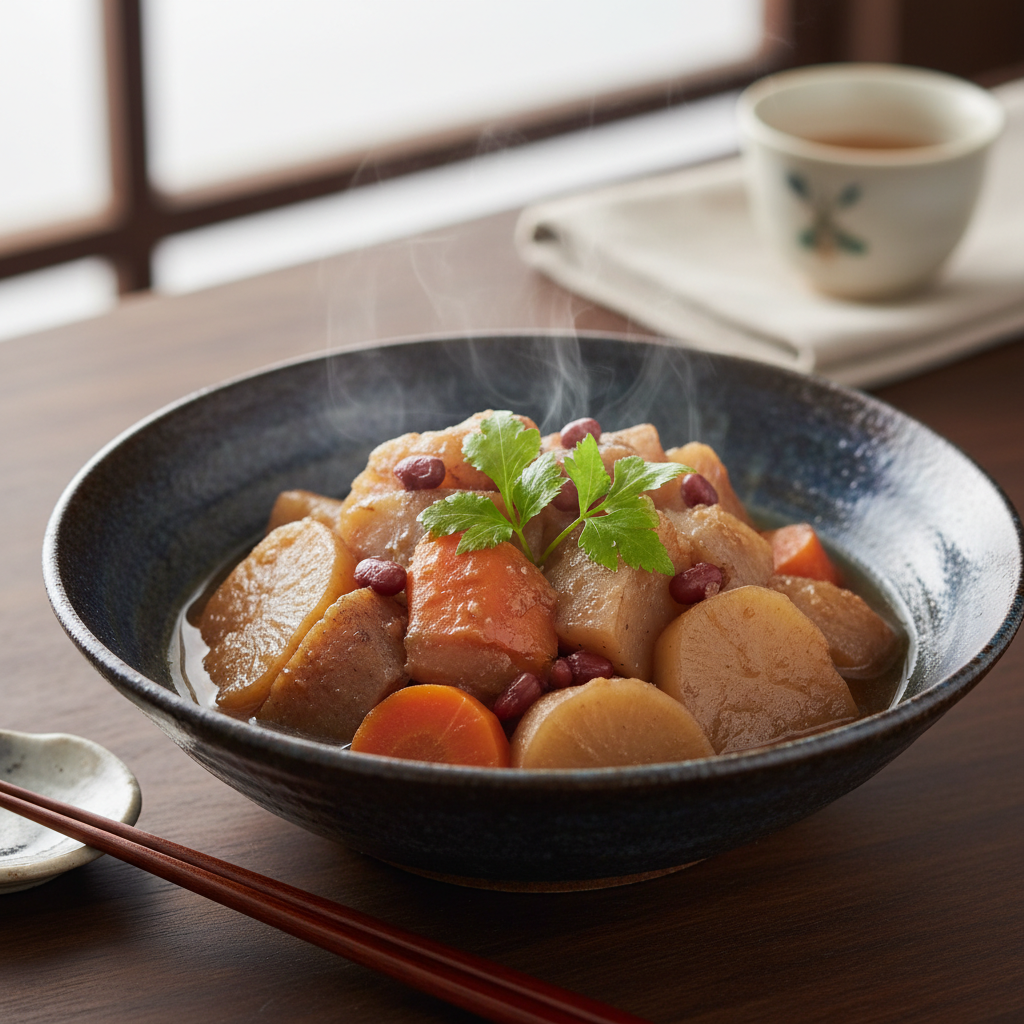
The itoko-ni generally seen nationwide is primarily a dish of boiled pumpkin and azuki beans together. This style is mainly seen in the Chubu and Hokuriku regions and is characterized by a combination of sweetly boiled pumpkin and azuki beans.
Some regions also have versions with root vegetables and azuki beans, and the cooking method of adding items “successively” is common, but the seasoning and finish differ greatly.
Uniqueness of Yamaguchi’s Itoko-ni
The greatest characteristics of Yamaguchi’s itoko-ni, particularly from the Hagi region, are:
- Cold Soup Style: While warm stewed dishes are the mainstream in other regions, Hagi’s tradition is to serve it chilled.
- Use of White Dango Dumplings: Using white dango dumplings rather than pumpkin as the main ingredient is unique.
- Lightly Salted Dashi Broth: Rather than finishing as sweet zenzai, it is characterized by refined seasoning with kombu dashi.
- Use of Kamaboko: Adding kamaboko as an ingredient is distinctly a Yamaguchi feature.
- Connection to Celebrations and Rites of Passage: Clear positioning as a special occasion food.
Relationship to Other Local Dishes of Yamaguchi Prefecture
Yamaguchi Prefecture has many other characteristic local dishes besides itoko-ni.
Kenchō (Kenchin Stew)
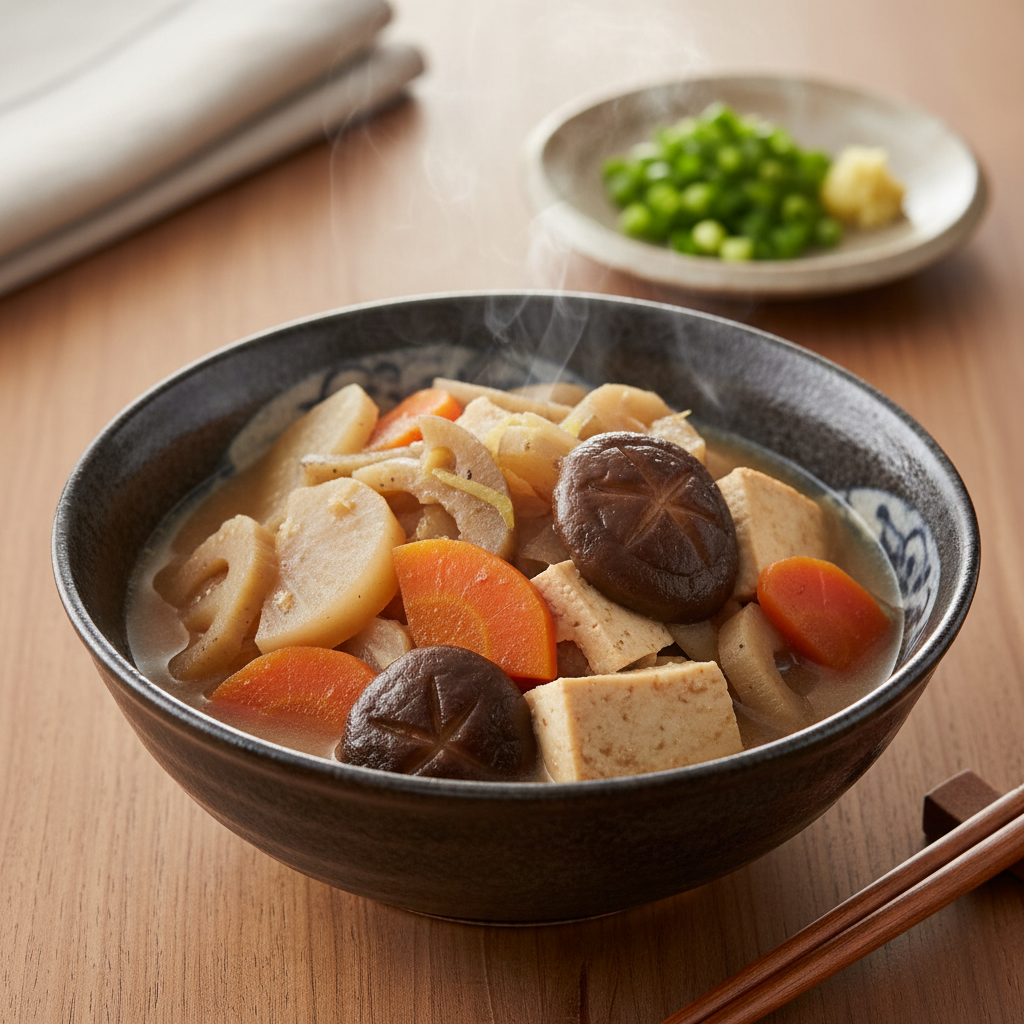
Kenchō is a representative local dish eaten throughout Yamaguchi Prefecture. This is a dish of tofu and root vegetables braised together and, like itoko-ni, is enjoyed as home cooking.
Iwakuni Sushi
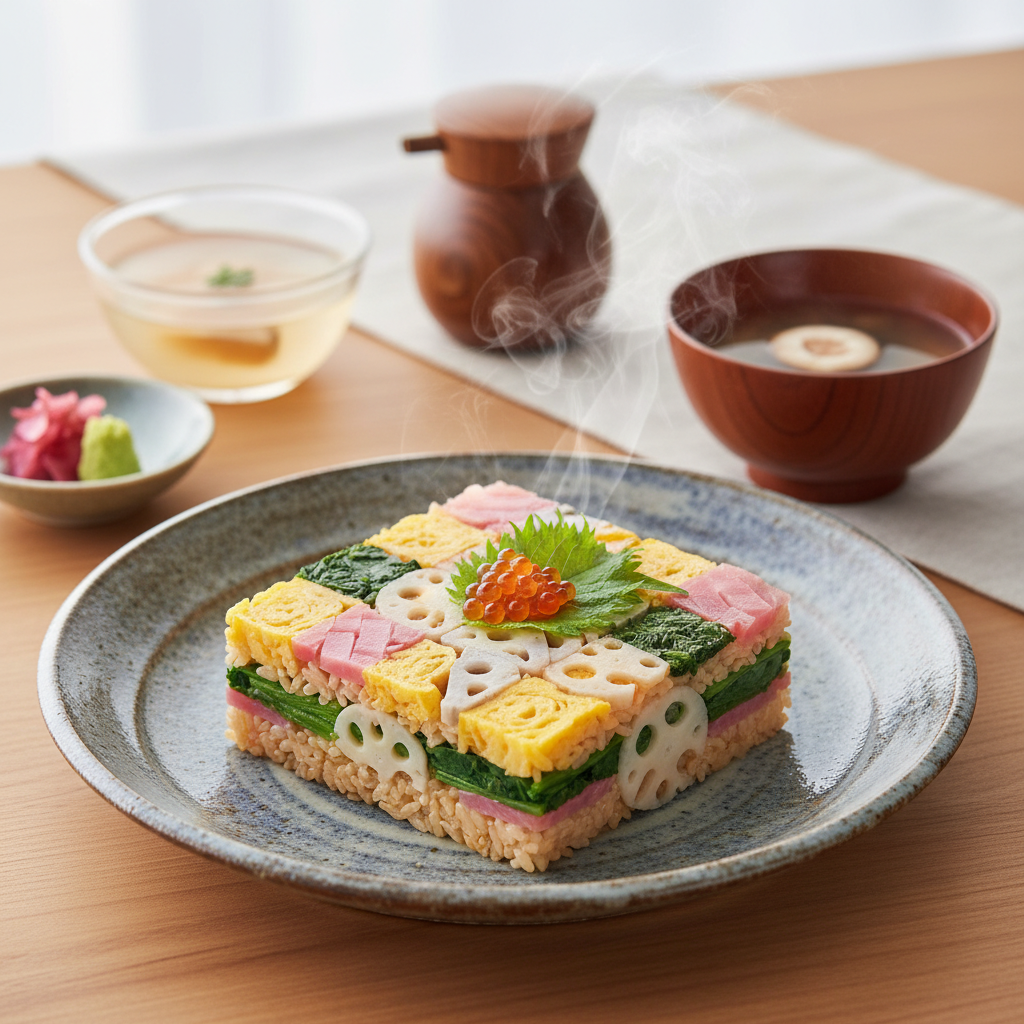
Iwakuni sushi, a specialty of the Iwakuni region, is an ornate pressed sushi. Interestingly, itoko-ni is not made in the Iwakuni region, clearly showing regional differences in food culture.
Chisha Namasu
A dish of chisha (a type of lettuce) with seasoned miso containing small dried fish, or mixed with small dried fish. Like itoko-ni, it is a traditional food made with simple ingredients.
Kawara Soba
Kawara soba, a specialty of the Shimonoseki region, is a unique dish where tea buckwheat noodles are grilled on a heated roof tile. In this way, characteristic local dishes developed in each region of Yamaguchi Prefecture.
Whale Dishes
Yamaguchi Prefecture has long been active in whaling, and whale dishes are also important local foods. It is clear that dishes utilizing marine bounty and dishes like itoko-ni utilizing the gifts of the harvest developed in good balance.
Cultural Background Reflected in Itoko-ni
Itoko-ni deeply reflects the history and culture of Yamaguchi Prefecture.
Influence of Castle Town Culture
Hagi flourished in the Edo period as the castle town of the Mori clan. The refined and clear broth of Hagi-style itoko-ni directly reflects this refined food culture of a castle town. Its delicate seasoning shows how it developed as a course in kaiseki cuisine in samurai society.
Spirit of Frugality and Simplicity
Itoko-ni, made with simple ingredients, also reflects the value of frugality and simplicity cherished in samurai society. The ingenuity seen in creating a flavorful dish with limited ingredients—azuki beans, white dango, kombu, and shiitake—is noteworthy.
Harmony with the Seasons
Hagi-style itoko-ni, served chilled, developed as a dish that can be enjoyed in hot seasons. On the other hand, because it is served at special occasions such as celebrations and rites of passage, it has been cherished regardless of season.
Community Bonds
Itoko-ni, always served at celebrations and rites of passage, has also played a role in deepening community bonds. By sharing the same dish at life’s milestones, cultural transmission across generations has taken place.
Itoko-ni in the Modern Era
As a traditional local dish, itoko-ni continues to be cherished as a representative of Yamaguchi’s food culture in modern times.
Value as a Tourist Resource
For tourists visiting Hagi, itoko-ni has become one of local dish that must be tasted. Restaurants and inns in the region continue to serve it to tourists while maintaining traditional preparation methods.
Succession in Homes
The tradition of making itoko-ni at celebrations and rites of passage remains in homes throughout Yamaguchi Prefecture. Recipes and the tricks of preparation are passed down from grandmother to mother to daughter, along with food culture.
Use in School Lunches
Itoko-ni is sometimes served in school lunches in the region, and food culture is also passed on to younger generations. There is also educational significance in fostering affection for the region through local cuisine.
New Arrangements
While preserving tradition, new arrangements suited to modern lifestyles have also emerged. For example, easier-to-make recipes and reduced-salt versions considering health consciousness have appeared.
Places to Enjoy Itoko-ni
There are several options for enjoying itoko-ni within Yamaguchi Prefecture.
Restaurants in Hagi City
Many local cuisine restaurants and inns in Hagi City serve traditional Hagi-style itoko-ni. Particularly at long-established restaurants, you can enjoy authentic taste passed down through generations.
Rest Stops and Direct Sales Shops
Itoko-ni made locally is sometimes sold at rest stops and agricultural product direct sales shops throughout Yamaguchi Prefecture. You can casually enjoy homestyle flavors.
Events and Festivals
At regional festivals and events such as the Yamaguchi Tenjin Festival, itoko-ni is sometimes served. It becomes a precious opportunity to share traditional cuisine with local people.
Cooking Classes
Cooking classes on local cuisine are sometimes held at community centers and tourism facilities in the region. You can learn how to prepare it while also learning about the cultural background of itoko-ni.
Conclusion
Yamaguchi Prefecture’s local dish “itoko-ni” is a precious food cultural heritage that transcends mere cooking, reflecting the region’s history, culture, and people’s lives. Developed primarily in the Hagi region, the cold soup-style itoko-ni has unique characteristics that set it apart from itoko-ni found throughout the country.
Despite simple ingredients of azuki beans and white dango dumplings, the refined flavor brought out by quality kombu and shiitake dashi conveys the sophisticated food culture of Hagi, which flourished as a castle town. Connected deeply to celebrations and rites of passage, expressing celebrations with red and white dango dumplings and funeral rites with white or green dumplings, it has been a companion to life’s important moments.
Even in modern times, the tradition of itoko-ni is maintained in various forms—family succession, use as a tourism resource, and provision in school lunches. When visiting Yamaguchi Prefecture, be sure to taste this unique local dish and experience the rich food culture behind it.
Itoko-ni can be said to embody the essence of Japanese food culture that values the region’s bounty and incorporates care and thoughtfulness amid simplicity. Through its taste, you will surely be able to perceive the values and aesthetic sense that Yamaguchi’s people have cherished.