Complete Guide to Kabura Sushi: History, How to Make, and How to Enjoy Ishikawa Prefecture’s Representative Winter Local Cuisine
What is Kabura Sushi?
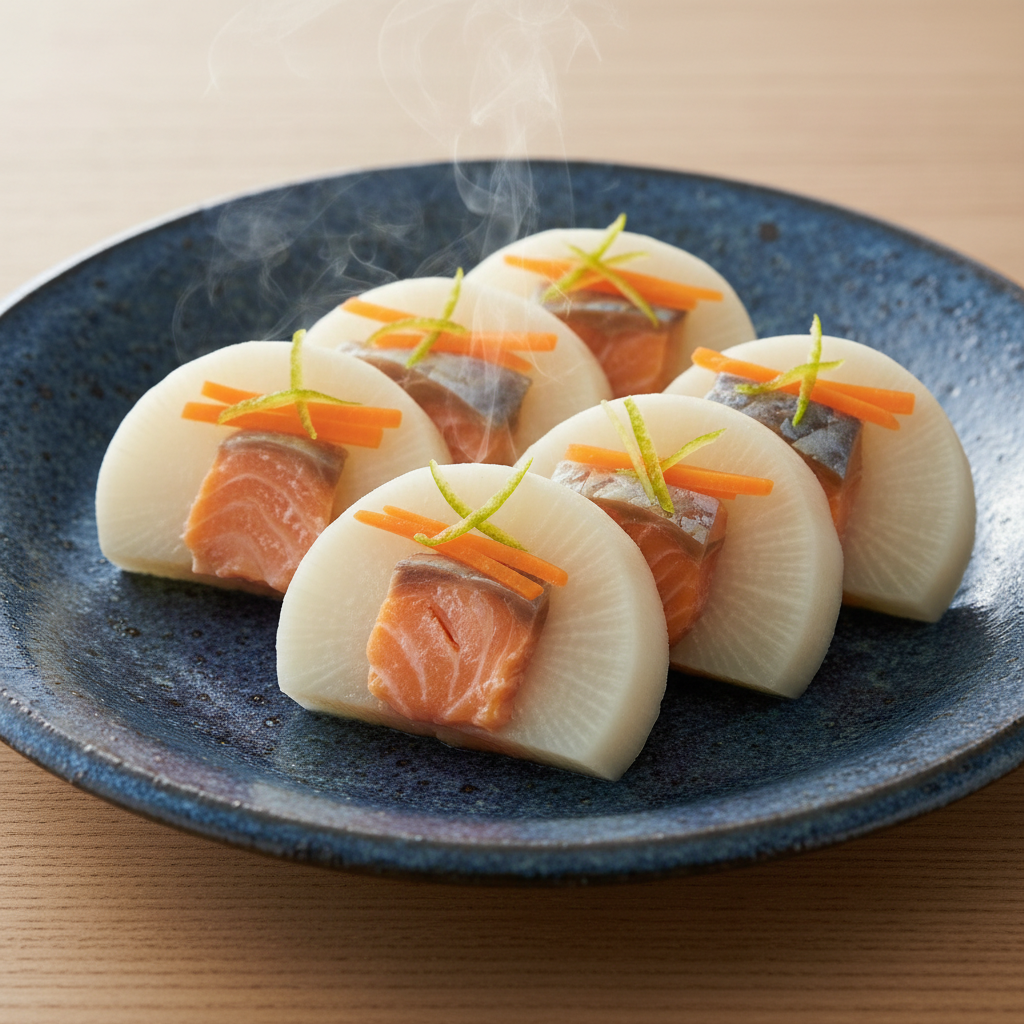
Kabura sushi (かぶら寿司) is a traditional fermented food that has been passed down for centuries, primarily in the Kaga region of Ishikawa Prefecture. It is a type of “narezushi” made by cutting grooves into thin slices of salt-pickled turnips (kabu), inserting salt-pickled cold-season yellowtail (kanaburi) between the slices, and fermenting them in rice koji or amazake.
Despite its name “sushi,” it differs entirely from the common vinegared rice nigiri sushi and is classified as a local pickle-like dish rather than sushi. In Kanazawa and throughout the Kaga region, it has become an indispensable winter preserved food and New Year’s dish, and is now recognized nationwide as a representative winter delicacy of the Hokuriku region.
The unique sourness and umami created by fermentation, the sweetness of the yellowtail’s fat, the crisp texture of the turnip, and the gentle sweetness of the koji blend perfectly together, creating an unforgettable taste.
Major Production Areas and Transmission Regions in Ishikawa Prefecture
Kaga Region as the Central Production Area
Kabura sushi is widely produced in the Kaga region of Ishikawa Prefecture, particularly around Kanazawa City. The former Kaga Domain territory, spanning from southern Ishikawa to western Toyama Prefecture, is the primary transmission area, and it has been consumed throughout the region excluding the Noto area.
In Kanazawa City, many long-established pickle shops and restaurants manufacture and sell kabura sushi, and families continue to make it using traditional methods passed down through generations. In particular, established shops like Shijuman-ya Honpo have maintained traditional manufacturing methods and continue producing kabura sushi to the present day.
Tradition Continues in Western Toyama Prefecture
Kabura sushi is also enjoyed as a local dish in western Toyama Prefecture, not only in Ishikawa. This stems from the former Kaga Domain territory extending beyond present-day prefectural borders, and it illustrates the history of food culture being shared as part of the same cultural sphere.
History and Origins of Kabura Sushi
A Tradition Continuing from the Edo Period
While there are various theories about the origins of kabura sushi, records indicate it was already being produced in the Kaga region during the Edo period. At that time, the Kaga Domain flourished both culturally and economically, creating fertile ground for a rich food culture.
The cold-season yellowtail with ample fat caught in the winter Sea of Japan, delicious turnips grown in the clear meltwater, and high-quality rice koji produced from the thriving rice cultivation in the Kaga region all contributed to the development of kabura sushi as a preserved food that took advantage of these regional resources.
Theory of Origins in Fishing Towns
According to one account, it was devised in fishing towns along the Sea of Japan coast as a means to preserve the large quantities of yellowtail caught in winter for extended periods. Fishermen would sandwich salt-pickled yellowtail between similarly winter-harvested turnips and ferment them, using it as a valuable protein source to survive the harsh winter.
Eventually, this manufacturing method spread to Kanazawa, the castle town of the Kaga Domain, and became popular among samurai and townspeople alike. Today, it has become a nationally recognized representative local dish of Ishikawa Prefecture.
Ingredients and Selection Guide for Kabura Sushi
Main Ingredients Used
The following main materials are necessary to make kabura sushi:
Turnips (Kabu)
Ishikawa Prefecture-grown blue-stemmed turnips are ideal. Choose larger ones with firm flesh. Turnips grown in environments with temperature variations are sweeter and maintain a crisp texture.
Yellowtail (Buri)
Winter yellowtail caught in the Sea of Japan is most desirable. Use fresh fish with well-marbled fat. Fish landed in the Toyama Bay or off the Noto Peninsula are particularly prized.
Rice Koji
Use koji made from high-quality rice. Sometimes amazake is used instead. The quality of the koji greatly affects the fermentation progress and final flavor.
Salt
Natural salt or rock salt is appropriate for salt-pickling. The amount of salt is important—too much makes it overly salty, while too little causes excessive fermentation.
Other Ingredients
Carrots, kombu seaweed, and chili peppers are sometimes added for color and flavor accents.
Tips for Selecting Ingredients
Choose turnips larger than 10cm in diameter to make inserting the yellowtail easier and improve the appearance. Yellowtail quality is paramount—using freshly caught fish results in a refined taste without any off-flavors.
Traditional Manufacturing Methods and Recipes
Ingredients (For 20-25 pieces)
- Turnips: 3-4 large ones (approximately 1.5kg)
- Yellowtail: 400-500g fillet
- Salt: 100g for turnips, 50g for yellowtail
- Rice koji: 500g
- Amazake: 200ml (or koji dissolved in water)
- Carrot: 1 (optional)
- Kombu: as needed
- Red chili pepper: 1-2 (optional)
Step-by-Step Instructions
1. Turnip Preparation (Day 1)
Wash the turnips thoroughly and peel them. Slice into rounds 1.5-2cm thick and cut a slit through the center (being careful not to cut all the way through). Salt them, apply a weight stone, and leave overnight to remove moisture.
2. Yellowtail Salt-Pickling (Day 1)
Remove bones and skin from the yellowtail and slice to about 1cm thickness. Sprinkle with salt and refrigerate overnight. The next day, lightly rinse off the surface salt and pat dry with paper towels.
3. Assembly (Day 2)
Squeeze excess moisture from the turnips and insert the yellowtail into the slits. If using carrot, julienne it and insert alongside the yellowtail.
4. Koji Pickling (Day 2)
Spread koji on the bottom of a container, then arrange the kabura sushi on top. Sprinkle koji between layers and pour amazake over everything. Add kombu and chili pepper, finishing with a layer of koji.
5. Fermentation (Day 3 onward)
Apply a light weight and store in a cool, dark place (around 10-15°C). It reaches peak eating quality in 3-5 days. As fermentation progresses, the sourness intensifies, so transfer to the refrigerator once it reaches your preferred flavor.
Manufacturing Tips
Temperature control is critical—too cold and fermentation won’t progress; too warm and it becomes overly sour. Making it in winter when temperatures are stable is ideal. Nowadays, many households manufacture it using refrigerators with controlled temperatures.
How to Eat and Enjoy Kabura Sushi
Basic Consumption Method
Kabura sushi is best eaten simply by slicing and serving. Cut into pieces 2-3cm each and plate on small dishes. Serving with the koji adds to the flavor.
It’s better to eat it after letting it come to room temperature slightly rather than directly from the refrigerator, as this brings out the koji’s sweetness and the yellowtail’s umami. However, be cautious of food poisoning risks in warm temperatures.
Ideal Pairings
Kabura sushi pairs wonderfully with Japanese sake, particularly Ishikawa Prefecture’s local brands like Kaga no Kiku and Tengu Mai, allowing you to fully enjoy the regional flavors. The complex umami of this fermented food harmonizes beautifully with sake’s aromatic qualities.
It also works excellently as a rice dish accompaniment or in ochazuke (tea rice). During New Year’s celebrations, it commonly appears on tables alongside ozoni soup, serving as an important decorative element for festive occasions.
The Daikon Sushi Alternative
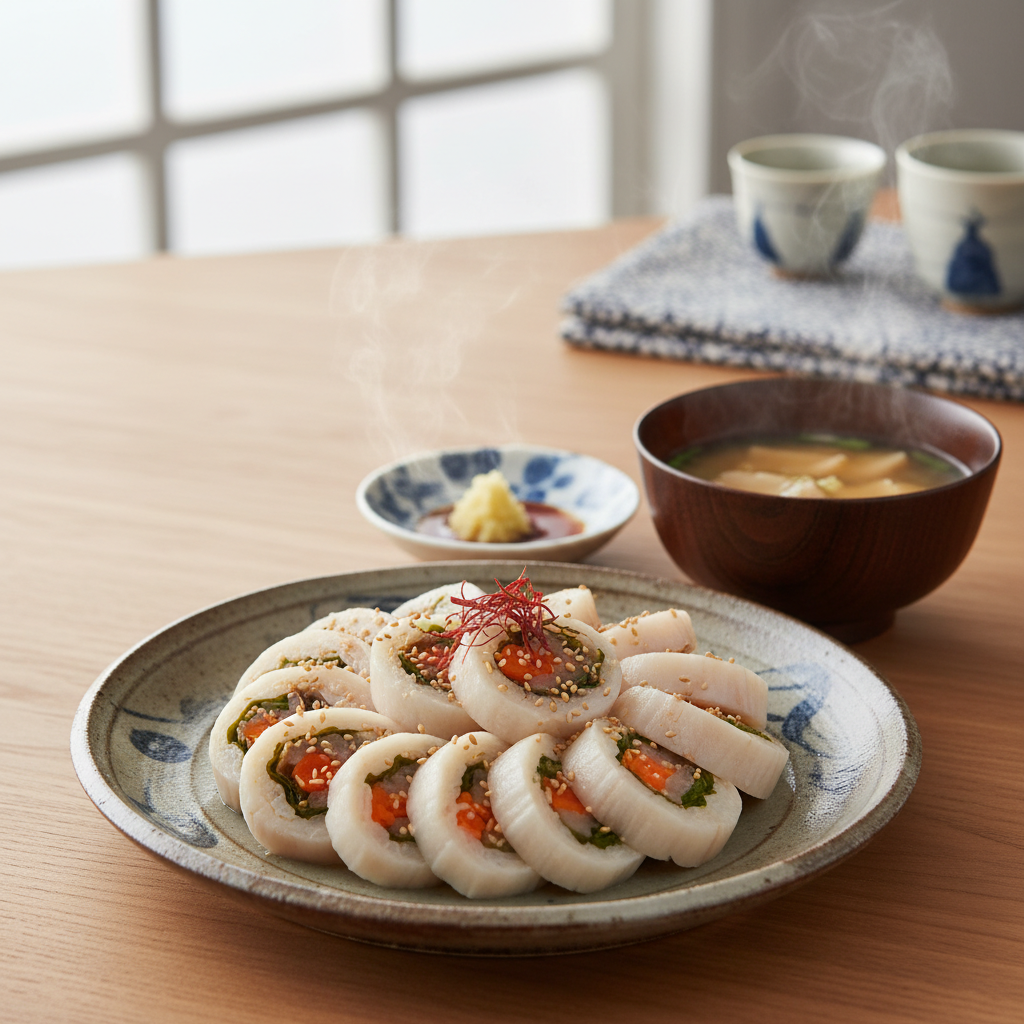
“Daikon sushi,” made with daikon radish instead of turnips, is also produced in Ishikawa. Daikon sushi is easier to prepare than kabura sushi, making it a more accessible local dish for home preparation. The preparation method is essentially the same, featuring the characteristic crisp texture and clean flavor of daikon.
Eating Occasions and Season
Limited Winter Season Delicacy
Kabura sushi is a seasonally limited local dish produced and eaten from late autumn through February, especially during winter. This seasonal production follows from several factors:
Peak Season for Cold-Season Yellowtail
Winter yellowtail caught in the Sea of Japan reaches its fattest before spawning, earning it the designation “kanaburi” and making it highly prized.
Turnip Harvest Period
Turnips are harvested as winter vegetables from late autumn through winter. Those grown in temperature-variable environments are particularly sweet and ideal for kabura sushi.
Temperature Optimal for Fermentation
Winter temperatures of 10-15°C are perfect for gradual fermentation, avoiding rapid fermentation and achieving mellow flavoring.
Position as New Year’s Cuisine
In Ishikawa Prefecture, particularly Kanazawa, kabura sushi is an essential New Year’s dish. Preparation begins in mid-December, timed so the product reaches peak flavor for year-end and New Year celebrations.
The sight of kabura sushi appearing on festive tables alongside ozoni soup and simmered vegetables has become a Kanazawa winter tradition. At family gatherings, people often bring homemade kabura sushi and compare flavors.
Demand as Gifts
There is also a tradition of gifting kabura sushi during year-end and New Year celebrations. Long-established pickle shops sell beautifully packaged kabura sushi as popular gifts expressing gratitude to those you’re grateful to.
Nutritional Value and Health Benefits
Value as a Fermented Food
Kabura sushi is a fermented food with excellent health characteristics. During fermentation with koji, various nutrients are generated and converted into forms that are easily digestible and absorbed.
Lactic Acid Bacteria Function
Lactic acid bacteria that proliferate during fermentation help regulate intestinal flora, increase beneficial bacteria, aid digestion, and boost immunity.
Increased B Vitamin Content
Koji mold fermentation produces abundant B vitamins, effective for fatigue recovery and metabolism promotion.
Protein Breakdown
The yellowtail’s protein is broken down during fermentation into amino acids and peptides, increasing umami while improving digestibility.
Nutrition of Turnips and Yellowtail
Turnip Nutrition
Turnips are rich in vitamin C and dietary fiber, and contain amylase, a digestive enzyme that aids digestion.
Yellowtail Nutrition
Yellowtail is abundant in quality protein and omega-3 fatty acids like DHA and EPA, which improve blood circulation and support brain health.
Salt Content Caution
Since kabura sushi is a preserved food, it is relatively high in salt. Those with hypertension or kidney issues should be mindful of consumption. However, currently manufactured products often have reduced salt compared to historical versions, with increasing health-conscious options available.
Storage Methods and Shelf Life
Proper Storage Methods
Storage is important for this fermented food.
During Manufacturing
Store in cool, dark conditions (10-15°C) during production. Excessive heat causes over-fermentation and intense sourness; insufficient cold prevents fermentation and flavor development.
After Reaching Desired Flavor
Once achieving preferred flavor, place in airtight containers and refrigerate (below 5°C), slowing fermentation and preserving quality.
Freezing Possibility
Kabura sushi can be frozen, though the turnip’s texture changes after thawing. If long-term storage is necessary, freezing is possible, but expect flavor degradation.
Shelf Life Guidelines
When properly stored, it remains delicious for approximately two weeks in the refrigerator. As fermentation continues, sourness intensifies, so consuming while at preferred flavor is recommended.
Commercial products are vacuum-packaged and keep about one month unopened. Once opened, consume promptly.
Contemporary Preservation and Initiatives
Maintaining and Passing on Tradition
Various efforts preserve and transmit kabura sushi as an important Ishikawa food cultural heritage.
Ministry of Agriculture Certification
Kabura sushi was selected for the Ministry of Agriculture’s “100 Selected Regional Dishes of Farm, Mountain and Fishing Villages,” gaining national recognition as an important local dish.
Regional Preservation Society Activities
Preservation societies in Kanazawa and throughout the Kaga region conduct activities transmitting kabura sushi preparation to future generations through cooking classes and workshops, helping young people inherit the skills.
School Education Initiatives
Elementary and middle schools in Ishikawa use comprehensive learning periods to provide kabura sushi-making experience, fostering regional attachment through hands-on food culture engagement.
Commercialization and Contemporary Development
Tradition Maintenance by Established Shops
Long-established pickle shops like Shijuman-ya Honpo maintain Edo-period traditional methods while adopting modern sanitation standards and quality control, producing safe and delicious kabura sushi.
Online Sales Expansion
Recently, internet commerce enables nationwide kabura sushi purchases, expanding opportunities for non-Ishikawa residents to enjoy regional flavors.
Social Media Outreach
Manufacturers and retailers use SNS platforms like Instagram and Facebook to share the appeal of kabura sushi, its production process, and consumption methods, expanding interest among younger generations through beautiful photography.
Tourism Resource Utilization
Kanazawa organizes manufacturing experience tours and tasting events for visitors, with ryokans and restaurants offering it seasonally, making it an attraction component.
New Product Development
While maintaining tradition, contemporary product development continues.
Reduced-Salt Varieties
Responding to health consciousness trends, reduced-salt versions have been developed. Improved fermentation techniques enable delicious, safe production with less salt.
Small Portion Packages
Single-household and small-family sized portions are marketed, enabling convenient access to local cuisine.
Arranged Versions
New products using salmon or plant-based vegetable versions have appeared, balancing traditional flavor preservation with diverse need fulfillment.
Recommended Purchase Locations and Experience Facilities
Long-Established Shops in Kanazawa
Shijuman-ya Honpo
A long-established shop continuously producing kabura sushi using traditional methods since its founding. Its direct stores offer kabura sushi along with daikon sushi and various pickles, with online shopping available.
Other Specialty Shops
Numerous pickle shops and food retailers throughout Kanazawa carry kabura sushi. Exploring the Omicho Market vicinity and Korinbo district offers local flavor discovery opportunities.
Experience at Ryokans and Restaurants
Ryoutei Kaiseki no Toyah
This high-end ryokan at Awazu Onsen serves homemade kabura sushi and offers guests manufacturing process observation and consumption method explanations, providing deep regional cuisine understanding.
Other Accommodations
Many Kanazawa-area and Kaga Onsen ryokans and hotels serve kabura sushi in winter meals. Please enjoy local flavors during your stay.
Online Purchasing
Those in distant locations can purchase through each establishment’s online shops and EC sites. Refrigerated shipping ensures fresh arrival at home. For regions requiring extended transit, understand quality may change and store immediately in refrigeration, consuming promptly.
Kabura Sushi and Ishikawa’s Food Culture
Central to Kaga Cuisine
Kabura sushi represents an important component of “Kaga ryori,” Ishikawa Prefecture’s traditional food culture. Kaga cuisine developed from the Kaga Domain era, featuring refined cooking that skillfully combines abundant local ingredients.
Fresh Sea of Japan seafood, traditional vegetables called Kaga yasai, and quality rice combine ingeniously, with fermentation and preservation techniques producing diverse dishes symbolizing Kaga Hyakuman-koku’s cultural richness.
Relationship with Other Fermented Foods
Ishikawa has various other fermented foods.
Ishiru (or Ishiri)
A fish sauce made from fermented squid or sardines, a traditional Noto seasoning.
Fugu Roe Bran-Pickle
Highly toxic fugu roe transformed through long-term salt-pickling and bran-pickling in a unique delicacy.
Hesiko
A preserved food of salt and bran-pickled mackerel and similar fish, transmitted from Wakasa to Ishikawa.
These fermented foods originated from ancestral winter-survival wisdom, with kabura sushi among them. Fermentation-based food culture demonstrates Ishikawa’s food diversity and richness.
Seasonal Food Culture
Ishikawa’s food culture closely connects with seasonal changes. Spring brings wild vegetables, summer brings rock oysters, autumn brings mushrooms, and winter brings kabura sushi and cold-season yellowtail. A culture valuing seasonal ingredients and enjoying each season’s unique cuisine is deeply rooted.
Kabura sushi represents a taste announcing winter’s arrival, cherished by locals. When first snow falls, conversations about beginning kabura sushi preparation commence, marking winter’s approach.
Conclusion: Kabura Sushi’s Appeal and Future
Kabura sushi represents Ishikawa’s traditional fermented food and primary winter local dish. Manufacturing methods continuing from the Edo period are carefully preserved and loved by many.
The distinctive flavor created by salted turnips, cold-season yellowtail, and koji fermentation proves unforgettable once tasted. Beyond serving as mere preserved food, it colors New Year’s celebration tables as a special dish and deepens family bonds through food culture, playing an important role.
Recent developments include tradition-respecting contemporary product development and SNS-based information sharing. Young generations are discovering local cuisine appeal, with inheritance by future generations anticipated.
Its value as a tourism resource is also increasing, becoming an essential winter flavor experience for Kanazawa visitors. Preserving and promoting regional food culture is crucial for maintaining community identity.
Kabura sushi transcends mere food—it represents condensed Ishikawa history, culture, and people’s lives, forming an invaluable food cultural heritage. Cherishing and transmitting this precious local dish to future generations constitutes our mission.
Should you visit Ishikawa during winter, please taste kabura sushi. If possible, attempt homemade production. Making it yourself enables deeper understanding of ancestral wisdom, ingenuity, and regional affection.