Complete Guide to Hegisoba | History, Characteristics, and Famous Restaurants of Niigata’s Uonuma Regional Cuisine
What is Hegisoba?
“Hegisoba” is a traditional regional cuisine originating from the Uonuma district of Niigata Prefecture. It is a cut buckwheat noodle dish served in a unique vessel called a “hegi,” using sea grass called funori (布海苔) as a binder. It is known as a unique dish born from the fusion of Niigata’s textile culture and buckwheat noodle culture.
It has also been selected as one of the Agency for Cultural Affairs’ “100-Year Foods,” and is recognized nationwide as a representative regional cuisine of Niigata Prefecture. Characterized by a smooth, slippery throat feel, strong chewy texture and elasticity, and a unique flavor, it offers a dining experience that sets it apart from ordinary buckwheat noodles.
Origin of the Name Hegisoba
“Hegi” refers to peeled boards (hagiiita). It is a vessel made by combining thin wooden boards, and the name “hegisoba” was born from the practice of serving buckwheat noodles in this vessel. Traditionally, square vessels made from wood such as cedar or cypress have been used, and many establishments continue to use these traditional hegis today.
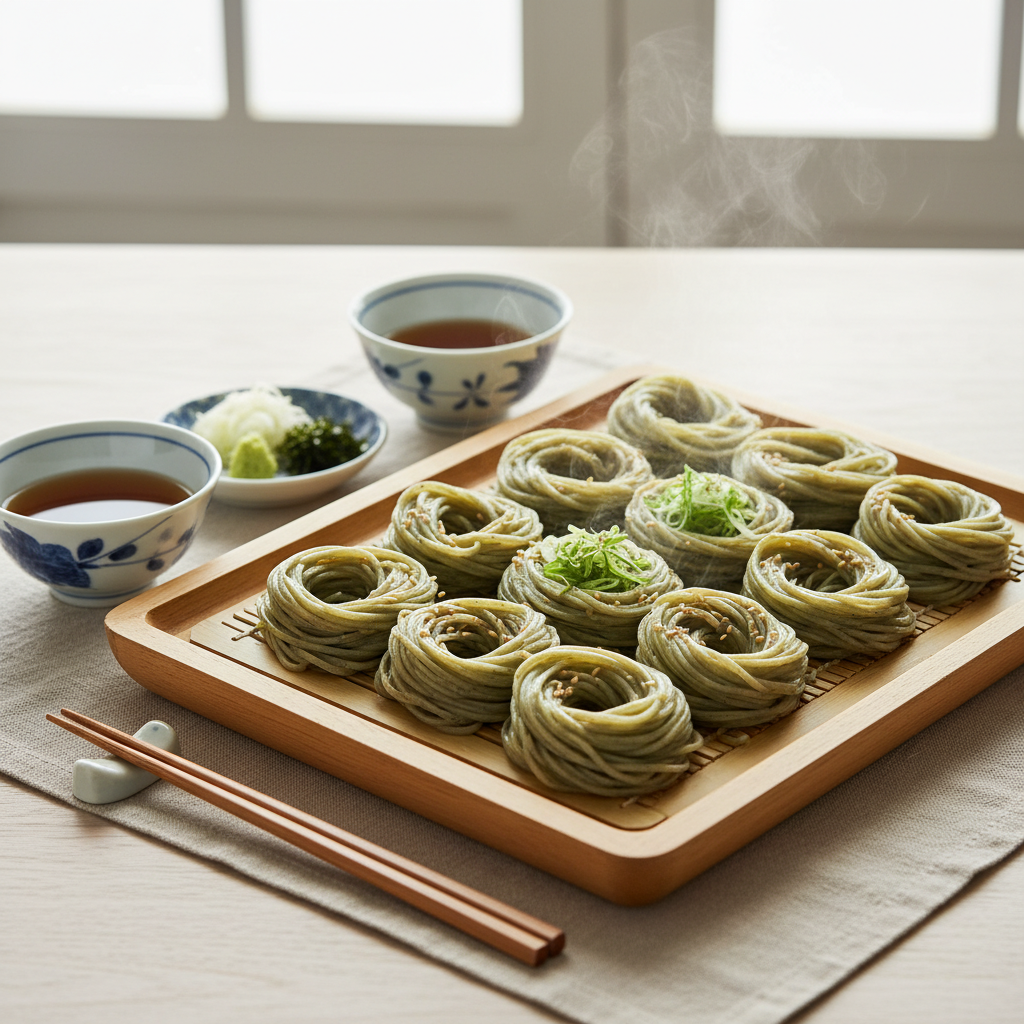
The hegi vessel serves not only as tableware but also as a stage for beautifully presenting the noodles. The technique of arranging one mouthful at a time in what is called “tekuri” (hand-pulled) wavy shapes is the wisdom of ancestors that achieves both visual beauty and ease of eating.
Major Areas of Transmission
Hegisoba originated in the Uonuma district of Niigata Prefecture, particularly in the areas centered around Ojiya City, Tokamachi City, and Uonuma City, and is still transmitted there today. This region has long been active in the textile industry and is known particularly as a production area for high-quality textiles such as Ojiya-chijimi and Tokamachi-kasuri.
The Uonuma District as the Birthplace
The Uonuma district is located in the southern part of Niigata Prefecture and is blessed with abundant water resources from the Shinano River system and a cool mountain climate. The textile industry prospered in this region from the Edo period, and in the Meiji era, Ojiya-chijimi became famous nationwide. The application of funori, which had been used to strengthen textile threads, as a binder for buckwheat noodles became the catalyst for the birth of hegisoba.
Today, shops offering hegisoba have increased throughout the prefecture, including Niigata City and beyond, as well as in urban areas such as Tokyo. However, to taste the authentic flavor, we recommend visiting the Uonuma district, the birthplace. At long-established local shops, you can enjoy authentic hegisoba made with techniques and methods passed down through generations.
History, Origins, and Related Events of Hegisoba
Deep Connection with Textile Culture
The birth of hegisoba is closely related to Niigata’s textile culture. From the Edo period to the present, in the textile industry producing fabrics such as Ojiya-chijimi and Tokamachi-kasuri, funori was used to make textile threads strong and durable. Funori is a type of seaweed that becomes sticky when dissolved in water, and this stickiness helped increase thread strength.
Textile workers discovered that the stickiness of funori could also be used as a binder for buckwheat noodles. At the time, wheat flour and mountain yam were common binders for soba, but using funori created buckwheat noodles with a unique texture and flavor. This is considered to be the origin of hegisoba.
A Tradition Continuing from the Edo Period
Hegisoba is thought to have become established as common food from the late Edo period through the Meiji era. Initially eaten among textile workers, it gradually spread throughout the region and came to be served as a hospitality dish for celebrations and guests.
After entering the Showa period, hegisoba became known to tourists as a specialty of the Uonuma district, and specialty shops opened one after another. Particularly after the period of high economic growth, the fame of hegisoba increased nationwide along with tourism promotion in Niigata Prefecture, and it has now firmly established itself as one of Niigata’s representative regional cuisines.
Modern Preservation and Transmission Efforts
Various initiatives are being carried out locally to preserve the tradition of hegisoba and pass it on to the next generation. In Ojiya and Tokamachi cities, hegisoba associations have been organized to work on standardizing methods, quality control, and training successors.
Efforts to incorporate hegisoba into school lunches and activities to host hegisoba-making experience events are also actively raising awareness among younger generations. Information sharing through SNS is also being conducted actively, and the introduction of beautifully plated hegisoba on platforms such as Instagram has contributed to acquiring new fans.
There has also been progress in commercialization, with dried noodles and semi-fresh hegisoba being sold as souvenirs, and distribution through mail order has increased. However, completely reproducing the texture and flavor of fresh noodles from the original location is difficult, and the experience of eating at local specialty shops remains unmatched.
Main Ingredients Used and Characteristics
The Role of Funori (布海苔)
The greatest characteristic of hegisoba is the use of funori, a type of seaweed, as a binder. Funori is a general term for seaweed of the Suizenji-nori family or Habano-ri family, and in Niigata Prefecture, mainly varieties found in the waters near Sado Island and along the Japan Sea coast are used.
Funori has strong stickiness, which serves to firmly bind buckwheat flour together. Compared to wheat flour, the common binder for ordinary soba, funori brings about the following characteristics:
- Smooth, slippery throat feel: The stickiness of funori smooths the surface of the noodles, creating a unique sensation when swallowed
- Strong chew and elasticity: The fibrous quality of seaweed imparts elasticity to the noodles, achieving a chewy mouthfeel
- Unique flavor: The oceanic aroma of funori subtly transfers to the buckwheat, creating a flavor found nowhere else
- Vivid green color: The use of funori gives the soba a beautiful greenish hue
Selection of Buckwheat Flour
The buckwheat flour used in hegisoba varies by establishment, but high-quality varieties from Hokkaido or within Niigata Prefecture are often chosen. Some shops blend buckwheat flour from multiple regions to pursue ideal flavor and texture.
The ratio of buckwheat flour to funori is often a trade secret of each shop, and this difference in proportion becomes each shop’s individuality. Generally, the higher the proportion of funori, the stronger the smooth texture and chew, but the natural aroma of buckwheat tends to become weaker. A well-balanced ratio is the key to delicious hegisoba.
How to Make Hegisoba
Ingredients (Serves 4)
Buckwheat dough:
- Buckwheat flour: 400g
- Dried funori: 8–10g
- Water: as needed (approximately 180–200ml)
Sauce:
- Dashi broth: 800ml
- Soy sauce: 120ml
- Mirin: 120ml
- Sugar: 1 tablespoon
Condiments:
- Ground mustard: as needed
- Green onion: as needed
- Wasabi: to taste
Instructions
1. Preparing the funori
Soak the dried funori in water to rehydrate. After soaking for about 30 minutes, transfer to a pot and heat over low heat while dissolving. Once completely dissolved and the mixture becomes thick and smooth, cool before use.
2. Making the buckwheat dough
Place buckwheat flour in a bowl and gradually add the cooled funori liquid while mixing. Initially mix with chopsticks or similar, then knead by hand once it begins to come together. Adjust the water content while kneading until the dough reaches the consistency of an earlobe.
Once the dough comes together, cover with a damp cloth and let rest for about 30 minutes. In this process, the stickiness of the funori spreads throughout the entire dough, creating uniform texture.
3. Making the noodles
On a work surface dusted with flour, roll out the dough thin with a rolling pin. The thickness should be approximately 1.5–2mm. Dough made with funori is more stretchable than regular buckwheat dough and is less likely to tear, which is a characteristic of this noodle.
Fold the rolled dough and slice thinly with a knife. Hegisoba is often cut slightly thinner than ordinary soba.
4. Boiling
Bring plenty of water to a boil and add the cut noodles. Soba with funori requires a slightly longer cooking time than ordinary soba, approximately 1 minute 30 seconds to 2 minutes. Once cooked, rinse thoroughly in cold water.
5. Plating
Arrange the noodles on a hegi (wooden square vessel) in wavy layers, one mouthful at a time. This plating technique is called “tekuri” and balances visual appeal with ease of eating. Typically, about 10–15 bundles are arranged on one hegi.
6. Preparing the sauce
Add mirin to the dashi broth and bring to a boil once to burn off alcohol. Add soy sauce and sugar to taste and let cool.
How to Eat and Dining Occasions
Traditional Way of Eating
There is a unique etiquette for eating hegisoba specific to the Uonuma district. The most distinctive feature is using mustard as a condiment. While ordinary soba typically uses wasabi, the Uonuma district has a long-standing tradition of using mustard. This is said to derive from the fact that wasabi was difficult to obtain in the mountainous Uonuma region.
Authentic way of eating:
- Pour the sauce into a small sauce dish
- Place a small amount of ground mustard directly on top of the noodles (do not dissolve in the sauce)
- Take one mouthful of noodles with mustard and dip in the sauce before eating
- Add condiments such as green onion to the sauce as desired
The sharpness of the mustard combines with the flavor of funori to create a unique taste. It’s recommended to start with a small amount of mustard and adjust the quantity to your preference.
Modern Variations in Eating
In addition to the traditional way, various arrangements are enjoyed in modern times:
- Using both mustard and wasabi: Prepare both condiments and enjoy the change in taste
- Combination with tempura: Served as tempura-hegisoba with seasonal vegetable or shrimp tempura
- Warm sauce: “Kake-hegisoba” with warm sauce is popular in winter
- Sauce variations: Variations such as duck broth or mushroom broth are offered as dipping sauces
Dining Occasions and Seasons
Hegisoba is eaten year-round, but it is particularly favored at the following occasions:
Celebrations and hospitality: Hegisoba is prized for its visually appealing presentation and the ease of sharing with many people, making it a suitable dish for celebrations and entertaining guests. It is sometimes served at occasions such as weddings and memorial services.
Summer demand: While autumn, the season of new buckwheat harvest, is also popular, demand during summer months is high when served as a cold noodle dish. Coinciding with tourist season, many people visit the Uonuma district to enjoy hegisoba during summer.
Year-end buckwheat noodles: In Niigata Prefecture, many households eat hegisoba as a year-end buckwheat noodle dish. On New Year’s Eve, reservations are often heavily booked at popular restaurants.
Nutritional Value and Health Benefits of Hegisoba
Hegisoba is not only delicious but also has excellent nutritional characteristics.
Nutrients in Funori
Since funori is a seaweed, it contains the following nutrients:
- Dietary fiber: Helps regulate intestinal environment and relieve constipation
- Minerals: Rich in calcium, iron, and iodine
- Low calorie: With the low calorie content typical of seaweed, it can be eaten with confidence during dieting
Health Benefits of Buckwheat
Buckwheat itself is known as a health food and is rich in the following nutrients:
- Rutin: Said to have the effect of strengthening blood vessels and lowering blood pressure
- High-quality protein: Contains essential amino acids in a well-balanced ratio
- B-complex vitamins: Useful for fatigue recovery and metabolism promotion
- Dietary fiber: Has the effect of preventing rapid spikes in blood sugar
Hegisoba can be said to be a healthy regional dish that allows you to intake the nutrients of both buckwheat and funori simultaneously.
Famous Hegisoba Restaurants in Niigata Prefecture
Centered in the Uonuma district, there are numerous hegisoba specialty shops throughout Niigata Prefecture. Here we introduce particularly highly-rated famous restaurants by area.
Ojiya, Tokamachi, and Uonuma Areas (Birthplace)
Kojima-ya Sohonten: An established restaurant synonymous with hegisoba, serving the traditional taste maintained since its founding. It is particular about the ratio of funori, and is characterized by strong chew and a smooth throat feel.
Wataya: A popular shop with its main store in Tokamachi City, known for fragrant hegisoba made with self-ground buckwheat flour.
Echigo Tokamachi Kojima-ya: A different branch from Kojima-ya Sohonten, but an equally highly-regarded established restaurant.
Niigata City Area
There are numerous branches of famous Uonuma district restaurants as well as shops offering unique hegisoba within Niigata City.
Susaka-ya Soba Niigata Station Front Store: Popular with tourists due to its convenient location a 5-minute walk from Niigata Station. Sizes can be chosen in large, medium, and small, making it easy for first-time visitors to order.
Kojima-ya Sohonten Niigata Station Front Store: Popular as a branch where the taste of the main store can be enjoyed within Niigata City.
Points When Visiting Famous Restaurants
- Reservations recommended: Popular restaurants become crowded on weekends and during tourist seasons, so advance reservations are recommended
- Confirm business hours: Many shops close once buckwheat noodles sell out, so early arrival is advisable
- Parking information: If visiting by car, confirm the availability of parking in advance
- Menu selection: For first-time visitors, it is recommended to first order basic hegisoba, then try tempura sets on subsequent visits
Enjoying Hegisoba at Home
While not equal to the authentic version, there are ways to enjoy hegisoba at home.
Mail Order and Delivery
Many hegisoba specialty shops conduct mail order sales of dried or semi-fresh noodles. Funori-containing soba is difficult to obtain at ordinary supermarkets, so using mail order is convenient.
Selection tips:
- Fresh noodle types have a short shelf life but the texture is closer to authentic
- Dried noodle types last longer and are suitable for gifts
- Choosing products with sauce and condiments included makes it easier to recreate the authentic taste
Presentation Ideas
Even without a traditional hegi, you can recreate the look of hegisoba by using a large flat plate or tiered box and arranging one mouthful at a time in wavy layers. The beauty of presentation is part of hegisoba’s appeal, so please give it a try.
Hegisoba and Niigata Tourism
If you visit Niigata with hegisoba as your destination, we recommend also enjoying the surrounding tourist attractions.
Tourist Spots in the Uonuma District
Kiyotsu Gorge: One of Japan’s three major gorges, offering beautiful scenic views of the valley. Particularly spectacular during the fall foliage season.
Binrin Forest: A mystical forest where approximately 100-year-old beech trees stand, presenting different faces with each season.
Hoshitoge Terraced Fields: Beautiful rice terraces resembling a primordial Japanese landscape, popular with photography enthusiasts.
Textile Workshop Visits: Workshops and museums where you can learn about the textile culture that was the origin of hegisoba are scattered throughout the area.
Sample Itineraries
Day trip course: Niigata Station → (approximately 2 hours by car) → Hegisoba in Tokamachi City → Kiyotsu Gorge sightseeing → Niigata Station
1-night, 2-day course: First day touring the Uonuma district and enjoying hegisoba, second day crossing to Sado Island to visit the funori production area is also an interesting plan.
Summary
Hegisoba is a unique regional cuisine born from the fusion of Niigata’s textile culture and buckwheat noodle culture, unparalleled in other regions. The smooth throat feel and strong chew created by using funori as a binder, the traditional way of eating using mustard as a condiment, and beautiful plating offer a cultural experience that transcends a simple meal.
The tradition continuing from the Edo period is preserved by modern artisans and continues to evolve. Its value has been publicly recognized, having been selected as one of the Agency for Cultural Affairs’ 100-Year Foods. When visiting Niigata, please be sure to taste authentic hegisoba and experience its history and culture.
When enjoying it at home, you can order authentic funori-containing noodles through mail order. Sharing the appeal of Niigata’s regional cuisine with family and friends is also a wonderful opportunity. Through hegisoba, we hope you will feel Japan’s rich food culture and regional history.