
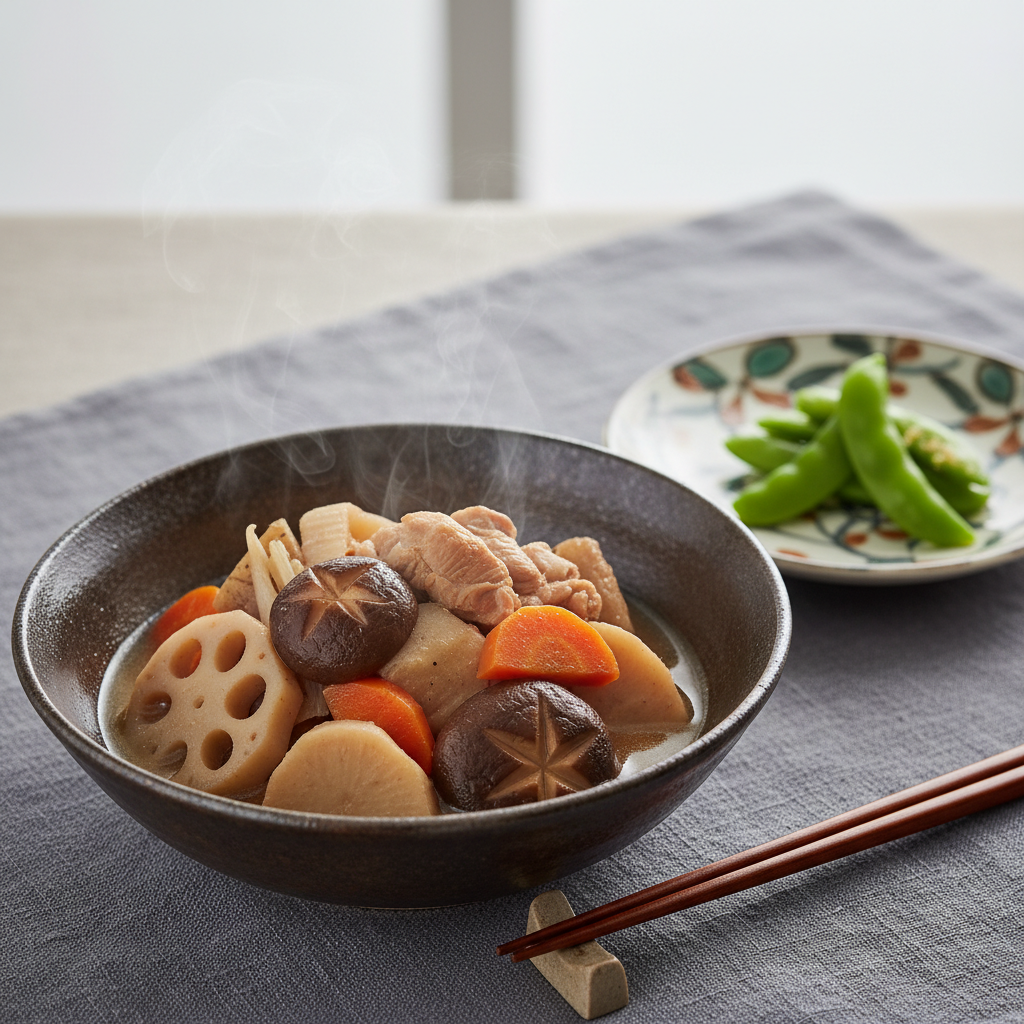
What is Gameni? A Thorough Explanation of Fukuoka Prefecture’s Representative Local Cuisine, from Its History and Origins to How to Make It
What is Gameni (Gameni)?
Gameni is a representative local dish of Fukuoka Prefecture, a traditional stewed dish made by simmering chicken and root vegetables in a soy sauce-based broth. It is known nationwide as “Chikuzen-ni,” and is widely enjoyed in school lunches and home cooking.
In Fukuoka Prefecture, particularly in the Hakata region, gameni has been passed down through generations as an essential dish for special occasions such as New Year’s, weddings, and festivals. The harmony of chicken’s rich flavor with the umami of root vegetables makes it a dish that symbolizes Fukuoka’s food culture.
The Origin of the Name Gameni and Its History
Hakata Dialect Theory: From “Gamekurikkomu”
There are several theories about the origin of the name gameni. The most widely accepted is that it comes from the Hakata dialect word “gamekurikkomu,” which means “to gather together” or “to mix up.” The name is said to come from the cooking method of collecting chicken and various vegetables into one pot and simmering them together.
This theory is accepted by many Fukuoka residents as a natural naming that connects the region’s language with its cuisine.
The Soft-Shell Turtle Theory from the Bunroku Campaign
Another prominent theory traces the name to the Bunroku Campaign (1592), Toyotomi Hideyoshi’s military expedition to Korea. According to this theory, soldiers stationed in Hakata during the Korean campaign cooked soft-shell turtles, which were called “dobu-game” at the time, with whatever ingredients were available. The Hakata dialect word for soft-shell turtle is “game,” so the dish came to be called “gameni.”
In fact, many soldiers gathered in Hakata during the Bunroku Campaign, so it is quite plausible that a dish using locally available ingredients was born during this period.
The Alternate Name: Chikuzen-ni
Long ago, the northern part of Fukuoka Prefecture was called “Chikuzen Province.” The name “Chikuzen-ni” comes from this regional name and is widely used. In particular, outside Fukuoka Prefecture, the name Chikuzen-ni is more common, and is frequently used in home cooking and school meals throughout the country.
However, in Fukuoka Prefecture, particularly in the Hakata-centered region, the name “gameni” remains strongly rooted, cherished as a designation connected to the region’s identity.
Main Transmission Regions and Position in Food Culture
Transmission Throughout Fukuoka Prefecture
Gameni is made throughout Fukuoka Prefecture, but has been particularly popular in the Fukuoka City area centered on Hakata and the Chikuzen region (northern Fukuoka Prefecture). Each household has recipes passed down through generations, and the choice of ingredients and seasoning reflects the individuality of each family.
Role as Food for Special Occasions
While gameni is eaten in daily life, it is particularly essential for the following occasions:
- New Year’s Cuisine: As a dish in traditional New Year’s meals and as an accompaniment to New Year’s celebration dinners
- Weddings and Celebrations: A standard dish at festive occasions
- Regional Festivals: Also served at festivals such as the Hakata Gion Yamakasa
- Memorial Services and Gatherings: As a large platter dish when relatives gather
In this way, gameni is a local dish with special significance, accompanying the milestones and seasonal events in the lives of Fukuoka’s people.
Main Ingredients Used and Their Characteristics
Basic Ingredients
The characteristic of gameni lies in combining diverse ingredients. The basic materials are as follows:
Main Ingredients:
- Chicken: Traditionally made with bone-in, roughly chopped pieces. The bones impart deep flavor and umami.
- Taro: Known for its creamy texture
- Lotus Root: Adds a crisp, crunchy bite
- Burdock: Earthy aroma and distinctive flavor
- Carrot: Adds color and sweetness
- Dried Shiitake Mushrooms: The soaking liquid is also used; the foundation of umami
- Konnyaku: Adds textural accent
- Bamboo Shoots: Fresh bamboo shoots are sometimes used depending on season
Seasonings:
- Soy sauce
- Mirin
- Sugar
- Sake
- Dashi (made from kelp or shiitake soaking liquid)
The Importance of Bone-in Chicken
One major difference from chikuzen-ni is the use of bone-in chicken. Gameni traditionally uses bone-in, roughly chopped chicken pieces, and the umami and collagen released from the bones give the entire dish depth. In contrast, chikuzen-ni in other regions often uses boneless chicken thighs, making the use of bone-in chicken a characteristic feature of authentic Fukuoka-style gameni.
Variations in Ingredients by Region and Season
There are differences in the ingredients used depending on the region and household within Fukuoka Prefecture. For example, some households add snow peas at the end for color, others add ginkgo nuts, and some incorporate high-protein tofu. Each family has its own innovations.
Ingredients also change with the seasons. Fresh bamboo shoots are added in spring, and mushrooms are used more generously in autumn, allowing one to enjoy the seasonality of gameni through the use of seasonal ingredients.
How to Make Gameni (Serves 4-5)
Ingredients
- Bone-in chicken thighs: 500g (roughly chopped)
- Taro: 300g (peeled and cut into bite-sized pieces)
- Lotus root: 150g (irregularly cut)
- Burdock: 1 piece (irregularly cut, soaked in water)
- Carrot: 1 piece (irregularly cut)
- Dried shiitake mushrooms: 5-6 pieces (soaked in water)
- Konnyaku: 1 sheet (torn by hand)
- Canned bamboo shoots: 150g (cut into bite-sized pieces)
- Snow peas: as needed (for garnish)
Seasonings:
- Dashi broth (including shiitake soaking liquid): 500ml
- Soy sauce: 4 tablespoons
- Mirin: 3 tablespoons
- Sugar: 2 tablespoons
- Sake: 2 tablespoons
Cooking Instructions
- Preparation: Soak the dried shiitake mushrooms in water and set aside the soaking liquid. Rub the taro with salt and wash to remove sliminess. Par-boil the konnyaku to remove its odor.
- Preparing the Chicken: Briefly blanch the chicken in boiling water to remove excess fat and odor.
- Start Simmering: Place the chicken and dashi broth in a pot and bring to a boil over high heat. Once boiling, carefully skim off the scum and reduce to medium heat.
- Add Vegetables: Add harder vegetables first. Start with burdock, lotus root, and carrot, and simmer for about 5 minutes.
- Add Seasonings: Add soy sauce, mirin, sugar, and sake to adjust the flavor.
- Add Remaining Ingredients: Add taro, shiitake mushrooms, konnyaku, and bamboo shoots, cover with a drop lid, and simmer over medium heat for 20-25 minutes.
- Finishing: When the broth is reduced and the flavor has permeated the vegetables, remove from heat. Briefly boil the snow peas and use as garnish for serving.
Tips for Making It Delicious
- Don’t Stir-fry: While typical chikuzen-ni involves stir-frying ingredients first, traditional gameni is characterized by simmering without stir-frying
- Cut Ingredients Large: Cutting ingredients larger improves texture and appearance
- Take Your Time: Simmering slowly allows the umami of each ingredient to harmonize
- Cool and Reheat: Cooling first allows flavors to permeate better, making it more delicious
Occasions for Eating and Seasons
Standard New Year’s Dish
Gameni holds the most important position in Fukuoka Prefecture’s New Year’s cuisine. It is commonly made in large quantities at the end of the year and eaten from New Year’s Day through the first three days of the new year. It may be placed in layered boxes as part of traditional New Year’s cuisine, or served on a large platter for the family to share.
The custom of eating gameni at New Year’s is connected to the auspicious meaning that “gathering many ingredients together” equals “gathering good fortune,” making it an appropriate dish for celebrating the new year.
Weddings and Celebrations
In Fukuoka Prefecture, gameni is frequently served at celebrations such as weddings and 60th birthday parties. Particularly at banquets held in community centers, large pots of gameni are provided to participants, serving to deepen community bonds.
Regional Festivals and Events
At festivals in Fukuoka Prefecture, including the Hakata Gion Yamakasa, gameni is sometimes served. Large quantities are made by local women as a gesture of appreciation for festival participants—a scene that symbolizes Fukuoka’s food culture.
Year-Round Home Cooking
Beyond special occasions, gameni is also enjoyed as everyday home cooking. It can be made ahead, tastes good cold, and offers good nutritional balance, so it frequently appears on ordinary dinner tables.
Eating Methods and How to Enjoy It
Basic Way of Eating
Gameni is traditionally eaten while warm, but it is also delicious when cooled. In fact, cooling it first allows the flavors to permeate better, deepening the taste.
It is typically served on a large platter for the family to share. It works perfectly as a side dish with rice and is also enjoyed as an accompaniment to alcohol.
Combinations in Meals
While gameni is satisfying on its own, typical Fukuoka dining tables combine it as follows:
- Rice: Pairs perfectly with white rice
- Soup: Hakata zoni or miso soup
- Pickles: Fukuoka pickles such as takana
- Sashimi: Served with sashimi at New Year’s and celebrations
Repurposed Dishes
Leftover gameni can be used in various repurposed dishes:
- Mixed Rice: Finely chopped and cooked with rice
- Udon Topping: Placed on warm udon noodles
- Egg-Wrapped Bowl: Topped with beaten egg for a bowl dish
- Croquettes: Mashed and used as filling
Preservation and Succession Efforts
Transmission in the Home
Gameni is a prime example of home cooking passed down from mother to daughter, from grandmother to grandchild. In many Fukuoka households, the preparation of gameni before New Year’s involves the entire family, and cooking methods and seasoning tips are naturally transmitted to the next generation during this process.
Each household has its own version of gameni’s flavor, which becomes part of the family’s identity.
Use in School Meals
In Fukuoka Prefecture’s school meals, gameni is regularly served as a local dish. School meals provide students an opportunity to experience regional food culture, playing an important role in food education.
With good nutritional balance and abundant vegetables, it contributes to the health of growing children.
Service in Restaurants
In Fukuoka Prefecture’s local cuisine restaurants and izakayas, gameni is offered as a standard menu item. It is also popular with tourists and draws attention as a dish where one can experience Fukuoka’s food culture.
In the Hakata Station area and busy districts like Nakasu, many restaurants serve authentic gameni, maintaining the authentic local taste.
Commercialization and Modern Approaches
In recent years, frozen and retort-packaged gameni products have been sold, making it easy to enjoy Fukuoka’s flavors. They can be purchased at Fukuoka Prefecture antenna shops and through online retailers, and are well-received by Fukuoka natives living outside the prefecture.
Additionally, recipe sharing via social media and gameni cooking classes are being held, promoting modern methods of preserving traditional cuisine.
Ministry of Agriculture, Forestry and Fisheries’ Local Cuisine Selection
Gameni has been selected by the Ministry of Agriculture, Forestry and Fisheries as “100 Local Dishes of Agricultural, Forestry and Fishing Villages,” with Fukuoka Prefecture as the representative. This designation has increased nationwide recognition and reaffirmed its value as part of Japan’s food culture heritage.
Differences Between Gameni and Chikuzen-ni
Regional Differences in Naming
Within Fukuoka Prefecture, particularly in the Hakata region, “gameni” is the common name, while “chikuzen-ni” is the nationally widespread term. This is because the alternative name, derived from “Chikuzen Province,” the old provincial name for northern Fukuoka Prefecture, became widespread across the country.
Differences in Cooking Method
There are several differences in cooking method between traditional gameni and typical chikuzen-ni.
Characteristics of Gameni:
- Uses bone-in chicken
- Ingredients are simmered without stir-frying
- Ingredients cut relatively large
- Simmered slowly over time
Typical Chikuzen-ni:
- Often uses boneless chicken thighs
- Ingredients are stir-fried in oil before simmering
- Ingredients cut relatively small
- Sometimes finished quickly
However, these differences are not absolute, and there are various variations even within Fukuoka Prefecture depending on household and region.
Nutritional Value and Health Benefits of Gameni
Well-Balanced Nutrition
Gameni is an ideal dish that allows one to consume diverse nutrients in a single dish.
- Protein: High-quality protein from chicken
- Dietary Fiber: Abundant fiber from root vegetables and konnyaku
- Vitamins and Minerals: Various vitamins and minerals from vegetables
- Umami Components: Umami compounds such as glutamic acid from shiitake and kelp
Health Effects
Using many root vegetables provides the following health benefits:
- Improved Intestinal Health: Bowel-regulating effects of dietary fiber
- Enhanced Immunity: β-glucans contained in shiitake mushrooms
- Improved Blood Circulation: Some households add ginger for its warming effects
- Collagen Intake: Collagen dissolves from bone-in meat
Low Calorie with Satisfying Flavor
Being vegetable-based and using little oil, it is relatively low in calories while still providing substantial and satisfying sustenance. It is a healthy dish that can be eaten with confidence even while dieting.
Places to Enjoy Gameni
Restaurants in Fukuoka Prefecture
Around Hakata Station, Tenjin, Nakasu and other busy districts, there are numerous local cuisine restaurants serving authentic gameni. One can almost certainly find gameni at restaurants advertising “Hakata cuisine” or “local cuisine.”
Roadside Stations and Local Products Shops
At roadside stations and product shops throughout Fukuoka Prefecture, locally made gameni side dishes and gameni seasoning packets are sold. It is also popular as a souvenir.
Home Cooking Experiences
Some tourist facilities and farm homestays offer gameni-making experience programs. Cooking alongside local people provides a deeper understanding of Fukuoka’s food culture.
Conclusion: Gameni as a Symbol of Fukuoka’s Food Culture
Gameni is a local dish filled with various elements of Fukuoka Prefecture’s history, dialect, ingredients, seasonal events, and family bonds. The name derived from the Hakata word “gamekurikkomu,” its historical background in the Bunroku Campaign, its connection to the regional name Chikuzen, and above all the flavors passed down in each household—all of these make gameni a special dish.
The cooking method of simmering diverse ingredients in a single pot is, true to its name of “gathering together,” an appropriate dish for scenes where people congregate. Gameni, essential at life’s milestones and community events such as New Year’s, celebrations, and festivals, can be said to be the very identity of Fukuoka Prefecture’s people.
Even in modern times, gameni continues to be made in homes, served in school meals, enjoyed in restaurants, and commercialized in new forms. This local dish, which preserves tradition while adapting to the times, will continue to be loved by many as a representative of Fukuoka’s food culture.
When visiting Fukuoka, be sure to taste authentic gameni and contemplate its history and culture. And if you have the opportunity, try making it at home. The harmonized umami of diverse ingredients in gameni will surely add a new dimension to your dinner table.


