
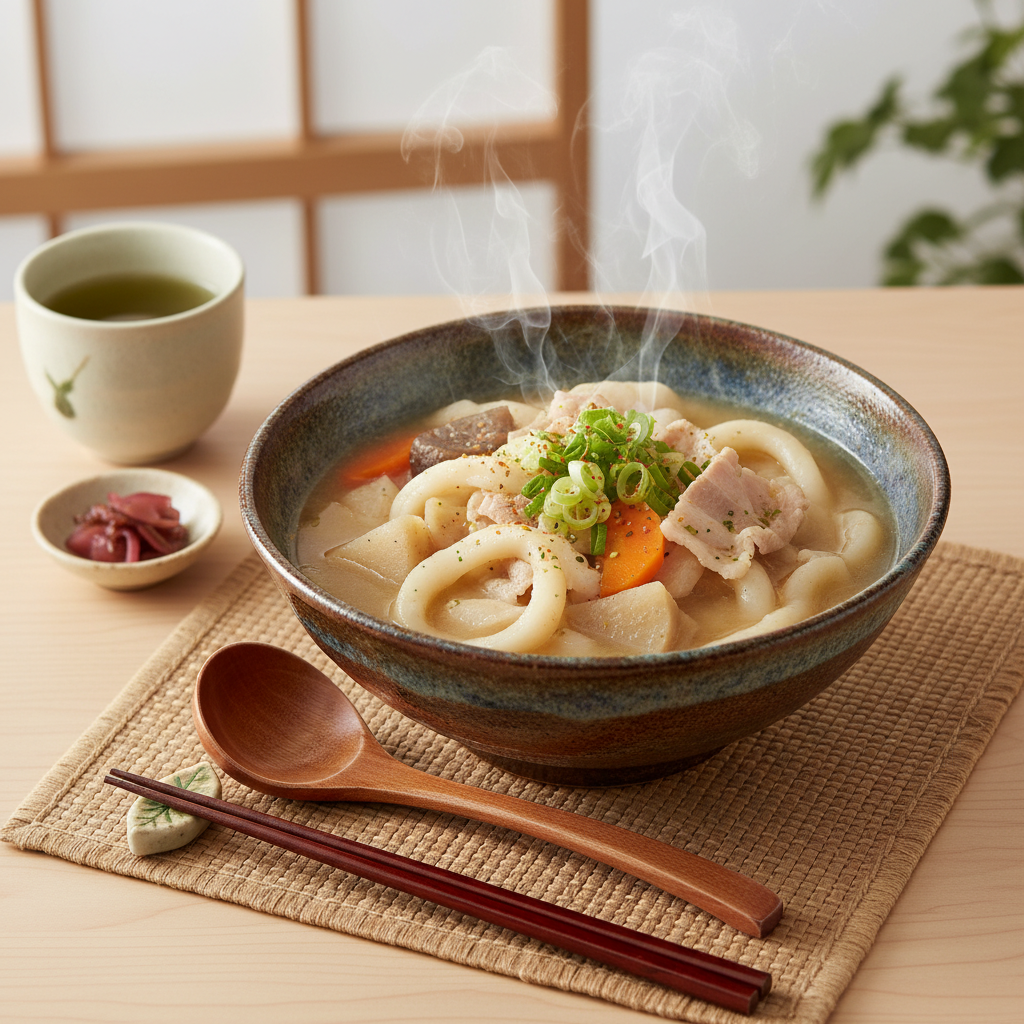
Dango-jiru: Oita Prefecture’s Representative Local Cuisine – History, How to Make It, and Everything About Its Transmission
What is Dango-jiru (だんご汁)?
Dango-jiru is one of the representative local dishes of Oita Prefecture. It is a dish made by simmering “dango”—flat, noodle-like strips created by kneading wheat flour with water and stretching it thin—together with seasonal vegetables and meat in a miso-based broth.
Unlike the round shape that the general term “dango” typically evokes, the dango used in Oita Prefecture’s dango-jiru has a flat shape similar to kishimen or houtou noodles. This unique shape results from hand-stretching the dough, creating subtle variations in thickness and width for each piece, producing a texture and warmth that only homemade food can offer.
The greatest characteristic of dango-jiru is the combination of chewy dango and a miso-based broth infused with vegetable umami—simple yet deeply flavorful. In Oita Prefecture, barley miso is commonly used, creating a distinctive richness and aroma.
The Deep Relationship Between Oita Prefecture and Dango-jiru
Geographic and Historical Background
Oita Prefecture is located in the northeast of Kyushu, blessed with a warm climate and abundant nature. However, the prefecture has few plains and is characterized by many mountainous areas. Consequently, land suitable for rice cultivation is limited, and historically, rice production was insufficient.
Given these geographic conditions, Oita Prefecture has long engaged in cultivating grains such as wheat and barley. During an era when rice was precious, ordinary people ate wheat flour-based dishes as their staple food. Dango-jiru was born precisely from this food culture.
Wisdom Born from Rice Shortages
From the Edo period through the early Showa period, in rural areas of Oita Prefecture, rice was a precious ingredient—paid as taxes or reserved for special occasions. In daily meals, dango made by kneading wheat flour with water served as a substitute for rice, becoming an important ingredient that satisfied people’s hunger.
Dango-jiru was not merely substitute food but the crystallization of ancestors’ wisdom in maximizing limited ingredients and considering nutritional balance. It is a well-reasoned dish that provides carbohydrates from wheat flour dango, vitamins and minerals from seasonal vegetables, and high-quality protein from miso.
History, Origins, and Related Events
The Origins of Dango-jiru in Old Documents
Tracing the history of dango-jiru, records from the Edo period are found. In a travel journal titled “Seiyu Zatsuki” written by Furukawa Koshosoken, who visited Bungo Province (present-day Oita Prefecture) in Tenmei 3 (1783), interesting descriptions remain.
According to the account, dango-jiru was also called “Houtchō (Abalone Intestine) Soup.” There is a legend that the Sengoku-period daimyo Ōtomo Sōrin was fond of eating abalone intestines (wata), but when they became unavailable, dango was used as a substitute, and because the taste was similar, it was named “Houtchō.”
While the truth of this anecdote is uncertain, it provides valuable evidence that dango-jiru was at least widely eaten in Oita Prefecture by the middle of the Edo period.
From Commoner’s Daily Food to Local Cuisine
From the Meiji period through the Showa era, dango-jiru became established as a everyday meal in Oita Prefecture’s rural areas. It became deeply rooted in the lives of Oita residents—at family dining tables during breaks from farm work, at gatherings for important ceremonies, and as a dish to warm the body on cold winter days.
After World War II, as lifestyles became Westernized and rice supply stabilized, fewer households ate dango-jiru regularly. However, it was simultaneously reappreciated as “the flavor of one’s hometown” and “mother’s cooking,” gaining recognition as a local cuisine.
Today, it has been selected for the Ministry of Agriculture, Forestry and Fisheries’ “One Hundred Local Dishes from Agricultural, Mountain, and Fishing Villages,” becoming widely known throughout the prefecture and beyond as a representative local dish of Oita.
Related Events and Dining Occasions
Dango-jiru is not limited to specific events but is eaten throughout the year in various contexts. It is particularly favored on the following occasions.
Winter Staple Dish: Because of its body-warming effects, it is especially often prepared during cold seasons. Dango-jiru made with plenty of winter vegetables is highly nutritious and was traditionally believed to be effective in preventing colds.
Meals After Farm Work: During busy farming periods, dango-jiru was valued for being quick to prepare and nutritious. The sight of large quantities prepared in a big pot and eaten together with family and those who came to help was common in rural areas of the past.
Gatherings: At occasions such as memorial services or community gatherings where many people gather, large quantities of dango-jiru were easily prepared and served.
Household Daily Food: Beyond special occasions, it was enjoyed as regular daily fare, with each household maintaining its own inherited “family taste.”
Major Areas of Transmission and Regional Differences
Spread Throughout Oita Prefecture
Dango-jiru is eaten throughout almost all of Oita Prefecture, but it has been particularly common in the central to southern parts of the prefecture. In cities such as Oita, Beppu, Usuki, Saiki, and Taketa, each region has its own unique ways of preparing and flavoring the dish.
Regional Differences
Types of Miso: Barley miso is standard in Oita Prefecture, but some regions and households use mixed miso or white miso. Barley miso, widely used throughout the Kyushu region, is characterized by sweetness and depth.
Thickness and Width of Dango: The thickness and width of dango vary by region and household. Some households stretch dango thin and wide, while others make it slightly thicker, each with its own unique texture.
Choice of Ingredients: Basic vegetables (daikon, carrot, burdock, taro, etc.) are common, but variations arise from adding regional specialties or seasonal ingredients. Regions along the coast sometimes add seafood.
Broth Preparation: Many households use iriko (dried small fish), but some use dried shiitake reconstituting liquid or kelp. Since Oita Prefecture is a major producer of quality shiitake, dango-jiru made with dried shiitake has exceptional flavor.
Main Ingredients Used
Materials for Dango (Noodles)
Wheat Flour: The primary ingredient for dango. Medium or cake flour is used. Some regions blend in bread flour.
Water: Mixed with wheat flour to make the dough. Approximately half the amount of wheat flour is standard, though adjustment is necessary depending on season and humidity.
Salt: A small amount adds elasticity to the dough and enhances flavor.
Broth Materials
Miso: Barley miso is most common, though mixed miso or white miso may be used. The amount of miso is adjusted according to preference.
Broth: Made from iriko (dried small fish), kelp, or dried shiitake. Combining multiple types creates deeper flavor.
Ingredients (Vegetables and Meat)
Root Vegetables:
- Daikon: Sliced into rounds or wedges
- Carrot: Sliced into rounds or cut into strips
- Burdock: Shaved thin to add aroma
- Taro: Adds textural accent
Other Vegetables:
- Chinese cabbage or leafy greens: Selected according to season
- Green onion: Scattered as garnish
- Mushrooms: Shiitake, shimeji, enoki, etc.
Meat:
- Pork: Thin slices or belly meat
- Chicken: Used in some regions
Others:
- Konjac: Adds textural variety
- Fried tofu: Added sometimes for depth
Ingredients (Serves 6)
Dango (Noodles)
- Wheat flour: 300g
- Water: approximately 150ml
- Salt: 1/2 teaspoon
Broth and Ingredients
- Water: 1500ml
- Iriko (dried small fish): 20g
- Kelp: One 10cm square piece
- Dried shiitake: 3-4 pieces
- Barley miso: 80-100g (adjusted to taste)
- Daikon: 300g
- Carrot: 1 (approximately 150g)
- Burdock: 1 (approximately 100g)
- Taro: 4-5 pieces
- Chinese cabbage or leafy greens: 200g
- Shimeji: 1 pack
- Pork belly thin slices: 200g
- Konjac: 1 sheet
- Green onion: As needed (for garnish)
Instructions
Dango Preparation
- Making the Dough: In a bowl, combine wheat flour and salt. Gradually add water while mixing. Initially mix with chopsticks, then combine by hand once partially mixed.
- Kneading: Knead the dough thoroughly for about 10 minutes until smooth. The consistency should resemble an earlobe. Add water little by little if dry; add flour if too sticky.
- Resting: Form the dough into a ball, place in a bowl, cover with a damp cloth, and rest for 30 minutes or more. This allows the dough to become more pliable.
- Stretching: Divide the dough into portions and stretch thin on a floured surface using a rolling pin. Target thickness is about 2-3mm.
- Shaping: Cut the stretched dough into 3-4cm wide strips. Alternatively, use the traditional method of tearing and stretching the dough by hand, which creates irregular shapes that enhance the handmade feel.
Broth Preparation
- Cold Water Soaking: From the night before or 2 hours before cooking, soak iriko and kelp in water. Rehydrate dried shiitake separately in water.
- Heating: Place water for broth, iriko, and kelp in a pot and heat over medium heat. Remove kelp just before boiling.
- Straining: Once boiling, reduce to low heat and simmer for 5 minutes. Remove iriko. Add the shiitake soaking liquid.
Ingredient Preparation
- Vegetable Cutting:
- Daikon: Peel and cut into 5mm wedges
- Carrot: Peel and slice into 5mm rounds or half-moons
- Burdock: Shave thin and soak in water to remove bitterness
- Taro: Peel and cut into bite-size pieces
- Chinese cabbage: Roughly chop
- Shimeji: Remove stem base and separate into small clusters
- Shiitake: Slice the rehydrated pieces thinly
- Meat Preparation: Cut pork belly into 3-4cm wide pieces.
- Konjac: Tear by hand or scoop with a spoon into bite-size pieces. Blanch to remove bitterness.
Cooking
- Cooking Vegetables: In the pot with prepared broth, add vegetables in order from those requiring longest cooking. Add daikon, carrot, burdock, taro, and konjac. Simmer over medium heat.
- Adding Meat: Once vegetables begin to soften, add pork. Carefully remove any scum that rises.
- Remaining Vegetables: Add Chinese cabbage and shimeji. Continue cooking.
- Adding Dango: Once vegetables are sufficiently soft, add the prepared dango one piece at a time. The key is adding dango gradually to prevent them from sticking together.
- Seasoning: When dango floats and becomes translucent, dissolve in miso. Don’t add all miso at once; adjust to taste.
- Finishing: Simmer over low heat for 2-3 minutes to blend flavors. Finally, scatter thinly sliced green onion and serve.
Cooking Time Estimate
- Dango preparation: 30 minutes (excluding resting time)
- Broth preparation: 30 minutes (excluding soaking time)
- Cooking: 30 minutes
- Total: approximately 1 hour 30 minutes (including prep)
Dining Method and Ways to Enjoy
Basic Way to Eat
Dango-jiru is served piping hot in a large bowl. When lifted with chopsticks, dango reveals its chewy elasticity. The first bite combines broth and dango together, enjoying the simple sweetness of wheat flour and the aroma of miso. As dango is chewed, wheat flavor expands, and its compatibility with broth infused with vegetable umami is excellent. With plenty of vegetables included, eating progressively creates a nutritionally complete dish.
Condiments and Seasonings
While the miso-based broth is enjoyed as-is, condiments may be added to taste:
- Seven-spice Chili: Adds a spicy accent
- Yuzu Kosho: An Oita specialty, adding fresh aroma
- Sesame: Increases fragrance and depth
- Ginger: Further enhances body-warming effects
Seasonal Variations
Spring: Adding spring vegetables like spring cabbage, new onions, or bamboo shoots creates seasonal dango-jiru.
Summer: Using summer vegetables and slightly lighter seasoning makes it easier to eat during hot weather.
Fall: Abundant mushrooms showcase autumn flavors.
Winter: Traditional dango-jiru loaded with root vegetables warms from the core.
Recipe Arrangements
Modern Arrangements
Western-style Dango-jiru: Substituting tomato or cream base for miso creates Western flavor. Adding cheese is recommended.
Curry Dango-jiru: Adding curry powder to miso creates child-friendly flavor.
Soy Milk Dango-jiru: Adding soy milk to the miso soup creates a mellow, healthier version.
Ingredient Variations
Seafood Dango-jiru: Using shrimp, squid, or clams instead of pork creates a luxurious seafood-flavored version.
Chicken Dango-jiru: Substituting chicken for pork creates a lighter flavor.
Vegetarian Dango-jiru: Using only vegetables and mushrooms without meat. Strong shiitake and kelp broth creates deep flavor.
Dango Arrangements
Whole Wheat Dango: Replacing part of wheat flour with whole wheat flour increases aroma and nutrition.
Mugwort Dango: Kneading mugwort into the dough creates spring aroma and color.
Pumpkin Dango: Kneading cooked pumpkin creates subtly sweet, vividly colored dango.
Nutrition and Health Benefits
Dango-jiru is a nutritionally balanced dish.
Carbohydrates: Wheat flour dango serves as the primary energy source.
Protein: High-quality protein is obtained from miso and pork.
Vitamins and Minerals: Abundant vegetables provide vitamins A, C, E, dietary fiber, and potassium.
Fermented Food Benefits: Miso, a fermented food, supports intestinal health.
Body-warming Effects: The hot broth combined with warming condiments further enhances body-warming properties.
Conservation and Transmission Efforts
Household Transmission
In Oita Prefecture, many households pass down the dango-jiru method from mother to daughter, grandmother to grandchild. Particularly the stretching technique, thickness, and miso flavor—each household’s unique “family taste” is carefully preserved.
School Lunch Programs
Many schools in Oita Prefecture feature dango-jiru in school lunches as an opportunity to learn about local cuisine. It provides a valuable opportunity for children to experience regional food culture and supports transmission to younger generations.
Restaurants
Many local cuisine restaurants and inns throughout Oita Prefecture serve dango-jiru as signature dishes. It is popular with tourists and plays an important role in conveying Oita’s food culture.
Especially in tourist destinations like Beppu and Oita cities, renowned restaurants serve authentic dango-jiru using local ingredients and are popular with outside visitors.
Product Development
In recent years, the following commercialization has advanced to make dango-jiru more accessible:
Frozen Dango-jiru: Frozen products with ingredients and dango included can be enjoyed by simply heating.
Dango-jiru Sets: Products containing fresh dango, miso, and broth packets allow easy home preparation.
Instant Types: Instant products requiring only hot water are also being developed.
Event Promotion Activities
Dango-jiru is served at various events throughout Oita Prefecture.
Local Cuisine Fairs: Demonstrations and tastings of dango-jiru occur at food events held across the prefecture.
Cooking Classes: Regular classes teaching dango-jiru preparation are held at community centers and cooking schools.
Tourism Campaigns: Dango-jiru is frequently featured in Oita’s tourism promotion, contributing to expanded awareness outside the prefecture.
SNS Promotion
In modern times, dango-jiru’s appeal is shared through SNS.
Instagram: Beautifully plated dango-jiru photos are posted, conveying visual appeal.
YouTube: Numerous instructional videos enable people from distant areas to make authentic dango-jiru.
Twitter (X): Posts of dango-jiru at daily tables convey approachability as home cooking.
Preservation Societies and Research Groups
Organizations dedicated to preserving and transmitting local cuisine exist in Oita Prefecture, conducting research and promotion activities regarding dango-jiru. These organizations document traditional methods, standardize recipes, and cultivate successors.
Dango-jiru and Oita’s Food Culture
Symbol of Powder Food Culture
Dango-jiru represents Oita Prefecture’s powder food culture. Beyond dango-jiru, dishes using wheat flour exist in Oita, such as yaseuma (local wheat flour confection stretched thin, boiled, and coated with kinako).
These dishes reflect food wisdom from when rice was precious and represent ingenuity in maximizing limited resources. Even today, this powder food culture is treasured as part of Oita’s identity.
Practice of Local Production and Consumption
Dango-jiru fundamentally uses locally produced ingredients. Oita wheat flour, locally cultivated vegetables, and regional miso represent the practice of local production and consumption.
Particularly, Oita Prefecture is a major shiitake producer with access to high-quality dried shiitake. Barley miso is also a traditional Kyushu condiment, and using these local ingredients produces authentic taste.
Cuisine That Deepens Family Bonds
Preparing dango-jiru is a family cooperative activity. Even children can help stretch dango, experiencing the joy of cooking together.
Sharing completed dango-jiru as a family deepens family bonds and becomes precious time for passing food culture across generations.
Conclusion
Dango-jiru, a representative local dish of Oita Prefecture, carries long history and rich food culture. While simple—flat dango made from kneaded wheat flour simmered with seasonal vegetables in miso broth—it embodies ancestors’ wisdom and ingenuity, and love for family.
Born as a substitute during rice-scarce times, dango-jiru is loved today as regional flavor and nutritionally balanced health food. From traditional household methods to modern arrangements, it offers diverse enjoyment.
When visiting Oita Prefecture, be sure to taste authentic dango-jiru. It is also relatively simple to prepare at home, so please try using this article as reference. Homemade dango’s chewy texture and the gentle flavor of broth infused with vegetable umami will surely warm both heart and body.


