Odawara Kamaboko: A Comprehensive Explanation of the History and Appeal of Kanagawa’s Representative Local Cuisine
Odawara kamaboko, a traditional local dish proudly presented by Odawara City in Kanagawa Prefecture, is a masterpiece representing Japanese food culture that has continued since the Edo period. The abundant seafood from Sagami Bay and the superior techniques of skilled craftsmen converge to create a unique texture and flavor. This article provides a thorough explanation of the history, manufacturing method, and efforts to preserve and transmit Odawara kamaboko in modern times, revealing all its charms.
What is Odawara Kamaboko (おだわらかまぼこ)?
Odawara kamaboko is a general term for steamed kamaboko produced in Odawara City, Kanagawa Prefecture. It is made by placing seasoned, thoroughly kneaded fish paste on a wooden board and steaming it, with a characteristic fan-like shape that protrudes plumply from the board.
The greatest characteristic of this local dish is the unique elasticity and stickiness called “ashi no tsuyosa” (leg strength). Through traditional manufacturing methods that rinse fish paste in water multiple times to thoroughly remove impurities and oil, a fine-textured, elastic texture is created. This “leg strength” is precisely why Odawara kamaboko is called the finest in Japan.
Known as a specialty product of Odawara City, it keeps well and is a highly nutritious food rich in protein and amino acids while being healthy. The refined umami of white fish and smooth texture are excellent both eaten as is and as an ingredient in cooking, possessing superior versatility.
Main Areas of Transmission
The main area of transmission for Odawara kamaboko is Odawara City, Kanagawa Prefecture, and its surrounding regions. In particular, “Kamaboko Street,” located about a 15-minute walk from Odawara Station, is positioned on the old Tokaido route and is known as a traditional shopping street with more than 30 stores, including the main shops of long-established kamaboko stores and dried fish shops.
The reason this area became the center of kamaboko manufacturing lay in geographic advantages. Odawara, facing Sagami Bay, possesses a fishing port where fresh white fish is abundantly landed, and was also blessed with high-quality water flowing from the Hakone mountain range. Furthermore, its history as a prosperous post town on the Tokaido contributed greatly to the development of kamaboko culture.
With traces remaining of its past as a fish market, the fishing village atmosphere is strongly preserved in the Kamaboko Street area. Currently, many kamaboko manufacturers exist within Odawara City, each continuing to maintain their own unique methods and flavors.
Main Ingredients Used
The main ingredients for Odawara kamaboko are as follows.
Primary Ingredients
White Fish (Guchiy/Ishimochi): The white fish most valued as the primary ingredient for Odawara kamaboko is guchiy (ishimochi). This fish, abundantly landed in Sagami Bay, contains a mild flavor and high-quality protein, and is considered ideal for creating elastic fish paste. Depending on the season and availability, other white fish such as conger pike, flying fish, and cod are also used.
Secondary Ingredients
Salt: An indispensable seasoning that provides elasticity to fish paste and enhances preservability. The appropriate amount of salt determines the “leg strength” of the kamaboko.
Sugar: Adds a subtle sweetness and also serves to enhance preservability.
Mirin: Enriches the flavor and creates a glossy finish.
Egg White: Helps bind the paste and creates a smooth texture.
Starch: Used to adjust texture and maintain shape.
In the traditional manufacturing of Odawara kamaboko, emphasis is placed on using natural ingredients rather than relying on preservatives. This attitude of valuing the essence of ingredients supports the quality of Odawara kamaboko.
Manufacturing Method
The manufacturing method of Odawara kamaboko is a traditional process in which craftsman’s technique and experience are concentrated.
1. Fish Selection and Pre-processing
Fresh white fish is carefully selected, and after removing the head and organs, it is filleted into three pieces. This process is particularly important since freshness management greatly affects the final quality.
2. Water Rinsing
The fish meat is finely crushed and thoroughly rinsed multiple times in cold water to completely remove bloodlines, oils, and impurities. This process, called “water rinsing,” is the most important work in creating the unique whiteness and elasticity of Odawara kamaboko. Using high-quality water flowing from the Hakone mountain range results in a more refined finish.
3. Fish Paste Preparation
The fish meat, which has completed water rinsing, is carefully ground using a stone mortar or grinding bowl. While machines are used in modern times, traditional manufacturing sometimes involves manual labor. At this point, salt is added and kneaded, causing fish protein to bond and creating unique stickiness and elasticity.
4. Seasoning and Kneading
Seasoning agents such as sugar, mirin, and egg white are added to the fish paste, and it is further carefully kneaded. This kneading degree determines the “leg strength” of the final product. Craftsmen discern the optimal state through the feel of their hands.
5. Molding
The kneaded fish paste is placed on a wooden board (kamaboko board). It is molded into the fan shape characteristic of Odawara kamaboko, arranged to protrude plumply from the board. This shape influences not only visual beauty but also how heat penetrates during steaming.
6. Steaming
The molded kamaboko is placed in a steamer and steamed at appropriate temperature and duration. The degree of steaming relies on the craftsman’s experience and intuition, with subtle adjustments to heat and timing bringing out the best texture and flavor.
7. Cooling and Finishing
The steamed kamaboko is cooled and the surface is finished. Odawara kamaboko made using traditional manufacturing methods possesses a translucent whiteness and unique elastic texture.
This series of processes requires long years of experience and skilled technique, with the craftsman’s skill supporting the quality of Odawara kamaboko.
History, Origins, and Related Events
History from the Edo Period
The history of Odawara kamaboko traces back to the Edo period. Odawara, which flourished as a post town on the Tokaido, was an essential waypoint where daimyo heading to Edo for sankin-kotai would necessarily pass. According to historical records, daimyo looked forward to eating Odawara kamaboko, and it is said to have been valued as a precious source of protein during their journeys.
Several factors underlie Odawara’s development as a center of kamaboko production. First, it was blessed with Sagami Bay, a rich fishing ground, allowing stable supply of fresh white fish. Second, it could utilize clear water flowing from the Hakone mountain range. Third, as a key point on the Tokaido with many travelers passing through, demand was high.
Development of Kamaboko Culture
After the Meiji period, Odawara’s kamaboko industry continued to develop. With the opening of railways, distribution expanded, and Odawara kamaboko became known throughout the country as a specialty product representing Kanagawa Prefecture. Craftsmen refined their techniques and, while preserving manufacturing methods passed down through generations, made continuous improvements suited to the times.
Related Events
Kamaboko Day (November 15): At many public elementary and middle schools in Odawara City, menus using Odawara kamaboko are provided in school lunch around November 15, designated as “Kamaboko Day.” This initiative serves as an important educational activity for transmitting regional food culture to the next generation.
Odawara Kamaboko Cherry Blossom Festival: Each year in late March, the “Odawara Kamaboko Cherry Blossom Festival” is held at Odawara Castle. At this event, kamaboko making demonstrations and experience workshops are conducted, attracting many tourists and local residents. Coinciding with the cherry blossom season, it has become established as a spring landmark of Odawara.
These events serve as opportunities to confirm regional identity through the local dish of Odawara kamaboko and to inherit traditional culture.
Occasions and Seasons for Consumption
Odawara kamaboko is a local dish consumed year-round regardless of season, but is particularly valued in the following situations.
Daily Dining
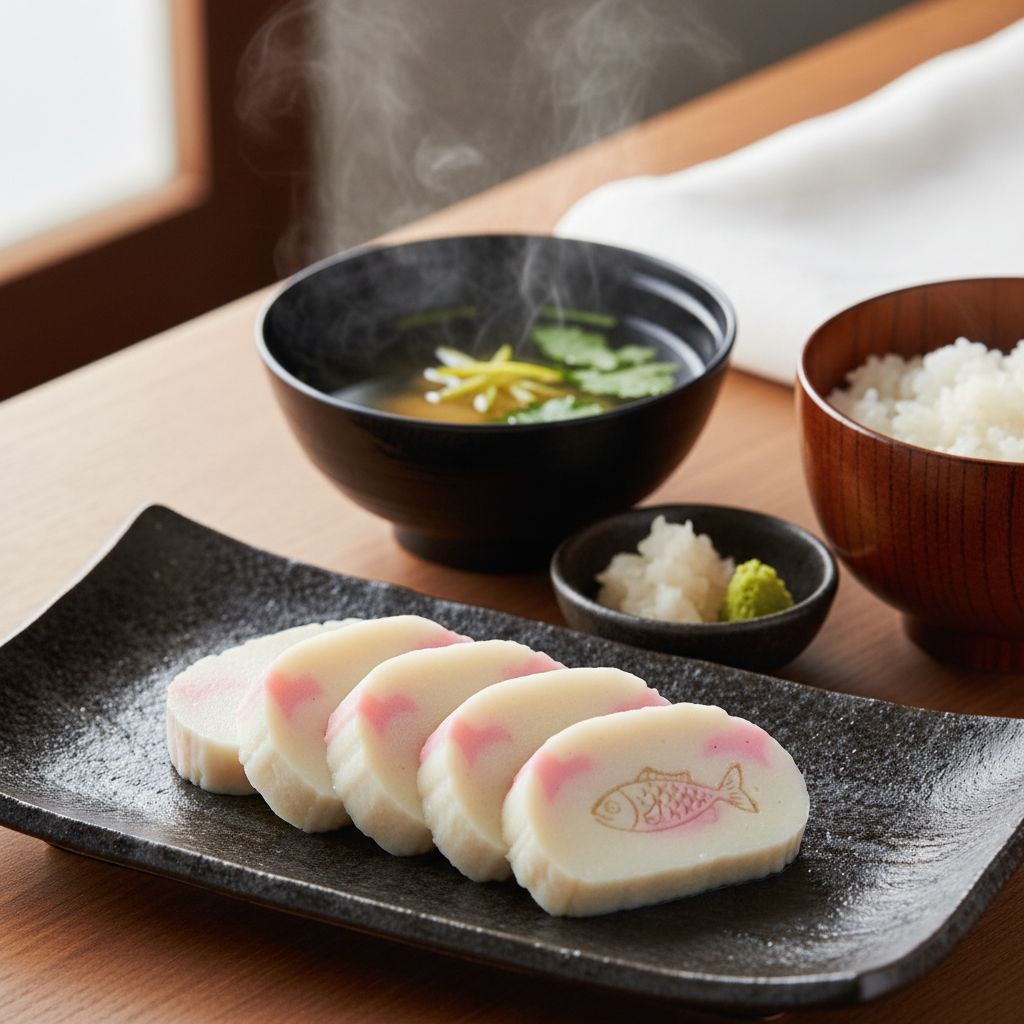
In the daily dining table of Odawara residents, kamaboko frequently appears as a dish for breakfast or dinner. The simplest and most common way to eat is as “ita-wasa,” slicing kamaboko thinly and eating it with wasabi soy sauce. This method allows the fullest enjoyment of kamaboko’s original taste and texture.
Celebrations and Festival Foods
Odawara kamaboko occupies an important position as an essential ingredient in New Year’s osechi (traditional celebratory) dishes. Red and white kamaboko is treasured as a lucky charm and adorns the celebration table at the new year. It may also be used as a premium ingredient at weddings and celebratory gatherings.
Tourism and Street Food
In recent years, it has also become popular as street food for tourists. At Kamaboko Street, freshly fried satsuma-age and stick kamaboko are sold, offering easy enjoyment and becoming one of the attractions of Odawara tourism. Fried kamaboko eaten at shop fronts or by the sea is loved by many people as a travel memory.
As a Gift
Odawara kamaboko is in high demand as a souvenir and gift, representing Kanagawa Prefecture as a specialty product. It is particularly chosen as a gift during the year-end and summer seasons, with long-established shops offering premium items in decorative boxes.
Ways of Eating
The ways to enjoy Odawara kamaboko are diverse, and it possesses excellent versatility both eaten as is and as an ingredient in cooking.
Eating As Is
Ita-wasa: The simplest and most traditional way to eat. Kamaboko is sliced to about 5mm thickness and eaten with wasabi soy sauce. This is the finest method for savoring the taste and texture of kamaboko itself.
Sashimi-style: Thinly sliced kamaboko is arranged like sashimi and eaten with ginger soy sauce or ponzu.
Eating Heated
Grilled kamaboko: Lightly grilling thinly sliced kamaboko adds a fragrant quality and creates a different flavor.
Stews: When used as an ingredient in oden or stews, it absorbs the broth, becomes tender, and creates a unique deliciousness.
As Fried Foods
Satsuma-age: Satsuma-age made by mixing fish paste with vegetables and frying is popular as Odawara street food. The pleasure of eating freshly fried, piping hot satsuma-age is exceptional.
As a Cooking Ingredient
Salads: Thinly sliced kamaboko added to salads creates a textural accent.
Fried rice and pasta: Finely chopped and added to stir-fries or Western dishes, it conveniently supplements protein.
Clear soup: Thinly sliced kamaboko floated in soup becomes a refined dish.
Odawara kamaboko has the flexibility to be applied not only to Japanese cuisine but also to Western and Chinese dishes, continuing to be enjoyed in various forms at modern dining tables.
Preservation and Transmission Efforts
Various efforts are underway to transmit the tradition of Odawara kamaboko to future generations.
Training of Successors
Long-established kamaboko shops have established apprenticeship systems and in-house training programs to pass craftsman’s techniques to the next generation. The traditional method of veteran craftsmen directly instructing young workers continues, with skilled craftsmen being trained over many years. During this process, not only techniques but also the craftsman’s philosophy and respect for ingredients are inherited.
Partnerships with Educational Institutions
Opportunities to learn about Odawara kamaboko as a local dish are provided in elementary and middle schools within Odawara City. Beyond providing it in school lunches, curricula in social studies and home economics classes teach regional food culture, creating an environment where children can take pride in their local traditions.
Kamaboko Museums and Experience Facilities
Facilities exist within Odawara City where visitors can learn the history and manufacturing method of kamaboko. A representative example is “Suzuhiro Kamaboko-no-Sato,” where hands-on kamaboko-making experience classes are conducted. Visitors can experience the high skill of craftsmen and the depth of traditional manufacturing methods through actually making kamaboko.
Activities of Preservation Organizations
Industry groups centered on the Odawara Kamaboko Cooperative work to preserve traditional manufacturing methods and maintain quality. Regular technical training sessions and product evaluation contests are held, creating an environment where craftsmen sharpen their skills through friendly competition. Efforts are also made to ensure stable supply of raw materials and develop new sales channels.
Contemporary Approaches Using SNS
In recent years, active information dissemination using SNS is being conducted. Instagram and Facebook are used to introduce manufacturing processes and new products, appealing to younger generations. Additionally, enhanced online shops enable people throughout the country to purchase Odawara kamaboko.
Product Development and Innovation
While preserving tradition, new product development suited to modern needs is advancing. Products such as low-salt types and reduced-sugar types responding to health consciousness, Western-style kamaboko with cheese and herbs mixed in, and colorful creative kamaboko continue attempts to create new value while basing themselves on traditional techniques.
Utilization as a Tourism Resource
Odawara City positions kamaboko as an important tourism resource, advancing the development of “Kamaboko Street” and incorporation into tourism routes. Tourism plans combining Odawara Castle and Hakone hot springs are proposed, contributing to local economic revitalization.
Through these diverse efforts, Odawara kamaboko, transcending a mere food product, is being securely transmitted to future generations as a cultural heritage symbolizing regional identity.
Nutritional Value and Health Benefits of Odawara Kamaboko
Odawara kamaboko has received attention not only as a delicious food but also as a highly nutritious health food.
High Protein, Low Fat
Odawara kamaboko, with white fish as its primary ingredient, is a healthy food abundant in high-quality protein while low in fat. With approximately 10-15g of protein per 100g and less than 1g of fat, it possesses ideal nutritional balance.
Essential Amino Acids
Protein derived from fish meat contains essential amino acids that cannot be synthesized by the human body, well-balanced. In particular, amino acids important for muscle maintenance and immune function enhancement are abundant.
Low Calorie
At approximately 90-100 kcal per 100g, it is low-calorie and suitable for those on diets or with caloric restrictions.
Digestive Absorption
Made through careful kneading of fish paste, it has good digestibility and places minimal burden on the digestive system. It is suitable for elderly people, children, and those in recovery periods after illness.
Preservability
When properly stored, it maintains quality for several days, and even with traditional manufacturing methods without preservatives, certain periods of storage are possible. This is due to preservation effects from salt and heat treatment during manufacture.
Differences Between Odawara Kamaboko and Kamaboko from Other Regions
Various regions throughout Japan have kamaboko with their own distinct characteristics, but Odawara kamaboko possesses unique features.
Manufacturing Method Differences
The greatest characteristic of Odawara kamaboko is the thorough “water rinsing” process. Through the traditional manufacturing method of rinsing fish paste in cold water multiple times to remove impurities, Odawara kamaboko emerges whiter and with greater elasticity and “leg strength” compared to kamaboko from other regions.
Shape Differences
The fan-like shape protruding plumply from the board is a visual characteristic of Odawara kamaboko. This shape not only provides beauty but also influences how heat penetrates during steaming, creating its unique texture.
Raw Material Differences
Fresh guchiy (ishimochi) landed in Sagami Bay is often the primary ingredient, with the taste reflecting the region’s sea bounty.
Cultural Background
The historical background of flourishing as a Tokaido post town elevates the cultural value of Odawara kamaboko. The anecdote that daimyo on sankin-kotai journeys looked forward to eating it demonstrates an aspect beyond mere food as a cultural heritage.
Tourism Information for Enjoying Odawara Kamaboko
When visiting Odawara, experiences centered on kamaboko and its food culture become major attractions for tourism.
Kamaboko Street
Located about a 15-minute walk from Odawara Station, Kamaboko Street is a tourist spot where long-established kamaboko shops line the street. Each shop offers tastings and purchases, with freshly fried satsuma-age and other street food also available. Visitors can experience Odawara’s food culture while strolling through the street with its preserved fishing village atmosphere.
Kamaboko-no-Sato (Suzuhiro)
A facility offering kamaboko-making experiences where, under craftsman guidance, visitors can create their own original kamaboko. The attached restaurant offers various dishes using kamaboko.
Odawara Castle Area
After visiting the historic Odawara Castle, shopping and dining at nearby kamaboko shops form the standard tourism route. During the spring cherry blossom festival season, both kamaboko and cherry blossoms can be enjoyed.
Access
Odawara Station is a major transportation hub served by the Tokaido Shinkansen, JR Tokaido Main Line, Odakyu Line, and Hakone Tozan Railway, with access in approximately one hour from Tokyo and two hours from Nagoya. It is suitable for day-trip tourism.
Conclusion: Odawara Kamaboko as Consumable Cultural Heritage
Odawara kamaboko, as a representative local dish of Kanagawa Prefecture, is a crystallization of food culture with a long history and tradition continuing since the Edo period. The abundant seafood from Sagami Bay, clear water from the Hakone mountain range, and craftsman’s techniques passed down through generations converge to create a “strong-legged” kamaboko worthy of world acclaim.
Beyond a mere food product, Odawara kamaboko is preserved and transmitted in various forms as a cultural heritage symbolizing regional identity. Partnerships with educational institutions, enhanced experience facilities, information dissemination using SNS, and new product development continue efforts preserving tradition while responding to modern needs.
When visiting Odawara, be sure to stroll through Kamaboko Street and savor the taste of long-established shops. By eating freshly fried satsuma-age as street food or participating in kamaboko-making experience workshops, you can sense the depth of this local dish. Additionally, purchasing as a souvenir allows you to enjoy Odawara’s taste at home.
Odawara kamaboko is an existence symbolizing the richness of Japanese food culture, and its flavor and tradition will continue to be loved by many people. As a local dish representing Kanagawa Prefecture, transmitting the charms of Odawara kamaboko securely to future generations is our important responsibility.