What is Ruibe? A Thorough Explanation of Hokkaido’s Traditional Local Cuisine: History, How to Make It, and How to Eat It
Ruibe is a unique local dish of Hokkaido born from the region’s harsh winter cold. This dish, made by thinly slicing frozen fish and eating it in a semi-thawed state, originated from the traditional food preservation wisdom of the Ainu people, and is now enjoyed as a signature dish representing Hokkaido. This article provides a detailed explanation of this fascinating local cuisine, covering everything from the historical background of ruibe, the types of fish used, nutritional value, how to make it at home, and delicious ways to eat it.
What is Ruibe? Basic Definition and Characteristics
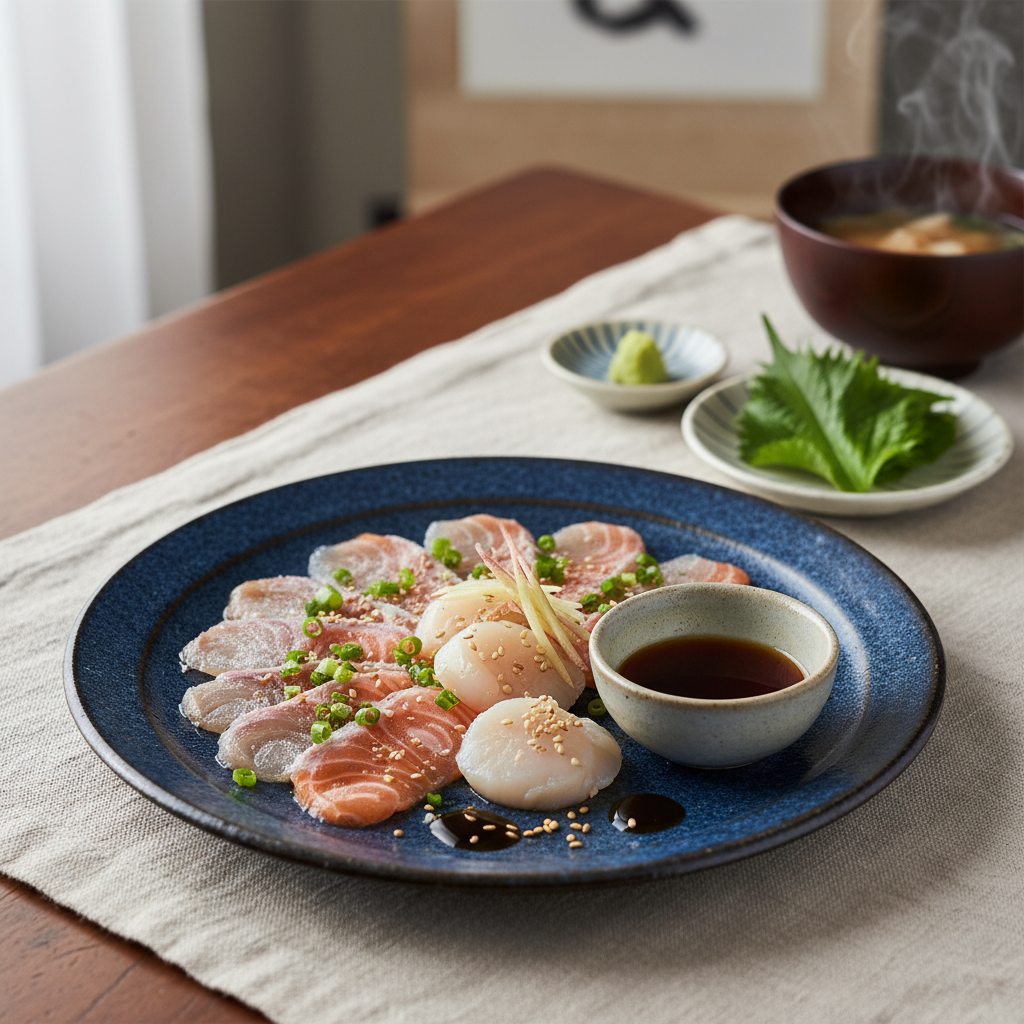
Ruibe is a traditional Hokkaido local dish in which fish is frozen and thinly sliced, then eaten in a semi-thawed state. The name “ruibe” comes from the Ainu words “ru ipe” (to melt, food), literally meaning “food that is melting.”
Main Characteristics of Ruibe
- Unique texture: Eaten in a semi-thawed state, it offers a crispy, crunchy texture
- Retention of freshness: Freezing preserves the fish’s freshness and concentrates its umami
- Parasite prevention: Freezing at minus 20 degrees Celsius or below for 48 hours or more kills parasites such as Anisakis
- Long-term storage regardless of season: Freezing allows for long-term preservation
The History of Ruibe and Its Deep Connection to Ainu Culture
Origins as a Preserved Food of the Ainu People
The origins of ruibe lie in the life wisdom of the Ainu, the indigenous people of Hokkaido. In an era without refrigeration technology, the Ainu utilized the harsh winter cold to naturally freeze fish and use it as a preserved food.
A method was established whereby large quantities of salmon and trout caught in autumn were buried in snow or under ice in rivers to freeze during winter, then taken out and eaten as needed. This method was not merely a preservation technique; it was also discovered that during the process of freezing and thawing, the fish’s flesh became tender and developed a unique texture and flavor.
Transmission to Wajin Culture and Continuation into the Modern Era
After the Meiji period, when large-scale migration of Wajin (ethnic Japanese) to Hokkaido began in earnest, ruibe was transmitted from Ainu culture to Wajin society. Initially, it spread among fishermen and pioneers, and eventually became established as a local dish throughout Hokkaido.
In the Showa period, advances in freezing technology made it possible to produce ruibe consistently year-round, and it became known to tourists as a signature Hokkaido dish. Today, it is widely served in Hokkaido’s izakayas, traditional restaurants, and souvenir shops, establishing itself as one of Hokkaido’s representative local cuisines.
Types of Fish Used in Ruibe and Their Characteristics
Traditional Salmon (Sake) Ruibe
The most traditional and common ruibe is made with salmon. In particular, fall salmon (shiro-zake) that migrate upstream to Hokkaido rivers in autumn is often used, and the fatty flesh becomes even more concentrated in flavor when frozen.
Characteristics of salmon ruibe:
- Beautiful red color
- Rich flavor from appropriate fat content
- Crunchy texture and natural sweetness of the fish
- Relatively easy to obtain and make at home
Trout (Masu) Ruibe as a Luxury Ingredient
Ruibe made with trout species, particularly sakura masu and rainbow trout, is also popular. Sakura masu is sometimes called the “phantom fish,” and its fatty flesh is considered exceptionally delicious.
Characteristics of masu ruibe:
- More delicate and refined taste than salmon
- Tender flesh
- Often served at high-end restaurants
- Often available seasonally
Ruibe Made from Other Fish
In recent years, ruibe is made with various fish beyond traditional salmon and trout:
- Hokke: A white fish caught in waters near Hokkaido, characterized by a subtle flavor
- Herring: Historically abundant in Hokkaido, herring ruibe has a long tradition
- Tuna: Served at high-end sushi restaurants as a modern arrangement
- Scallop: A creative variation using shellfish
Nutritional Value and Health Benefits of Ruibe
Rich in Protein and Omega-3 Fatty Acids
Salmon and trout, the main ingredients of ruibe, are rich in high-quality protein. They also contain abundant DHA and EPA omega-3 fatty acids, which are expected to provide the following health benefits:
- Maintenance of cardiovascular health: Keeps blood flowing smoothly and helps prevent arteriosclerosis
- Improved brain function: DHA is important for brain development and maintenance of cognitive function
- Anti-inflammatory effects: Effective in suppressing chronic inflammation
- Maintenance of vision: Contributes to retinal health
A Treasure Trove of Vitamins and Minerals
Salmon contains the following important vitamins and minerals:
- Vitamin D: Aids in calcium absorption and maintains bone health
- B vitamins: Necessary for energy metabolism and maintenance of nerve function
- Astaxanthin: A red pigment with powerful antioxidant properties
- Selenium: Possesses antioxidant effects and supports immune function
- Potassium: Helps regulate blood pressure
Effects of Freezing on Nutritional Value
Although ruibe is preserved by freezing, properly frozen fish loses almost none of its nutritional value. In fact, rapid freezing technology has the advantage of maintaining freshness and preventing oxidation of nutrients.
However, some water-soluble vitamins may be lost along with drip (thawed liquid) during thawing. Therefore, it is recommended to thaw slowly in the refrigerator or eat the fish in a semi-thawed state.
How to Make Ruibe at Home
Basic Method for Making Ruibe
Ruibe can be made easily at home. The following is a basic method for making ruibe using salmon.
Ingredients:
- Fresh salmon fillets 500g
- Salt to taste (approximately 3% of the fish’s weight)
Instructions:
- Prepare the fish: Rinse the salmon fillets well and pat dry with paper towels. If there are bones, remove them carefully with tweezers.
- Salt the fish: Lightly sprinkle salt on both sides of the salmon. The amount should be about 2-3% of the fish’s weight. Salting helps remove excess moisture and firms up the flesh.
- Rest in refrigerator: Wrap the salted salmon in plastic wrap and let it rest in the refrigerator for 1-2 hours.
- Wipe away moisture: Using paper towels, thoroughly wipe away the moisture that has been drawn out by the salt.
- Wrap individually: Wrap each piece of salmon tightly in plastic wrap. It is important to seal thoroughly without air pockets.
- Freeze: Place the wrapped salmon in a ziplock freezer bag and freeze in the freezer. For food safety, it is recommended to freeze at minus 20 degrees Celsius or below for 48 hours or more, which helps reduce parasite risk.
- Eat semi-thawed: When ready to eat, remove from the freezer and let sit at room temperature for 15-30 minutes until the surface softens slightly, then thinly slice.
Tips for Making Professional-Grade Ruibe
Selecting fish:
- It is important to choose the freshest fish possible
- Using fish from its peak season with good fat content increases deliciousness
- Choosing fish sold as sashimi-grade is reassuring
Freezing tips:
- Using a freezer with rapid-freeze function minimizes cell damage to the fish, resulting in better texture after thawing
- Placing fish on an aluminum tray before freezing improves heat conduction and speeds up freezing
- Avoid refreezing fish that has already been thawed
Slicing tips:
- Slice thinly using a sharp knife when the fish is in a semi-thawed state
- A sashimi knife is ideal, but a regular sharp knife works fine
- The typical thickness is 3-5mm
- Timing is important, as the fish becomes difficult to slice if completely thawed
How to Make Soy-Marinated Ruibe
“Soy-marinated ruibe,” which is marinated in soy sauce before freezing, is also popular.
Ingredients:
- Salmon fillets 500g
- Soy sauce 100ml
- Mirin 50ml
- Sake 50ml
- Grated ginger 1 teaspoon
Instructions:
- Bring soy sauce, mirin, and sake to a boil in a pot to cook off the alcohol, then cool
- Add the grated ginger
- Marinate the salmon fillets in the marinade for 2-3 hours
- Remove from marinade and lightly pat dry with paper towels
- Wrap in plastic wrap and freeze
- Slice thinly while still semi-thawed and serve
Soy-marinated ruibe is delicious on its own and makes an excellent accompaniment to alcohol.
Delicious Ways to Eat Ruibe and Recipe Variations
Traditional Ways of Eating
Simply with soy sauce and wasabi:
The simplest and most traditional way to eat ruibe is with thinly sliced ruibe served with soy sauce and wasabi. This allows you to enjoy the fish’s natural flavor.
With grated daikon radish:
Serving with grated daikon radish and ponzu sauce creates a refreshing taste. The enzymes in grated daikon also aid in digestion.
With plenty of condiments:
Serving with generous amounts of condiments such as chopped green onion, myoga, shiso leaves, and ginger is also a delicious way to eat it.
Modern Variation Recipes
Ruibe Carpaccio:
- Arrange thinly sliced ruibe on a plate
- Drizzle with a dressing made from olive oil, lemon juice, salt, and black pepper
- Top with arugula, baby greens, and cherry tomatoes
Ruibe Donburi:
- Arrange generous amounts of thinly sliced ruibe over warm rice
- Drizzle with soy sauce and wasabi, or a special sauce
- Top with salmon roe, shredded seaweed, and green onion for a more luxurious dish
Ruibe Ochazuke:
- Place ruibe over rice
- Pour hot broth or tea and eat readily
- Enhance the flavor by adding wasabi, seaweed, and rice crackers
Ruibe Salad:
- Top lettuce, mizuna, cucumber, and other vegetables with ruibe
- Serve with Japanese-style or sesame dressing
- A healthy dish that provides protein and vegetables at once
Ruibe Yukhoe Style:
- Finely chop ruibe and mix with sesame oil, soy sauce, gochujang, and ground sesame
- Top with egg yolk and mix well while eating
- Pairs excellently with rice
Pairing with Alcohol
Ruibe pairs exceptionally well with Japanese sake. The following types of alcohol are particularly recommended:
- Dry junmai sake: The fish’s fat and the sake’s umami harmonize beautifully
- Local sake from Hokkaido: Foods and beverages from the same region pair well
- Shochu: Particularly delicious when paired with sweet potato or barley shochu
- White wine: Also pairs well with modern arrangements
Places to Eat Ruibe and How to Purchase It
Famous Restaurants in Hokkaido
When visiting Hokkaido, you’ll want to taste authentic ruibe. Ruibe can be enjoyed at places such as:
In Sapporo:
- Izakayas and seafood restaurants in Susukino
- Restaurants near Nijo Market
- Traditional local cuisine restaurants around Odori Park
In Eastern Hokkaido:
- Seafood restaurants in Kushiro and Nemuro
- Restaurants and inns near the Shiretoko Peninsula
In Southern Hokkaido:
- Restaurants near Hakodate’s morning market
- Traditional local cuisine restaurants in Matsumae Town
How to Purchase as a Souvenir
Airport and train station souvenir shops:
Major transportation hubs such as New Chitose Airport and Sapporo Station have souvenir shops selling frozen ruibe. Vacuum-packed products are relatively easy to transport.
Online shops:
Online shops specializing in Hokkaido products deliver frozen ruibe nationwide, allowing you to enjoy authentic Hokkaido flavors at home.
Hokkaido product fairs at department stores:
Hokkaido product fairs held regularly at department stores throughout the country sometimes sell frozen ruibe.
Points to Note When Purchasing
- Check expiration dates: Although it is a frozen food, check the expiration date
- Storage method: Store promptly in a freezer after purchase
- Method of transport: If traveling for extended periods, prepare ice packs or cooler bags
- Thawing method: Natural thawing or slow thawing in the refrigerator is the basic method
Ruibe and the Importance of Food Poisoning Prevention
Parasite Risk and Countermeasures
Raw fish may contain parasites such as Anisakis. The freezing process used for ruibe is important not only for deliciousness but also for food safety.
Standards for making safe ruibe:
- Freeze at minus 20 degrees Celsius or below for 48 hours or more
- Or freeze at minus 35 degrees Celsius or below for 15 hours or more
Meeting these standards kills parasites such as Anisakis.
Precautions for Home Freezers
Most home freezers are typically set at around minus 18 degrees Celsius. At this temperature, extended freezing can reduce parasite risk, but it is recommended to freeze at the lowest possible temperature for extended periods.
Tips for enjoying it safely:
- Use fish sold as sashimi-grade
- Purchase from a trusted fishmonger
- Check the freezer temperature and freeze for sufficient time
- Exercise special caution with pregnant women, young children, and elderly people with compromised immune systems
Local Dishes Similar to Ruibe
Hizu Namasu (Salmon Head Cartilage Vinegar Dish)
Hizu namasu is a local dish of Hokkaido and northeastern Japan made by thinly slicing the cartilage from a salmon’s head and marinating it in vinegar. It is characterized by a crispy texture and is also enjoyed as a New Year’s dish.
Iizushi (Fermented Fish and Rice)
Iizushi is a traditional Hokkaido preserved food made by fermenting fish and rice with koji. Salmon, herring, or sandfish are used, and it is characterized by a distinctive sour and umami taste.
Matsumae Zuke
Matsumae zuke is a local dish originating from Matsumae Town in Hokkaido, made by marinating squid and kelp in a soy-based sauce. Like ruibe, it is one of Hokkaido’s representative preserved foods.
The Significance and Future of Ruibe in Modern Times
Inheritance of Food Culture
Ruibe is a valuable food culture in which the traditional wisdom of the Ainu people is passed down to the present day. In an era of advancing globalization, the importance of preserving and transmitting region-specific food cultures to future generations is being reconsidered.
Activities to pass ruibe on to younger generations are being conducted, such as serving it in school lunches and teaching preparation methods in local cuisine classes.
Value as a Tourism Resource
Ruibe has become one of Hokkaido’s important tourism resources. For tourists visiting Hokkaido, ruibe is popular as “a special dish that can only be tasted in Hokkaido.”
Local restaurants and accommodations are making efforts to innovate while preserving tradition, such as serving creative dishes using ruibe.
As a Sustainable Food Culture
The method of preserving ruibe through freezing is attracting attention from the perspective of reducing food waste. Long-term preservation of fish allows fish caught during peak season to be consumed without waste.
Additionally, advances in freezing technology have made it possible for people in remote locations to enjoy Hokkaido’s flavors, contributing to the revitalization of the regional economy.
Conclusion: Rediscovering the Charm of Ruibe
Ruibe is a local dish born in Hokkaido’s harsh natural environment, filled with the wisdom of its predecessors. Beginning as a traditional preserved food of the Ainu people, it is now loved by many as a signature dish representing Hokkaido.
With its unique crunchy texture, the natural umami of the fish, and food safety, ruibe can be described as a dish in which tradition and innovation merge. Since it can be made relatively easily at home, why not give it a try?
When visiting Hokkaido, taste authentic ruibe and reflect on its history and culture. When making ruibe at home, please enjoy this wonderful local dish while respecting the food wisdom the Ainu people have built over time.
Ruibe is not merely a dish, but truly a “culinary cultural heritage” in which Hokkaido’s history, culture, and nature are concentrated.