Mizusawa Udon Complete Guide | The History and Charm of Japan’s Top Three Udon, Boasted by Gunma Prefecture
“Mizusawa Udon,” which boasts a history of over 400 years in the Mizusawa district of Ikaho Town, Shibukawa City, Gunma Prefecture. This local specialty, characterized by its transparent, beautiful noodles and strong chewiness, is counted as one of Japan’s top three udon along with Akita’s Inaniwa Udon and Kagawa’s Sanuki Udon. This article provides a comprehensive explanation of the charm of Mizusawa Udon from every angle, from its history to the secrets of its manufacturing method, introductions to famous restaurants, and Gunma Prefecture’s udon culture.
What is Mizusawa Udon | A Local Specialty Representing Gunma Prefecture
Mizusawa Udon is hand-made udon born in the Mizusawa district of Ikaho Town, Shibukawa City, Gunma Prefecture. This region has long been known for wheat cultivation, and blessed with high-quality spring water, making it an ideal environment for udon production.
Status as One of Japan’s Top Three Udon
Mizusawa Udon is widely recognized as one of Japan’s top three udon alongside Sanuki Udon (Kagawa Prefecture) and Inaniwa Udon (Akita Prefecture). Unlike the strong chewiness of Sanuki Udon and the delicate thin noodles of Inaniwa Udon, Mizusawa Udon is characterized by its unique texture combining transparent, beautiful appearance with firm elasticity.
Characteristics of Mizusawa Udon
The greatest characteristic of Mizusawa Udon lies in its transparency and strong chewiness. The noodles are medium to thick, and the lustrous sheen when boiled is beautiful. One bite reveals elastic, chewy texture that spreads throughout the mouth. Made with only wheat flour, salt, and the clear water of Mizusawa through an additive-free method, the original flavor of wheat stands out.
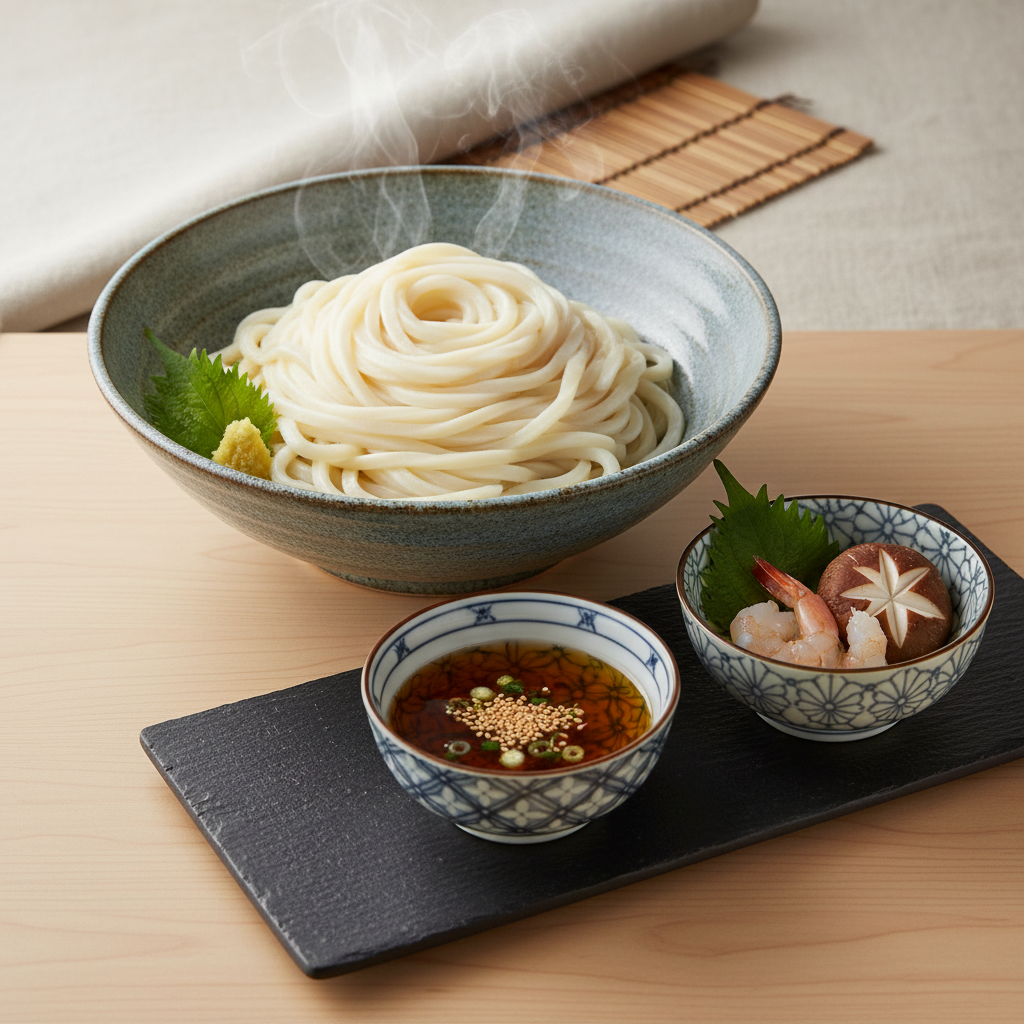
It is often served as cold zaru udon and is typically eaten with sesame sauce or soy sauce. Some restaurants serve it warm, but to fully enjoy the transparency and chewiness that characterize Mizusawa Udon, eating it cold is recommended.
The History of Mizusawa Udon | Walking Together with Mizusawa Temple for 400 Years
The Birthplace: Mizusawa Temple (Mizusawa Kannon)
The history of Mizusawa Udon dates back approximately 400 years to the early Edo period. Mizusawa Temple (commonly known as Mizusawa Kannon) in Ikaho Town, Shibukawa City, Gunma Prefecture, was the sixteenth temple on the Bandō Thirty-Three Kannon Pilgrimage and attracted many worshippers. Mizusawa Udon is said to have begun when hand-made udon was served to pilgrims at the temple’s front gate.
The area around Mizusawa Temple was abundant with clear spring water, and udon made using this water became well-regarded among pilgrims. Gradually, more udon shops appeared at the temple’s front gate, and the Mizusawa district became known as the “Land of Udon.”
The History of Tamariya, the Original
Tamariya, known as the original Mizusawa Udon restaurant, is said to have been founded in the tenth year of Tensho (1582). Over 400 years, it has continued to preserve traditional manufacturing methods and has been the driving force in spreading the name of “Mizusawa Udon” throughout Japan. Established restaurants like Tamariya pass down techniques inherited through generations, conveying flavors from the past to the present.
The Relationship with Ikaho Hot Spring
The Mizusawa district is located near Ikaho Hot Spring, one of Gunma Prefecture’s leading hot spring destinations. After Ikaho Hot Spring developed as a healing spa from the Meiji era onward, a course became established where hot spring visitors would worship at Mizusawa Temple and eat Mizusawa Udon on their way back. The combination of hot springs and local cuisine created a synergistic effect as a tourist resource, greatly contributing to increased recognition of Mizusawa Udon.
The Manufacturing Method of Mizusawa Udon | The Secret Behind Its Transparency and Strong Chewiness
Carefully Selected Raw Materials
The secret to Mizusawa Udon’s deliciousness lies in carefully selected raw materials, though simple. Only wheat flour, salt, and Mizusawa’s clear water are used. The additive-free manufacturing method, which uses no additives, brings out the original flavor of wheat and creates transparent noodles.
Primarily medium-strength flour is used, with some restaurants creating their own blends. Many restaurants use Gunma-grown wheat, and local production for local consumption efforts are advancing. Salt plays an important role in giving the noodles chewiness, while water from Mizusawa’s spring water or groundwater is used to achieve a clean, clear flavor.
Traditional Hand-Beating Method
Most Mizusawa Udon is still made by hand today. The process is carried out in the following steps:
- Water mixing: Salt water is added to wheat flour and mixed evenly. This process determines how the flour and water bond.
- Kneading: Kneading the dough vigorously forms gluten, resulting in noodles with strong chewiness. Artisan skill is required to adjust kneading time and force according to temperature and humidity.
- Resting: The kneaded dough is left to rest for a certain period, allowing gluten to mature and the noodles to gain extension and elasticity.
- Stretching: The dough is evenly stretched with a noodle roller. Uniform thickness affects the texture of the cooked noodles.
- Cutting: The stretched dough is folded and cut with a knife into uniform thickness. Mizusawa Udon is characteristically cut to medium to thick size.
- Boiling: Cooked in plenty of boiling water. Cooking time is adjusted based on noodle thickness, but generally takes about 15 minutes.
- Cooling: The cooked noodles are tightened in cold water, bringing out transparency and chewiness.
The Power of Water Creating Transparency
The transparency characteristic of Mizusawa Udon is largely attributed to the high-quality water of the Mizusawa district. Water emerging from the Haruna Mountain system has good mineral balance and few impurities, so when the noodles are boiled, there is little cloudiness and a lustrous finish is achieved. When tightened in cold water, this clear water also firms the noodle surface, resulting in shiny, beautiful noodles.
Mizusawa Udon Boulevard | The Sacred Ground of Udon Where Famous Restaurants Gather
What is Mizusawa Udon Boulevard
Along the national road in the Mizusawa district, there is a “Mizusawa Udon Boulevard” where many udon restaurants line the street. Along this path that continues from around Mizusawa Temple toward Ikaho Hot Spring, about a dozen udon restaurants gather, each welcoming customers with their unique flavors and atmosphere.
Introduction to Representative Famous Restaurants
Tamariya (Tamariya)
Founded in 1582, the original Mizusawa Udon restaurant. With over 400 years of history, it continues to preserve traditional methods. Located at the temple’s front gate, as the true origin of Mizusawa Udon, it provides time-honored flavors. The two-sauce style of eating with both sesame and soy sauce tsuyu is the classic method.
Osawaya (Osawaya)
One of the most popular restaurants on Mizusawa Udon Boulevard. Known for its commitment to homemade noodles, it features transparent, beautiful noodles. A popular menu item is the tempura set, where freshly fried tempura and cold udon combine exquisitely. It features a spacious interior and parking lot, making it easily accessible for tourists.
Suikouen (Suikouen)
A restaurant devoted to additive-free homemade noodles and Gunma Prefecture ingredients. It also pays attention to the dishes used, with plating that is visually enjoyable. It maintains a style of cooking only after receiving orders, adhering to “delicious” freshly boiled and fried items.
Iwatoya (Iwatoya)
An established restaurant preserving an old-fashioned atmosphere. Noodles that showcase hand-beating technique are characterized by strong chewiness and smooth throat-feel. Known for its taste beloved by locals, with many repeat customers.
Mizusawatei (Mizusawatei)
A restaurant with a calm atmosphere on Mizusawa Udon Boulevard. Private rooms are available, recommended for those wishing to enjoy their meal slowly. Offers abundant local dishes beyond udon, allowing you to enjoy a wide range of Gunma flavors.
Tanjitei (Tanjitei)
An established restaurant continuing the manufacturing method since its founding. It pays attention to noodle thickness and boiling degree, making fine adjustments according to season and weather. Popular with local regulars, it is cherished as a restaurant rooted in the community as well as visited by tourists.
Yamagen (Yamagen)
A relatively new restaurant that has learned traditional methods and added its own innovations to Mizusawa Udon. Popular with younger generations, it is characterized by a fusion of modern interior design and traditional flavor.
How to Eat Mizusawa Udon | Enjoying with Sauce and Condiments
Basic Eating Method
Mizusawa Udon is typically served as cold zaru udon. Noodles served on bamboo strainers or ceramic plates are dipped in sauce and eaten. Two types of sauce—sesame sauce and soy sauce—are commonly provided, allowing you to enjoy each flavor.
Sesame Sauce and Soy Sauce
Sesame sauce is the classic Mizusawa Udon style, characterized by the fragrant aroma and richness of ground sesame. The rich flavor clings well to the noodles and brings out the wheat flavor. Individual restaurants differ in sesame ratio and seasoning, with each having its own character.
Soy sauce is a simple sauce where the umami of broth and soy aroma stand out. You can enjoy the original taste of Mizusawa Udon straight. Based on dashi from bonito flakes and kelp, adjusted with mirin and sugar, it has an elegant flavor.
Enjoying Condiments
Condiments like green onion, wasabi, and ginger are provided. Adding condiments to the sauce allows you to enjoy flavor changes. Particularly, wasabi further brightens the freshness of Mizusawa Udon, and in summer, the refreshing flavor stimulates appetite.
Enjoying as Warm Udon
While cold udon is mainstream, some restaurants serve warm udon. Variations include “kake udon” with warm sauce and noodles, and curry nanban udon. In cold seasons, warming yourself with warm udon is also recommended.
Gunma Prefecture’s Udon Culture | Not Just Mizusawa Udon
Flour Food Culture Taking Root in Gunma
Gunma Prefecture has long been known for wheat production, with flour food culture taking deep root. Much of the land was unsuitable for rice cultivation, so wheat-based dishes developed as staple foods. Beyond udon, numerous local dishes using wheat flour exist, including suiuton, grilled buns, and okkiri-komi.
Gunma Udon Other Than Mizusawa Udon
Himokawa Udon (Kiryu City)
A local specialty of Kiryu City featuring wide, flat noodles. The width can exceed 5cm, with a smooth, slippery texture and throat-feel. Typically eaten with cold sauce, though also served warm.
Tatebayashi Udon (Tatebayashi City)
Tatebayashi City is also known as an ancient udon production area. Featuring thin noodles with smooth texture, it is eaten daily locally and beloved as a home-cooked dish.
Okkiri-komi
Thick udon cooked with vegetables, a local dish. Available in miso or soy broth, it is cherished as a warming dish in cold seasons. The name comes from “cutting and inserting” the noodles.
Mizusawa Udon and Ikaho Hot Spring | How to Enjoy Tourism
Synergistic Effects with Ikaho Hot Spring
Mizusawa Udon and Ikaho Hot Spring are complementary Gunma Prefecture tourism resources. A popular tourist course has become staying at Ikaho Hot Spring, visiting Mizusawa Temple the next day, and eating Mizusawa Udon.
Recommended Tourism Routes
Morning: Stroll through Ikaho’s stone-step street. Known as the birthplace of hot spring buns, you can sample hot spring buns while walking.
Lunch: After worshipping at Mizusawa Temple, lunch at Mizusawa Udon Boulevard. Comparing multiple restaurants is recommended.
Afternoon: Visit nearby nature spots like Haruna Mountain or Haruna Lake. Depending on the season, enjoy autumn leaves or fresh greenery.
Access Information
By car: Approximately 20 minutes from Kan’etsu Expressway, Shibukawa Ikaho IC. Parking is provided at each restaurant along the boulevard.
By public transportation: Approximately 25 minutes by bus from JR Shibukawa Station, getting off at “Mizusawa Kannon-mae.” As bus frequency is limited, checking the schedule in advance is recommended.
Enjoying Mizusawa Udon at Home | Souvenirs and Online Shopping
Souvenir Mizusawa Udon
Each restaurant on Mizusawa Udon Boulevard sells fresh udon and dried noodles as souvenirs. Fresh udon has a short shelf life but offers a texture close to restaurant quality. Dried noodles have longer shelf life, making them ideal souvenirs for distant destinations. Many restaurants also sell sauce as a set, allowing you to recreate authentic Mizusawa Udon at home.
Purchasing via Online
Many restaurants including Tamariya operate online shops. You can order Mizusawa Udon from anywhere in Japan, and it is also popular as a gift. Fresh udon sets delivered by refrigerated shipping and room-temperature preserved dried noodle sets are available, allowing you to choose according to your needs.
Tips for Cooking at Home
The secret to deliciously eating souvenir Mizusawa Udon lies in boiling time and cooling method. Fresh udon should be boiled slightly shorter than indicated time and immediately tightened in cold water to recreate restaurant-like texture. Chill the sauce in the refrigerator and serve with condiments for a more authentic flavor.
Nutritional Value and Health Benefits of Mizusawa Udon
Nutritional Components
Mizusawa Udon is wheat flour-based, so carbohydrates are the primary component. Per 100g of cooked noodles, energy is approximately 270kcal, with protein, B vitamins, and minerals also included. The additive-free method means no worries about consuming unnecessary additives, allowing you to take in wheat’s original nutrition.
Ease of Digestion
Udon is known for easy digestion and is gentle on the stomach and intestines. The background of its development as food at hot spring resorts likely reflects consideration for the health of healing spa guests. It can be safely eaten even when feeling unwell or with weak digestive systems.
As a Balanced Meal
Combining Mizusawa Udon with tempura or vegetable side dishes creates a balanced meal. By consuming protein and vegetables together, nutritional balance improves and satisfaction increases.
Mizusawa Udon Through the Seasons | Seasonal Enjoyment
Spring Mizusawa Udon
Spring is the season of new leaves. You can enjoy Mizusawa Udon while viewing cherry blossoms blooming around Mizusawa Temple. Pairing with spring vegetable tempura is recommended.
Summer Mizusawa Udon
In hot summer, cold Mizusawa Udon is the best. The transparent noodles and cold sauce let you forget the heat. Mizusawa Udon eaten after soaking in Ikaho Hot Spring is extraordinary.
Autumn Mizusawa Udon
Autumn is the beautiful season for Haruna Mountain’s autumn leaves. Many tourists visit to enjoy autumn leaf viewing combined with Mizusawa Udon. Mushroom tempura and seasonal limited menus featuring autumn flavors appear.
Winter Mizusawa Udon
In cold winter, warm udon is also popular. Menus featuring curry udon and hot pot udon that warm the body are abundant. After warming up in Ikaho Hot Spring, warm Mizusawa Udon warms both heart and body.
The Future of Mizusawa Udon | Tradition and Innovation
Inheritance of Tradition
With over 400 years of history, passing Mizusawa Udon’s traditions to the next generation is a challenge. Established restaurants focus on training young craftspeople, passing on hand-beating techniques and manufacturing methods.
New Initiatives
While preserving tradition, new efforts are beginning. Development of gluten-free udon, export to overseas markets, information dissemination using SNS, and other initiatives suited to modern times are progressing. Menu development incorporating young generations’ sensibilities is underway, creating new charm in Mizusawa Udon.
Value Enhancement as a Regional Brand
Shibukawa City and Gunma Prefecture actively promote Mizusawa Udon as a regional brand. Efforts to protect and enhance brand value, including trademark registration of “Mizusawa Udon” and setting quality standards, are progressing. Firmly establishing its position as one of Japan’s top three udon and conveying this to domestic and international audiences is expected.
Conclusion | Experience Gunma’s Food Culture with Mizusawa Udon
Mizusawa Udon is a local specialty boasted by Gunma Prefecture and one of Japan’s top three udon with over 400 years of history and tradition. Its transparent, beautiful noodles, strong chewiness, and original wheat flavor from additive-free methods create an unforgettable taste.
Born at the gate of Mizusawa Temple and developed alongside Ikaho Hot Spring, Mizusawa Udon is not merely food but a treasure containing Gunma’s history and culture. On Mizusawa Udon Boulevard, famous restaurants with their own individual character line the street, warmly welcoming visitors.
When visiting Ikaho Hot Spring, be sure to taste Mizusawa Udon. Enjoy the transparency and chewiness with cold zaru udon, and warm your heart with warm udon. Experience the taste changes with sesame and soy sauce, enjoy freshly fried tempura with the noodles, and experience Gunma’s food culture.
Mizusawa Udon is truly a local flavor created by Gunma Prefecture’s rich nature, clear water, wheat culture, and the skill and passion of craftspeople. In each bowl lies the weight of 400 years of history and continuing tradition. Please confirm the charm of Mizusawa Udon with your own palate.