
Kashiwameshi: A Traditional Fukuoka Dish – Comprehensive Guide to History, Preparation, and Regional Culture
What is Kashiwameshi?
Kashiwameshi (chicken rice) is a local dish widely enjoyed throughout the Kyushu region, centered in Fukuoka Prefecture. In the Kyushu region, chicken is called “kashiwa,” and kashiwameshi is prepared by mixing cooked rice with simmered chicken and other ingredients.
It is a standard homestyle local dish made in households and restaurants throughout Fukuoka Prefecture, and is also eaten on special occasions such as festivals and sports days. As a signature dish unique to Fukuoka, where chicken dishes are prominent, kashiwameshi has become one of the dishes that symbolizes the region’s food culture.
The Origin of the Name “Kashiwa”
There are several theories about why chicken is called “kashiwa” in the Kyushu region. The most widely accepted theory is that the name comes from the similarity between the color of chicken feathers and the color of oak leaves. In particular, the yellowish-brown feathers of certain chickens are said to resemble the color of oak leaves in autumn.
Another theory suggests that the name “kashiwa” became established because chicken meat was once sold wrapped in oak leaves. Regardless, in the Kyushu region, especially in Fukuoka Prefecture, the term “chicken = kashiwa” is used daily and is deeply rooted in the region’s food culture.
Main Regions of Transmission
Kashiwameshi is primarily enjoyed throughout Fukuoka Prefecture as a local dish, but is also widely eaten in other prefectures of northern Kyushu, such as Saga Prefecture. Within Fukuoka, it has become established as a homestyle dish in nearly all regions, including Kitakyushu City, Fukuoka City, the Chikuho region, and the Chikugo region.
In particular, the Orito area of Kitakyushu City is known as the birthplace of kashiwameshi as a station lunch box. The “kashiwameshi” sold by Totetsuken is a famous specialty station lunch box with a history of over 100 years. Since sales began in 1921 (Taisho 10), it has continued to be loved by many people.
Regional Differences
Even within Fukuoka Prefecture, there are slight variations in how kashiwameshi is prepared by region. In the Kitakyushu area, the mixed rice style is common, while in the Fukuoka City area, the style of mixing ingredients into cooked rice is the mainstream. In the Chikuho region, kashiwameshi made with older chickens, which have a chewy texture, has been traditionally prepared.
Additionally, the vegetables and seasoning ratios used vary by household, with each family passing down its own distinctive flavor. This diversity is one of the charms of kashiwameshi.
History, Origins, and Related Events
Historical Background of Kashiwameshi
Fukuoka Prefecture has long been known as a region that has favored eating chicken. Two local dishes that symbolize this food culture are “tori no mizutaki” (chicken hot pot) and “kashiwameshi.” The development of chicken dishes in Fukuoka can be attributed to the warm climate being suitable for chicken farming, as well as the exchange of diverse food cultures in Hakata, which prospered as a port town.
Kashiwameshi became established as a common dish after the Meiji era. Before that, chicken was a precious ingredient eaten only on special occasions. However, as the poultry industry developed and chicken became more readily available, it spread as a home-cooked dish.
Development as a Station Lunch Box
With the advent of the Taisho era, kashiwameshi also began to be sold as a station lunch box. The “kashiwameshi” that Totetsuken began selling at Orito Station in 1921 became widely known throughout the country as a specialty of Fukuoka Prefecture alongside the development of railways.
The station lunch box version of kashiwameshi became a source of pleasure for many travelers and a must-eat local dish for tourists visiting Fukuoka Prefecture. Today, kashiwameshi station lunch boxes can still be purchased at stations such as Orito and Hakata.
Occasions and Food Customs Related to Kashiwameshi
While kashiwameshi is an everyday home-cooked dish, it is also essential on special occasions. It is prepared for various occasions such as lunch boxes for sports days and school excursions, festivals and memorial services for the deceased, and family gatherings.
Particularly during sports day season, many households prepare kashiwameshi, which becomes one of children’s delights. It also appears as a school lunch menu item, making it a “taste of home” that Fukuoka Prefecture children become familiar with from an early age.
Main Ingredients Used
The main ingredients used in kashiwameshi are as follows.
Chicken (Kashiwa)
The most important ingredient, chicken, was traditionally made with older chickens. Older chickens have firmer meat but strong umami and a distinctive chewy texture. Today, chicken thigh or chicken breast is often used, making it easier to prepare at home with adjustments.
Using Fukuoka Prefecture brand chickens such as “Hakata Jidori” allows for a more flavorful kashiwameshi. The key to deliciousness is to cut the chicken into bite-sized pieces and season it well with soy sauce and other seasonings like mirin.
Vegetables
Various vegetables are used in kashiwameshi, with the most common being burdock and carrot.
Burdock serves as an accent for aroma and texture, making it an essential ingredient in kashiwameshi. It is typically used after being julienned, and its earthy aroma and chewy texture add depth to the dish.
Carrot adds color and natural sweetness to the dish. It is sliced thinly or cut into ginkgo shapes.
Other households also add shiitake mushrooms, fried tofu, and konnyaku. Mushrooms increase umami, while fried tofu adds richness. The vegetables used vary by region and household, and each brings its own character.
Seasonings
The basic seasonings are soy sauce, mirin, sake, and sugar. In Fukuoka Prefecture, Kyushu soy sauce is often used, characterized by a somewhat sweet taste. Kyushu soy sauce has a sweet flavor and rich aroma that highlights kashiwameshi’s taste.
Broth is made from kombu seaweed or bonito flakes for a Japanese-style dashi. Since umami also comes from the chicken, a modest amount of dashi is sufficient for delicious results.
Rice
Freshly cooked rice is the standard. There are no specific requirements for the type of rice, but less sticky rice mixes better with the ingredients. When making it as a mixed rice dish, the water ratio needs to be adjusted for cooking.
How to Make Kashiwameshi
Ingredients (Serves 4)
- Rice: 2 cups
- Chicken thigh: 200g
- Burdock: 1/2 root (about 80g)
- Carrot: 1/2 root (about 80g)
- Shiitake mushrooms: 3-4 pieces
- Fried tofu: 1 piece (optional)
- Soy sauce: 3 tablespoons
- Mirin: 2 tablespoons
- Sake: 2 tablespoons
- Sugar: 1 tablespoon
- Dashi broth: as needed
- Salad oil: 1 tablespoon
- Chopped green onion: as needed (for finishing)
- Red pickled ginger: as needed (optional)
Basic Preparation Method
Preparation
- Rinse the rice and soak for at least 30 minutes, then drain well in a colander.
- Cut the chicken thigh into bite-sized pieces.
- Julienne the burdock and soak in water to remove excess dirt.
- Slice the carrot thinly or cut into ginkgo shapes.
- Remove the stem from the shiitake mushrooms and slice thinly.
- Pour hot water over the fried tofu to remove excess oil, then slice thinly.
Cooking Steps
- Heat salad oil in a frying pan and sauté the chicken. Once the chicken is lightly browned, add the burdock, carrot, and shiitake mushrooms and continue sautéing.
- Once the vegetables are coated with oil, add soy sauce, mirin, sake, and sugar. Pour in enough dashi broth to barely cover the ingredients.
- Simmer over medium heat until the broth reduces. It is important to allow the flavors to fully infuse into the ingredients at this stage. Be careful not to let it scorch by cooking too long.
- In another pot, cook rice normally. If making as a mixed rice dish, add seasonings and ingredients to the rice and cook together.
- Once the rice is cooked, add the simmered ingredients and gently mix. When mixing, cut gently with the spatula rather than stirring to avoid breaking the rice grains.
- Serve in bowls and top with chopped green onion and red pickled ginger to finish.
How to Make as Mixed Rice
When preparing as mixed rice, follow these steps:
- Prepare the chicken and vegetables.
- Place washed rice in a rice cooker and add soy sauce, mirin, sake, and sugar.
- Pour dashi broth up to the 2-cup line.
- Place the chicken and vegetables on top of the rice and cook on the normal setting.
- Once cooked, mix everything together to finish.
This method is easier and less prone to failure, making it suitable for home cooking.
Tips for Delicious Kashiwameshi
- Seasoning the chicken: Lightly salt the chicken and let sit for about 10 minutes before cooking to remove any gaminess and improve flavor.
- Preparing burdock: Do not soak burdock too long as it loses its aroma; 5 minutes is sufficient.
- Simmering: Simmer the ingredients until just a little broth remains, which will provide the right amount of moisture when mixed with the rice.
- Mixing method: When mixing rice with ingredients, use a cutting motion with the rice paddle to avoid breaking the rice grains and achieve a fluffy finish.
- Using older chicken: For a more authentic taste, use older chicken. Since it is tougher, precook it in a pressure cooker or simmer for a long time until tender.
How to Eat and Enjoy
Basic Way to Eat
Kashiwameshi is best eaten while still warm. When freshly cooked or freshly mixed, the umami of the chicken and the aroma of the rice become one, creating an exceptional taste.
Adding condiments such as chopped green onion and red pickled ginger provides an accent to the flavor. The acidity of the red pickled ginger complements the rich taste of kashiwameshi and cleanses the palate.
As a Lunch Box
Kashiwameshi is also very popular as a lunch box. It remains delicious even when cold, and in fact, the flavors meld together over time, making it even more delicious. It is ideal for lunch boxes for sports days, school excursions, and picnics.
When packing into a lunch box, let it cool completely first to prevent spoilage. The red pickled ginger also provides antibacterial benefits.
As a Station Lunch Box
Kashiwameshi sold as a station lunch box in Fukuoka Prefecture is one of the pleasures of travel. The “kashiwameshi” from Totetsuken is particularly famous, with its traditional style in a wooden chip container being popular. Station lunch box kashiwameshi has a special charm that evokes the feeling of travel.
Eating kashiwameshi in a shinkansen or limited express train creates a memory of a Fukuoka trip that stays with many people.
Variations
Based on basic kashiwameshi, various arrangements can be enjoyed.
Onigiri: Shaping kashiwameshi into onigiri (rice balls) makes it more portable and easier to eat. Wrapping with nori seaweed is also delicious.
Fried rice: Leftover kashiwameshi can be remade as fried rice. Stir-frying in a pan and adding egg creates a new flavor profile.
Tea rice: Pouring tea or dashi broth over kashiwameshi makes a tea rice version that is also delicious.
Western-style arrangement: Adding butter or cheese creates a Western-style version. This arrangement is popular with younger generations.
Occasions and Seasons for Eating
Year-Round Consumption
Kashiwameshi is eaten year-round without being limited to any specific season. However, there are certain times of year and occasions when it is more commonly prepared.
Spring (March-May): During spring sports days and school excursions, kashiwameshi is frequently prepared as a lunch box. The beginning of the new school year increases opportunities to make kashiwameshi at home.
Fall (September-November): Fall sports season is another peak time for kashiwameshi demand. It is also served at autumn festivals and other community events.
Food for Special Occasions
While kashiwameshi is an everyday home-cooked dish, it also holds an important place as a dish for special occasions.
Memorial services: In Fukuoka Prefecture, it is customary to prepare kashiwameshi for memorial services. It is frequently served as a form of hospitality for attendees.
Family gatherings: Kashiwameshi is prepared when families gather for New Year’s, Obon, and other occasions. Because it can be made for large numbers at once, it is valued for family gatherings with relatives.
Celebratory occasions: Kashiwameshi also appears on the table for celebrations such as birthdays and entrance/graduation ceremonies.
Provision in School Lunches
Kashiwameshi is sometimes provided in Fukuoka Prefecture school lunches as a local dish. It serves as an opportunity for children to learn about their regional food culture and provides a well-balanced nutritious meal.
The experience of eating kashiwameshi in school lunches becomes a fond memory for Fukuoka natives and remains in their memory as a “taste of home” even as adults.
Fukuoka’s Chicken Culture and Kashiwameshi
Diversity of Fukuoka’s Chicken Dishes
Fukuoka Prefecture is a region with a very active chicken cooking tradition. Besides kashiwameshi, there are many types of chicken dishes, including mizutaki (hot pot), gamenī (braised chicken and vegetables), chicken sashimi, and yakitori (grilled chicken).
Mizutaki is a hot pot dish representative of Hakata, where chicken and vegetables are simmered simply. It is characterized by collagen-rich broth and is famous nationwide.
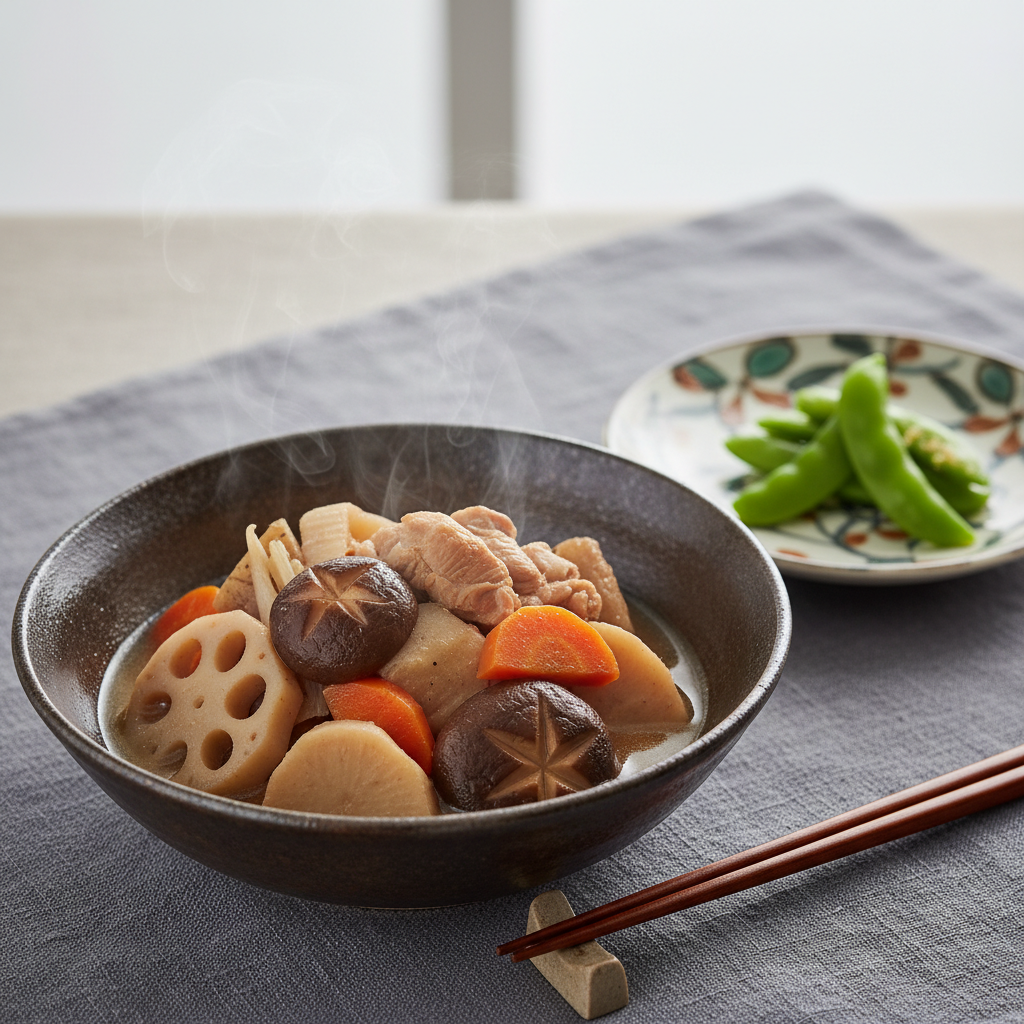
Gamenī (Chikuzen-ni) is a dish of chicken and root vegetables braised in a sweet and savory sauce, eaten at New Year’s and celebrations. Like kashiwameshi, it is one of Fukuoka Prefecture’s representative local dishes.
Chicken sashimi is fresh raw chicken served as sashimi, a food culture unique to Fukuoka and the Kyushu region.
The existence of these chicken dishes demonstrates the richness of Fukuoka’s chicken culture. Kashiwameshi can be said to be the most familiar and commonly eaten of these dishes.
Development of the Poultry Industry
The development of chicken dishes in Fukuoka is rooted in the development of the poultry industry. Fukuoka Prefecture benefits from a warm climate and abundant natural environment, making it ideal for chicken farming.
Today, brand chickens such as “Hakata Jidori” are also produced, providing high-quality chicken meat within the prefecture. Using locally produced fresh chicken allows for even more delicious kashiwameshi.
Conservation and Transmission Efforts
Transmission in the Home
Kashiwameshi has been primarily passed down as a home-cooked dish from mother to daughter and grandmother to grandchild. Each household has its own recipe, treasured as “our family taste.”
Many Fukuoka natives fondly recall the kashiwameshi they ate at home as children and later learn to make it themselves as adults. This intergenerational transmission supports the culture of kashiwameshi.
Commercialization and Modern Efforts
Transmission as a station lunch box: Station lunch box vendors including Totetsuken continue to sell traditional kashiwameshi, keeping it widely recognized. Totetsuken’s kashiwameshi, with its history of over 100 years, is popular with tourists as a product symbolizing Fukuoka’s food culture.
Retort and frozen foods: Recently, kashiwameshi has also become available as retort pouches and frozen foods. This allows people to enjoy authentic kashiwameshi without the hassle of cooking, making it accessible to today’s busy people.
Ingredient set sales: “Kashiwameshi no moto” (kashiwameshi base) sets containing chicken, vegetables, and seasonings are sold, allowing households to easily make authentic kashiwameshi at home.
Use at Regional Events
In various regions of Fukuoka Prefecture, kashiwameshi is served at food events and festivals. It plays an important role as an opportunity to introduce the region’s food culture.
At tourism events and specialty product exhibitions, kashiwameshi is introduced as a representative local dish of Fukuoka Prefecture, bringing its appeal to people outside the prefecture.
Communication via SNS and Media
In recent years, kashiwameshi recipes and photos are increasingly shared through SNS. Numerous posts using hashtags such as “#kashiwameshi” and “#Fukuoka gourmet” can be found on Instagram and Twitter, with younger generations recognizing it as a local dish.
Additionally, many cooking sites and recipe video sites introduce how to make kashiwameshi, making it easy for people outside Fukuoka Prefecture to prepare it at home.
Efforts in Educational Settings
Kashiwameshi as a local dish is sometimes taken up in school education. Actual cooking in home economics classes and learning about regional food culture in social studies or integrated learning time help children understand and take pride in their region’s food culture.
Nutritionists and food education specialists also use kashiwameshi, which has good nutritional balance and utilizes local ingredients, as educational material for food education.
Nutritional Value and Health Benefits of Kashiwameshi
Well-Balanced Nutrition
Kashiwameshi is a one-dish meal that includes staple foods (rice), main dish (chicken), and side dishes (vegetables) in good balance. Because a single bowl provides balanced nutrition, it is an excellent option for quick meals.
Protein: High-quality protein is obtained from chicken. Protein is an essential nutrient for building muscle, organs, and skin.
Dietary fiber: Vegetables like burdock and carrot provide dietary fiber that helps maintain a healthy gut environment.
Vitamins and minerals: Vitamins and minerals are obtained from vegetables. Particularly noteworthy are the β-carotene in carrots and polyphenols in burdock, both beneficial health compounds.
Healthy Cooking Methods
Kashiwameshi uses relatively little oil and relies mainly on simmering and cooking, making it a relatively healthy dish. Using chicken breast instead of chicken thigh further reduces calories.
It is also possible to create a healthier version of kashiwameshi by increasing the amount of vegetables or adding more mushrooms, thus increasing dietary fiber and vitamins.
Places to Enjoy Kashiwameshi
As a Home-Cooked Dish
Most commonly, kashiwameshi is made in homes. Throughout Fukuoka Prefecture, kashiwameshi is made regularly in many households, with each family having its own distinctive taste.
Restaurants
Numerous restaurants throughout Fukuoka Prefecture serve kashiwameshi. Noodle shops, soba restaurants, and set meal restaurants frequently offer kashiwameshi as a single dish or as part of a set menu.
Particularly around Kitakyushu, there are restaurants specializing in kashiwameshi or where it is a house specialty.
Station Lunch Boxes
Kashiwameshi can be purchased as a station lunch box at stations such as Orito and Hakata. Totetsuken’s “kashiwameshi” is particularly famous and loved by railway enthusiasts and tourists alike.
The traditional style in a wooden chip container offers a nostalgic atmosphere.
Product Exhibitions and Events
At Kyushu product exhibitions and Fukuoka Prefecture product exhibitions held throughout the country, kashiwameshi and related products are sometimes sold. People living outside Fukuoka Prefecture can also experience kashiwameshi through these opportunities.
Conclusion
Kashiwameshi, as a representative local dish of Fukuoka Prefecture, has a long history and rich food culture. Beginning with the Kyushu region’s unique terminology of calling chicken “kashiwa,” the flavors passed down through families have become part of the region’s identity.
While an everyday home-cooked dish, kashiwameshi is also eaten on special occasions and is nationally known as a station lunch box, exemplifying the diversity and richness of Fukuoka’s food culture.
Maintaining traditional methods while also embracing modern variations and commercialization, kashiwameshi continues to be accepted by newer generations and will undoubtedly remain a beloved local dish of Fukuoka Prefecture. Kashiwameshi enjoyed at home, as a station lunch box, and in restaurants—this local flavor can be experienced in many forms.
When visiting Fukuoka Prefecture, be sure to taste the authentic kashiwameshi. Trying to make it at home using the recipes provided will deepen your understanding and enjoyment of Fukuoka’s food culture.