Complete Guide to Imotaki | History, How to Make, and How to Enjoy Ehime Prefecture’s Traditional Local Cuisine
What is Imotaki?
“Imotaki” is a local dish representative of Ehime Prefecture and is cherished as an autumn tradition. It is characterized by cooking ingredients centered on taro in the outdoors and enjoying a banquet-style gathering around the pot while viewing the moon with a large group of people.
Taro has long been used in celebratory dishes as an auspicious food symbolizing prosperity of descendants, due to its characteristic of increasing from parent taro to child taro to grandchild taro. “Imotaki,” with this auspicious taro as the star ingredient, has developed not merely as a hot pot dish but as an important cultural event connecting regional communities.
It is practiced in approximately a dozen or more locations throughout Ehime Prefecture, particularly centered in the Nanyo region, and banquets are held on autumn riverbanks while gazing at the harvest moon. The sight of people gathering on riverbanks attracted by cool breezes and gathering around pots to converse has become a landscape symbolizing autumn for Ehime residents.
History and Origins of Imotaki
A Tradition Continuing from the Edo Period
The origin of imotaki is said to be Ōzu City in Ehime Prefecture, with its history tracing back to the Edo period. This local dish, which boasts a history of approximately 300 years, is said to have begun with a “seclusion” event called “okagomi,” a friendly gathering held during the feudal period.
During the feudal period, there was a custom where local people gathered at shrines and temples and spent the night in “okagomi.” During these occasions, a culture developed of cooking food outdoors using ingredients brought by participants and sharing and eating them together. Particularly during the autumn harvest season, freshly harvested taro was served in dishes created to celebrate the good harvest and express gratitude.
Relationship with Ukai Cormorant Fishing in Ōzu City
In Ōzu City, cormorant fishing on the Hijikawa River is popular, and imotaki has developed historically intertwined with viewing this cormorant fishing. Tourists and local residents who came to watch cormorant fishing gathered on the riverbanks, and the sight of people enjoying cormorant fishing while gathering around imotaki became established as an autumn tradition of Ōzu.
With the advent of the Showa period, it began to receive attention as a tourism business and developed into an important event contributing to regional revitalization. Presently, imotaki gatherings are held not only in Ōzu City but also in various regions of Ehime Prefecture, including Matsuyama City, Iyo City, and Tōon City.
Major Tradition Areas and Regional Characteristics
Nanyo Region (Ōzu City Area)
In the Nanyo region centered on Ōzu City, said to be the birthplace, a taro variety called “summer taro” is characteristically used. The summer taro of the Ōzu area is a soft variety that resists falling apart when cooked and is considered ideal for imotaki.
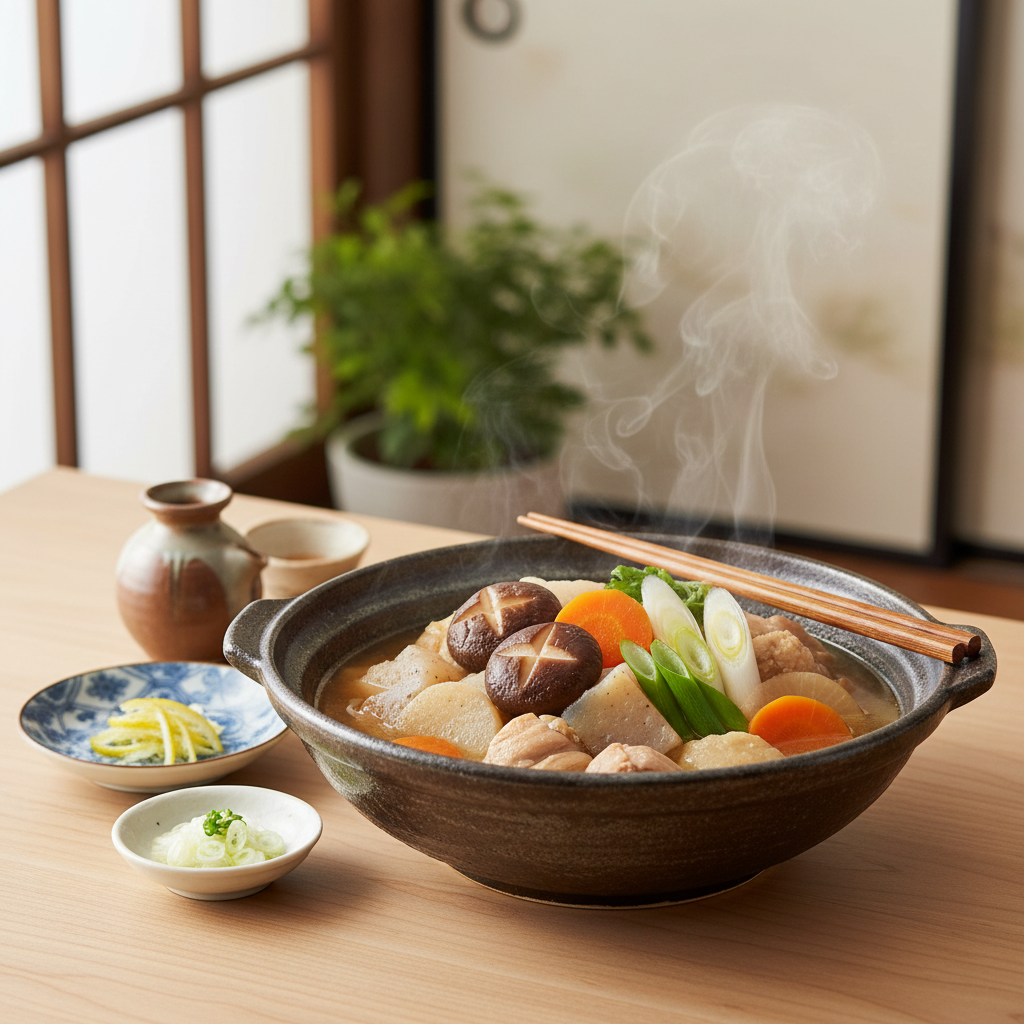
Imotaki in the Nanyo region primarily features a soy-based chicken bone broth flavor, with ingredients including chicken, fried tofu, konjac, and shiitake mushrooms. It is characterized by a savory-sweet seasoning with rich broth, offering a profound flavor despite its simplicity.
Chūyo Region (Matsuyama City Area)
In the Chūyo region centered on Matsuyama City, while based on the Nanyo region style, unique arrangements are made by individual households and regions. A wide variety of ingredients is evident, with many households adding seasonal vegetables and local foods.
In Matsuyama City, imotaki gatherings are actively held not only on riverbanks but also in parks and facilities, functioning as venues for regional community exchange in urban areas.
Tōyo Region
In the Tōyo region, imotaki is also practiced as an autumn event, though some areas show uniqueness in ingredients and seasoning. In areas near the sea, arrangements adding seafood are also seen, reflecting the region’s food culture.
Main Ingredients Used in Imotaki
Essential Ingredients
Taro (Summer Taro)
The star ingredient of imotaki. In the Ōzu region, a variety called “summer taro” is preferred. Due to its characteristic of increasing from parent taro to child taro to grandchild taro, it is regarded as a symbol of prosperity of descendants. Using bite-sized pieces makes them easy to eat and allows the seasoning to penetrate more readily.
Chicken
An important ingredient as a source of umami. Thigh meat is often used, cut into bite-sized pieces. The broth released from chicken enhances the overall flavor of imotaki.
Fried Tofu
Used after removing excess oil. It absorbs broth and offers a juicy texture. It is added either cut into strips or in bite-sized pieces.
Konjac
An ingredient providing textural accent. Tearing by hand or using a spoon to create bite-sized pieces allows the seasoning to penetrate more easily.
Other Ingredients
Shiitake Mushrooms
An important ingredient adding umami. Fresh shiitake mushrooms are often used, with the stem end removed and sliced thinly.
Burdock Root
An ingredient adding aroma and texture. It is typically used after being thinly shaved.
Carrot
An ingredient adding color and sweetness. Used either thinly sliced or cut into strips.
Green Onion
Often added last as seasoning, enhancing the aroma.
Seasonings and Broth
The basic preparation uses chicken bone broth as a base, seasoned with soy sauce, mirin, sake, and sugar. Depending on the region or household, kombu or bonito broth may be added. The characteristic sweet and salty seasoning pairs well with taro.
How to Make Imotaki (Basic Recipe)
Ingredients (Serves 4)
- Taro: 600g
- Chicken thigh meat: 300g
- Fried tofu: 2 pieces
- Konjac: 1 piece
- Shiitake mushrooms: 4 pieces
- Burdock root: 1/2
- Carrot: 1/2
- Green onion: as needed
- Water: 1000ml
- Chicken bone broth stock: 2 tablespoons
- Soy sauce: 4 tablespoons
- Mirin: 3 tablespoons
- Sake: 2 tablespoons
- Sugar: 1 tablespoon
Preparation
- Taro preparation: Peel the taro and cut into bite-sized pieces. If the sliminess bothers you, rub with salt and rinse in water.
- Chicken preparation: Remove excess fat from the chicken thigh meat and cut into bite-sized pieces.
- Fried tofu preparation: Pour boiling water over the fried tofu to remove excess oil, then cut into strips.
- Konjac preparation: Tear the konjac by hand or cut into bite-sized pieces with a spoon. Parboil to remove impurities.
- Vegetable preparation: Remove the stem end from shiitake mushrooms and slice thinly; shave the burdock root; cut the carrot into strips; and slice the green onion into small rounds.
Instructions
- Add water and chicken bone broth stock to a pot and bring to a boil. Once boiling, add the chicken and simmer while removing impurities.
- Once the chicken is cooked through, add the taro, konjac, burdock root, and carrot. Simmer over medium heat for about 10 minutes.
- Once the taro becomes tender, add the shiitake mushrooms and fried tofu. Simmer for another 5 minutes or so.
- Add soy sauce, mirin, sake, and sugar to adjust the flavor. Continue simmering for about 10 minutes until the flavors are well combined.
- Garnish with green onion and serve. Each person takes a portion to eat.
Time-Saving Cooking with a Pressure Cooker
Using a pressure cooker significantly reduces cooking time. Add the prepared ingredients and seasonings to the pressure cooker and cook under pressure for 10 minutes. Once the pressure is released and the lid opened, check and adjust the flavor as needed.
Occasions and Seasons for Consumption
Imotaki as an Autumn Event
Imotaki is primarily held from September through November during the autumn season. Particularly around the autumn moon festival (15th day of the eighth lunar month), imotaki gatherings are held most actively.
The autumn moon festival occurs around a full moon and is particularly bright and worth viewing, making it an ideal time for moon viewing. During this period, it is customary to offer newly harvested taro as an offering to the moon. It carries the meaning of giving thanks for a good harvest and praying for coming fertility.
Role as a Community Event
In modern times, imotaki gatherings are held as important opportunities for deepening community ties, organized by neighborhood associations, schools, workplaces, and others. By gathering on riverbanks or in parks and gathering around the pot together, interaction across generations is created.
Particularly within Ehime Prefecture, “imotaki gatherings” are often incorporated into autumn event calendars, serving as an important cultural event strengthening community bonds.
Enjoyment at Home
Beyond large-scale imotaki gatherings in the outdoors, it is also a dish that can be easily enjoyed at home. On long autumn nights, families gather around the pot and enjoy seasonal flavors as a home-cooked meal.
Methods of Eating and Ways to Enjoy
Outdoor Imotaki Style
Traditional imotaki is held on riverbanks or along rivers. A large pot is prepared and ingredients are cooked on site. Eating outdoors allows one to enjoy autumn’s cool breezes and moonlight while experiencing a special atmosphere.
Participants bring their own plates and take portions of the finished imotaki to eat. The time spent around the pot with a drink in hand, conversing, is one of autumn’s pleasures for Ehime residents.
Modern Ways to Enjoy
In recent years, imotaki gatherings are held not only on riverbanks but also in parks, outdoor spaces at facilities, and even indoors. More restaurants are offering imotaki as autumn limited-time menu items, making it possible to enjoy imotaki more easily.
It has also become popular as an outdoor cooking dish at campsites, with increasing numbers of groups using Dutch ovens or large pots to enjoy full-fledged imotaki in natural settings.
Tips for Eating
The most delicious way to eat imotaki is piping hot and freshly prepared. The taro is cooked soft and crumbles easily with chopsticks. The combination of taro infused with chicken umami and fried tofu that has absorbed the broth is exquisite.
It is also common to make the remaining broth into risotto-style rice or add udon noodles as a finishing touch. Everything can be enjoyed without waste until the very end.
Preservation and Succession Efforts
Regional Preservation Activities
Throughout Ehime Prefecture, efforts are being made to pass on the tradition of imotaki to the next generation. In Ōzu City, tourist associations and regional organizations take the lead in holding large-scale imotaki events annually, drawing many visitors from within and outside the prefecture.
Efforts to incorporate imotaki into school lunches have also been undertaken, creating opportunities for children to experience local cuisine. Imotaki is also served in school lunches in other areas as an Ehime Prefecture local dish, with expanded use in educational settings.
Commercialization and Modern Efforts
Regional food manufacturers and JA groups develop and sell retort and frozen imotaki products that allow easy enjoyment at home. This enables people outside the prefecture and busy modern people to enjoy authentic imotaki flavor.
Agricultural cooperatives such as JA Ehime Taiki engage in sales of imotaki sets using locally produced taro and activities to promote recipes, also contributing to regional agricultural revitalization.
Information Dissemination Using SNS
In recent years, information dissemination using SNS has become active. On Instagram and Twitter, many posts appear with hashtags such as “#imotaki” and “#Ehime gourmet.” Photos of imotaki gatherings under beautiful moonlit skies and homemade imotaki recipes are shared, leading to increased awareness among younger generations.
Ehime Prefecture and municipal official sites and tourism information sites actively disseminate information about imotaki spots and event information. Regional information sites such as “Imanani” run special features on imotaki spots annually, providing information about venues and schedules.
Cooking Classes and Workshops
Cooking classes and workshops teaching how to make imotaki are held at community centers and cooking schools. Local residents serving as successors of local cuisine learn traditional methods and play a role in passing them on to the next generation.
Industry organizations such as the Ehime Prefecture Food and Beverage Business Association are engaged in activities to promote imotaki, holding training sessions and recipe development for restaurants.
Cultural Value of Imotaki
Community Bonds
Imotaki holds cultural value beyond being merely a dish. By gathering around a pot together and sharing the same dish, the community is bonded and ties between people are deepened.
In modern society, imotaki serves the role of maintaining regional connections that tend to diminish. It serves as a precious opportunity for cross-generational interaction, where the elderly and children alike can enjoy together.
Culture of Sensing the Season
Imotaki is also a culture of sensing autumn through all five senses. Cool night breezes, bright moonlight, the flavor of freshly harvested taro, and lively conversation among many people. All these combine to form Ehime’s autumn tradition.
Japan’s traditional values of cherishing seasonal changes and giving thanks for nature’s blessings are condensed in the culture of imotaki.
Value as Food Education
For children, imotaki is an excellent opportunity for food education. By using locally grown ingredients, cooking cooperatively, and eating together, children can learn the importance of food and the region’s food culture.
By experiencing imotaki through school lunches and community events, it is expected to cultivate attachment to and pride in one’s hometown.
Major Imotaki Spots in Ehime Prefecture
Ōzu City
In Ōzu City, the birthplace, large-scale imotaki gatherings are held on the Hijikawa riverbank. Events combining cormorant fishing are also popular, allowing one to fully experience the traditional atmosphere.
Matsuyama City
Imotaki gatherings are held at multiple locations including areas around Dōgo Hot Springs and the Shigenobu River. Despite being an urban area, an environment for enjoying traditional events is well established.
Iyo City, Tōon City, Masaki Town, Tobe Town
In each municipality of the Chūyo region, imotaki gatherings are held in various locations as autumn arrives. Each region has its own characteristics, allowing one to enjoy each region’s unique flavor.
Conclusion
Imotaki is a local dish of which Ehime Prefecture is proud and a traditional culture with a history of over 300 years. While being a simple hot pot dish centered on taro, it plays an important role in connecting regional communities and allowing people to sense the changing of seasons.
The sight of large groups gathering around a pot while gazing at the moon on autumn riverbanks is cherished as a landscape symbolizing Ehime’s autumn by many people even today. While being a dish that can be easily made at home, it also holds value as a special experience to be enjoyed outdoors, and is being preserved in various forms in modern times.
Regional preservation activities, commercialization, and information dissemination via SNS are progressing while protecting traditions, with succession to the next generation advancing steadily. If you have an opportunity to visit Ehime Prefecture, by all means experience autumn imotaki and touch this rich food culture.