Satsuma (Iyo Satsuma) │ A Comprehensive Explanation of the History, Recipe, and Regional Characteristics of Ehime Prefecture’s Representative Local Cuisine
Ehime Prefecture’s local dish “satsuma” is a traditional soup made with fresh white-fish and barley miso. Also known as “Iyo satsuma” or “satsuma soup,” it has been cherished since ancient times, especially in the Nanyo region (Uwajima City, Yawatahama City, etc.). This dish, made by grilling fish, flaking the flesh, mixing it with miso, thinning it with broth, and pouring it over rice, is a symbol of Ehime’s food culture, combining the boldness characteristic of fishing towns with delicate flavors.
This article comprehensively explains Ehime’s local dish “satsuma,” covering its historical background, detailed recipes, regional characteristics, the origin of its name, and modern preservation activities.
What is Satsuma │ A Traditional Fish Dish of Ehime’s Nanyo Region
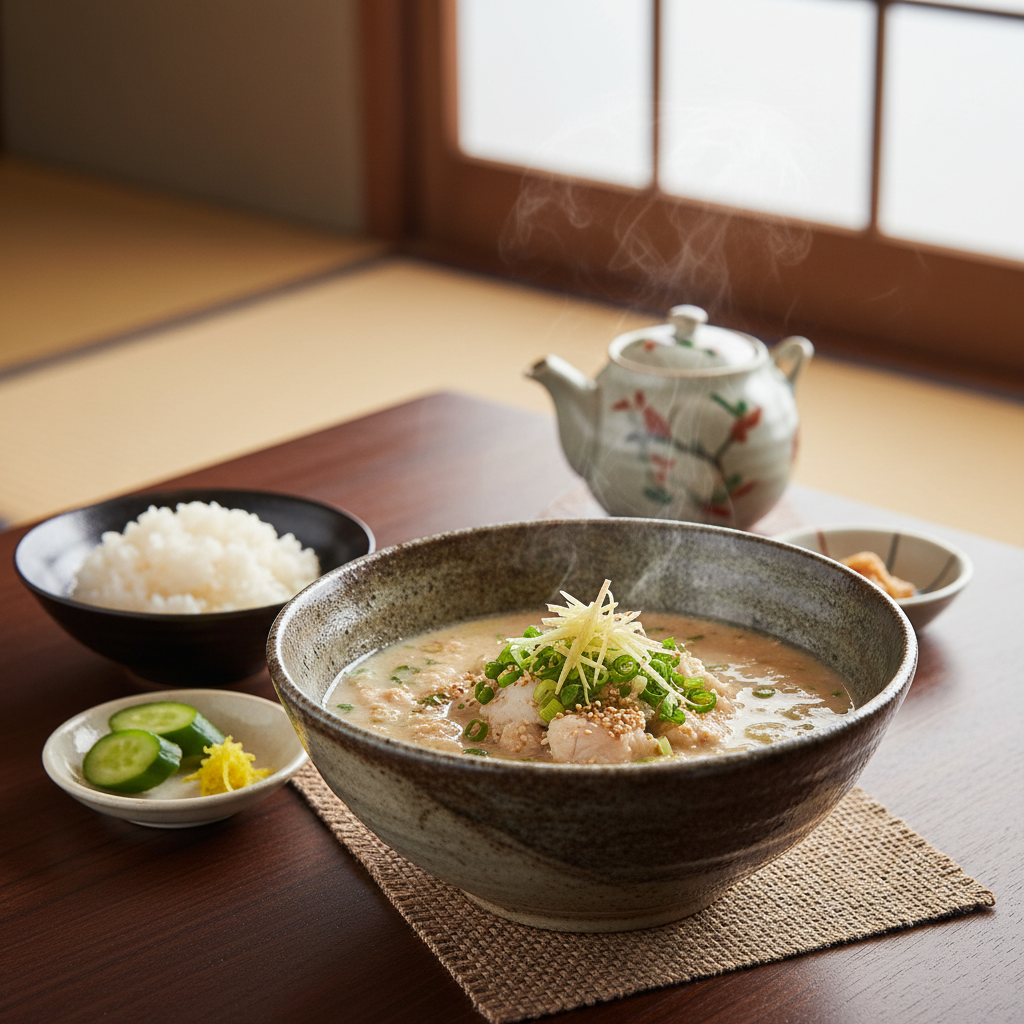
“Satsuma” is a local dish of Ehime Prefecture made by flaking grilled white fish flesh in a mortar, combining it with barley miso, thinning it with broth, and pouring it over hot rice. It has been primarily passed down in the Nanyo region, centered on Uwajima City and Yawatahama City.
Basic Characteristics
- Main ingredients: White fish (sea bream, horse mackerel, sardine, rockfish, etc.), barley miso
- Cooking method: Grill fish and flake it, then combine with miso
- How to eat: Pour over hot rice and eat quickly
- Taste: Characterized by the fragrant aroma of grilled fish combined with the richness of barley miso
This dish utilizes fresh fish unique to Ehime Prefecture, which faces the Seto Inland Sea and the Uwa Sea, and developed as a nutritious meal that fishermen could easily eat aboard ships.
Main Areas of Transmission │ Distribution Throughout Ehime Prefecture
While satsuma has been actively made in the Nanyo region of Ehime Prefecture, it is passed down with distinctive characteristics throughout the prefecture.
Nanyo Region (Uwajima City · Yawatahama City)
This is considered the most traditional heartland of satsuma. In Uwajima City, it became established as a fishing town dish from ancient times, and in Yawatahama City, it is known as an important local dish. In these areas, high-quality fish such as sea bream and horse mackerel are often used, with cooking methods that emphasize the flavor of barley miso.
Chūyo and Tōyo Regions
In the Chūyo region such as Matsuyama City and the Tōyo region, satsuma is recognized as a local dish, but there are regional differences in the types of fish used and miso proportions. In inland areas, variations using river fish can be seen.
Food Culture Across Prefectural Borders
Interestingly, a similar dish called “Sanuki satsuma” exists in the western part of Kagawa Prefecture, which borders Ehime. This demonstrates a shared food culture as part of the Seto Inland Sea fishing culture sphere.
History, Origin, and Related Events │ The Origin of the Name Satsuma and Its Transmission
There are multiple theories about the origin of the name satsuma, which is deeply connected to Ehime’s history.
Various Theories About the Name’s Origin
Connection to the Satsuma Domain
One of the most plausible theories is the historical connection to the Satsuma Domain of Kagawa Prefecture. The Uwajima Domain had relations with the Shimazu family of the Satsuma Domain during the Edo period, and one theory suggests the name came from a cooking method of cutting fish into a cross shape, inspired by the Shimazu family’s crest, the “cross pattern.”
The “Sazuma” Theory
Another theory holds that the dish was devised by fishermen’s wives (sa-zuma) to quickly prepare meals for their husbands, which was called “sazuma-jiru” (fisherman’s wife soup), later transforming into “satsuma.”
The Sweet Potato Theory
Some theories suggest it was named because sweet potatoes (satsuma-imo) were used as ingredients in certain regions, but this theory is questioned since sweet potatoes are not used in mainstream recipes today.
Deep Connection with Fishing Culture
Satsuma developed as a dish fishermen could quickly prepare while aboard ships. In an environment where fresh fish was readily available, combining it with preservable miso created an ideal meal that was nutritious, quickly cooked, and practical.
After returning from fishing, consuming hot rice with satsuma allowed weary fishermen to quickly replenish their energy.
Main Ingredients Used │ Fish and Seasonings in Satsuma
What determines satsuma’s flavor is fresh fish and high-quality barley miso. The appeal of this local dish also lies in the fact that the ingredients used vary by region and season.
Types of White Fish
Sea Bream (Tai)
The most premium and traditional ingredient. True sea bream caught in the Uwa Sea has firm flesh and sweetness, making it ideal for satsuma. It is often used when treating guests or for special occasions.
Horse Mackerel (Aji)
Easily obtainable in daily life, its oily, umami-rich flavor goes well with satsuma. It is one of the most popular fish in the Nanyo region.
Sardine (Iwashi)
Common and highly nutritious, it was valued as everyday food for fishermen. The distinctive flavor of blue fish pairs well with barley miso.
Rockfish (Hogo)
Locally called “hogo,” rockfish has a refined white flesh suitable for satsuma. In some regions, it is treated as a premium fish.
Other Fish
Depending on the season and catch, various fish such as mackerel, flying fish, and pike conger are used. In some regions, river fish are also used.
Barley Miso
Barley miso is traditionally used in the Nanyo region of Ehime Prefecture. Compared to rice miso, barley miso has stronger sweetness and a mellow flavor. This barley miso’s richness harmonizes with the fragrant aroma of grilled fish, creating satsuma’s unique taste.
Other Ingredients
- Garnishes: Green onion, ginger, shiso leaves, etc.
- Broth: Broth made from dried sardines or kelp
- Rice: Hot white rice is the standard
Ingredients (Serves 4) │ Recipe for Authentic Satsuma
Here is a traditional satsuma recipe that can be made at home.
Ingredients
- White fish (sea bream, horse mackerel, sardine, etc.): 2 fish (approximately 400g)
- Barley miso: 4-5 tablespoons
- Broth: 600-800ml
- White sesame seeds: 2 tablespoons
- Ginger (grated): 1 piece worth
- Green onion (thinly sliced): as needed
- Shiso leaf (julienned): as needed
- Freshly cooked rice: for 4 people
- Salt: a small amount
Preparation
- Remove the fish’s internal organs and lightly salt for about 10 minutes
- Prepare the broth (make from dried sardines or kelp)
- Prepare the garnishes
Instructions │ Traditional Cooking Steps
Step 1: Grill the Fish
- Thoroughly pat the fish dry
- Grill in a fish grill or over charcoal until the skin is nicely browned
- Browning enhances the fragrance
- Cook thoroughly inside (approximately 10-15 minutes)
Step 2: Flake the Fish Flesh
- Let the grilled fish cool slightly
- Carefully remove skin and bones
- Flake the flesh finely
- Carefully check to ensure no small bones remain
Step 3: Combine in a Mortar
- Place the flaked fish flesh in a mortar
- Add white sesame seeds and grind together
- Add barley miso and continue grinding
- Continue grinding until the fish and miso are completely combined and form a smooth paste
- Add grated ginger and mix
Step 4: Thin with Broth
- Gradually add warm broth to the ground fish-miso
- Mix well with a wooden spatula while thinning
- Adjust the broth to reach your preferred consistency
- Taste and adjust seasoning with miso or salt if needed
Step 5: Finishing and Plating
- Transfer the satsuma soup to a pot and warm gently (do not boil)
- Place hot rice in a bowl
- Pour satsuma soup generously over the rice
- Scatter green onion and shiso leaves
- Add additional ginger or shichimi togarashi pepper if desired
Cooking Tips
- Fish doneness: Browning well enhances the fragrance
- Grinding: Taking time to grind carefully creates a smooth texture
- Broth temperature: Ideally warm rather than hot, so as not to lose the fish’s fragrance
- Consistency adjustment: The traditional consistency is light enough to quickly scoop and eat
Occasions and Seasons for Eating │ When Satsuma is Consumed
While satsuma was originally eaten year-round as everyday food for fishermen, it is nowadays eaten more at specific occasions and seasons.
Everyday Meals
Traditionally, fishermen returning from fishing would eat satsuma daily aboard ship or at home. Its quick preparation and high nutritional value made it ideal for busy fishermen’s meals.
Summer Dish
Satsuma is particularly favored during summer. Its smooth texture that can be quickly scooped and the fragrant aroma of grilled fish stimulate appetite and make it easy to eat during hot seasons. The abundance of fresh fish available during the busy summer fishing season is another reason.
Festivals and Special Events
Satsuma is sometimes served at community festivals and special events. When entertaining guests, satsuma made with premium sea bream may be prepared.
Modern Food Culture
Today, the opportunity to make it at home has decreased, but it is served year-round at local restaurants and inns, becoming a popular menu item for tourists visiting Ehime Prefecture.
How to Eat │ How to Enjoy Satsuma and Its Variations
Basic Way of Eating
The most traditional way to eat satsuma is to pour it generously over hot rice and quickly scoop it up with chopsticks or a spoon. This style reflects the fishing culture where there was a need to eat meals quickly.
Garnish Variations
- Green onion: A standard garnish adding a fresh flavor
- Ginger: Removes fishy odors and has warming effects
- Shiso leaf: Aromatic with a refreshing taste
- Japanese ginger: Popular as a summer garnish
- Shichimi togarashi: Spicy accent
Modern Arrangements
Cold Broth Style
In summer, some people use cold broth and prepare it cold soup style. Floating ice and pouring over cold rice makes it easy to eat on hot days.
Tea Soup Style
Pouring green tea or dashi tea over it and enjoying it like tea soup is another method. The light texture makes it easy to eat when appetite is low.
As a Rice Bowl
Adding more ingredients and serving it like a seafood rice bowl is also popular. Vegetables such as cucumber and tomato can be added.
Regional Differences │ Variations of Satsuma in Ehime Prefecture
Even within Ehime Prefecture, the way satsuma is made and eaten varies by region.
Uwajima Region
Premium satsuma made with sea bream is traditionally made in Uwajima. The flavor of barley miso is emphasized, with generous amounts of sesame. The broth consistency is relatively thick, designed to coat the rice well.
Yawatahama Region
This region often uses fish such as horse mackerel and sardine that are commonly caught. It is characterized by a casual, approachable flavor, with a tendency to use abundant garnishes.
Around Uchiko Town
In inland areas, satsuma made with river fish is also prepared. Arranged versions incorporating local vegetables can also be seen.
Matsuyama Region
In Matsuyama, the prefectural capital, local restaurants serve refined satsuma for tourists. It is often served as a beautifully plated dish with careful presentation.
Preservation and Inheritance Efforts │ Modern Transmission Activities of Satsuma
While time-consuming satsuma has decreased in home cooking, various preservation and transmission activities are being conducted as an important food culture of Ehime Prefecture.
Provision at Local Restaurants
Local restaurants in Uwajima City and Yawatahama City continue to serve satsuma while maintaining traditional methods. These establishments play an important role in inheriting regional food culture.
School Lunch Initiatives
Some schools in Ehime Prefecture provide satsuma in school lunches as part of local food education, or teach the cooking method through cooking practice. This is a valuable opportunity to pass local food culture to children.
Cooking Classes and Workshops
Satsuma cooking classes are sometimes held at community centers and tourist facilities. Local elderly people serve as instructors, passing traditional cooking methods to the next generation.
Commercialization Efforts
Satsuma has been commercialized as retort-processed and frozen foods, allowing households to easily enjoy authentic flavors at home. It is also popular as a souvenir.
Information Sharing via SNS
Ehime Prefecture’s tourism associations and local restaurants promote satsuma’s appeal through SNS. Sharing photos and videos of the cooking method is helping to interest younger generations.
Ministry of Agriculture, Forestry and Fisheries “Our Local Cuisine” Project
Satsuma is registered in the database operated by the Ministry of Agriculture, Forestry and Fisheries’ “Our Local Cuisine” project, promoting Ehime’s food culture nationally.
Differences from Sanuki Satsuma │ Comparison with Kagawa Prefecture
While Ehime’s “Iyo satsuma” and Kagawa’s “Sanuki satsuma” share common roots in the Seto Inland Sea fishing culture sphere, they have each developed uniquely.
Similarities
- White fish and miso-based soup
- Style of pouring over rice
- Origin as fisherman’s cuisine
Differences
Type of Miso Used
While iyo satsuma primarily uses barley miso, sanuki satsuma often uses white miso or mixed miso.
Fish Types
While iyo satsuma primarily features sea bream and horse mackerel, sanuki satsuma tends to use black sea bream (chinu).
Details of Cooking Method
Iyo satsuma involves thorough grinding in a mortar, while in some areas sanuki satsuma is flaked coarsely.
Nutritional Value and Health Effects of Satsuma
Satsuma is a nutritious local dish with excellent nutritional balance.
Main Nutrients
High-Quality Protein
White fish contains abundant high-quality, easily digestible protein that is useful for muscle and tissue formation.
DHA and EPA
Especially when using blue fish such as horse mackerel or sardine, you can obtain DHA and EPA beneficial for brain health maintenance.
Vitamins and Minerals
Fish contains B vitamins, vitamin D, calcium, phosphorus, and other nutrients.
Effects of Fermented Food
Miso is a fermented food that may help regulate intestinal environment. It also provides isoflavones from soybeans.
Health Benefits
- Low calorie, high protein
- Easy to digest and gentle on the stomach
- Good nutritional balance
- Fatigue recovery effects
Famous Restaurants and Tourism Information Where You Can Enjoy Satsuma
This section introduces representative places to enjoy satsuma when visiting Ehime Prefecture.
Uwajima City
Multiple local restaurants in Uwajima City serve traditional satsuma. You can enjoy local flavors combined with sightseeing at Uwajima Castle.
Yawatahama City
In the fishing port town of Yawatahama, you can taste satsuma made with fresh fish. Some eateries near fish markets serve exceptional satsuma made with fish caught that morning.
Matsuyama City
Local restaurants in Matsuyama, the prefectural capital, serve refined satsuma for tourists. It is recommended to visit while sightseeing at Dogo Hot Spring.
Roadside Stations and Product Halls
Retort satsuma and related products can be purchased at roadside stations and product halls throughout Ehime Prefecture. You can also bring them home as souvenirs.
Summary │ Satsuma: A Flavor Nurtured by Ehime’s Sea and History
Ehime Prefecture’s local dish “satsuma” is a traditional cuisine born from the fusion of the rich fishing resources of the Seto Inland Sea and Uwa Sea with the region’s history and culture. While employing a simple cooking method of carefully grinding grilled white fish with barley miso, thinning it with broth, and pouring it over rice, it is characterized by a deep flavor in which the umami of the fish harmonizes with the richness of miso.
Developed as everyday food for fishermen, satsuma is a practical dish that is nutritious and quickly prepared, while possessing the depth to become a dish for entertaining guests when using premium fish. While the opportunity to make it at home has decreased in modern times, its transmission to the next generation is being pursued through provision at local restaurants, school education, and commercialization.
When visiting Ehime Prefecture, be sure to taste satsuma at its source and experience the region’s food culture and history. Also, as it is a recipe you can try at home, recreating Ehime’s traditional flavor using fresh fish and barley miso is recommended. Satsuma is truly a local flavor packed with the wisdom and affection of Ehime residents, utilizing local ingredients and passed down across generations.