
Tororo Soup: Shizuoka Prefecture’s Local Cuisine | Complete Guide to History, Preparation, and Renowned Restaurants
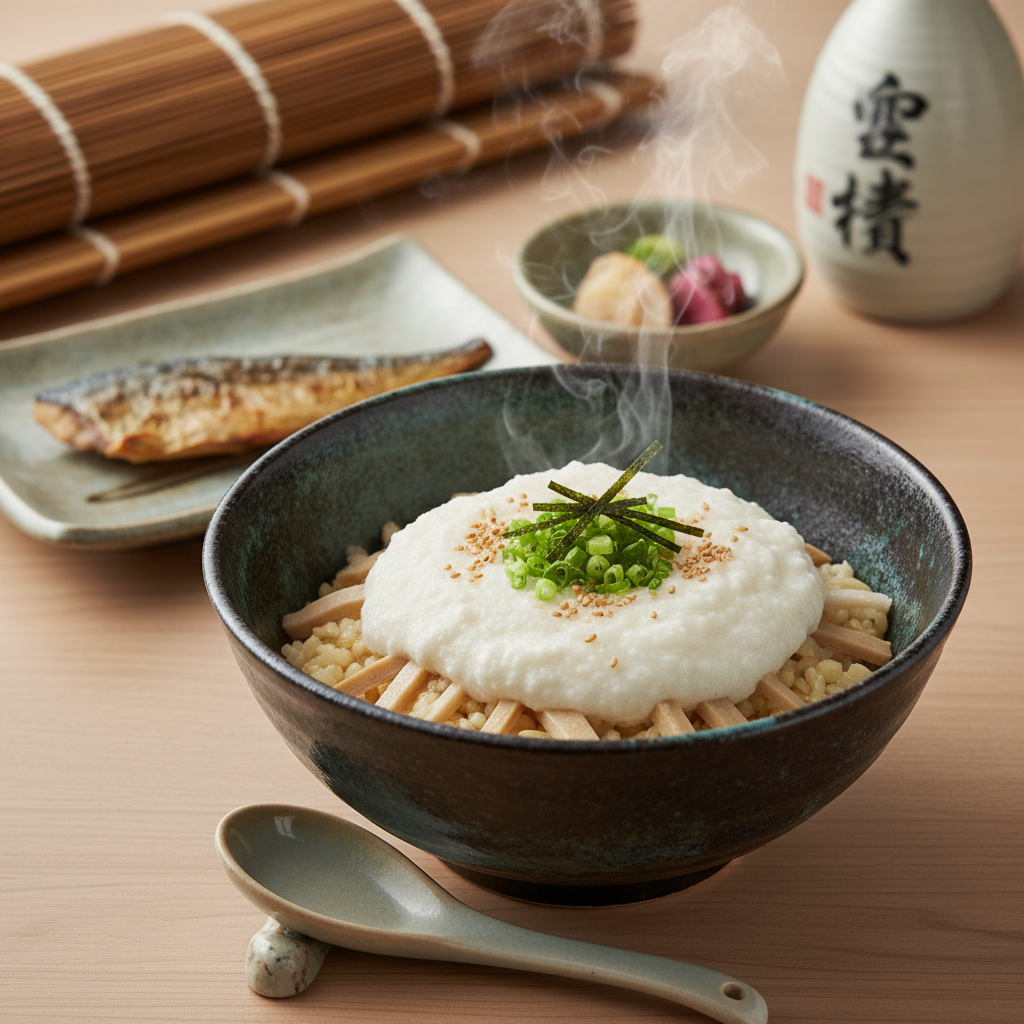
Tororo soup, a representative local dish of Shizuoka Prefecture, is a traditional cuisine made by grating Japanese yam and mixing it with dashi broth and miso, then serving it over barley rice. Since the Edo period, it has been beloved by travelers at the Mariko post station along the Tokaido Road, and it appears in Utagawa Hiroshige’s ukiyo-e prints and Jippensha Ikku’s “Tokaido Hizakurige,” making it a dish rich in history and culture. This article provides a comprehensive explanation of Shizuoka Prefecture’s tororo soup culture, covering its history, preparation methods, ingredients, and information about renowned restaurants.
What is Tororo Soup (Tororojiru)?
Tororo soup is a representative local dish of Shizuoka Prefecture, made by grating Japanese yam (jinenjo) and mixing it with dashi broth and miso, then serving it over barley rice. Japanese yam, also called “yamanoimo,” is a type of wild yam that grows naturally in the mountains and fields of Honshu, Shikoku, and Kyushu, measuring approximately 1.5 meters in length and 3 centimeters in diameter.
Within Shizuoka Prefecture, the central region is primarily known as a Japanese yam production area, though harvesting also occurs in the western and eastern regions. Currently, not only wild Japanese yams but also cultivated ones are used, and high-quality Japanese yams are supplied stably through partnerships with local farmers.
Main Ingredients Used
The main ingredients used in tororo soup are as follows:
- Japanese yam (mountain yam): Indigenous varieties from Shizuoka Prefecture are considered the highest grade
- Dashi broth: Japanese dashi made with bonito flakes is the standard
- Miso: Miso-based preparation is characteristic of Shizuoka Prefecture
- Barley rice: Barley rice made by mixing white rice with barley is traditional
Japanese yam has been called “mountain medicinal herb” since ancient times and was treasured as a food for stamina and vitality. Due to its strong viscosity and high nutritional value, it became indispensable as a source of energy for travelers.
History, Origins, and Related Events
As a Specialty of Mariko Post Station on the Tokaido
Tororo soup has a very ancient history and is known as a specialty of Mariko (currently the Mariko district of Suruga Ward, Shizuoka City), the 20th post station of the Tokaido Road’s fifty-three stations. During the Edo period, high-quality Japanese yam was harvested around Mariko, and it developed into a famous dish of the post station.
Travelers preparing to cross mountain passes were said to eat tororo soup for its stamina-boosting effects to build strength and continue their journeys. At that time, travel was primarily on foot, and nutritious meals were essential for travelers.
Appearances in Literary and Artistic Works
Tororo soup appears in numerous literary and artistic works:
Jippensha Ikku’s “Tokaido Hizakurige”
This work depicts an episode where Yaji and Kita attempt to eat tororo soup. According to the story, they were unable to actually eat it, which shows how famous this specialty was.
Utagawa Hiroshige’s “Fifty-Three Stations of the Tokaido”
Hiroshige’s ukiyo-e print “Mariko Station” depicts the appearance of a tea house serving tororo soup. According to one account, Hiroshige depicted Yaji and Kita in his own ukiyo-e print and had them eat tororo soup.
Matsuo Basho’s Haiku
Basho also left haiku with tororo soup as the subject, showing that the dish was familiar to Edo period intellectuals.
The Historic Restaurant Founded in Keichō 1 (1596)
The “Tejiya,” known as Shizuoka’s oldest tororo soup restaurant, was founded in Keichō 1 (1596) and boasts a history of over 400 years since the early Edo period. It continues to preserve tradition and maintains the atmosphere of the old Mariko post town with its appearance modeled on a thatched roof structure.
This historic establishment has become synonymous with Shizuoka’s “tororo,” using carefully cultivated Japanese yams from local partner farms and continuing to provide its famous tororo soup made with carefully selected ingredients.
Main Transmission Areas
Tororo soup is enjoyed throughout Shizuoka Prefecture, but is particularly transmitted in the following areas:
Mariko District, Suruga Ward, Shizuoka City
The center of Tokaido’s Mariko post station, known as the birthplace of tororo soup. Many specialized tororo soup restaurants currently operate here and it is popular with tourists. In the Mariko district, various versions of tororo soup are served, preserving traditional methods while also incorporating contemporary arrangements.
Central Region of Shizuoka Prefecture
In the central region, a major production area for Japanese yam, authentic tororo soup made with wild Japanese yam can be enjoyed. Japanese yam cultivated by local farmers is also of high quality, and efforts toward local production and consumption are active.
Western and Eastern Regions of Shizuoka Prefecture
While not as prominent as the central region, Japanese yams are also harvested in the western and eastern regions, and distinctive tororo soup cultures reflecting each area have taken root. Each region differs in the types of miso and the methods of making dashi, reflecting local food cultures.
Ingredients (Serves 4)
The basic ingredients for tororo soup are as follows:
Main Ingredients
- Japanese yam (or long yam): 400g
- Barley rice: 4 servings (3 cups white rice, 1 cup barley)
For Tororo Soup
- Dashi broth: 200ml (made with bonito flakes)
- Miso: 2-3 tablespoons (adjust to taste)
- Soy sauce: 1 teaspoon (optional)
Toppings (Optional)
- Shredded nori seaweed
- Wasabi
- Chopped green onion
- Egg yolk
Japanese yam has extremely strong viscosity and rich flavor, but long yam can be used as a substitute if Japanese yam is difficult to obtain. However, to recreate the authentic taste of Shizuoka’s tororo soup, using Japanese yam is recommended.
Preparation Method
Preliminary Preparation
- Preparing Barley Rice
- Mix 3 cups white rice and 1 cup barley and cook as usual
- Pre-soaking barley in water results in more delicious cooked rice
- Preparing Dashi Broth
- Bring 400ml of water to a boil in a pot
- Add 15g bonito flakes and simmer over low heat for 3 minutes
- Turn off heat, remove bonito flakes, and use 200ml of the broth
Making Tororo Soup
- Peeling Japanese Yam
- Carefully peel the Japanese yam skin with a peeler
- Using gloves is recommended as hands may become itchy
- Grating
- Grate along the ridges of a mortar in circular motions
- Mix with a wooden pestle to incorporate air
- This step is key to creating viscosity and smoothness
- Seasoning
- Add dashi broth to the grated yam a little at a time while mixing
- Dissolve miso and add soy sauce to taste
- Mix well until a smooth consistency forms
- Finishing
- Place barley rice in a rice bowl and pour tororo soup generously over it
- Top with shredded nori, wasabi, green onion, and egg yolk as desired
Tips for Delicious Preparation
- Use a mortar: The ridges of a mortar finely grate the yam fibers and incorporate air, creating a smooth texture
- Add dashi gradually: Adding all at once makes it watery, so add while observing the consistency
- Dissolve miso first: Dissolving miso in dashi before adding prevents lumps
- Prepare just before eating: Since it discolors over time, cook as close to eating time as possible
Eating Occasions and Seasons
As Everyday Food
Tororo soup is not a special occasion food but a local dish eaten daily. In Shizuoka Prefecture it is frequently made at home, and due to its high nutritional value, it is particularly favored in the following situations:
- Prevention of summer fatigue: As a nutritious food during hot seasons
- Fatigue recovery: For nutritional replenishment after work or exercise
- When lacking appetite: As a healthy food that goes down smoothly
Peak Season for Japanese Yam
The harvest period for Japanese yam is primarily autumn through winter (November to February), which is considered the most delicious time. It has strong viscosity and rich flavor, so this season is recommended for tasting authentic tororo soup.
However, with improved cultivation techniques, high-quality Japanese yams are now available year-round.
How to Eat
Basic Eating Method
The traditional way to eat tororo soup in Shizuoka Prefecture is as follows:
- Pour over barley rice: Generously pour tororo soup over freshly cooked warm barley rice
- Mix and eat: Mix barley rice and tororo soup well together before eating
- Add condiments: Add condiments such as wasabi, shredded nori, and green onion for flavor variation
Modern Arrangements
In addition to traditional methods, the following arrangements are now popular:
- Also delicious with white rice: Those who dislike barley rice can enjoy it with white rice just as well
- With soba or udon: Can be enjoyed as tororo soba or tororo udon
- Donburi style: Combined with tuna or negitoro in a rice bowl
- As a side dish: Served in a small bowl, combined with other dishes
Nutritional Benefits
Japanese yam contains the following nutritional components in abundance:
- Digestive enzymes: Rich in amylase that aids digestion
- Vitamins: B vitamins, vitamin C, and others
- Minerals: Potassium, magnesium, and others
- Dietary fiber: Improves intestinal environment
- Mucin: Viscous component that protects the stomach and intestines
These nutrients helped Edo period travelers recover from fatigue and continue to be popular as a health food today.
Introduction to Famous Restaurants in Shizuoka Prefecture
Ganso Tejiya
Basic Information
- Address: 〒421-0103 10-10 Mariko 7-chome, Suruga Ward, Shizuoka City, Shizuoka Prefecture
- Founded: Keichō 1 (1596)
- Operating Hours:
- Monday to Friday: 11:00-14:00
- Saturday, Sunday, Holidays: 11:00-15:00, 16:30-19:00
- Closed: Every Thursday (Last Wednesday and Thursday of each month closed)
Characteristics
As Shizuoka’s oldest tororo soup restaurant, it boasts a history of over 400 years. With its traditional appearance modeled on a thatched roof structure, it is the famous restaurant depicted in Utagawa Hiroshige’s ukiyo-e. It uses indigenous Japanese yams from Shizuoka Prefecture cultivated with local partner farms and continues to preserve the traditional taste.
Other Famous Restaurants
Centered in the Mariko district, Shizuoka Prefecture has many specialized tororo soup restaurants. Each establishment has its own unique seasoning and methods, allowing you to enjoy subtly different flavors.
When visiting as a tourist, trying multiple restaurants is also recommended. All establishments are particular about the quality of Japanese yam and provide services that both preserve tradition and offer contemporary hospitality.
Preservation and Transmission Efforts
Overview of Transmitters
The tradition of tororo soup is primarily transmitted by the following people:
- Historic restaurants: Historic establishments such as Tejiya continue to preserve traditional methods
- Local farmers: Inherit Japanese yam cultivation techniques and supply high-quality ingredients
- Home dining tables: Made regularly in Shizuoka households and passed down from parent to child
Contemporary Efforts
Promotion of Commercialization
In Shizuoka Prefecture, the following commercialization is being promoted for the dissemination and preservation of tororo soup:
- Retort tororo soup: Products allowing enjoyment of authentic taste easily
- Frozen Japanese yam: Products allowing storage of grated yam in frozen form
- Tororo soup sets: Complete ingredient sets as gifts
- Instant products: Simplified versions prepared by adding hot water
Information Dissemination Using SNS
Shizuoka Prefecture and various establishments disseminate the appeal of tororo soup through SNS:
- Official websites: The Shizuoka Prefecture official “Shizuoka Food Information Center” introduces recipes and history
- Instagram: Visually appeal through beautiful tororo soup photographs
- YouTube: Support home reproduction through instructional videos
- Tourism sites: Actively introduce as “Recommended Shizuoka Tourism Spots”
Educational Activities in Food Culture
- School lunches: Incorporate tororo soup in local school lunches to transmit local cuisine to children
- Cooking classes: Instruct preparation methods at cooking classes held in communities
- Tourism tours: Implementation of food culture tours including tororo soup
- Ministry of Agriculture, Forestry and Fisheries efforts: National dissemination of information through the “Our Local Cuisine” project
Coordination with Regional Revitalization
Tororo soup holds an important position as a tourism resource for Shizuoka Prefecture:
- Tokaido tourism: Featured as a highlight of tourism routes touring the Tokaido Road’s fifty-three stations
- Local production and consumption promotion: Contributes to agricultural promotion through expansion of consumption of locally produced Japanese yams
- Hometown tax donations: Offer tororo soup-related products as return gifts
- Brand development for food: Positioned as part of the “Fuji no Kuni” brand
Q&A for Enjoying Tororo Soup
Q1: What is the difference between Japanese yam and long yam?
A1: Japanese yam is a native Japanese wild species with extremely strong viscosity and rich flavor. Long yam is a cultivated variety with more moisture and weaker viscosity than Japanese yam. Japanese yam is used in authentic Shizuoka tororo soup, but long yam makes delicious tororo soup at home as well.
Q2: How can I prevent my hands from becoming itchy?
A2: The cause is calcium oxalate crystals in Japanese yam and long yam. Using cooking gloves or applying vinegar to hands before cooking prevents this. If your hands become itchy, washing with vinegar or lemon juice alleviates it.
Q3: Does tororo soup keep well?
A3: Grated Japanese yam is prone to discoloration when exposed to air, so eating it fresh is most delicious. For refrigerated storage, place in a sealed container and consume on the same day if possible.
Q4: Is it delicious with white rice instead of barley rice?
A4: Yes, it is quite delicious with white rice. Traditionally barley rice is used, but many people eat it with white rice today. Barley rice is rich in dietary fiber and healthier, but choose based on your preference.
Q5: Can tororo soup be eaten outside Shizuoka Prefecture?
A5: Tororo soup itself is eaten throughout Japan, but Shizuoka Prefecture’s tororo soup is distinctive in its miso-based style served over barley rice. Other regions have variations such as soy sauce-based preparations or served over soba noodles.
Summary
Shizuoka Prefecture’s local dish “tororo soup” is a traditional food representing Japan with a history of over 400 years continuing from Keichō 1 (1596). Loved by travelers as a specialty of the Tokaido’s Mariko post station, it appears in Utagawa Hiroshige’s ukiyo-e and Jippensha Ikku’s “Tokaido Hizakurige,” making it a dish of high cultural value.
Though a simple dish made by grating Japanese yam, mixing it with dashi broth and miso, and serving over barley rice, its flavor is profound and its stamina-boosting effects are high, making it still beloved by many people today. In Shizuoka Prefecture, historic restaurants continue to preserve tradition while contemporary efforts such as commercialization and SNS information dissemination advance transmission to the next generation.
When visiting Shizuoka Prefecture, be sure to taste authentic tororo soup. Additionally, this is a dish that can be relatively easily prepared at home, so why not use the recipe in this article to recreate Shizuoka’s traditional taste?
Preserving regional food culture and transmitting it to future generations is an important cultural activity any one of us can undertake. We hope you experience Shizuoka Prefecture’s rich food culture and history through tororo soup.


