
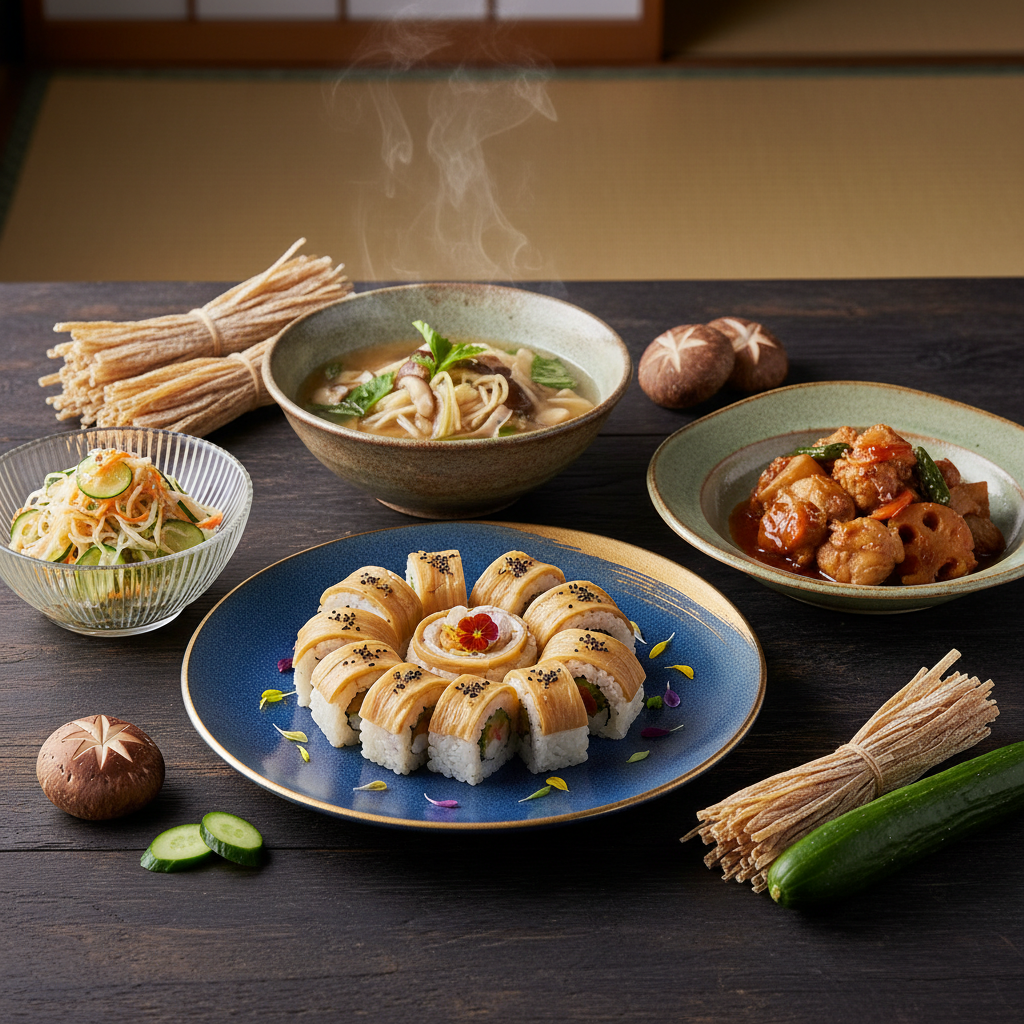
Complete Guide to Kanpyo Cuisine in Tochigi Prefecture: History of Local Dishes and Authentic Recipes You Can Make at Home
Kanpyo is known as a representative specialty product of Tochigi Prefecture. This ingredient, which accounts for approximately 98% of the national production volume, is an indispensable part of Tochigi’s local cuisine. This article introduces the charm of Tochigi’s kanpyo cuisine in its entirety, from traditional local dishes using kanpyo to its history, nutritional value, and authentic recipes that you can easily prepare at home.
Kanpyo: A Traditional Food Ingredient Tochigi Prefecture is Proud Of
Basic Knowledge of Kanpyo
Kanpyo (dried bottle gourd) is a traditional dried food made by peeling the fruit of the bottle gourd (Lagenaria siceraria) into thin, long strips and drying them. The bottle gourd is a plant of the Cucurbitaceae family, and its fruit is also called “fukube.” The flesh of fresh bottle gourd is peeled thinly and lengthily using specialized machinery, and then dried in the sun, creating kanpyo with its unique texture and preservation quality.
Dried kanpyo has a pale yellowish-white color, and when rehydrated with water, it becomes soft and can be used in various dishes. Its unique texture is crunchy yet tender, making it suitable for a wide range of cooking methods including simmered dishes, dressed salads, and sushi rolls.
History of Kanpyo Cultivation in Tochigi Prefecture
The history of kanpyo cultivation in Tochigi Prefecture dates back to the Edo period. In 1712 (Shotoku 2), it is said that Tadahide Torii, the feudal lord of Shimofusa Miki Domain (present-day Miki Town in Tochigi Prefecture), brought bottle gourd seeds from Omi Province (present-day Shiga Prefecture).
The Miki Domain encouraged the cultivation of this new crop and promoted it as a side business for farmers. Because the climate and soil in southern Tochigi Prefecture were suitable for bottle gourd cultivation, and because of good transportation access to Edo, kanpyo production spread rapidly. By the late Edo period, it was already recognized as an important specialty product of Tochigi Prefecture.
Currently, Tochigi Prefecture boasts an overwhelming share of approximately 98% of the nation’s kanpyo production. In particular, the southern areas of the prefecture, including Shimotsuke City, Miki Town, and Oyama City, have become the main production areas, and traditions spanning more than 300 years continue to be passed down today.
Nutritional Value and Health Benefits of Kanpyo
Kanpyo is a food ingredient with surprisingly high nutritional value for its appearance. The noteworthy nutrients are as follows:
Dietary Fiber: Kanpyo contains approximately 30g of dietary fiber per 100g, which is among the highest content among dried foods. It is effective in relieving constipation and improving intestinal environment, and also helps prevent lifestyle-related diseases.
Potassium: It works to expel excess sodium from the body and is effective in preventing high blood pressure and relieving swelling. Kanpyo contains approximately 1,800mg of potassium per 100g.
Calcium: An essential mineral for maintaining bone and tooth health, kanpyo contains approximately 250mg per 100g.
In addition, it contains various nutrients in well-balanced amounts, including iron, magnesium, and B vitamins, making it a nutritious health food that is low in calories yet nutrient-rich.
Representative Kanpyo Local Dishes of Tochigi Prefecture
Kanpyo with Egg Sauce: A Soul Food of Local Residents
Characteristics and History of the Dish
Kanpyo with egg sauce is one of the most beloved kanpyo dishes in Tochigi Prefecture. Originally, kanpyo-producing farmers created this home-cooked dish to avoid wasting irregularly shaped kanpyo or non-standard kanpyo that could not be shipped to market during the manufacturing process.
Though simple, the unique texture of kanpyo matches exquisitely with the mild flavor of eggs, making it a versatile dish that can be enjoyed both as a side dish for rice and as a snack with alcoholic beverages. Today it is provided as a standard menu item in school lunches, and has become a flavor that reminds all Tochigi residents of nostalgic memories.
Ingredients (serves 4)
- Dried kanpyo: 30g
- Eggs: 4
- Dashi broth: 400ml
- Soy sauce: 2 tablespoons
- Mirin: 2 tablespoons
- Sugar: 1 tablespoon
- Sake: 1 tablespoon
- Mitsuba or green onion: as needed
Instructions
- Soak kanpyo in plenty of water for 30 minutes or more to rehydrate. Once softened, rinse gently while changing the water, and cut to an edible length of 3-4cm.
- Pour dashi broth into a pot and heat over medium heat. Once boiling, add the kanpyo.
- After the kanpyo has softened, simmer for about 10 minutes, then add soy sauce, mirin, sugar, and sake to adjust the taste.
- Beat the eggs and pour into the pot. Stir lightly with wooden chopsticks until the mixture reaches a half-cooked state.
- Turn off the heat and cover with a lid to set the eggs with residual heat. Plate and sprinkle with chopped mitsuba or green onion to finish.
Cooking Tips
It is important to thoroughly rehydrate the kanpyo in water. If the soaking time is too short, it becomes hard and the texture is poor. Also, turning off the heat while the eggs are still half-cooked results in a fluffy finish. The intensity of seasoning is adjusted in each household, with some families preferring a sweeter taste with more sugar, while others prefer a crisper flavor with less, creating variations.
Gomoku Rice: A Traditional Dish to Grace Special Occasions
Background of the Dish
Gomoku rice is a traditional local dish of Tochigi Prefecture that has been prepared on special days such as festivals, farmers’ rest days, and New Year’s. Various colorful ingredients including kanpyo, dried shiitake mushrooms, carrots, burdock, snow peas, fried tofu, and egg threads are used, creating a visually gorgeous dish.
The name “gomoku” (five items) derives from the use of five or more ingredients. Each household has its own variations in ingredients and seasoning, and each family’s unique taste is passed down.
Ingredients (serves 6)
- Rice: 3 cups
- Dried kanpyo: 20g
- Dried shiitake mushrooms: 5
- Carrot: 1
- Burdock: 1
- Chicken thigh: 150g
- Fried tofu: 1
- Snow peas: 10
- Eggs: 2 (for egg threads)
- Dashi broth: as needed
- Soy sauce: 3 tablespoons
- Mirin: 3 tablespoons
- Sake: 2 tablespoons
- Sugar: 1 tablespoon
- Salt: a pinch
Instructions
- Rehydrate kanpyo and dried shiitake mushrooms in water, and cut each to an edible size. Reserve the soaking liquid.
- Cut carrots into matchsticks, shred burdock and soak in water. Cut chicken into bite-sized pieces, blanch fried tofu to remove excess oil, and cut into thin strips.
- Heat a small amount of oil in a pot and sauté the chicken. Once the color changes, add carrots, burdock, kanpyo, shiitake mushrooms, and fried tofu, and continue sautéing.
- Combine 200ml of the shiitake soaking liquid with dashi broth, and prepare the seasoning by adding soy sauce, mirin, sake, sugar, and salt.
- Add the seasoning to the sautéed ingredients and cook until the liquid is almost gone.
- Rinse the rice and place in a rice cooker with slightly less than the normal amount of water. Add the cooked ingredients with their liquid, mix lightly, and cook.
- Blanch snow peas and cut diagonally. Prepare egg threads by making a thin omelet.
- Plate the cooked rice and arrange snow peas and egg threads decoratively on top to finish.
Seasoning Tips
The seasoning of gomoku rice varies slightly from household to household. The basic flavor is a soy sauce-based sweet and savory seasoning, but the aroma also changes depending on the type of dashi (kombu dashi, bonito dashi, or small dried fish dashi). Since umami from the ingredients also contributes to the flavor, it is best to start with conservative seasoning and adjust the taste while tasting.
Kanpyo Nori Roll Sushi: A Classic Flavor
Variations of Thin and Thick Rolls
Kanpyo is an indispensable ingredient in nori rolls. In Tochigi Prefecture, thin rolls with sweetly-savory simmered kanpyo and thick rolls with kanpyo, egg omelet, and cucumber rolled together are popular.
Thin rolls allow for a simple enjoyment of the kanpyo flavor and are ideal for bento boxes and entertaining. Thick rolls feature a beautiful array of colorful ingredients in cross-section, creating a visually gorgeous appearance.
How to Make Sweet and Savory Simmered Kanpyo
- Dried kanpyo: 30g
- Dashi broth: 200ml
- Soy sauce: 2 tablespoons
- Sugar: 2 tablespoons
- Mirin: 1 tablespoon
- Rehydrate kanpyo in water and cut to an edible length.
- Place dashi broth and kanpyo in a pot and heat over medium heat until the kanpyo is soft.
- Add soy sauce, sugar, and mirin, and simmer until the liquid is gone.
- Cool before using in sushi rolls.
Tips for Making Sushi Rolls
When making sushi rolls, the balance between the amount of vinegared rice and the ingredients is important. Spread the rice leaving 1cm at the near edge and 2cm at the far edge of the nori, and place the ingredients slightly closer to the near edge of the center. Roll all at once using a bamboo mat and shape before slicing. Wiping the knife with a damp cloth as you cut results in clean slices.
Kanpyo with Sesame Vinegar Dressing: A Light Side Dish
Characteristics of the Dish
Kanpyo with sesame vinegar dressing is a dressed salad that brings out the texture of kanpyo. The fragrant sesame and the refreshing taste of vinegar complement the mild flavor of kanpyo well. It is an ideal side dish for hot summer days and works well as a palate cleanser.
Ingredients (serves 4)
- Dried kanpyo: 20g
- Cucumber: 1
- Carrot: 1/2
- Ground white sesame: 3 tablespoons
- Rice vinegar: 2 tablespoons
- Sugar: 1 tablespoon
- Soy sauce: 1 teaspoon
- Salt: a pinch
Instructions
- Rehydrate kanpyo, cut to an edible length, and boil.
- Slice cucumbers thinly, salt them, and wring out excess moisture. Cut carrots into thin matchsticks and blanch lightly.
- In a bowl, mix ground white sesame, rice vinegar, sugar, and soy sauce to create the dressing.
- Add kanpyo, cucumber, and carrot, and mix well. Chill in the refrigerator for about 30 minutes to allow the flavors to meld.
Applications and Arrangements of Kanpyo Cuisine
Kanpyo Simmered Dishes
Kanpyo also works excellently as an ingredient in simmered dishes. Adding it to sukiyaki-style braised chicken and vegetables, beef and potato stew, or oden provides a unique textural accent. Kanpyo easily absorbs the umami of other ingredients and becomes more delicious the longer it simmers.
Kanpyo Miso Soup
In Tochigi households, it is common to use kanpyo as an ingredient in miso soup. When combined with tofu, wakame seaweed, fried tofu, and other ingredients, it creates a fiber-rich, healthy miso soup. Lightly boiling kanpyo before adding it to miso soup results in an easily edible soft texture.
Kanpyo Salad
As a modern arrangement, kanpyo can also be used in salads. Cool boiled kanpyo and combine with fresh vegetables such as lettuce, tomatoes, and cucumbers, and dress with sesame dressing or Japanese-style dressing for a healthy salad with an enjoyable texture.
Kanpyo Tempura
As a creative variation, kanpyo tempura is also a delicious dish. Lightly season rehydrated kanpyo, coat with tempura batter, and deep fry to create a crispy exterior with a chewy interior. Serve with salt or tempura dipping sauce.
Preparation and Storage Methods for Kanpyo
Proper Rehydration Method
Proper preparation is essential for delicious kanpyo cooking.
- Rinsing: Rinse dried kanpyo quickly in plenty of water to remove surface dirt.
- Salt Rubbing: Sprinkle salt on the rinsed kanpyo and rub well by hand. This makes kanpyo soften more easily.
- Soaking in Water: Rinse off the salt and soak in plenty of water for 30 minutes to 1 hour to rehydrate. If time is limited, using warm water will speed up rehydration.
- Boiling: Place the rehydrated kanpyo in a pot and boil from cold water. After boiling, simmer over low heat for 10-15 minutes until it reaches an ideal softness.
- Draining: Place in a colander to drain water and cool.
Storage Methods
Storage of Dried Kanpyo
Store dried kanpyo in a cool, dark place away from moisture. Place in an airtight container or ziplock storage bag and keep in a place away from direct sunlight for storage of one year or more.
Storage of Rehydrated Kanpyo
Drain rehydrated kanpyo thoroughly and store in an airtight container in the refrigerator. Use within 3 days. For longer-term storage, divide into portions and freeze. Frozen kanpyo can be used in cooking directly from the frozen state.
Experiencing Kanpyo Culture in Tochigi Prefecture
Kanpyo Production Sites
In southern Tochigi Prefecture, the landscape of kanpyo production can be seen during the summer. Bottle gourds harvested early in the morning are peeled using specialized machinery on the same day and dried in the sun. The sight of white kanpyo swaying in the wind has become a summer symbol of Tochigi Prefecture.
Some farms offer experience programs where tourists can actually peel bottle gourds and experience the drying process.
Restaurants Serving Kanpyo Cuisine
There are numerous restaurants throughout Tochigi Prefecture serving kanpyo cuisine. From dining halls offering traditional local dishes to restaurants offering creative dishes using kanpyo, there are various styles to experience the appeal of kanpyo.
Particularly in production areas such as Shimotsuke City and Miki Town, many restaurants serve dishes using local kanpyo, where you can enjoy fresh, high-quality kanpyo cuisine.
Kanpyo-Related Events
Tochigi Prefecture also holds events themed around kanpyo. At the “Shimotsuke Kanpyo Festival,” kanpyo dishes are offered for tasting and sale, and kanpyo-making demonstrations are held, attracting many tourists.
Additionally, at roadside stations and agricultural product direct sales stores, locally produced kanpyo and processed products can be purchased. Side dishes and bento boxes made with kanpyo are also sold, allowing easy enjoyment of Tochigi’s flavors.
Tips for Enjoying Kanpyo Cuisine at Home
Points for Beginners
Those trying kanpyo cuisine for the first time are recommended to start with “kanpyo with egg sauce.” With simple ingredients and cooking methods, you can learn the basic handling of kanpyo.
Allowing sufficient rehydration time and starting seasoning conservatively while gradually adjusting to preference are keys to success. Also, it is good to start with small amounts and gradually adjust the seasoning to match your family’s preferences.
Selecting Ingredients
When purchasing kanpyo, choose pieces that are white with uniform thickness. Avoid pieces that are discolored or damp. Items labeled as Tochigi Prefecture origin are reassuring as their quality is guaranteed.
In supermarkets, kanpyo is typically sold in 20g-50g packages. When purchasing for the first time, starting with a small package is a good idea.
Seasonal Enjoyment
Kanpyo cuisine can be enjoyed year-round, but there are seasonal ways to enjoy it.
Spring: Gomoku rice combined with fresh spring vegetables or bamboo shoot rice with kanpyo are recommended.
Summer: Light kanpyo with sesame vinegar dressing or chilled kanpyo salad stimulates the appetite.
Autumn: Cooked rice with mushrooms combined with kanpyo or simmered dishes are delicious during this season.
Winter: Warm kanpyo with egg sauce or kanpyo hot pot dishes warm the body.
Pairing with Other Tochigi Local Dishes
Compatibility with Shimotsukaré
Shimotsukaré is a representative local dish of Tochigi Prefecture, a traditional dish made during the Setsubun season. This dish combines daikon radish, carrots, soybeans, and salmon head simmered in sake lees. Serving kanpyo dishes alongside shimotsukaré allows for a full experience of Tochigi’s food culture.
Pairing with Chitake Soba
Chitake (milk mushrooms) are mushrooms highly valued in Tochigi Prefecture, used as soba toppings. Enjoying kanpyo sushi rolls alongside chitake soba allows simultaneous appreciation of the mountain bounty and field produce of Tochigi Prefecture.
Meal Plans with Utsunomiya Gyoza
Meal plans combining with Utsunomiya gyoza, another famous specialty of Tochigi Prefecture, are also popular. In contrast to the rich flavor of gyoza, the light kanpyo dish works well as a palate cleanser.
Nutritional Value of Kanpyo Cuisine
Effects in Preventing Lifestyle-Related Diseases
The dietary fiber abundantly contained in kanpyo suppresses rapid rises in blood glucose levels and is effective in preventing diabetes. It also inhibits cholesterol absorption, reducing the risk of atherosclerosis and heart disease.
The abundance of potassium contributes to high blood pressure prevention. Modern Japanese tend to consume excessive salt, but obtaining sufficient potassium helps regulate sodium balance in the body.
Utilization as a Diet Food
Kanpyo is excellent as a diet food ingredient, being low in calories while rich in dietary fiber. When rehydrated in water, the volume increases, providing satisfaction with small amounts. Also, because of its chewy texture, thorough chewing stimulates the satiety center, helping prevent overeating.
Contribution to Intestinal Environment Improvement
Dietary fiber serves as food for beneficial bacteria in the intestines, working to maintain intestinal environment. Regular consumption of kanpyo improves bowel movements and balances the intestinal flora. This promotes improved immunity and skin health benefits.
Conclusion: Experiencing Tochigi’s Food Culture Through Kanpyo Cuisine
Kanpyo cuisine of Tochigi Prefecture is a traditional local dish with a history of more than 300 years. The appeal of kanpyo can be enjoyed in various dishes including kanpyo with egg sauce, gomoku rice, and kanpyo nori roll sushi.
Kanpyo is nutritionally rich, abundant in dietary fiber and potassium, and serves as a food ingredient helpful in maintaining health. Due to its unique texture and compatibility with various seasonings, it has become an indispensable presence at Tochigi dining tables, functioning both as a main ingredient and supporting ingredient.
Many recipes can be easily prepared at home, making them accessible to beginners. As a dried food with long shelf life, it is also convenient as a staple ingredient. When visiting Tochigi Prefecture, why not taste the local kanpyo cuisine and try recreating Tochigi’s flavors at home?
Through kanpyo cuisine, please enjoy the rich food culture of Tochigi Prefecture and the traditional flavors that have been preserved by those before us in your own home.
