Rafute: Okinawa Prefecture’s Traditional Local Cuisine – Thorough Explanation of History, Preparation Methods, and Culture
What is Rafute – Okinawa Prefecture’s Representative Local Dish
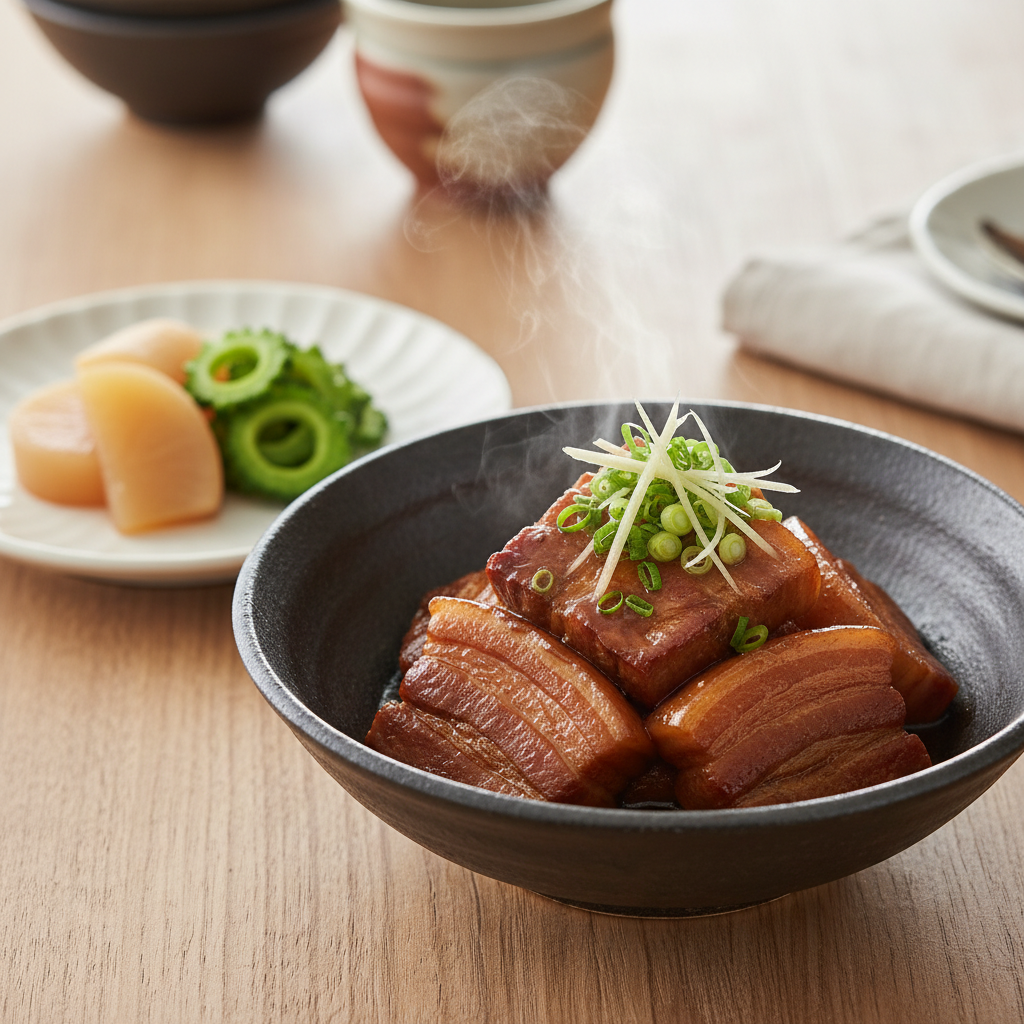
Rafute is one of Okinawa Prefecture’s representative local dishes, made by slowly simmering pork belly with skin (or hisagaa, which is skin-on thigh meat) in awamori, soy sauce, and brown sugar to create a sweet and savory braised pork dish. In the Ryukyuan language it is called “rafute,” and it is also known by the alternative name “raftii.” In kanji characters, it is written as “羅火腿.”
The greatest characteristic of this dish is the extreme tenderness achieved through long, slow simmering—so soft it crumbles at the touch of chopsticks—and a melt-in-your-mouth texture. Collagen that dissolves from the skin-on pork creates a thickened consistency throughout the dish, producing a rich yet refined flavor.
Ryukyuan cuisine is said to “begin and end with pork,” reflecting a food culture that places great importance on pork. Every part of the pig is utilized without waste—not only the meat itself, but also the organs, face, ears, and blood. Among these, skin-on pork belly is particularly frequently used, and rafute stands as its most representative dish, enjoyed widely both within and outside Okinawa Prefecture.
History, Origins, and Related Events
A Tradition Dating Back to the Ryukyu Kingdom Era
The history of rafute goes back to the era of the Ryukyu Kingdom. It is believed to originate from the Chinese dish “dongpo rou (東坡肉),” and its name derives from the Chinese “luohuotui (羅火腿),” which means “pork ham.” This reflects the long history of cultural exchange between Ryukyu and China.
During the Ryukyu Kingdom period, extensive cultural exchanges took place through tribute relations with China, and Ryukyuan cuisine, particularly court cuisine, was strongly influenced by Chinese cooking methods and seasonings. These Chinese culinary techniques merged with Okinawa’s unique ingredients and seasonings, giving birth to unique local dishes such as rafute.
Role as Preserved Food
Rafute also served as a traditional preserved food from the Ryukyu Kingdom era. With its strong seasoning and thorough cooking, it could keep for approximately one month even without refrigeration, making it a valuable source of protein. This high preservability held particular importance in Okinawa’s subtropical climate.
Position as a Guest Dish and Funeral Meal Cuisine
Rafute, which was served as court cuisine during the Ryukyu Kingdom period, is now offered as guest dishes and funeral meal cuisine in modern times. While it once had an extremely strong flavor, the taste has become gentler over time, and it is now enjoyed in a wider variety of settings.
During special occasions such as New Year, funerals, and the Obon festival, rafute commonly appears on tables where families gather, making it an indispensable part of Okinawa’s food culture.
Primary Transmission Regions
Rafute is transmitted throughout Okinawa Prefecture, but particularly in the southern Okinawa Main Island region centered on Naha City, traditional cooking methods from the Ryukyu Kingdom era remain strongly preserved.
In the former castle town area around Shuri Castle, traditional rafute descended from court cuisine continues to be made, and established Ryukyuan restaurants maintain secret recipes passed down through generations. Additionally, in island regions such as Miyako Island and Ishigaki Island, each area has its own unique seasoning and arrangements of rafute that are enjoyed locally.
In individual homes, unique family recipes are passed down, with each household’s choice of seasonings, simmering time, and secret ingredients varying from family to family, cherished as “grandmother’s taste.”
Main Ingredients Used
Pork Belly with Skin
The star ingredient of rafute is skin-on pork belly. Using belly meat with layers of lean and fatty portions ensures the meat doesn’t dry out even after long simmering, creating a melt-in-your-mouth texture. The skin is essential, as the collagen that dissolves from it gives the entire dish thickened consistency and depth.
Hisagaa (Skin-on Thigh Meat)
Skin-on thigh meat, called hisagaa, can also be used as a substitute for belly meat. When thigh meat is used, the result is slightly leaner with a lighter finish compared to belly meat.
Awamori
Awamori, a distilled spirit unique to Okinawa, is an indispensable seasoning for making rafute. The alcohol content removes the gamey smell of pork and adds a unique flavor. It also helps tenderize the meat, and when simmered for long periods, it creates a deep, complex taste.
Soy Sauce
Soy sauce, the foundation of the seasoning, is typically Okinawa Prefecture soy sauce, which tends to be slightly sweeter than mainland Japanese soy sauce. When combined with awamori and brown sugar, it completes rafute’s characteristic sweet and savory flavor.
Brown Sugar and Sugar
Using Okinawa Prefecture brown sugar adds deep richness and gentle sweetness. The minerals unique to brown sugar give the dish depth and create a complex flavor that goes beyond simple sweetness. While white sugar is sometimes used, brown sugar is traditionally preferred.
Other Ingredients
Ginger, green onions, and bonito stock are also used to remove odors and add flavor. Some restaurants and households also add spices such as star anise.
Preparation Methods – Authentic Rafute Cooking
Ingredients (Serves 4)
- Pork belly with skin: 800g–1kg
- Awamori: 200ml
- Soy sauce: 100ml
- Brown sugar (or regular sugar): 80g–100g
- Water: As needed (enough to cover the meat)
- Ginger: 1 piece (sliced)
- Green part of one green onion: 1 piece
- Bonito stock: 500ml (as desired)
Preparation
- Parboiling the pork: Blanch the skin-on pork belly in a large pot of water for 30 minutes to 1 hour. This step removes excess fat and odors. Remove any scum that rises during boiling carefully.
- Cooling the meat: Remove the blanched meat, cool it in cold water, then cut it into approximately 5cm cubes. Cutting with the skin facing down makes it easier.
Main Simmering
- Searing the meat: Lightly brown the surface of the cut meat in a frying pan. This step adds a pleasant aroma and prevents the meat from falling apart.
- Beginning the simmer: Place the meat in a heavy pot, add awamori, soy sauce, brown sugar, ginger, and green onion. Add water or bonito stock until the meat is just covered.
- Slow simmering over low heat: Once it comes to a boil, reduce to low heat, cover with a drop lid, and simmer for 2–3 hours. Traditional cooking methods may involve simmering for 5–6 hours. Adjust the liquid level by adding water as needed if the broth reduces too much.
- Flavor adjustment: Taste the dish as it simmers, adjusting with additional soy sauce or brown sugar to reach your preferred taste. Be careful not to reduce the broth too much, or it will become too salty.
- Finishing: Once the meat is so tender it crumbles at the touch of chopsticks and the broth has thickened, it is done. Turn off the heat and let it sit overnight for even deeper flavor.
Cooking Tips
- Take your time: The secret to delicious rafute is, above all, slow, patient simmering. Rushing the process over high heat will result in tough meat.
- Treasure the skin: Using skin-on meat allows collagen to dissolve, creating thickened consistency and depth of umami. It is essential not to remove the skin.
- Cool and reheat: Allowing the dish to cool completely before reheating allows the flavors to permeate more deeply.
Occasions for Eating and Seasons
Rafute is eaten throughout the year in Okinawa Prefecture on various occasions, but it is indispensable particularly in the following situations.
New Year’s Dishes
During Okinawa’s New Year celebration, rafute is always included as one of the dishes in the traditional tiered boxes (jubaku). When relatives gather during the first three days of the new year, rafute packed in tiered boxes brightens the celebratory table.
Funerals and Altar Observances
During Obon and funeral services, rafute is used as an offering to the family altar. Okinawa has a strong ancestor-veneration culture, and it is customary to prepare elaborate dishes for funeral services, with rafute playing a central role.
Celebrations and Guest Dishes
Rafute is also served as a hospitality dish at celebratory occasions such as weddings, baby congratulations, and housewarming parties. Rafute, made with considerable effort, is also a dish that expresses respect for guests.
As Everyday Food
In modern times, rafute is enjoyed not only in restaurants catering to tourists but also as everyday home cooking. It is common to make a large batch on the weekend and have it appear on the dinner table throughout the week.
How to Eat
As a Main Dish on Its Own
The most common way to enjoy it is as a main dish alongside white rice. Rafute’s rich flavor pairs perfectly with plain rice, making it very appetizing. Eating with the broth poured over the rice is also a typical Okinawan way of enjoying it.
As a Topping for Okinawa Soba
“Rafute soba,” which features rafute as a topping on Okinawa soba noodles, is popular with tourists as well. The noodle broth harmonizes with rafute’s sweet and savory flavor, creating a very filling dish.
As a Rice Bowl
Serving rafute over hot rice with plenty of broth poured over it as a “rafute-don” (rice bowl) is also popular. Adding green onion and pickled red ginger provides a refreshing accent to balance the rich flavor.
As an Appetizer with Alcohol
It is also ideal as an accompaniment to awamori or shochu. The rich flavor of rafute pairs beautifully with strong spirits, making it a standard menu item at Okinawan izakayas.
As Onigiri Filling
Rafute can also be shredded and used as a filling for onigiri (rice balls). It is ideal for lunch boxes and remains delicious even when cold.
Preservation and Transmission Efforts
Work of Transmission Practitioners and Preservation Societies
Various preservation societies and organizations throughout Okinawa Prefecture work to protect the traditions of Ryukyuan cuisine. The Ryukyuan Cuisine Transmission Practitioner system certifies cooks who correctly transmit traditional cooking methods and supports the passing of skills to the next generation.
Additionally, women’s associations and community centers throughout the region regularly hold cooking classes where older generations teach younger people how to make rafute, continuing efforts to preserve family flavors.
School Education Initiatives
In Okinawa Prefecture school cafeterias, rafute is sometimes served as a local dish, providing children with an opportunity to experience their region’s food culture. Comprehensive learning programs also teach rafute’s history and preparation methods.
Promotion via SNS and Media
In recent years, young chefs and influencers have been promoting rafute’s appeal through SNS. On Instagram and YouTube, information ranging from traditional preparation methods to modern arrangement recipes is shared, attracting new fans.
Okinawa Prefecture’s tourism association and local governments actively promote local cuisine information through official websites and SNS, increasing the value of rafute as a tourism resource.
Commercialization and Modern Initiatives
Rafute has been commercialized as vacuum-sealed and retort-packaged food and is popular as a souvenir. Supermarkets throughout Okinawa Prefecture sell pre-cooked rafute, allowing people to easily enjoy authentic flavors.
It is also available as frozen food, purchasable at supermarkets and online shopping sites nationwide. This has made it possible for people outside Okinawa Prefecture to easily enjoy rafute, contributing to increased awareness.
Transmission through Restaurants
Numerous specialty Ryukyuan restaurants operate primarily in Naha City, where visitors can enjoy authentic rafute made by skilled craftspeople. These establishments continue to protect traditional flavors through cooks trained through years of apprenticeship.
As Okinawan izakayas and Okinawan restaurants expand nationwide, rafute has become widely known outside Okinawa Prefecture, becoming a local dish enjoyed throughout Japan.
Differences Between Rafute and Standard Braised Pork
Rafute is also called “Okinawan-style braised pork,” but it differs from mainland braised pork in several clear ways.
Difference in Seasonings
The most significant difference is the use of awamori. Mainland braised pork typically uses sake or shochu, but rafute uses Okinawa’s unique awamori, creating a distinctive flavor. The use of brown sugar is also characteristic, creating a deep sweetness and richness different from mainland braised pork made with white sugar or mirin.
Simmering Time and Texture
Rafute is generally simmered for even longer than mainland braised pork. Simmering for 5–6 hours or more achieves tenderness so extreme that the meat crumbles at the slightest touch. This cooking method to achieve ultimate tenderness is a unique characteristic of rafute, which also had a role as preserved food.
Treatment of the Skin
Using skin-on meat is an absolute requirement for rafute, while mainstream braised pork sometimes removes the skin. The collagen that dissolves from the skin is a critical element of rafute, serving as the source of thickened consistency and umami.
Intensity of Seasoning
Rafute, with its history as preserved food, is characterized by stronger seasoning than mainland braised pork. However, there is a recent trend toward slightly lighter seasoning to align with modern health consciousness.
Okinawa’s Pork Culture and Rafute
Pork occupies a special place in Okinawa Prefecture’s food culture. As the phrase “begin and end with pork” indicates, Okinawa has a deeply rooted culture of utilizing pork without waste.
Diversity of Pork Dishes
Beyond rafute, dishes such as soki (pork ribs), mimiga (pork ears), chiragaa (pork facial skin), and nakami soup (pork organ soup) exist, using every part of the pig. Within this pork culture, rafute is positioned as the most representative and formal dish.
Ryukyu Kingdom Food Culture
In the court cuisine that developed to entertain Chinese envoys during the Ryukyu Kingdom era, pork dishes played a central role. Rafute served as the foremost example, considered the highest-class hospitality dish.
Modern Pork Culture
Even today, pork consumption in Okinawa Prefecture far exceeds the national average. Supermarkets routinely sell skin-on pork belly, and making rafute at home remains an everyday occurrence.
Regional Flavor Variations and Arrangements
Within Okinawa Prefecture, various regions and households have different seasoning and preparation methods for rafute.
Naha and Shuri Region
In the Shuri Castle area, the historical center of the Ryukyu Kingdom, refined, delicate flavoring in the court cuisine tradition is often seen. Brown sugar is used sparingly, allowing awamori’s flavor to shine through in a sophisticated taste.
Island Regions
In island regions such as Miyako and Ishigaki, sweeter rafute using abundant local brown sugar is preferred. Local seasonings and spices unique to each region may also be added.
Household Variations
Each household has its own unique recipe passed down through generations, treasured as “grandmother’s taste.” Some households add miso as a secret ingredient, others add spices such as star anise, some use generous amounts of bonito stock—the variations are many.
Places to Enjoy Rafute
Traditional Ryukyuan Restaurants
Numerous specialty Ryukyuan restaurants exist along Naha’s Kokusai Street and around Shuri Castle, where authentic rafute prepared by skilled cooks can be enjoyed.
Izakayas and Casual Eateries
Izakayas and casual eateries frequented by locals also serve homestyle rafute. These establishments offer the everyday flavors of Okinawa, different from tourist-oriented restaurants.
Roadside Stations and Farm Stands
At roadside stations and agricultural produce stands throughout Okinawa Prefecture, homemade rafute prepared by local mothers is sometimes available for purchase. It can be bought as vacuum-sealed packages or prepared dishes, and is popular as a souvenir.
Hotels and Resorts
Rafute is also served as part of buffets and multi-course meals at tourist-oriented hotels and resort restaurants. You can enjoy luxurious rafute made with premium ingredients.
Conclusion – What Rafute Conveys About Okinawa’s Food Culture
Rafute is not merely braised pork, but rather a local dish in which the long history continuing from the Ryukyu Kingdom era and Okinawa’s unique food culture are concentrated. While influenced by Chinese cuisine, it has developed uniquely through Okinawa’s distinctive ingredients, seasonings, and cooking methods, and has been transmitted to the present day.
The cooking method of long-simmering skin-on pork belly with awamori, brown sugar, and soy sauce represents the wisdom of preserved food in Okinawa’s subtropical climate, and at the same time, it is the highest-class hospitality cuisine. As an indispensable dish on special occasions such as New Year and funerals, and as everyday home cooking that brightens the dinner table, rafute is deeply rooted in Okinawans’ lives.
In modern times, new cooking methods and arrangements have emerged while preserving tradition, and through SNS and commercialization, rafute has spread nationwide. Through transmission activities to younger generations and school education initiatives, rafute’s tradition is being reliably passed to the next generation.
When visiting Okinawa, please be sure to taste authentic rafute and experience the depth of its history and culture. And if possible, attempt making rafute at home, and through the process of slow, patient simmering, experience the richness of Okinawa’s food culture. Rafute is a treasure of food culture that Okinawa Prefecture is proud of, and a wonderful example demonstrating the diversity of Japan’s local cuisine.