Goya Champuru: History and Authentic Preparation of Okinawa’s Representative Local Cuisine
What is Goya Champuru
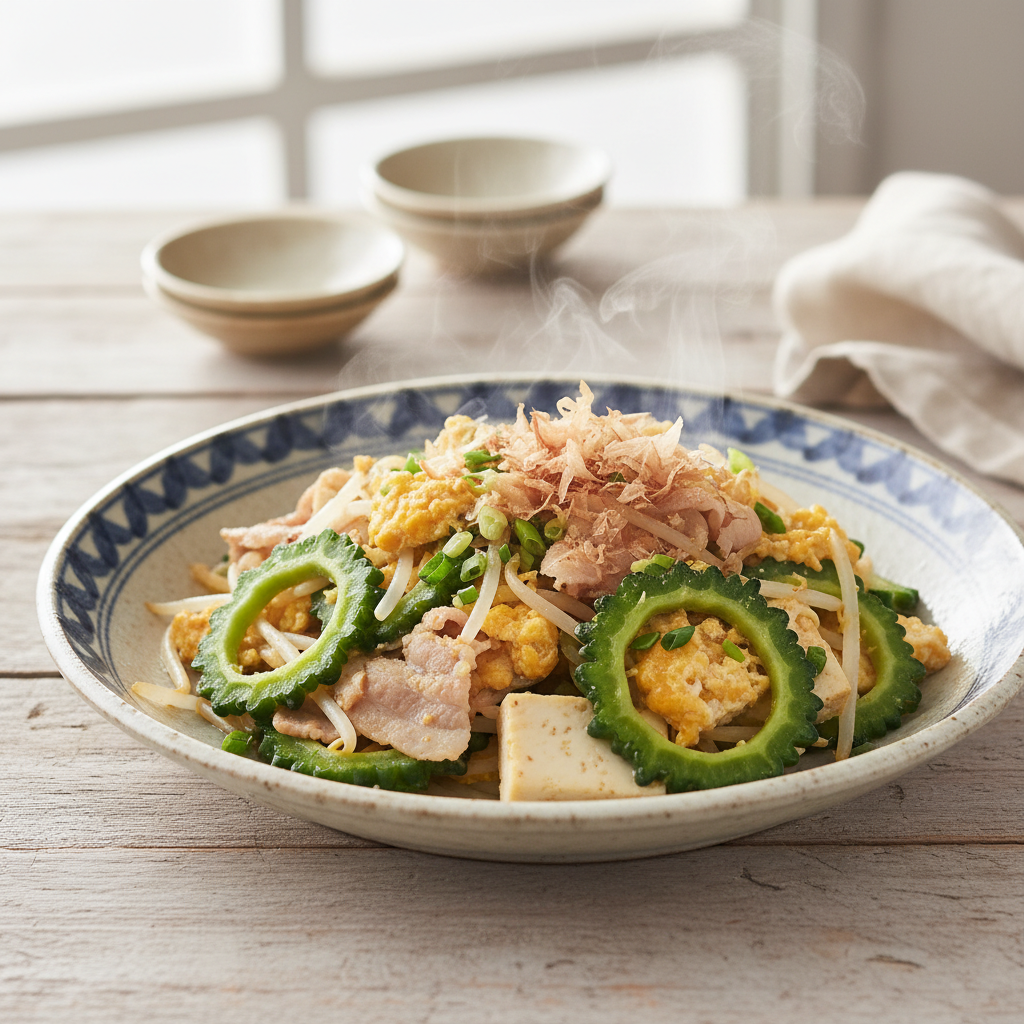
Goya champuru is a representative local dish of Okinawa Prefecture, a home-cooked meal made by stir-frying goya (bitter melon), island tofu, pork, eggs, and other ingredients together. The word “champuru” is an Okinawan dialect term meaning “mixed up” or “jumbled together,” expressing the act of stir-frying various ingredients together.
This dish is eaten daily in Okinawan homes, and every household in the prefecture has its own unique seasoning and preparation method. In recent years, its reputation has spread nationwide, and it has become a standard summer dish enjoyed in homes throughout Japan. The high nutritional value of goya and its distinctive flavor that stimulates appetite during hot seasons have gained attention alongside the growing health-consciousness trend.
Main Transmission Areas and Spread Throughout Okinawa Prefecture
Goya champuru is a local dish transmitted throughout Okinawa Prefecture, though there are subtle regional differences. It is passed down through families in various locations throughout the prefecture, including Okinawa Main Island, Miyako Island, Ishigaki Island, and other remote islands, each with their own family flavors.
Particularly in the southern part of Main Island centered around Naha City, many households use pork luncheon meat (spam). On the other hand, in Miyako Island and the Yaeyama Islands, there is a tendency to use the more traditional three-layer pork (braised pork belly). This reflects differences in regional food culture and available ingredients in each area.
The dish is frequently served in school lunches throughout the prefecture, providing children opportunities to become familiar with Okinawan flavors from a young age. Additionally, from tourist-oriented restaurants to local eateries, this dish can be enjoyed at all kinds of dining establishments throughout Okinawa Prefecture.
History, Origins, and Related Events
Etymology of Champuru and Historical Background
The etymology of the cooking method “champuru” is believed to derive from the Malay or Indonesian word “campur,” meaning “to mix.” This word is thought to have been transmitted to Okinawa through trade with Southeast Asia during the Ryukyu Kingdom era.
The Ryukyu Kingdom prospered through entrepôt trade with China, Japan, and Southeast Asian countries from the 14th to 19th centuries. During this period, various cultures, ingredients, and cooking methods flowed into Okinawa, forming a unique food culture. The stir-frying cooking method itself was strongly influenced by Chinese cuisine.
Transmission of Goya to Okinawa
Goya (bitter melon) is originally a vegetable from Southeast Asia, believed to have been transmitted to Okinawa via China during the Ryukyu Kingdom era. Okinawa’s warm climate proved suitable for goya cultivation, and the vegetable came to be widely grown throughout the prefecture from early on.
Initially used as a medicinal plant, it gradually gained recognition for its food value and became actively cultivated in home vegetable gardens. After World War II, particularly from the 1970s onward, goya champuru became established as a representative home-cooked dish in Okinawa.
Post-War Food Culture and Development
After World War II, Okinawa came under American administration. During this period, pork luncheon meat (spam) became widely distributed and began to be used as an ingredient in goya champuru. From the 1980s to 1990s following reversion to Japan, goya champuru became known nationwide along with the Okinawa boom.
From the 2000s onward, influenced by health food trends, the nutritional value of goya gained attention. Rich in vitamin C, potassium, and dietary fiber, with the bitter component said to have blood sugar-lowering effects, it gained support from health-conscious people.
Main Ingredients Used and Their Characteristics
Goya (Bitter Melon)
The star ingredient of goya champuru. Characterized by a distinctive bitterness, this bitter component (momordicin) is said to have appetite-stimulating and blood sugar-lowering properties. Okinawa-grown goya is thicker, shorter, and has larger bumps compared to mainland varieties.
Selection tips include choosing ones with deep green color and firm bumps. Yellow, ripe goya has reduced bitterness, but young green ones are used for cooking.
Island Tofu
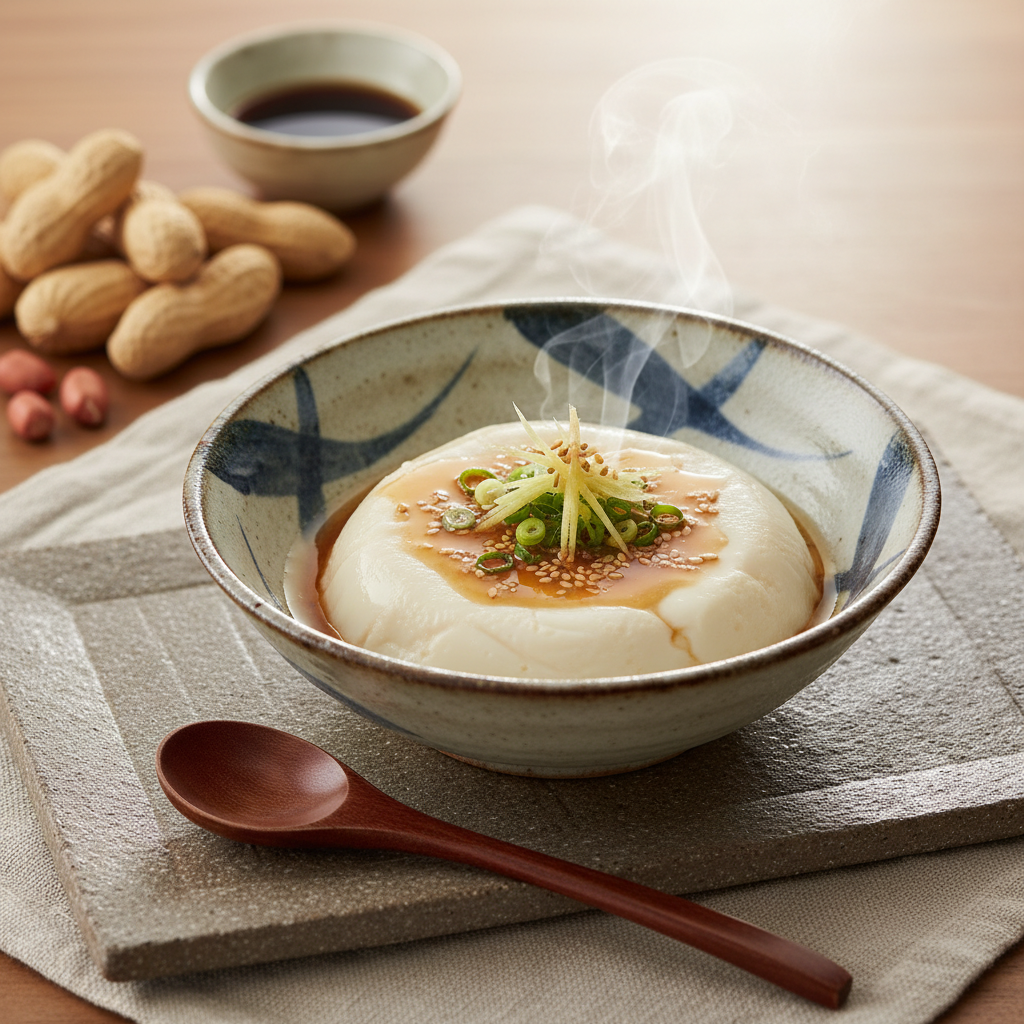
A traditional Okinawan tofu that is firmer and has less moisture than mainland cotton tofu. It has a concentrated soybean flavor and doesn’t crumble easily when stir-fried, making it ideal for champuru dishes. If difficult to find on the mainland, regular cotton tofu can be substituted by thoroughly draining it.
Island tofu is made using “nigari” from seawater and is made without pressing, so strong soybean flavor remains. In Okinawa, there is a culture of consuming tofu made in the morning that same day, with fresh tofu being preferred.
Pork (Three-Layer Pork or Pork Luncheon Meat)
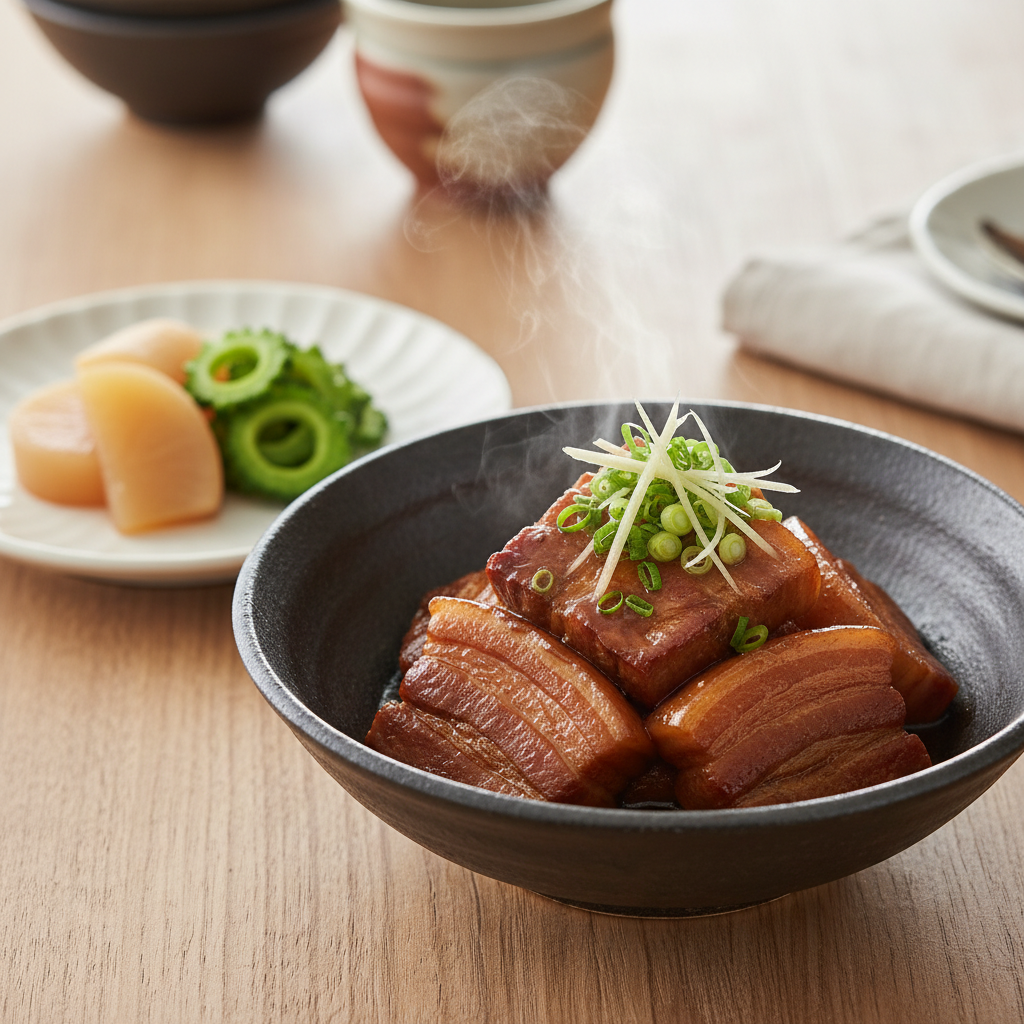
Traditional recipes use “three-layer pork,” a braised block of pork belly. This reflects Okinawa’s pork meat culture, with the meat’s umami and fat tempering goya’s bitterness and adding depth to the overall dish.
In modern households, pork luncheon meat (spam) is often used for convenience. Influenced by post-war American administration, it has now become an essential ingredient in Okinawan cuisine. With strong saltiness and umami, it pairs excellently with goya.
Egg
The egg added at the finish serves to round out the entire dish. Stopping the heat while the egg is half-cooked creates a fluffy texture and softens goya’s bitterness.
Other Ingredients
Some households add vegetables like bean sprouts, onion, and carrot. These are added for textural accents and nutritional balance. Common seasonings include salt, soy sauce, bonito flakes, and granulated dashi.
Ingredients (Serves 4)
The ingredients for authentic goya champuru are as follows.
Main Ingredients:
- Goya: 1 (about 250g)
- Island tofu (or cotton tofu): 1 block (300-400g)
- Pork belly (block or thinly sliced): 150g
- Eggs: 2
- Bonito flakes: as needed (for finishing)
Seasonings:
- Salad oil: 2-3 tablespoons
- Salt: 1/2-1 teaspoon (for goya preparation and seasoning)
- Soy sauce: 1 tablespoon
- Granulated dashi (bonito dashi): 1 teaspoon
- Awamori or sake: 1 tablespoon (if available)
For Preparation:
- Sugar: 1 teaspoon (to reduce goya bitterness)
Preparation Method: Traditional Okinawan Cooking Technique
Preliminary Preparation
1. Goya Preparation
Cut goya lengthwise in half and remove the interior pith and seeds thoroughly with a spoon. If pith remains, bitterness will intensify, so careful removal is important. Then slice to about 3-5mm thickness.
Place sliced goya in a bowl, add 1/2 teaspoon salt and 1 teaspoon sugar, and rub together. Let sit for about 10 minutes, then rinse lightly with water and squeeze out moisture thoroughly. This process softens the bitterness and makes it more palatable. However, if you wish to enjoy the bitterness, you may omit this step or use only salt rubbing.
2. Draining Tofu
If using island tofu, it can be used as is, but cotton tofu requires thorough draining. Wrap tofu in paper towels, place a weight on top, and let sit for 30 minutes or more. Alternatively, heat in a microwave (600W) for about 3 minutes to evaporate moisture.
Drained tofu should be broken by hand into larger pieces or cut into bite-sized chunks with a knife. In Okinawan households, hand-breaking is common, with irregular shapes allowing better seasoning absorption.
3. Pork Preparation
If using pork belly block, cut to about 5mm thickness. If using pork luncheon meat, cut into about 1cm cubes. When using pork belly, parboiling beforehand removes excess fat for easier eating.
Cooking Steps
1. Fry the Tofu
Heat 1 tablespoon salad oil in a frying pan, add drained tofu. Cook over medium heat until both sides develop color. This step creates the island tofu-like texture. Once the surface becomes crispy, remove temporarily.
2. Stir-Fry the Pork
Add 1 tablespoon salad oil to the same pan, add pork, and stir-fry over medium heat. Cook until fat releases from the pork and the surface browns. For pork luncheon meat, light browning is sufficient.
3. Add Goya
Once pork is cooked through, add prepared goya and stir-fry over high heat. Over-cooking goya loses its crisp texture, so aim for about 2-3 minutes until the color becomes a vibrant green. Adding awamori or sake improves the aroma.
4. Return Tofu and Season
Return the set-aside tofu to the pan and mix everything together. Season with granulated dashi, soy sauce, and salt. Okinawan households often emphasize bonito dashi flavor, which adds depth to the overall dish. Gently combine everything so seasoning reaches all components.
5. Finish with Egg
Pour beaten egg around the pan and mix gently. Stop heating once the egg becomes half-cooked. Overcooking egg makes it tough, so the key is finishing with residual heat.
6. Plating
Plate the dish and generously top with bonito flakes. The bonito flavor brings refinement to the overall dish. Add pickled red ginger on the side if desired.
Dining Occasions and Seasons
Goya champuru is eaten year-round as an everyday home-cooked meal throughout Okinawa Prefecture, but it appears particularly frequently on dining tables from May to September, when goya is in season.
As Everyday Meal
In Okinawan homes, goya champuru is made multiple times a week without exception. It appears as a lunch or dinner side dish and is also enjoyed as an accompaniment to alcoholic drinks. With good nutritional balance and providing both vegetables and protein in one dish, it is valued on busy days.
Summer Fatigue Prevention Dish
In hot Okinawan summers, goya champuru plays an important role in preventing summer fatigue. Vitamin C in goya is heat-resistant and remains stable when stir-fried, allowing efficient nutrient intake. Additionally, the distinctive bitterness stimulates appetite, making it easy to eat during periods when appetite typically wanes in the heat.
Aspects as Ceremonial Food
Though not tied to specific occasions, it is frequently served when family gathers or during visits. As each household’s “mother’s cooking,” it becomes a standard dish made for returning family members.
Dining Methods and Eating Variations
Basic Eating Method
The most common way to enjoy goya champuru is with freshly cooked white rice. In Okinawa, it is sometimes paired with “Jushi” (Okinawan-style mixed rice). It is also popular as an accompaniment to alcoholic drinks like awamori or beer.
Arrangements and Eating Variations
Combination with Somin Champuru:
In Okinawa, goya champuru is sometimes eaten alongside somin champuru (stir-fried thin noodles).
Donburi Style:
A popular way is to place goya champuru over rice as a donburi bowl. Adding extra egg and covering it creates a more satisfying dish.
Lunch Box Side Dish:
Since it remains tasty when cold, it is valued as a lunch box side dish. It is standard in Okinawan school lunches and workplace bento boxes.
Modern Arrangements:
Recent years have seen creative recipes adding cheese or curry powder flavoring. There are also abundant “○○ Champuru” variations using vegetables other than goya.
Nutritional Value and Health Benefits
Goya champuru is a nutritionally balanced and healthy dish.
Goya Nutritional Components
- Vitamin C: Contains about three times as much as lemon, contributing to beautiful skin and improved immunity. It is resistant to heat damage when cooked.
- Momordicin: A bitter component that suppresses blood sugar rise and stimulates appetite.
- Potassium: Effective in reducing puffiness and preventing high blood pressure.
- Dietary Fiber: Improves intestinal environment and aids constipation relief.
Tofu and Pork Nutrition
Tofu provides high-quality plant-based protein and is rich in isoflavones and calcium. Pork contains abundant B-group vitamins effective for fatigue recovery. Eggs are called a complete food, containing essential amino acids in good balance.
Combining these ingredients creates an ideal dish providing diverse nutrients in a single preparation.
Preservation and Transmission Efforts
Utilization in School Lunches
Goya champuru is regularly provided in school lunches throughout Okinawa Prefecture. This allows children to become familiar with local dishes from a young age, naturally learning Okinawan food culture. Nutritionists and cooks devise child-friendly recipes with reduced bitterness.
Cooking Classes and Transmission Activities
Throughout Okinawa Prefecture, local cooking classes for traditional dishes are held in community centers and cultural facilities, transmitting goya champuru preparation across generations. Particularly in cooking classes for newcomers and those from outside the prefecture, goya champuru often serves as an entry point for understanding Okinawan food culture.
Tourism and Food Culture Promotion
Goya champuru plays an important role in Okinawa’s tourism industry. Dining establishments throughout the prefecture serve authentic goya champuru to tourists, creating opportunities to experience Okinawan food culture.
Tourist facilities also offer goya champuru cooking experience programs, deepening understanding of Okinawan food culture through hands-on preparation.
Commercialization and Modern Initiatives
Retort Foods and Frozen Foods:
Numerous goya champuru seasonings, retort packages, and frozen foods are commercialized and available at supermarkets nationwide. This makes it easy to enjoy authentic flavors outside Okinawa Prefecture.
Goya Variety Improvement:
Development of less bitter varieties is progressing, allowing people who dislike bitterness to enjoy goya champuru more easily. This further promotes the dish’s popularity.
SNS Information Sharing:
Food researchers and Okinawa residents share recipes and cooking tips through SNS, advancing transmission to younger generations. Instagram and YouTube share diverse information from authentic methods to simple arrangements.
Ministry of Agriculture, Forestry and Fisheries “Our Local Cuisine”:
Goya champuru is registered in the “Our Local Cuisine” database operated by the Ministry of Agriculture, Forestry and Fisheries, recognized as official local cuisine. This acknowledges its value as a Japanese food culture heritage.
Development as Regional Brand
Okinawa-produced goya is established as a regional brand with active shipments outside the prefecture. At roadside stations and agricultural direct sales shops, fresh goya and goya champuru recipe cards are distributed together, implementing efforts to promote ingredients and dishes as an integrated whole.
Relationship with Other Champuru Dishes
Goya champuru is the most famous among Okinawan “champuru” dishes, but various other champuru dishes exist.
Fu Champuru
A dish using wheel fu (kurumabu), one of Okinawa’s representative champuru alongside goya champuru. Fu absorbs broth, creating unique texture.
Somin Champuru
A stir-fried thin noodle dish popular as summer lunch. Boiled noodles are stir-fried with vegetables and pork, seasoned with salt or soy sauce.
Papaya Champuru
A dish using green papaya (unripe papaya) characterized by crisp texture. With less bitterness than goya, it is an easy-to-eat dish.
Tamana Champuru
A dish using cabbage (called tamana in Okinawan dialect), one of the simplest and most homestyle champuru dishes.
These champuru dishes share basic cooking methods but allow enjoying different flavors and textures depending on main ingredients. In Okinawan homes, various champuru are made depending on season and available refrigerator contents.
Conclusion: Goya Champuru Embodying Okinawan Food Culture
Goya champuru transcends being merely a home-cooked meal, embodying Okinawa Prefecture’s local cuisine expressing history, culture, and lifestyle. It has evolved with historical transitions—from Ryukyu Kingdom trade history through post-war American administration influence to contemporary health trends.
The distinctive bitterness of goya and the cooking method of “mixing together” various ingredients symbolize Okinawa’s history of accepting diverse cultures while building unique culture itself.
Today, goya champuru is loved throughout Japan, not just in Okinawa Prefecture. Yet its essence remains unchanged, passed down as home cooking across generations. The unique preparation methods and flavors transmitted in each household represent this dish’s true value, speaking to the richness of Okinawan food culture.
Through goya champuru, one can sense Okinawa’s warm climate, abundant ingredients, and the warm spirit of “ichariba choudee” (once you meet, everyone is family). This local dish will continue to be transmitted as Okinawa’s identity and as an important part of Japan’s food culture.